
700W vs 1000W Microwave: Which One Is Better for Your Kitchen? (2026 Guide)
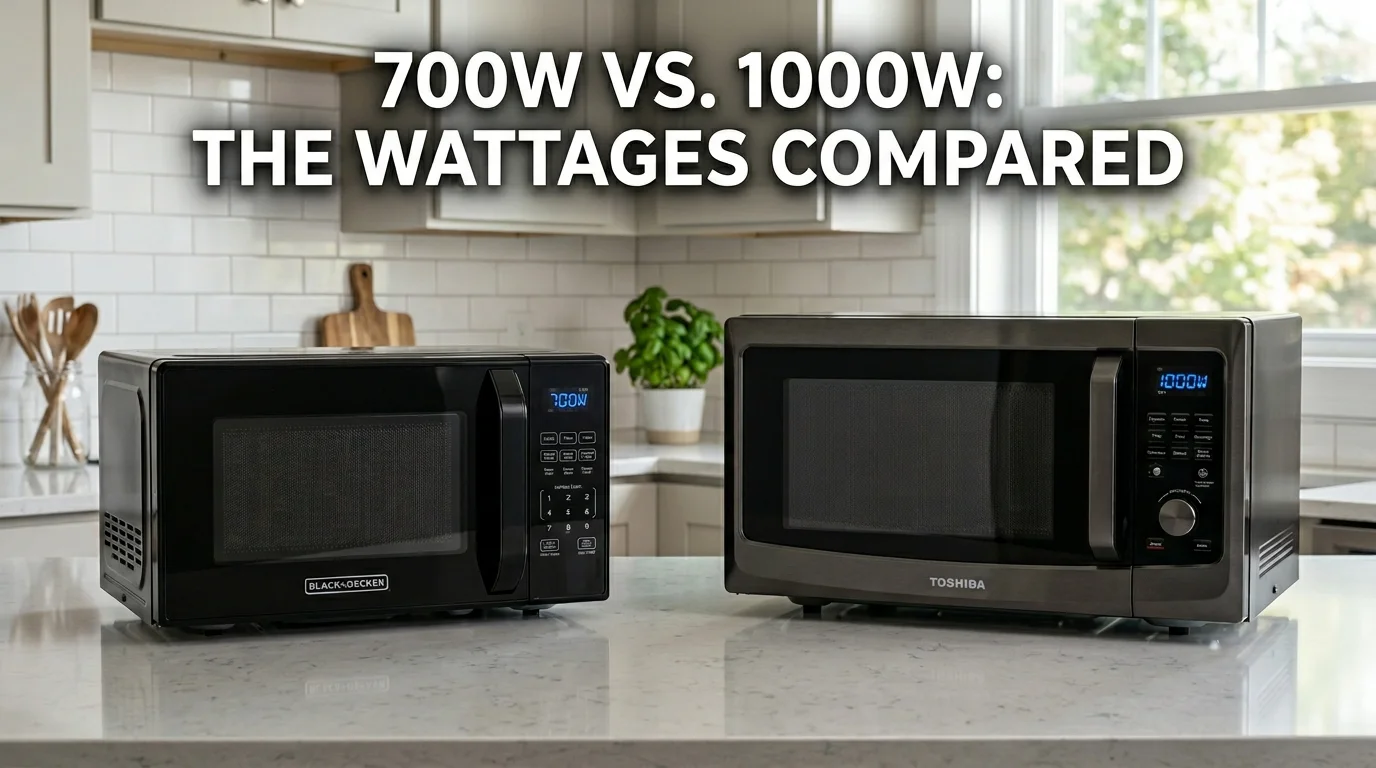
If you are shopping for a new kitchen appliance in March 2026, you’ve likely hit the ultimate crossroads: the wattage debate. You found a compact, stylish model that fits your budget, but you look at the box and hesitate. It says 700 Watts. Right next to it is a slightly larger model boasting 1000 Watts.
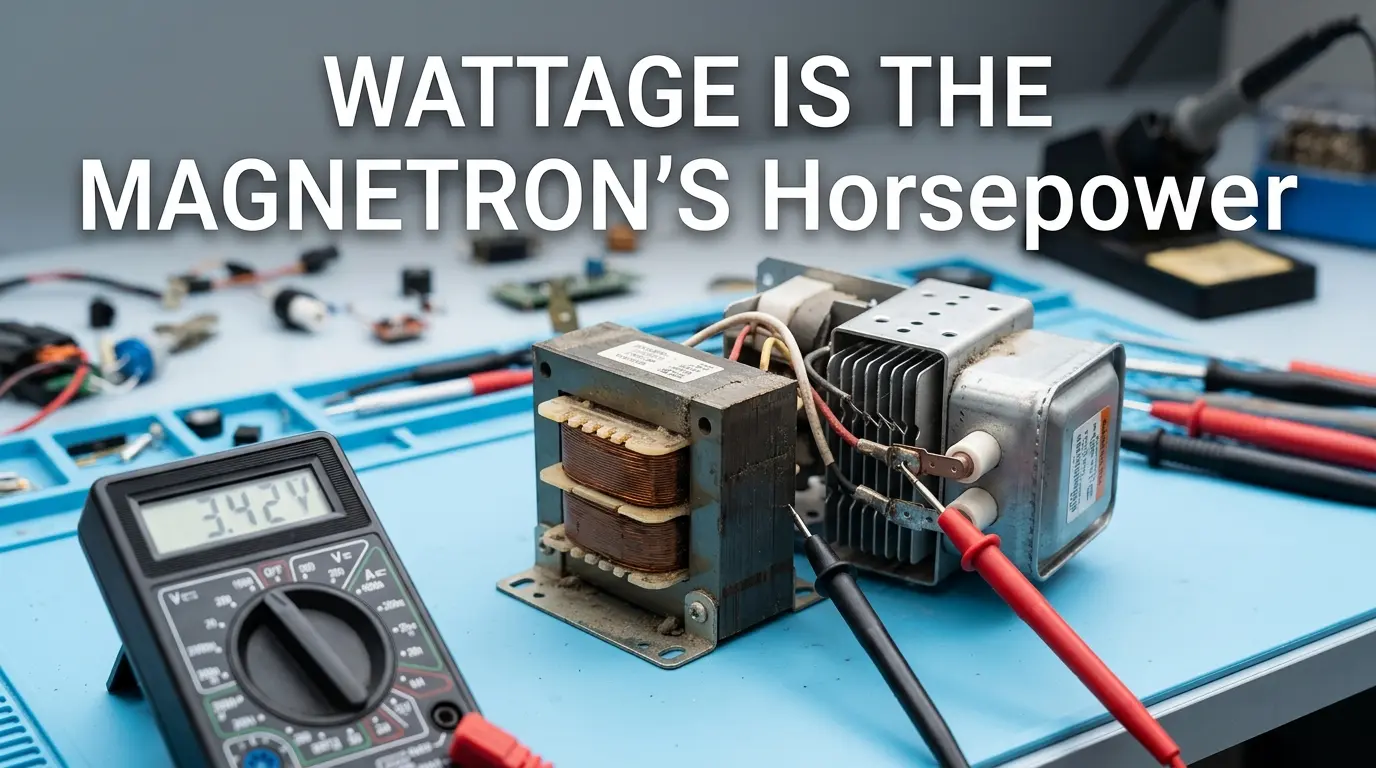
Suddenly, you’re paralyzed by a simple question: Is 700 watts enough, or do I need the 1000-watt powerhouse? The battle of the 700W vs 1000W microwave is the most common dilemma buyers face. Wattage is essentially the “horsepower” of your microwave. It determines how fast your food cooks, how evenly it heats, and, crucially, how much stress it puts on your home’s electrical system.
As we approach the strict June 2026 Department of Energy (DOE) efficiency mandates, choosing the right wattage isn’t just about cooking speed anymore; it’s about smart energy management. In this comprehensive guide, we will break down exactly how these two power tiers perform in real-world kitchens so you can make the perfect choice for your lifestyle.
Quick Answer
A 700W microwave is a compact, budget-friendly option perfect for dorms, RVs, and older apartments with sensitive electrical wiring. However, it takes longer to cook and struggles with tasks like popping popcorn. A 1000W microwave is the standard workhorse for family kitchens, offering fast, even cooking that matches the instructions on almost all packaged foods, though it requires more counter space and a dedicated electrical circuit. Neither is objectively better; the right choice depends on your space and cooking habits.
I. Understanding Microwave Wattage: The Basics
Before we pit them against each other, what does “wattage” actually mean in a microwave?
Inside every conventional microwave is a critical component called a magnetron. This device takes the electrical current from your wall outlet and converts it into microwave radiation, which vibrates the water molecules in your food to create heat. The wattage rating tells you the total output of that magnetron.
- A 700-watt microwave generates less microwave energy per second.
- A 1000-watt microwave generates significantly more energy per second.
Think of microwave wattage like water flowing through a hose. A 700W microwave is a standard garden hose—it will eventually fill up the bucket (heat your food completely), but it takes a little time and patience. A 1000W microwave is a firehose—it fills the bucket rapidly. But as we all know, sometimes a firehose is too much pressure for a small, delicate job (like melting butter).
II. The 700W Microwave: The Compact Survivor
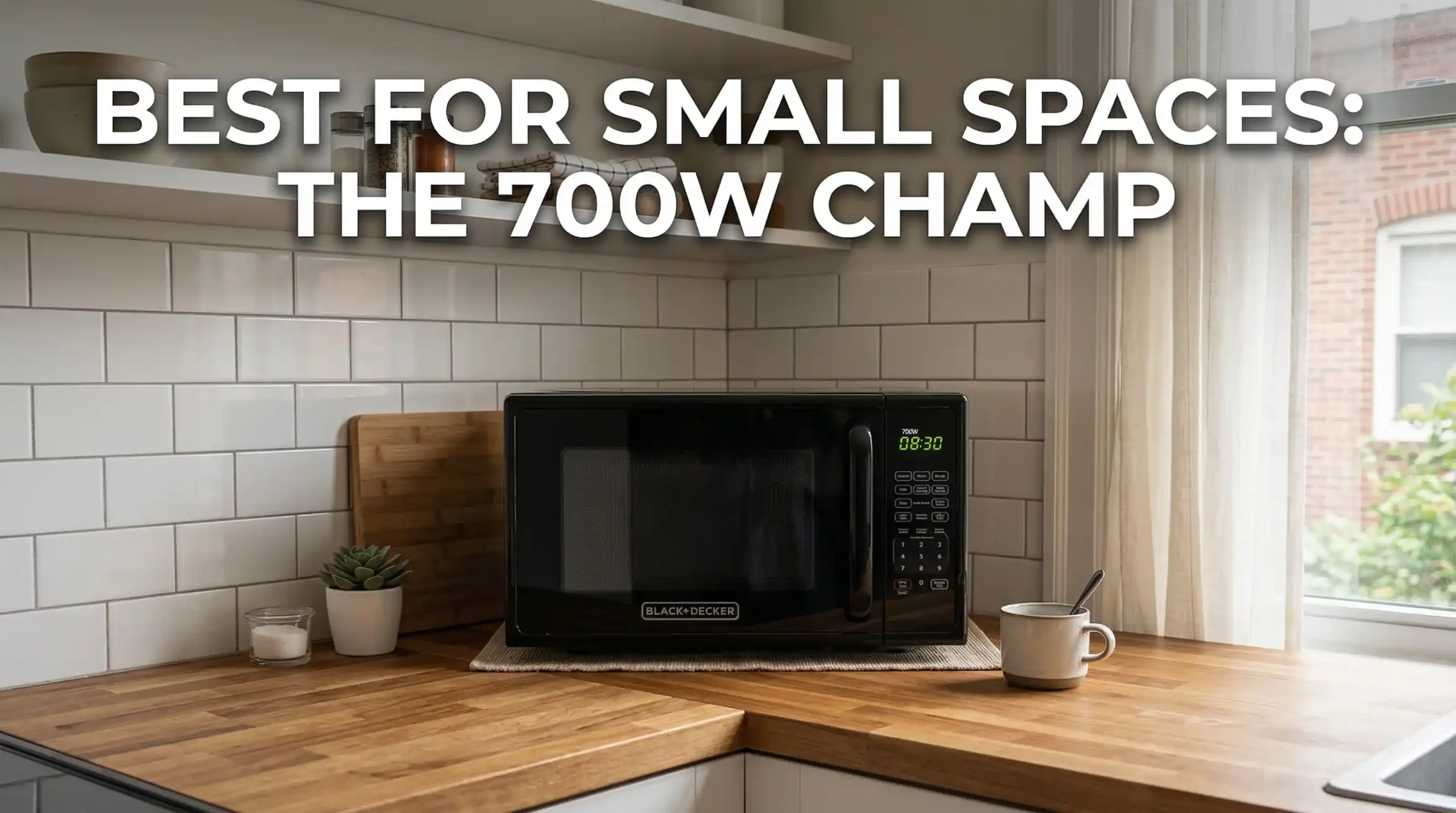
The 700-watt microwave is the undisputed king of the compact appliance world. If you look at our list of the Best Compact Microwave for Apartments, almost all of them sit proudly at the 700W mark.
The Pros of 700 Watts
Because the internal magnetron and transformer are physically smaller, manufacturers can drastically shrink the exterior casing. Units like the incredibly popular Black+Decker EM720CB7 can easily tuck into tight corners, dorm rooms, or small office cubicles.
This is the biggest hidden advantage. A 700W microwave typically draws around 1050 to 1100 watts from the wall. If you live in an older apartment building, an RV, or use a solar-powered setup, a 700W unit is much less likely to trip your 15-amp circuit breaker when the refrigerator compressor kicks on.
Because they require smaller, less complex internal components, 700W microwaves are significantly cheaper to manufacture. You can easily find a high-quality model for well under $100.
The Cons of 700 Watts
- Slower Cooking Times: You cannot defy physics; less energy means it will take longer to heat your food. A frozen dinner that requires 4 minutes in a 1000W unit might take 6 to 7 minutes in a 700W unit.
- The Popcorn Problem: 700W units notoriously struggle with microwave popcorn. Because the ambient heat builds up slowly, the kernels can dry out before they reach the critical popping temperature, leaving you with a bag full of unpopped kernels or burnt pieces at the bottom.

III. The 1000W Microwave: The Standard Workhorse
For the last decade, 1000 watts has been the industry standard for family kitchens. If you are buying a mid-sized microwave with a capacity of 1.1 to 1.5 cubic feet, it is almost certainly a 1000W machine designed to handle heavy daily use.
The Pros of 1000 Watts
A 1000W microwave heats food rapidly. It boils water faster, reheats dense foods (like lasagna) more effectively, and is the precise baseline wattage used for the instructions on the back of almost all frozen meals in the grocery store.
Because there is more power penetrating the food simultaneously, you are less likely to experience the dreaded “lava on the outside, frozen on the inside” phenomenon. This is especially true if you upgrade to a model featuring Inverter Technology. Learn why in our Inverter vs Conventional Microwave guide.
At 1000W, a microwave transitions from a simple “reheating box” to an actual cooking appliance. You have enough raw power to steam raw vegetables rapidly, poach eggs perfectly, and bake mug cakes.
The Cons of 1000 Watts
- The Footprint: You cannot cheat physics. To safely generate 1000 watts of power without overheating, the unit requires larger cooling fans and much bigger internal transformers. A 1000W unit like the Toshiba EM131A5C-BS will demand a larger chunk of your valuable counter space.
- Amperage Draw: A 1000W microwave can pull up to 1500 watts from your wall. If you plug it into the exact same circuit as a toaster oven or a space heater and run them simultaneously, you will almost certainly blow a fuse.
You don’t have to spend a fortune to get standard family cooking power. Check out our curated list of high-performance models that won’t break the bank.
Best Budget Microwave Under $150 →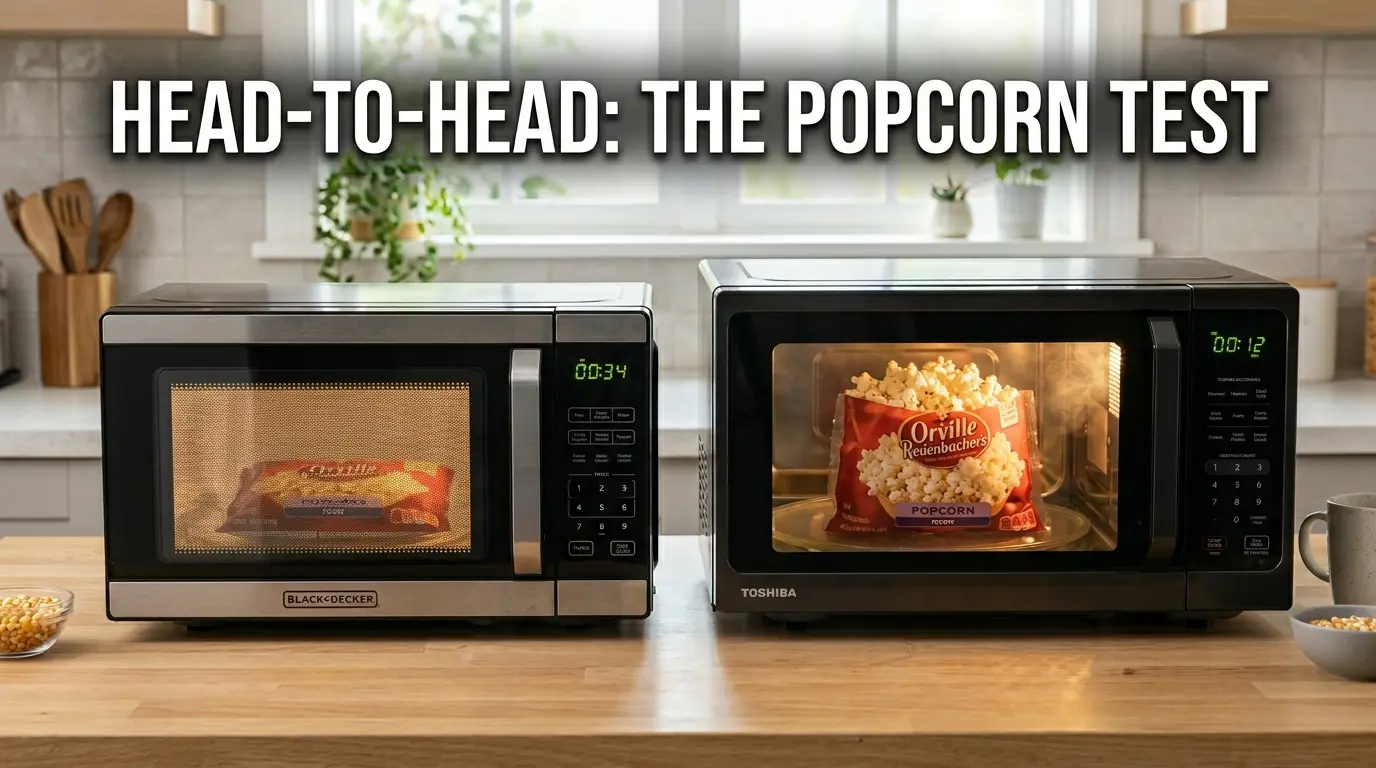
IV. Head-to-Head: 700W vs 1000W in the Real World
Let’s look at how these two power levels handle everyday kitchen tasks side-by-side.
| Cooking Task | 700W Microwave Performance | 1000W Microwave Performance | The Winner |
|---|---|---|---|
| Reheating Coffee | Takes about 1 minute 45 seconds. | Takes about 60 seconds. | Tie (Both do it well) |
| Microwave Popcorn | Takes 3.5 mins. High risk of unpopped kernels. | Takes 2 mins. Full, fluffy popping. | 1000W |
| Frozen TV Dinners | Requires adding 2-3 extra minutes to package instructions. | Follows package instructions exactly. | 1000W |
| Melting Butter | Excellent. The lower power melts it gently without exploding. | Good, but requires using the “Power Level 5” setting to avoid a mess. | 700W |
| Defrosting Meat | Takes longer, but less likely to accidentally “cook” the edges. | Very fast, but without an Inverter, the edges may turn brown and rubbery. | Tie |
V. The 2026 Energy Factor: How Much Electricity Do They Use?
As we adapt to the new 2026 DOE standards, buyers are hyper-aware of their utility bills. Does a 1000W microwave cost more to run than a 700W model? The short answer is: Not really.
While a 1000W microwave draws more power from the wall while it is actively running, it runs for a shorter amount of time. If it takes 2 minutes to heat a bowl of soup at 1000W, and 3 minutes to heat the exact same soup at 700W, the total kilowatt-hours (kWh) consumed is almost identical.
The real energy drain in 2026 is Standby Power (the clock display and internal sensors running 24/7). Fortunately, both 700W and 1000W models manufactured today are required to use less than 0.6W in standby, meaning neither will artificially spike your electric bill.
For a detailed mathematical breakdown of these costs and how to calculate your monthly bill, see our deep dive: How Much Electricity Does a Microwave Use?.
VI. How to Convert Cooking Times Between Wattages
If you buy a 700W microwave, you will quickly notice that the instructions on a Hot Pocket or a frozen pizza are designed for a 1000W to 1100W oven. Don’t panic. You don’t need to guess and risk eating lukewarm food; there is a simple math formula you can use.
The 1.4 Conversion Rule
To convert a 1000W recipe for a 700W microwave, simply multiply the recommended cooking time by 1.4.
- Example: If the box says “Heat for 3 minutes” (180 seconds).
- The Math: 180 seconds x 1.4 = 252 seconds.
- The Result: Heat for 4 minutes and 12 seconds in your 700W microwave.
If you don’t want to do the math every time you eat, or if you regularly rely on frozen meals for quick dinners, opting for the 1000W unit will save you daily mental gymnastics.
VII. The Verdict: Which One Should You Buy?
At The Bridge Finds, we review dozens of appliances, and the truth is that neither wattage is universally “better.” The right choice depends entirely on your living situation, your kitchen wiring, and your daily cooking habits.
You Should Buy a 700W Microwave If:
- You live in a tiny space: Ideal for dorm rooms, studio apartments, or RVs where counter space is precious.
- Your electrical wiring is old: If you frequently trip breakers when running multiple appliances, 700W is the safe, low-draw choice.
- You only reheat: If you just want to warm up yesterday’s pizza or heat your morning coffee, spending more money on high wattage is unnecessary.
🏆 Our Top Pick:
The Black+Decker EM720CB7 is the undisputed champion of the 700W category for its incredible durability and tiny footprint.
You Should Buy a 1000W Microwave If:
- You have the counter space: If you have a standard-sized kitchen, fill it with standard-sized power.
- You cook for a family: Heating multiple plates or large bowls of soup simultaneously requires high wattage to be efficient.
- You eat a lot of frozen meals or popcorn: 1000W is the exact power level food manufacturers use to test their products.
🏆 Our Top Pick:
The Toshiba EM131A5C-BS offers 1000W of power, a large 1.2 Cu. Ft. capacity, and premium features like a Mute button and a Smart Sensor for under $150.
Explore More Appliance Guides
Don’t stop here! Visit our complete hub for more expert tips, side-by-side equipment comparisons, and updated buying recommendations for 2026.

