
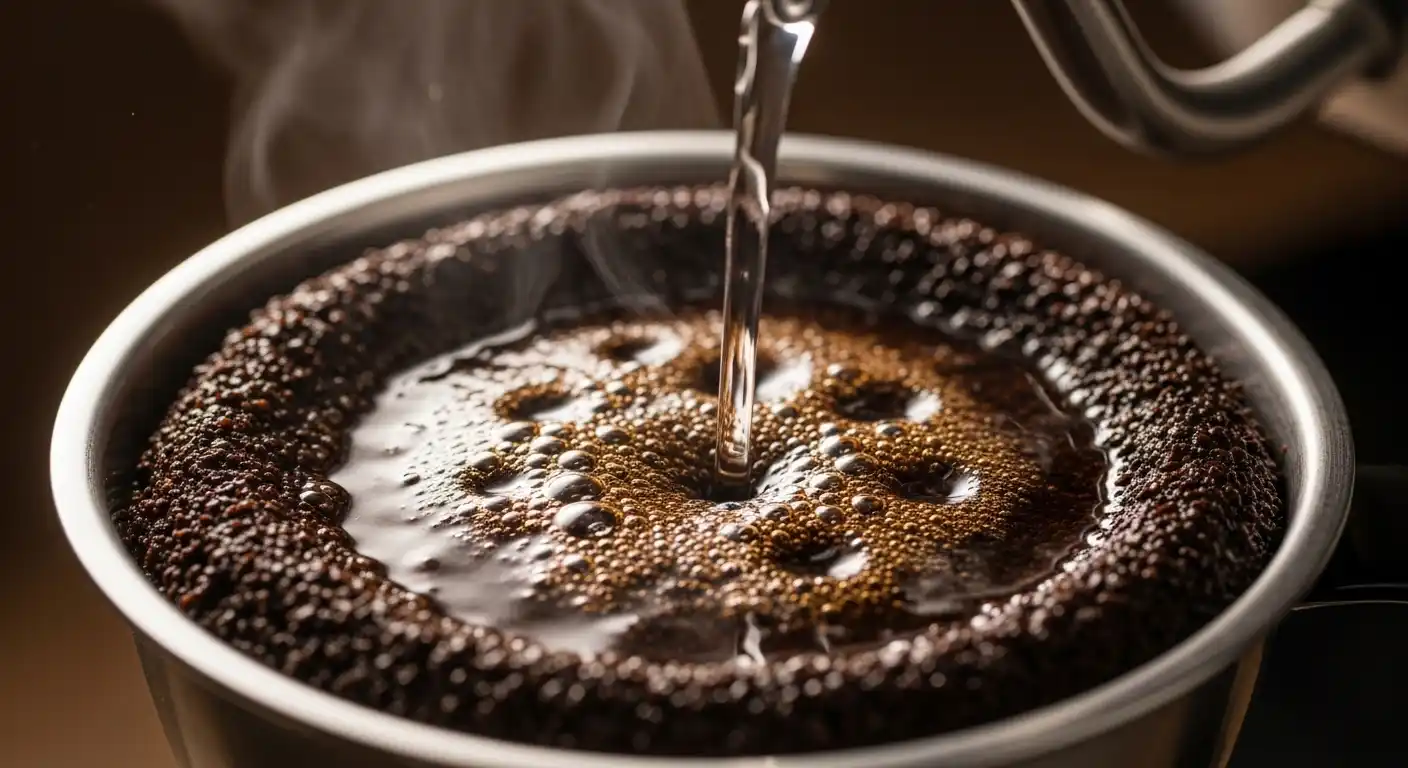
Coffee Extraction Explained Simply (2026 Guide): How Brewing Really Works
Coffee extraction is the hidden science behind every great cup. Whether espresso tastes rich and balanced or sour and weak depends on how efficiently water pulls flavor from coffee grounds during brewing.
Many beginners assume better coffee comes from expensive equipment, but understanding extraction delivers far bigger improvements. This guide explains coffee extraction in simple terms — no chemistry degree required — so you can consistently brew café-quality coffee at home.
In the world of specialty coffee, mastering extraction is the difference between a daily habit and a sensory experience. By the end of this guide, you will understand the physics and chemistry that transform water and beans into liquid gold.
Quick Answer
Coffee Extraction is the process where water acts as a solvent to dissolve flavor compounds from coffee grounds. A Balanced Extraction is the goal: it pulls acids, sugars, and oils in harmony to create sweetness and clarity. Under-extraction results in sour, thin coffee (often due to coarse grinds or short times), while Over-extraction leads to bitterness and a dry mouthfeel (often due to fine grinds or excessive heat). To master your brew, you must control five key variables: grind size, time, temperature, ratio, and water chemistry.
What Is Coffee Extraction?
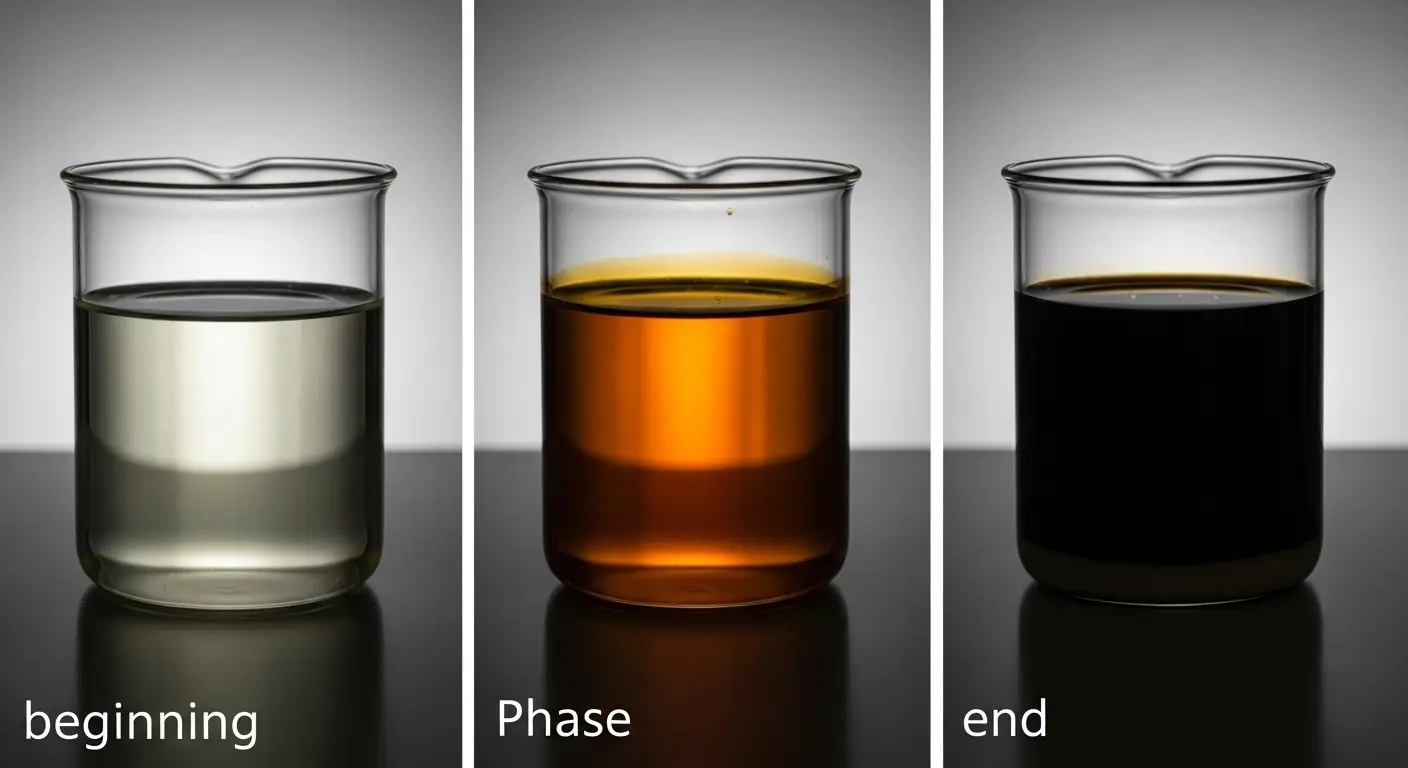
Coffee extraction is the process where water dissolves soluble compounds from ground coffee beans. Ground coffee is a complex biological structure containing hundreds of flavor elements. When hot water meets these grounds, it works as a solvent to remove:
- Acids: These are the bright, fruity, and floral notes. They dissolve most easily and are the first to enter your cup.
- Sugars: These provide sweetness, caramel notes, and balance the early acidity.
- Oils: These contribute to the body, texture, and the rich “mouthfeel” of the coffee.
- Bitter compounds: Heavier plant fibers and organic salts that provide depth but can become overwhelming if over-extracted.
The goal of any barista, professional or home-based, is balanced extraction. This means removing enough flavor compounds to enjoy sweetness and character without extracting the unpleasant bitterness found in the core of the bean.
Think of coffee like making tea: if you steep it for too short a time, it tastes weak and watery; if you leave it for too long, it becomes harsh and astringent. Coffee follows the same fundamental principle but with much higher precision. Extraction happens every time you brew, regardless of the device you use: espresso machines, pour-overs, drip makers, French press, or cold brew systems. The difference between an amazing cup and a disappointing one is simply how well you control that extraction process.
The Three Extraction Outcomes (Easy Concept)
Every cup of coffee you will ever drink falls into one of these three categories. Learning to identify them by taste is the first step toward brewing perfection.
1. Under-Extraction
Under-extraction occurs when the water has not had enough opportunity to pull the desirable compounds from the coffee grounds. It pulls the highly soluble acids first but misses the sugars and oils that provide balance.
- Sour, sharp, or salty flavor
- Thin, watery body
- Quick, disappearing aftertaste
- Total lack of sweetness
- Grind is too coarse
- Brew time is too short
- Water temperature is too low
- Low mineral water content
2. Balanced Extraction (The Goal)
This is where great coffee lives. Acids, sugars, and oils are extracted in perfect harmony, highlighting the unique “origin character” of the beans.
- Sweet and smooth
- Clear, distinct flavors
- Pleasant, ripe acidity
- Long, satisfying finish
This is the standard professional cafés aim for in every cup. It feels complete and “rounded” on the palate.
3. Over-Extraction
Over-extraction happens when water extracts too much from the grounds, pulling undesirable bitter compounds after the good flavors have already been removed.
- Harsh bitterness
- Dry, “ashy” mouthfeel
- Astringent finish (dry tongue)
- Muted or muddy flavor clarity
- Grind is too fine
- Brew time is too long
- Excessive agitation (stirring)
- Water temperature is too hot
The Coffee Extraction Timeline (What Happens First)
Extraction is not instantaneous; it happens in stages based on the molecular size and solubility of the compounds within the bean. Understanding this timeline is the key to why brew time matters so much.
Stage 1 — Acids (Early Extraction)
The first seconds of brewing extract bright organic acids. These create citrus notes, fruity brightness, and perceived freshness. Stopping the brew too early leaves you with only these acids, making the coffee taste intensely sour.
Stage 2 — Sugars (The Sweet Spot)
Next comes the sweetness and balance. This stage produces caramel notes, chocolate flavors, and a smooth texture that rounds out the acidity. Ideal brewing always aims to maximize this phase.
Stage 3 — Bitters (Late Extraction)
The final compounds to be pulled are heavier plant fibers and bitter elements. Small amounts are necessary to add depth and “kick,” but too much will completely ruin the balance of the cup.
Water minerals act as the “hooks” that pull these compounds out of the grounds. If your water is poor, your extraction will be poor regardless of technique.
Read the Coffee Water Chemistry Guide →The Five Variables That Control Extraction
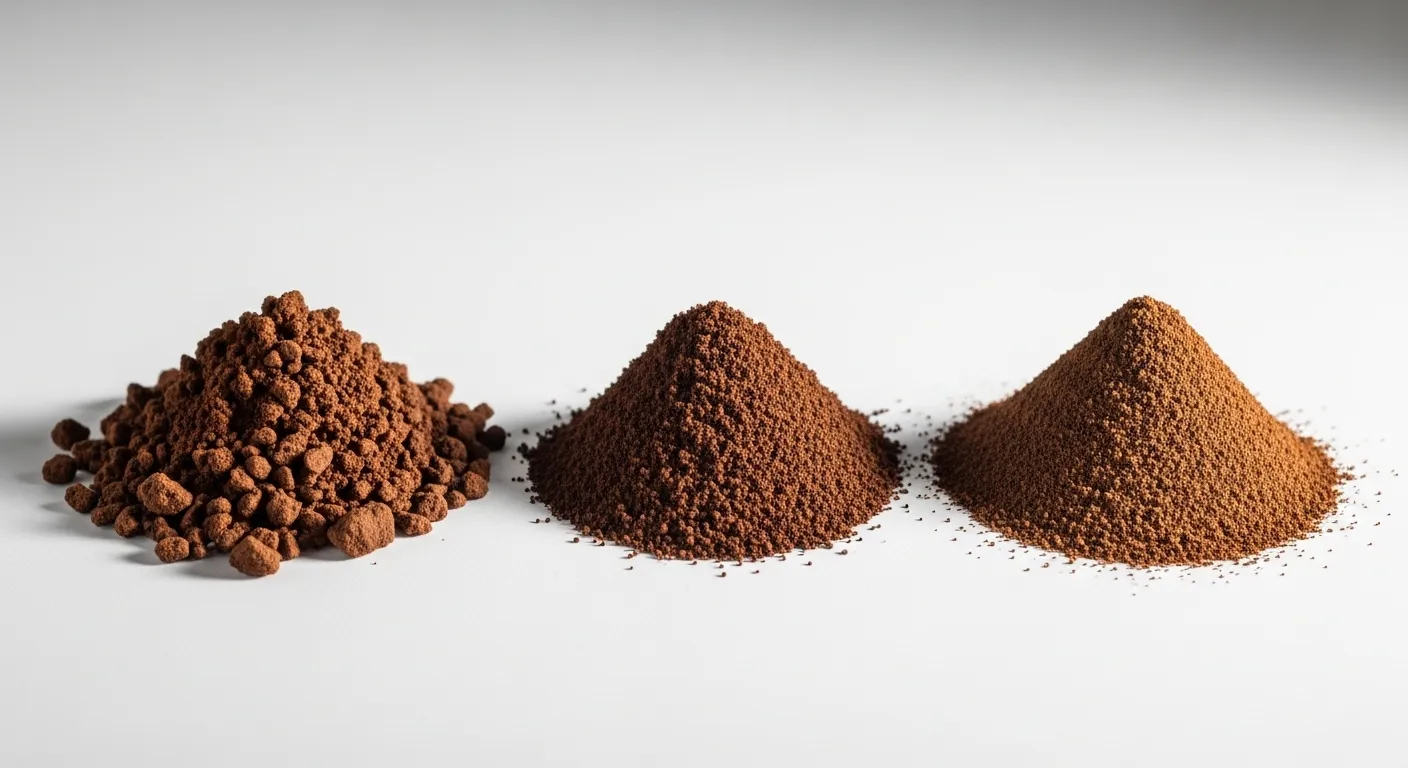
Mastering extraction doesn’t require expensive gadgets; it requires controlling these five environmental factors during the brew.
1. Grind Size (The Most Important Variable)
Grind size controls the total surface area exposed to water. A Fine grind creates more contact surface, leading to faster extraction. A Coarse grind has less surface area, slowing the process down.
Practical rule: Espresso requires a very fine grind due to short contact time. French press requires a coarse grind due to long contact time. If your coffee is sour, grind finer. If it’s bitter, grind coarser.
2. Brew Time
The longer the water is in contact with the coffee, the more it extracts. Time and grind size work in tandem. If you use a fine grind, you must use a shorter time.
Typical ranges: Espresso (25–35 seconds), Pour-over (2–4 minutes), French press (4 minutes), Cold brew (12–24 hours).
3. Water Temperature
Temperature affects the speed of the chemical reaction. The ideal range is 195–205°F (90–96°C). Lower temperatures extract very slowly (leading to sourness), while higher temperatures extract aggressively (bringing out bitterness). Note: Boiling water is rarely ideal for specialty light roasts.
4. Coffee-to-Water Ratio
Ratio determines the concentration (strength) and the capacity of the water to hold dissolved solids. Common starting points: Pour-over (1:16 ratio), French press (1:15), Espresso (1:2 yield ratio). Too little water leads to under-extraction; too much leads to over-extraction as the “fresh” water continues to pull compounds from spent grounds.
5. Water Chemistry
Water minerals directly affect extraction efficiency. Magnesium and Calcium are the main workers that dissolve flavor. Poor water chemistry (too soft or too hard) can cause flat taste, sour espresso, or inconsistent results every morning. Many problems blamed on equipment are actually water issues.
How to Diagnose Extraction Problems Quickly
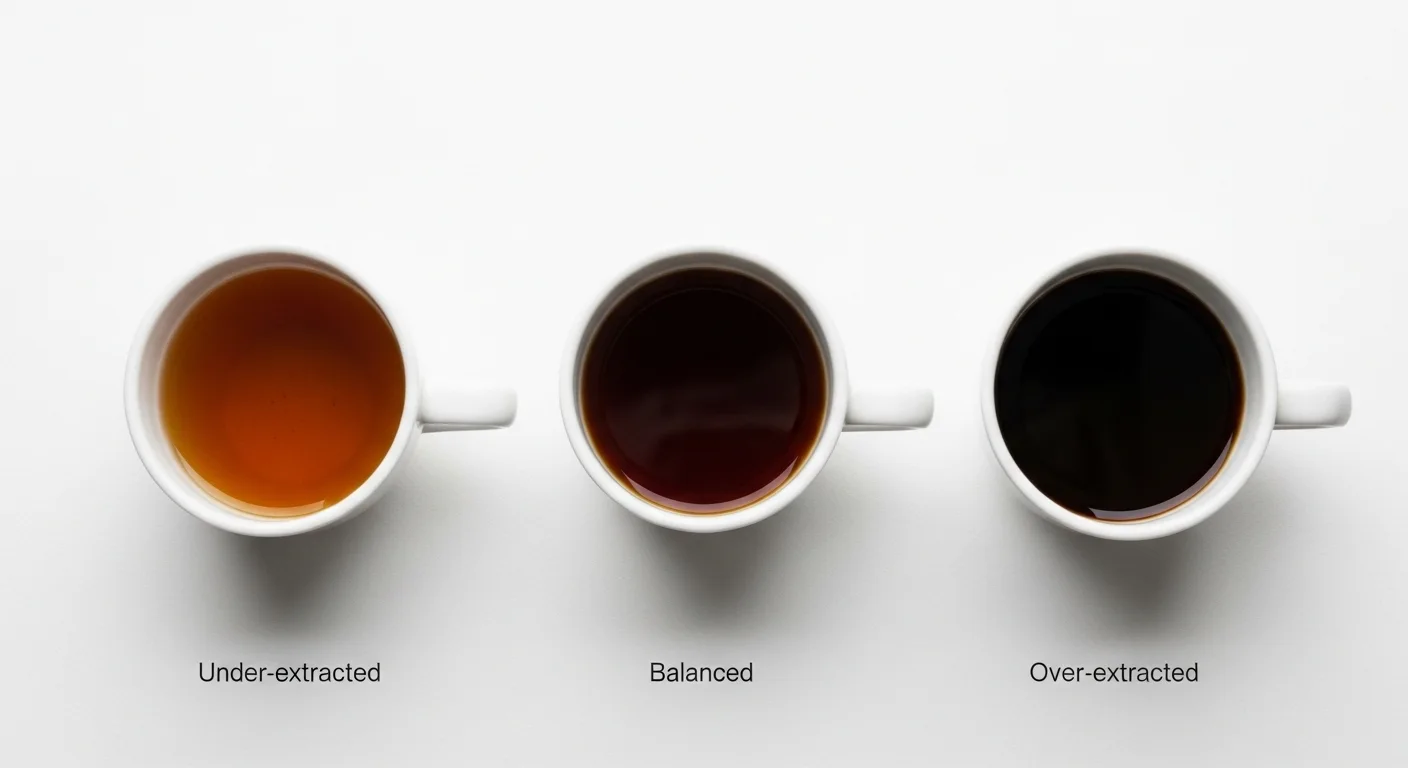
Use your taste buds as your main diagnostic tool. Always change only one variable at a time so you know what fixed the problem.
| Taste Problem | Likely Cause | Fix |
|---|---|---|
| Sour / Sharp | Under-extraction | Grind finer / Increase temp |
| Bitter / Harsh | Over-extraction | Grind coarser / Lower temp |
| Weak / Watery | Low total extraction | Increase coffee dose |
| Harsh Finish | Too much extraction | Shorten brew time |
Extraction Differences by Brew Method
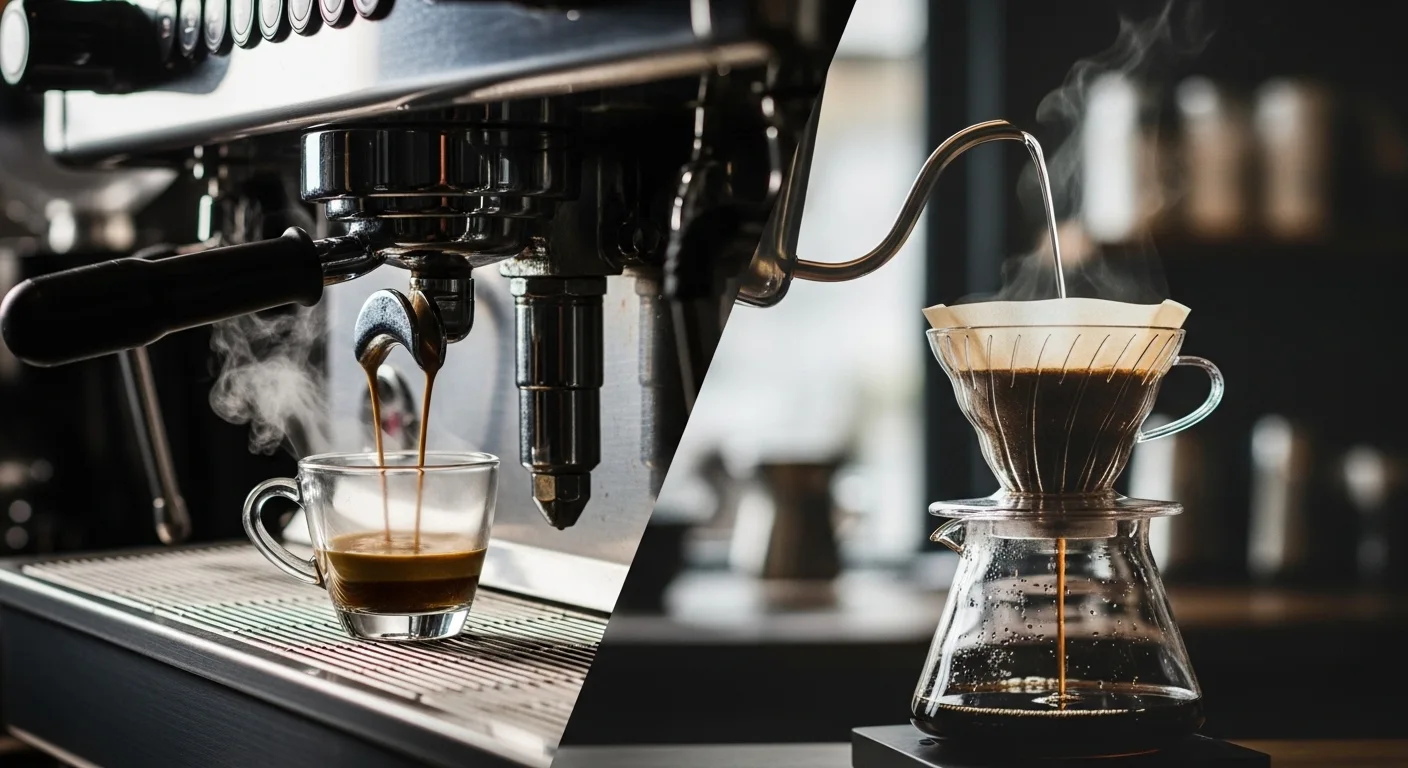
While the chemistry remains the same, the physics of each brewing style changes how variables interact.
Espresso Extraction
Uses 9 bars of pressure to force extraction at high speed. Small adjustments in grind size dramatically change the taste. Base for all milk drinks.
Espresso Guide →Pour-Over Extraction
Relies on gravity and manual technique. Offers high clarity and flavor separation. Highly sensitive to water chemistry and pouring precision.
Immersion Extraction
Coffee is fully submerged (French Press). Results in a fuller body and more forgiving profile as extraction is more uniform across all particles.
Common Extraction Myths & Mistakes
- ❌ Mistaking Strength for Extraction: Strength is how concentrated the coffee is; Extraction is how well flavors were dissolved. You can have a “strong” coffee that is under-extracted (salty/sour) or “weak” coffee that is over-extracted (bitter).
- ❌ The Golden Range Trap: Professionals aim for an 18–22% extraction yield. While scientific, you don’t need expensive refractometers to find it. If your coffee is sweet and smooth, you have achieved the golden range.
- ❌ Chasing Gear Instead of Knowledge: Many buy new grinders or machines to fix bad taste. Improved extraction understanding usually fixes flavor immediately for free. Technique outperforms equipment in most cases.
Frequently Asked Questions
How do I know if I need to grind finer?
If your coffee consistently tastes sour, sharp, or salty, and feels thin on the tongue, your water is passing through too quickly. Grinding finer increases resistance and slows down the brew.
Does the roast level affect extraction?
Yes. Darker roasts are more porous and extract much faster than light roasts. You typically need lower water temperatures and coarser grinds for dark roasts to avoid bitterness.
Can I over-extract with cold brew?
It is difficult but possible. Because cold water is a weak solvent, it takes hours to pull flavor. However, after 24 hours at room temperature, even cold water can pull woody, bitter notes from the beans.
Beginner Extraction Recipe (Works Everywhere)
If you want a reliable starting point to practice your extraction skills:
- Fresh Beans: Use coffee roasted 7–21 days ago.
- Grind Timing: Grind your beans immediately before brewing.
- Water Temp: Use filtered water around 93°C (199°F).
- Ratio: Start with a 1:16 ratio (1g coffee per 16g water).
- Time Baseline: Aim for a 3-minute brew for pour-over.
- Final Adjustment: If it’s sour, grind finer next time. If bitter, grind coarser.
Master Your Coffee Ritual
Consistency is the key to great coffee. Visit our hub for more expert tips on extraction, water optimization, and equipment maintenance.

