
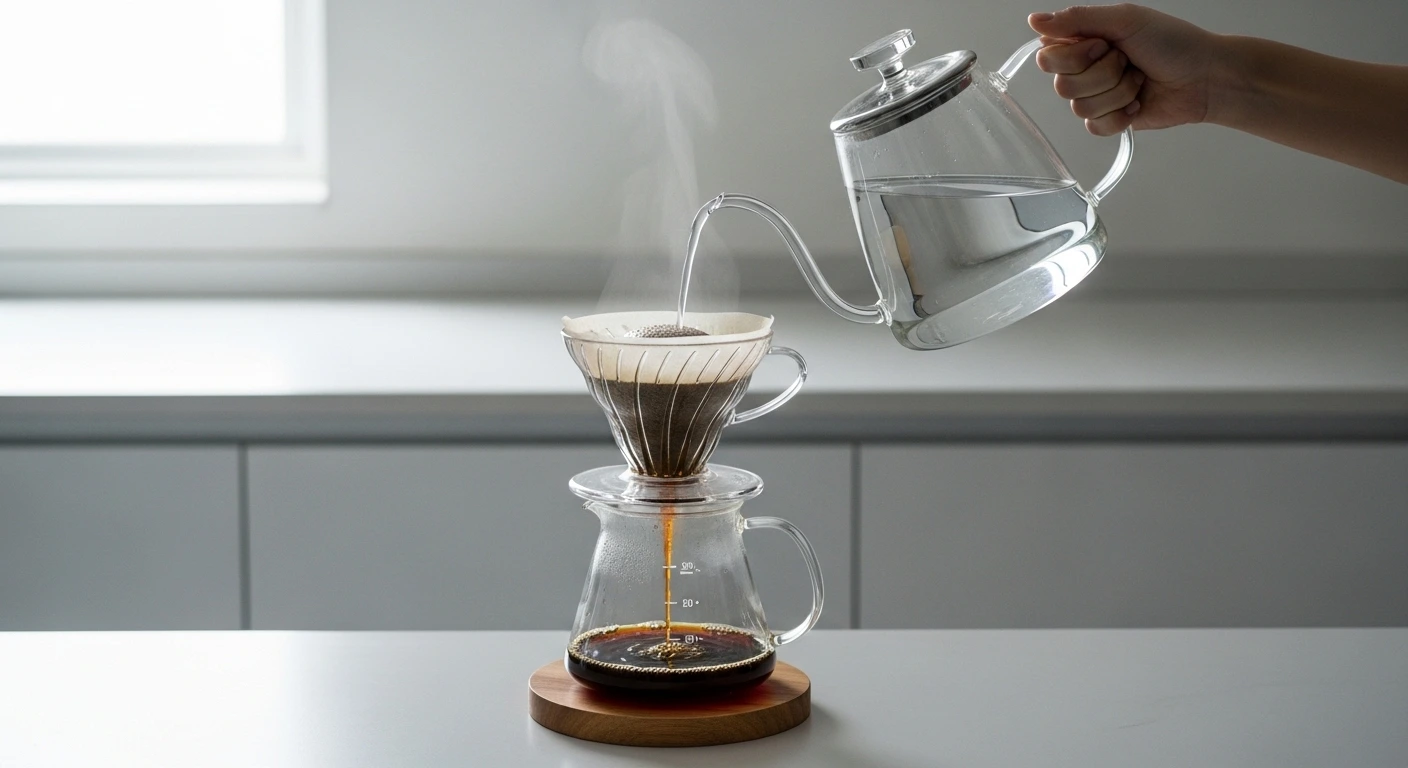
Coffee Water Chemistry Guide (2026): How Water Minerals Transform Your Coffee Flavor
Water is the most overlooked variable in home brewing — yet it represents nearly 98% of your cup of coffee. Many home baristas invest hundreds or even thousands of dollars in grinders and espresso machines while unknowingly brewing with water that prevents great extraction.
This coffee-water-chemistry guide explains how minerals influence flavor, extraction, and consistency, and how you can optimize your water at home without complicated laboratory tools. Once you understand water chemistry, you unlock one of the biggest upgrades possible in coffee quality.
Quick Answer
Ideal brewing water should have a TDS of 75–150 ppm, Hardness (Calcium & Magnesium) of 50–100 ppm, and Alkalinity of 30–50 ppm. Pure distilled water results in thin, sour coffee because it lacks minerals to bind with flavor, while water that is too hard creates chalky bitterness and causes scale damage. For most baristas, adding mineral packets like Third Wave Water to distilled water is the simplest path to perfect consistency.
Why Water Chemistry Matters More Than Most Coffee Gear
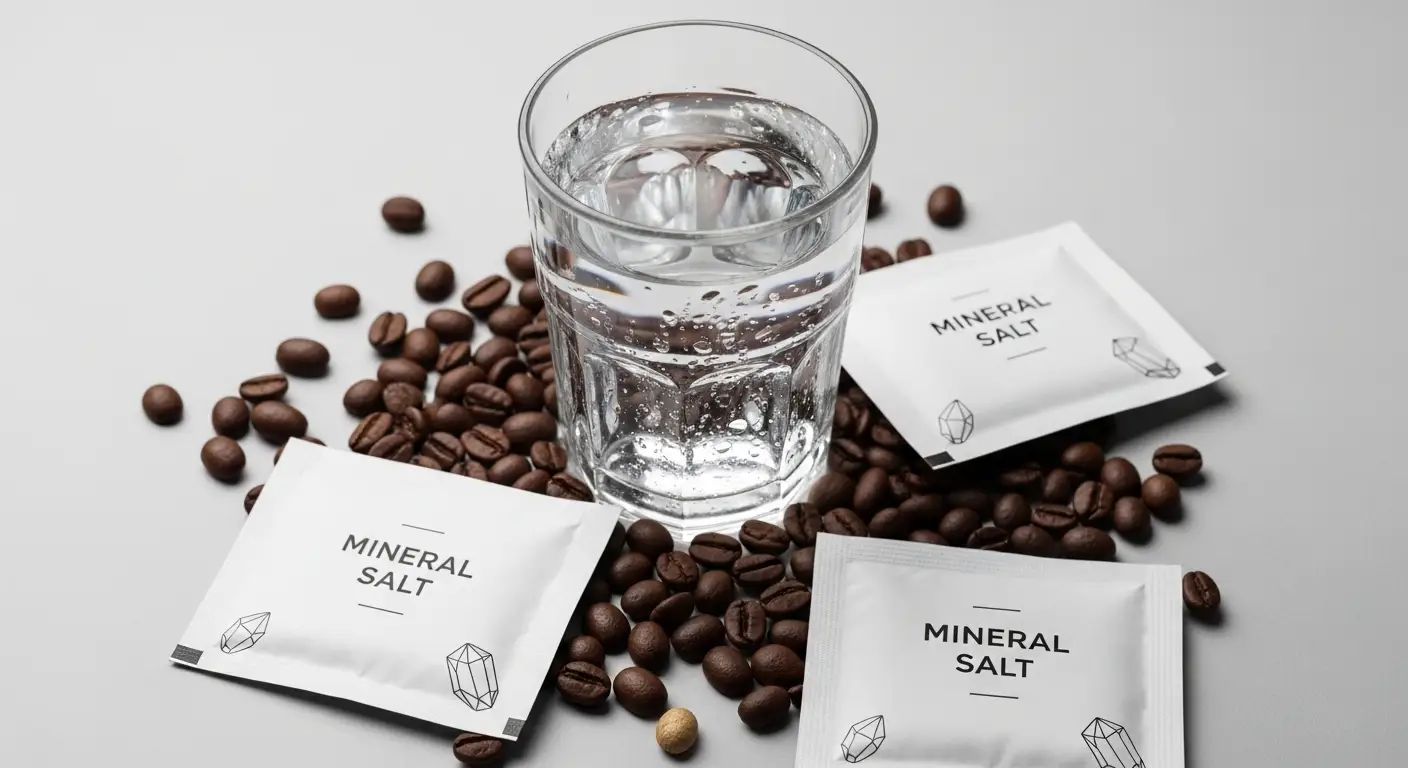
Coffee extraction is a chemical process. During brewing, water acts as a solvent, dissolving acids, sugars, oils, and aromatic compounds from ground coffee. The problem is simple: not all water dissolves coffee compounds equally.
- Too pure water: Extracts poorly and tastes thin/lifeless.
- Wrong minerals: Creates localized bitterness or dulls vibrant acidity.
- Too hard water: Damages machines with scale and masks bean complexity.
Many common brewing problems like sour espresso or flat pour-overs are actually water problems. Understanding water chemistry helps stabilize extraction before you touch your grinder settings or brew ratios. Learn more in our Coffee Extraction Explained Simply guide.
The Three Key Elements of Coffee Water Chemistry
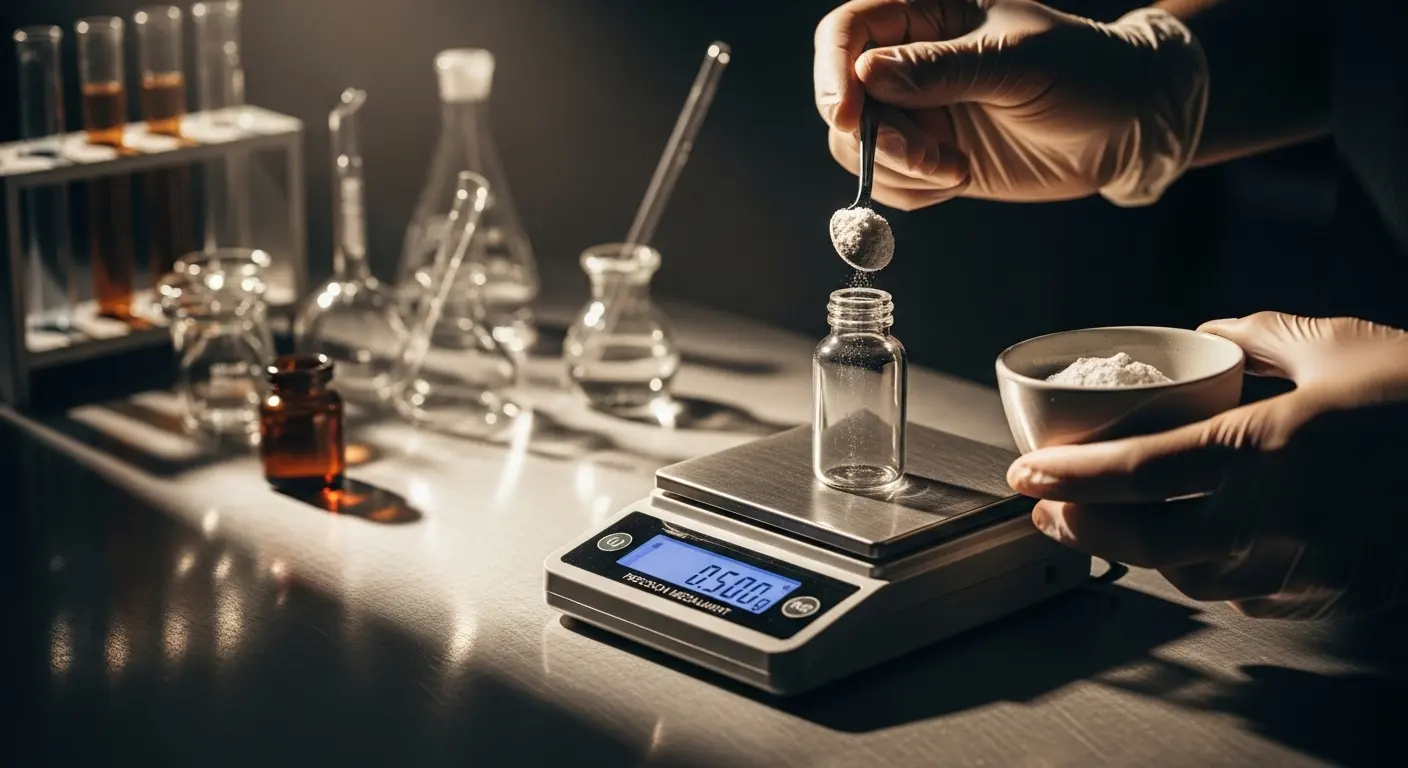
Water composition sounds complicated, but for coffee brewing it comes down to three main components that dictate how flavor is pulled from the bean.
1. Total Dissolved Solids (TDS)
TDS measures how many minerals are dissolved in water, usually expressed in parts per million (ppm). Typical ranges include Distilled (~0 ppm), Soft (20–70 ppm), Ideal (75–150 ppm), and Hard (200+ ppm). Distilled or ultra-filtered water lacks the mineral “hooks” needed for extraction, often resulting in coffee that tastes thin and sour.
2. Hardness (Calcium & Magnesium)
Hardness refers primarily to calcium and magnesium ions. These minerals are beneficial because they help pull flavor compounds from coffee grounds:
- Magnesium: Enhances sweetness and fruit clarity; improves extraction efficiency.
- Calcium: Adds body, structure, and supports balanced extraction.
Too much hardness, however, produces chalky bitterness and scale buildup inside expensive espresso machines.
3. Alkalinity (Buffering Capacity)
Alkalinity measures bicarbonates in water — compounds that neutralize acids. This directly affects perceived brightness. Low alkalinity leads to bright, acidic coffee (risk of sourness), while high alkalinity mutes acidity entirely, resulting in a flat flavor profile. Balanced alkalinity allows acidity to shine without becoming sharp.
Ideal Composition Targets (SCA Standards)
| Parameter | Ideal Range |
|---|---|
| TDS | 75–150 ppm |
| Hardness | 50–100 ppm |
| Alkalinity | 30–50 ppm |
| pH | 6.5–7.5 |
Espresso often benefits from slightly higher mineral content to handle pressure extraction, while pour-over performing best with moderate hardness. Learn the difference in Espresso vs Drip Coffee.
How Poor Water Quality Affects Flavor
Sour Coffee That Won’t Go Away
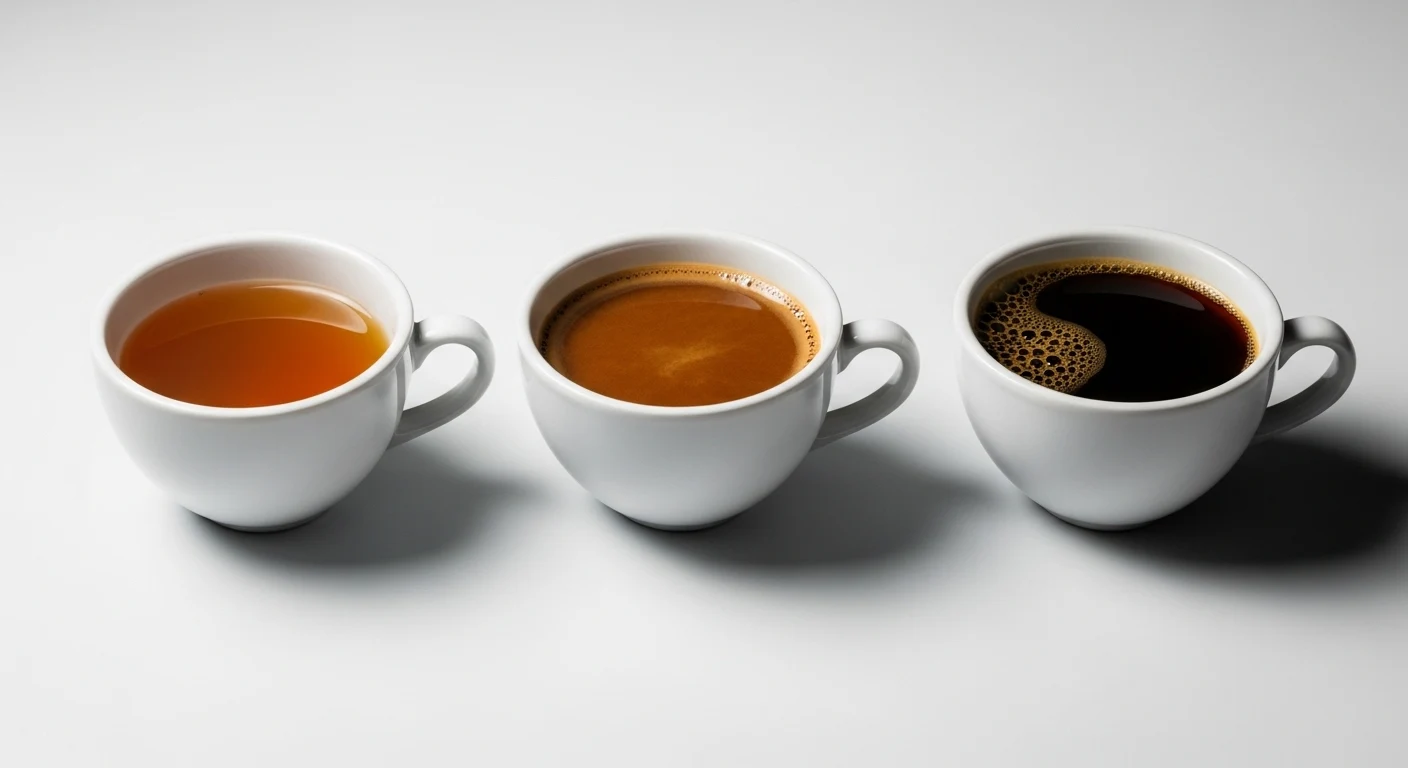
If grind adjustments don’t fix sour espresso, water may lack buffering capacity or minerals. Low mineral water extracts acids faster than sugars, creating an immediate imbalance. Read more in Why Your Espresso Tastes Sour (Fix Guide).
Bitter, Muddy, or Flat Coffee
Excess bicarbonates suppress acidity and exaggerate bitter compounds, leading to a heavy mouthfeel and loss of origin character. High alkalinity can cancel brightness entirely. Many people mistake this for “bad beans” when it is actually poor water chemistry.
The Best Water Solutions for Home Baristas
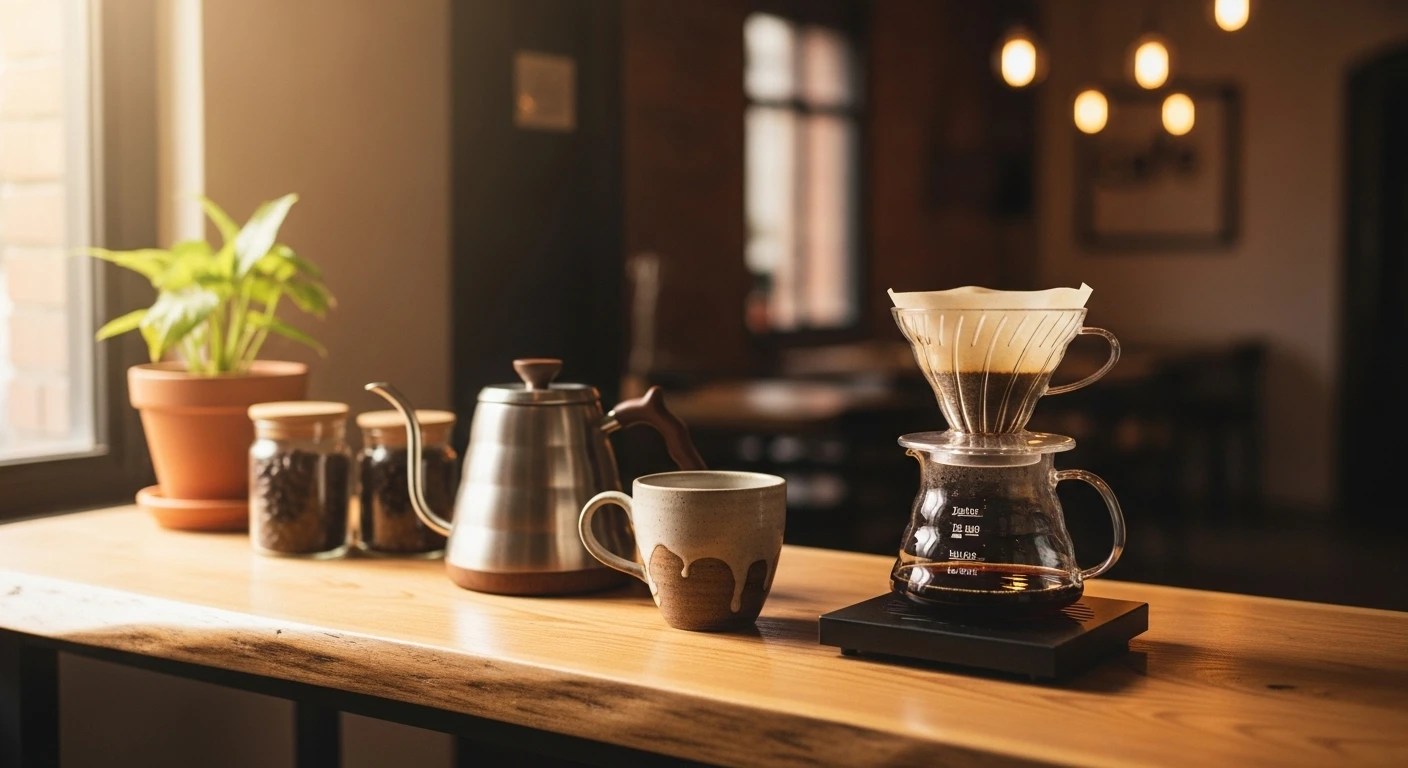
Option 1 — Mineral Packets (Simplest)
Products like Third Wave Water add precise mineral blends to distilled water. It ensures consistent results every day with zero testing required and machine-safe levels. Ideal for beginners.
Option 2 — Mixing Water Recipes
Advanced users often mix distilled water with tap water (e.g., 70% distilled, 30% tap). This reduces hardness while maintaining some minerals, though results vary depending on local water composition.
Option 3 — Full Control (Advanced)
Enthusiasts use Reverse Osmosis (RO) systems, mineral concentrates, and digital TDS meters. This allows tailoring water specifically to light roast coffees to emphasize fruit notes. Master your machine with our Ultimate Home Espresso Guide 2026.
Water Chemistry by Brew Method
- Espresso: Requires stable mineral content for pressure extraction. Key needs: moderate hardness, controlled alkalinity, and scale prevention.
- Pour Over (V60, Chemex): Highly sensitive. Best with lower alkalinity and medium hardness to produce clarity and distinct flavor notes.
- Immersion (French Press): More forgiving due to longer contact time, but still benefits from filtered water for improved clarity.
- Cold Brew: Less sensitive to acidity balance but strongly affected by mineral heaviness; hard water creates overly heavy concentrates.
Machine Health & Scaling
Water chemistry affects not only taste but equipment lifespan. Hard water causes scale buildup inside boilers and valves, leading to temperature instability, pressure inconsistency, and expensive repairs. Balanced mineral water prevents both corrosion and scaling. Note: many manufacturers void warranties when scale damage occurs.
👉 Maintenance Tips: Protecting your investment starts with water. Check the setup guide for more info.
Common Water Chemistry Mistakes
- ❌ Using Distilled Water Alone: Leads to weak extraction, poor flavor, and potentially corrosive machine damage.
- ❌ Ignoring Local Water Differences: Water quality varies dramatically between cities; never assume yours is “fine.”
- ❌ Over-Filtering: Removing all minerals via RO without remineralizing kills extraction efficiency.
- ❌ Chasing Gear Over Water: Water improvements often outperform expensive upgrades. See our Best Espresso Machine Guide.
Frequently Asked Questions
How do I test my water at home?
You do not need lab equipment. Use a TDS meter (cheap and accurate), aquarium hardness test kits, or municipal reports available online.
Is Brita filtered water good for coffee?
It removes chlorine and off-flavors, which is a great start, but it does not fully control mineral balance for specialty coffee extraction.
Why does hard water make coffee bitter?
Excessive minerals exaggerate the extraction of bitter compounds and suppress the natural acidity that provides balance.
The Future of Coffee Water (2026)
In 2026, water customization is becoming mainstream. Emerging trends include smart filtration systems with mineral adjustment, app-controlled profiles, and bean-specific mineral recommendations. As specialty coffee knowledge spreads, water chemistry is becoming the defining factor separating casual brewing from café-quality results at home.
Master Your Water Ritual
Consistency is the key to great coffee. Visit our hub for more expert tips on water optimization and maintenance.

