
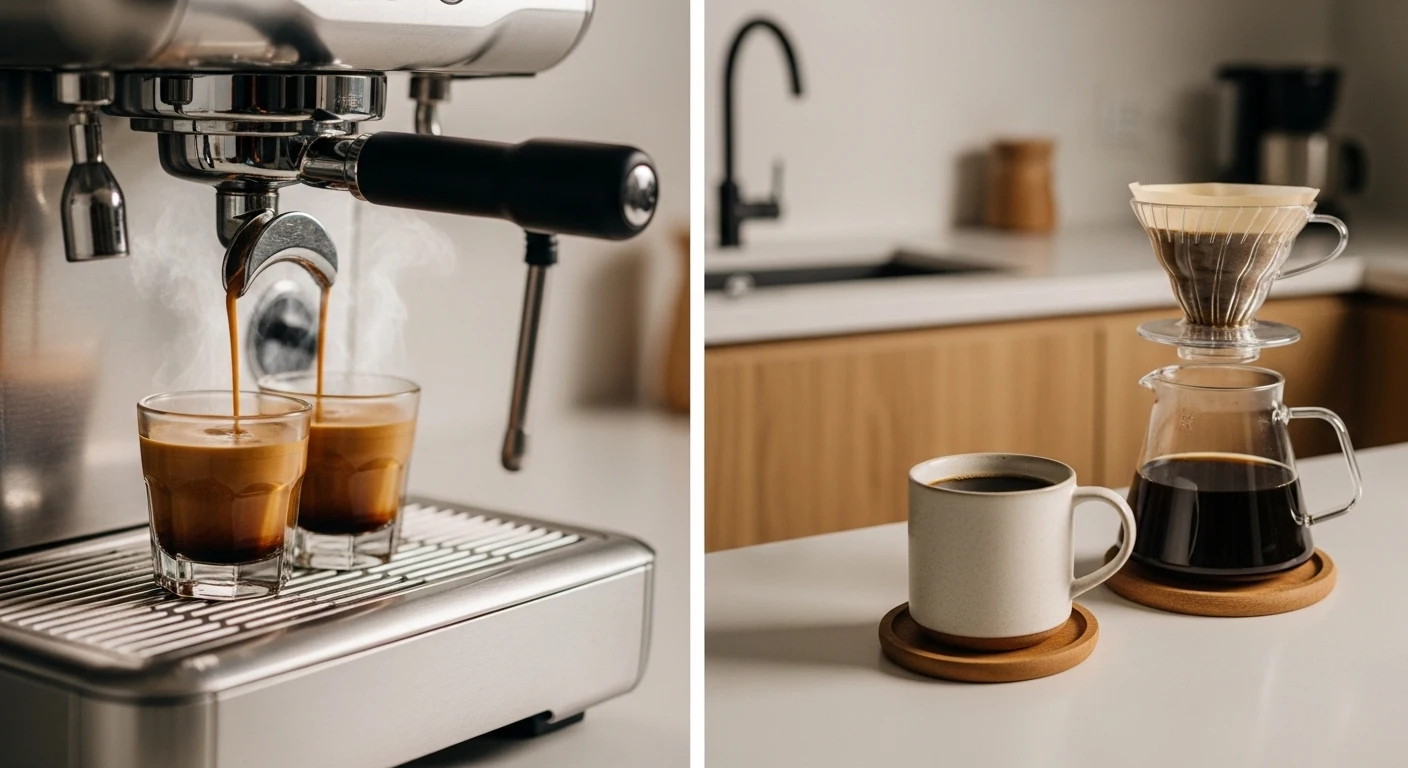
Espresso vs Drip Coffee: Which Brewing Method Is Right for You?
Coffee drinkers eventually face one of the most common decisions in home brewing: choosing between espresso and drip coffee. Although both beverages come from the same coffee beans, the brewing method dramatically changes flavor intensity, texture, caffeine delivery, preparation time, and even the daily ritual surrounding coffee.
Understanding espresso vs drip coffee is essential for anyone building a home coffee setup or trying to improve their daily brewing experience. Each method serves a different purpose, appeals to different personalities, and fits different lifestyles. Some people prioritize convenience and consistency, while others enjoy precision, experimentation, and café-style drinks at home.
This complete guide explains how espresso and drip coffee differ in brewing science, taste profile, caffeine content, equipment requirements, cost, learning curve, and which option is best depending on your goals.
Quick Answer
The fundamental difference lies in pressure vs. gravity. Espresso uses 9 bars of pressure and a very fine grind to create a concentrated 30ml shot in 30 seconds. Drip coffee uses gravity and medium grounds to produce a larger cup in 5 minutes. While espresso is more intense per ounce, drip coffee usually contains more total caffeine per serving because the portion size is significantly larger.
What Is Espresso?
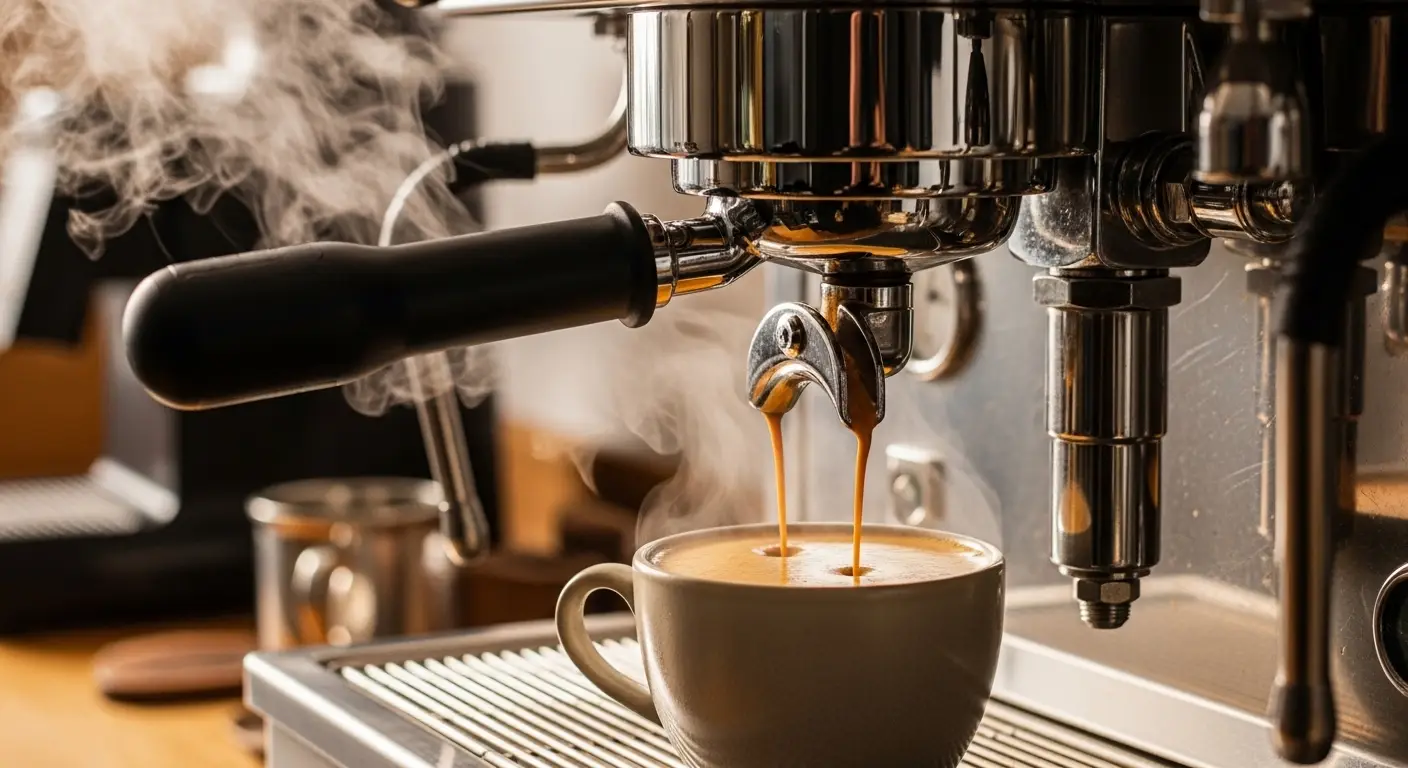
Espresso is a concentrated coffee brewed by forcing hot water through finely ground coffee under high pressure, typically around nine bars. The process lasts about 25 to 30 seconds and produces a small but highly intense shot topped with crema — a golden foam created from emulsified oils and trapped gases.
Unlike immersion or gravity brewing methods, espresso extraction happens extremely quickly. Because of this speed, every variable matters: grind size, water temperature, pressure stability, and timing all influence flavor. Espresso brewing extracts oils and soluble compounds more aggressively than drip coffee, resulting in a dense texture and complex flavor concentration.
- Brew time: 25–30 seconds
- Grind size: Very fine
- Water pressure: High (9 bars)
- Serving size: Small (25–40 ml)
- Texture: Thick and velvety
- Flavor intensity: Strong and layered
For a deeper understanding of how pressure and grind size affect flavor, read: Coffee Extraction Explained Simply.
What Is Drip Coffee?
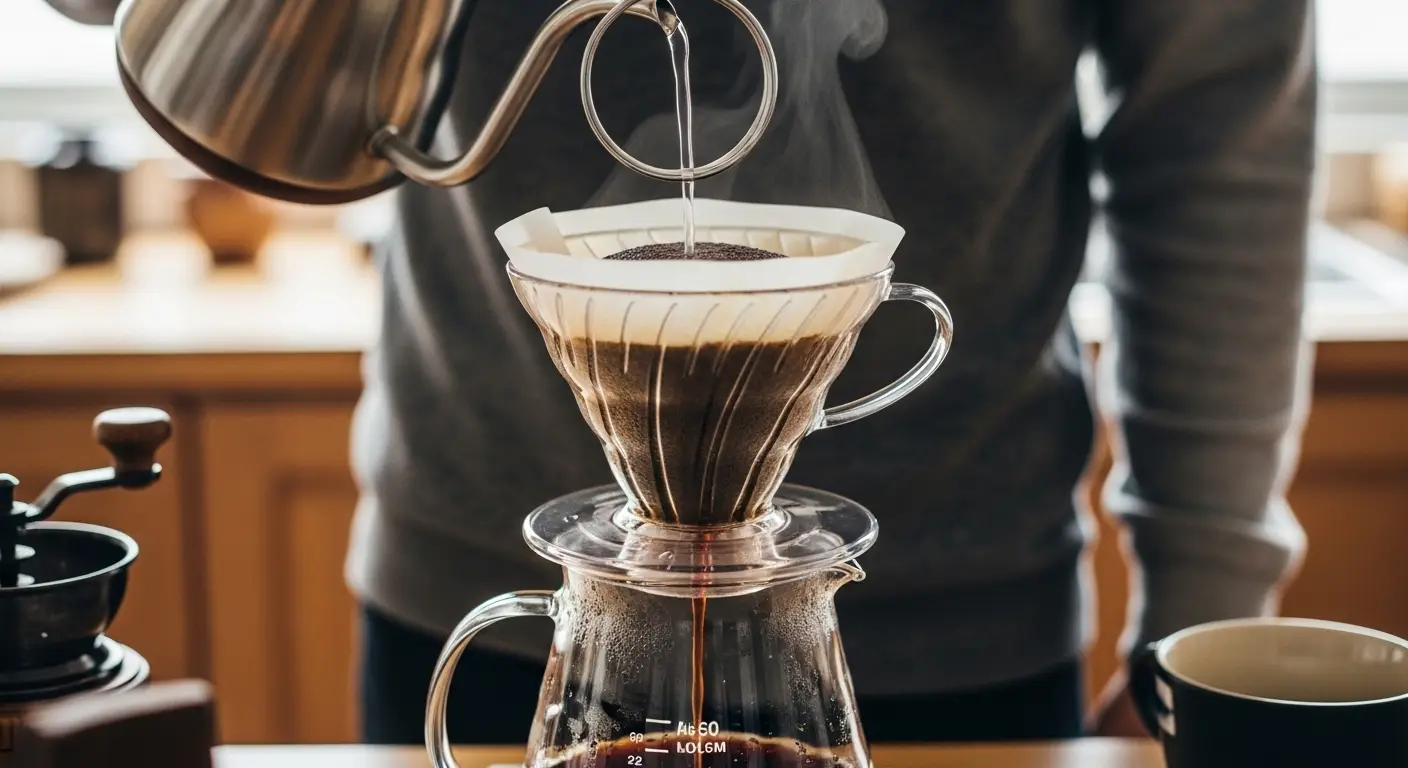
Drip coffee, also known as filter coffee, is brewed when hot water flows slowly through medium-ground coffee held in a filter. Gravity pulls the brewed coffee into a carafe or mug below, creating a clean and balanced beverage. The slower extraction process allows water to dissolve flavors gradually, emphasizing clarity instead of intensity.
- Brew time: 4–6 minutes
- Grind size: Medium
- Pressure: None (gravity only)
- Serving size: Large cups or full carafe
- Texture: Light and clean
- Flavor intensity: Moderate and smooth
Because of its simplicity, drip coffee remains the most widely used brewing method worldwide. Explore how drip machines compare with other devices in our guide: Types of Coffee Makers Explained.
Brewing Science Explained
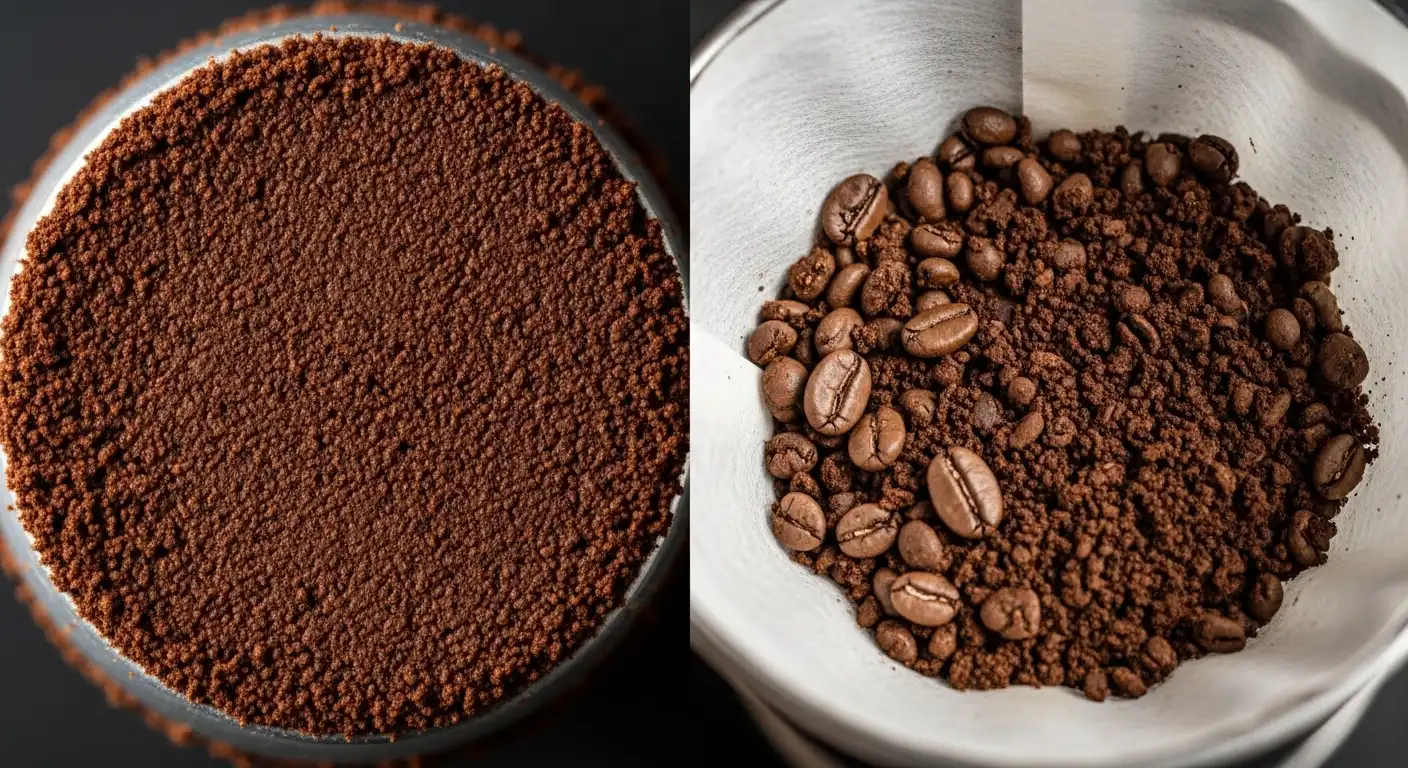
The fundamental difference between espresso vs drip coffee lies in extraction mechanics. Espresso uses pressure to force water through compacted grounds quickly, while drip coffee relies on time and gravity. These differences change how flavor compounds dissolve.
Pressure extraction pulls more oils and microscopic particles into the cup, creating espresso’s signature richness. Drip coffee filters out many oils, producing a cleaner taste. Understanding extraction balance is critical because poor extraction leads to sour or bitter flavors.
| Factor | Espresso | Drip Coffee |
|---|---|---|
| Extraction force | Pressure | Gravity |
| Brew speed | Fast | Slow |
| Grind size | Fine | Medium |
| Concentration | High | Moderate |
| Body | Heavy | Light |
See our detailed guide on troubleshooting: Why Your Espresso Tastes Sour (Fix Guide).
Flavor Profile Differences
Flavor perception changes dramatically between these methods. Espresso emphasizes strength and texture, while drip highlights nuance and drinkability.
Espresso delivers intensity. Because the beverage is concentrated, flavors feel amplified and immediate.
- Bold and punchy taste
- Heavy mouthfeel
- Lingering aftertaste
- Strong aroma
- Slight natural bitterness
Drip coffee focuses on clarity and drinkability. Subtle flavor notes become easier to recognize.
- Smooth and balanced profile
- Cleaner finish
- More noticeable origin flavors
- Lower perceived bitterness
- Easy sipping over longer periods
Caffeine Content: Which One Is Stronger?
One of the biggest misconceptions is that espresso contains more caffeine than drip coffee. The truth depends on how you measure it. Per ounce, espresso is stronger. Per serving, drip coffee usually delivers more caffeine overall.
| Drink | Average Serving | Approx. Caffeine |
|---|---|---|
| Espresso Shot | 30 ml | 60–75 mg |
| Drip Coffee | 240 ml | 95–150 mg |
Espresso provides a faster caffeine intake due to concentration, while drip coffee offers sustained consumption over time.
Check our curated list of high-performance machines for beginners.
Best Espresso Machines Under $1000 →Equipment Needed for Each Method
Choosing between espresso and drip coffee also means choosing different levels of equipment investment and setup complexity.
Espresso Setup
A basic home espresso setup requires several specialized tools to ensure consistency:
- Espresso machine: Capable of maintaining stable pressure.
- Burr grinder: High-precision is required for fine grounds.
- Tamper: To compact the coffee bed evenly.
- Scale: Essential for measuring dose and yield.
- Milk pitcher: For lattes and milk-based drinks.
👉 Featured Guide: Single Dose Grinder Guide
Drip Coffee Setup
Drip coffee setups are much simpler and often more affordable to maintain:
- Automatic machine: Or a manual pour-over device.
- Filters: Paper (for clarity) or reusable metal.
- Basic grinder: Medium grind is less demanding on gear.
- Carafe: To collect the brewed coffee.
👉 Compare Machines: Types of Coffee Makers Explained
Learning Curve & Ease of Use
Espresso: The Craft of Precision
Espresso requires adjusting variables such as grind size, dose amount, extraction time, and pressure consistency. Small changes can dramatically alter flavor. Beginners often experience inconsistent results before mastering the process. However, this complexity is also why many people fall in love with espresso — it feels like a craft or hobby rather than a routine task. [Imagem de tirar um shot de espresso com precisão]
Drip Coffee: Straightforward & Reliable
Drip coffee is straightforward: add coffee, add water, and press start. Most machines handle temperature and timing automatically, making drip coffee ideal for busy mornings or households with multiple coffee drinkers. Drip coffee wins in convenience, while espresso rewards mastery. [Imagem de uma cafeteira de filtro em funcionamento]
Lifestyle Differences: Ritual vs Convenience
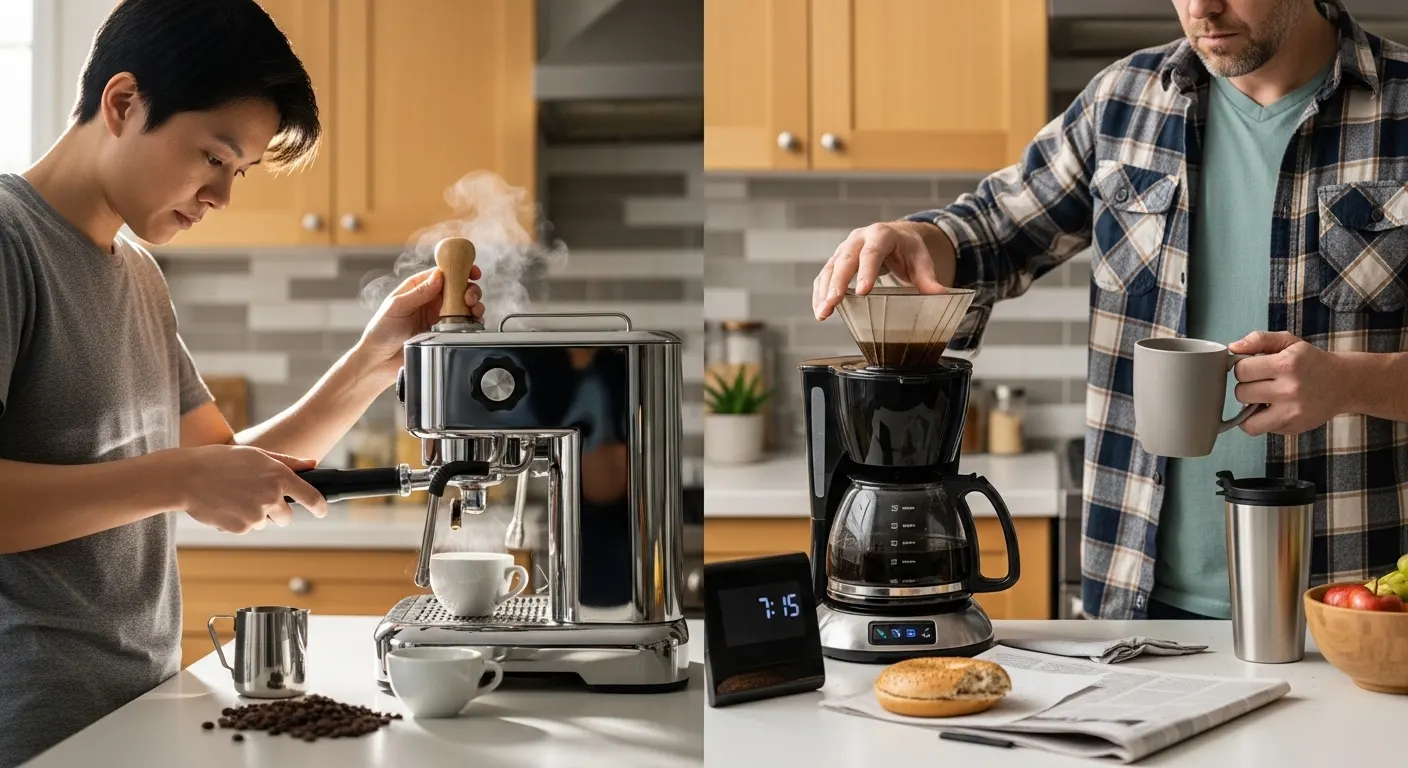
Appeals to people who enjoy hands-on brewing, experimentation, and café-style drinks. For many enthusiasts, making espresso becomes a relaxing daily ritual involving technical skill development.
👉 Read More: Ultimate Home Espresso Guide 2026
Suits people who value speed, simplicity, and consistency. It allows for larger servings and requires minimal cleanup, integrating seamlessly into busy schedules without the need for intense focus.
Common Extraction Mistakes
- ❌ Using the wrong grind: Espresso requires a fine grind. Using a drip grind in an espresso machine results in a weak, sour, and watery shot.
- ❌ Incorrect water chemistry: Both methods suffer if the water lacks essential minerals. Check our Water Chemistry Guide.
- ❌ Ignoring maintenance: Old coffee oils build up and ruin the flavor. Regular cleaning is mandatory to avoid sour or bitter tastes.
Explore More Coffee Guides
Don’t stop here! Visit our complete hub for more expert tips, side-by-side comparisons, and updated brewing recommendations.

