
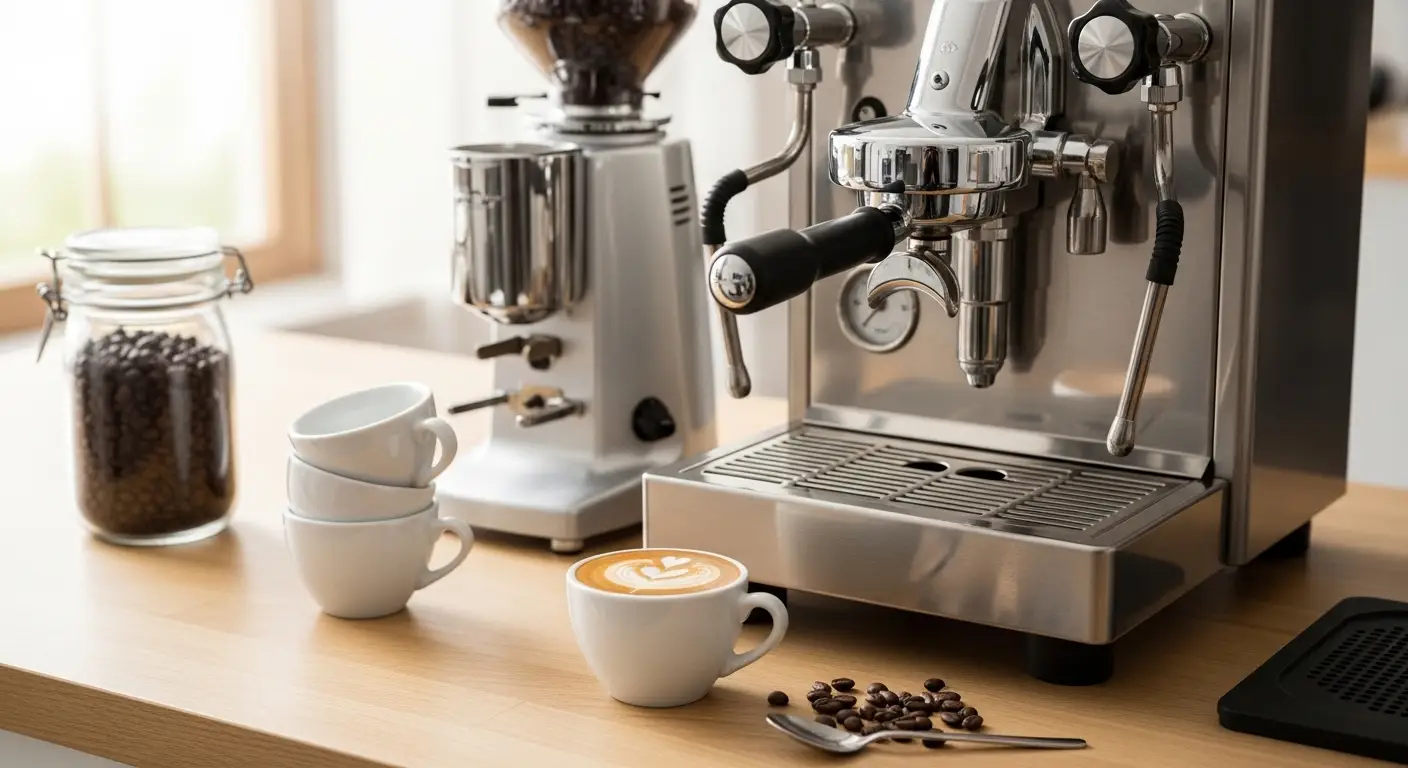
Ultimate Home Espresso Guide 2026
The home espresso guide you need in 2026 looks very different. Thanks to smarter machines and precision grinders, anyone can now create café-quality espresso at home.
Espresso vs Drip Coffee →Quick Answer
In 2026, home espresso has evolved into a lifestyle hobby that blends science, ritual, and design. It is achieved by forcing pressurized water through fine grounds, allowing enthusiasts to focus on consistency, flavor clarity, and personalization.
What Is Espresso?
Espresso is a concentrated coffee brewed by forcing hot water through finely ground coffee under pressure. It depends on precision variables working together: grind size, water temperature, pressure, brew ratio, and extraction time.
When balanced correctly, it produces:
- Body: Liquid coffee
- Crema: Golden foam
- Aroma: Volatile compounds
Essential Home Espresso Equipment
A successful home espresso setup depends more on balance than price. The three most important components are the machine, grinder, and workflow tools.
1. The Espresso Machine
Manual / Semi-Auto
Maximum control and learning-focused. Requires skill development.
Assisted Machines
Built-in guidance systems for consistent results. Ideal for beginners.
Superautomatic
One-button brewing. Convenience prioritized with less manual control.
2. The Grinder (The Most Important Upgrade)
The grinder influences quality more than the machine. Espresso requires uniform particle size to prevent uneven extraction.
3. Essential Accessories
Small tools help prevent channeling and uneven extraction:
- • Precision scale with timer
- • WDT tool (distribution needles)
- • Level tamper
- • Knock box & Bottomless portafilter
Understanding Espresso Extraction
Espresso brewing follows a simple principle: Balanced extraction = balanced flavor.
Typical Starting Parameters:
- Dose: 18g
- Yield: 36g
- Time: 25–30s
Step-by-Step Home Espresso Workflow
Common Beginner Mistakes
- ❌ Grinding Too Coarse or Fine: Causes sour or bitter shots. Adjust gradually.
- ❌ Ignoring Water Quality: Tap water minerals vary widely and can distort flavor.
- ❌ Changing Multiple Variables: Makes improvement impossible to track.
- ❌ Expecting Instant Perfection: Espresso improves through iteration and observation.
Choosing the Right Beans
Fresh specialty coffee produces better espresso than dark supermarket blends. Look for roast dates within 2–4 weeks and medium to medium-dark roasts.
Explore curated options matched to your brewing preferences:
Best Coffee Subscription USA →Functional Coffee and Modern Trends
In 2026, espresso culture overlaps with wellness and cognitive performance products like adaptogens.
Building a Home Espresso Ritual
Home espresso is more than brewing coffee — it becomes a daily ritual combining precision and relaxation. Many enthusiasts design dedicated coffee stations that reflect personal style and workflow efficiency. Consistency, experimentation, and small improvements lead to café-level results.
Frequently Asked Questions
What is the best beginner setup for home espresso?
A beginner setup should prioritize a quality grinder and a temperature-stable machine. Consistency matters more than advanced features.
How long does it take to learn espresso?
Most beginners achieve consistent results within 1–2 weeks by practicing a repeatable workflow and adjusting one variable at a time.

