
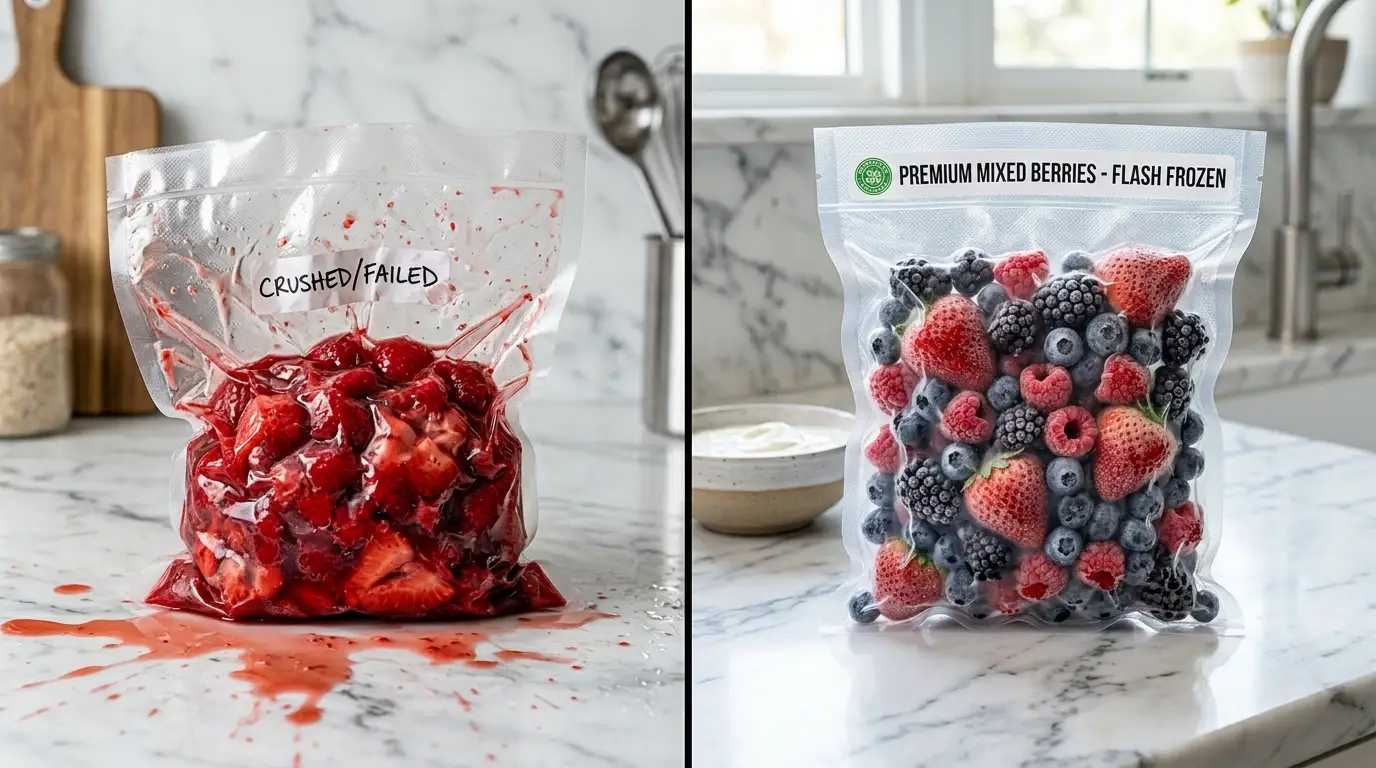
How to Vacuum Seal Delicate Fruits for Smoothies Without Crushing (2026 Guide)
Fresh berries are incredibly expensive, and unfortunately, they have one of the absolute shortest shelf lives in the entire grocery store. If you buy organic raspberries, blackberries, or strawberries in bulk to fuel your daily morning smoothie habit, you know you are in a constant, stressful race against mold and mush.
Vacuum sealing is the ultimate culinary way to lock in the nutritional value and extend the freezer life of your expensive fruit from a few mere weeks to several years. However, if you simply toss a handful of fresh, soft raspberries into a plastic bag and hit the standard “Vacuum & Seal” button on your high-powered machine, you will be met with a sudden culinary disaster. The intense atmospheric pressure of the vacuum pump will instantly crush the delicate cellular structure of the fruit, violently squeezing the juice out and turning your expensive berries into a flat, sticky puree.
Do not throw your machine away! You don’t need a different appliance; you just need a radically different prep technique. In this comprehensive guide, we break down exactly how to vacuum seal delicate fruits using the professional flash-freeze method, manual pressure controls, and hard-sided glass containers to ensure your smoothie ingredients stay perfectly whole, vibrant, and delicious.
The Quick Answer
To vacuum seal soft, delicate fruit without crushing it, you must use the Flash-Freeze Method. Lay your washed and thoroughly dried berries flat on a parchment-lined baking sheet and freeze them for 2 hours until rock-solid. Once frozen hard like marbles, transfer them to a vacuum bag and seal them safely on maximum power. If you want to store them fresh in the fridge without freezing, use your machine’s “Pulse” function to manually control the suction, or bypass plastic bags entirely by using rigid glass Mason jars.
For more expert preservation hacks and comprehensive machine reviews, explore our master directory: The Ultimate Vacuum Sealing Hub: Food Storage, Sous Vide, Mason Jars & Buying Guides (2026).
I. The Biology: Why Do Berries Crush So Easily?
Before we dive into the physical hacks, it is crucial to understand the biology of the food you are trying to preserve. Unlike a dense, muscular cut of steak or a hard block of cheddar cheese, berries are composed almost entirely of water (often over 85%) held together by incredibly fragile, microscopic plant cell walls.
When a vacuum sealer turns on, it rapidly evacuates the air from the inside of the plastic bag. As the internal air disappears, the external atmospheric pressure of your kitchen literally crushes the plastic bag inward with immense, heavy force. Because soft fruits lack the dense structural integrity to fight back against this atmospheric weight, their delicate cell walls instantly rupture and burst under the pressure.
The Oxidation Threat
When the cell walls burst and release their internal juices, two terrible things happen. First, the sugary juice is sucked directly into your machine’s heating element, which completely ruins the thermal plastic weld (leaving an air leak). Second, the ruptured cells release specific enzymes that react violently with whatever trace amounts of oxygen are left, causing the fruit to oxidize, turn brown, and lose massive amounts of its nutritional value and vitamin content.
II. The Flash-Freeze Method (The Gold Standard)
If your primary goal is long-term, multi-year deep freezer storage for your morning smoothies, the Flash-Freeze Method is the absolute only technique you need. It is a completely foolproof, professional culinary technique that guarantees your fruit will never get crushed, and more importantly, it prevents the fruit from clumping together into a single, massive, unblendable block of ice.
Step 1: The Wash and the Dry
Wash your delicate berries, sliced peaches, or bananas thoroughly to remove any dirt or pesticide residue. Crucial Warning: You must pat them completely, totally dry with a paper towel or run them through a gentle salad spinner.
Any excess surface water left on the outside of the fruit will freeze into sharp, jagged ice crystals. This surface moisture is the exact root cause of dreaded freezer burn, which destroys the texture and taste of the fruit over time.
Step 2: The Baking Sheet Tray
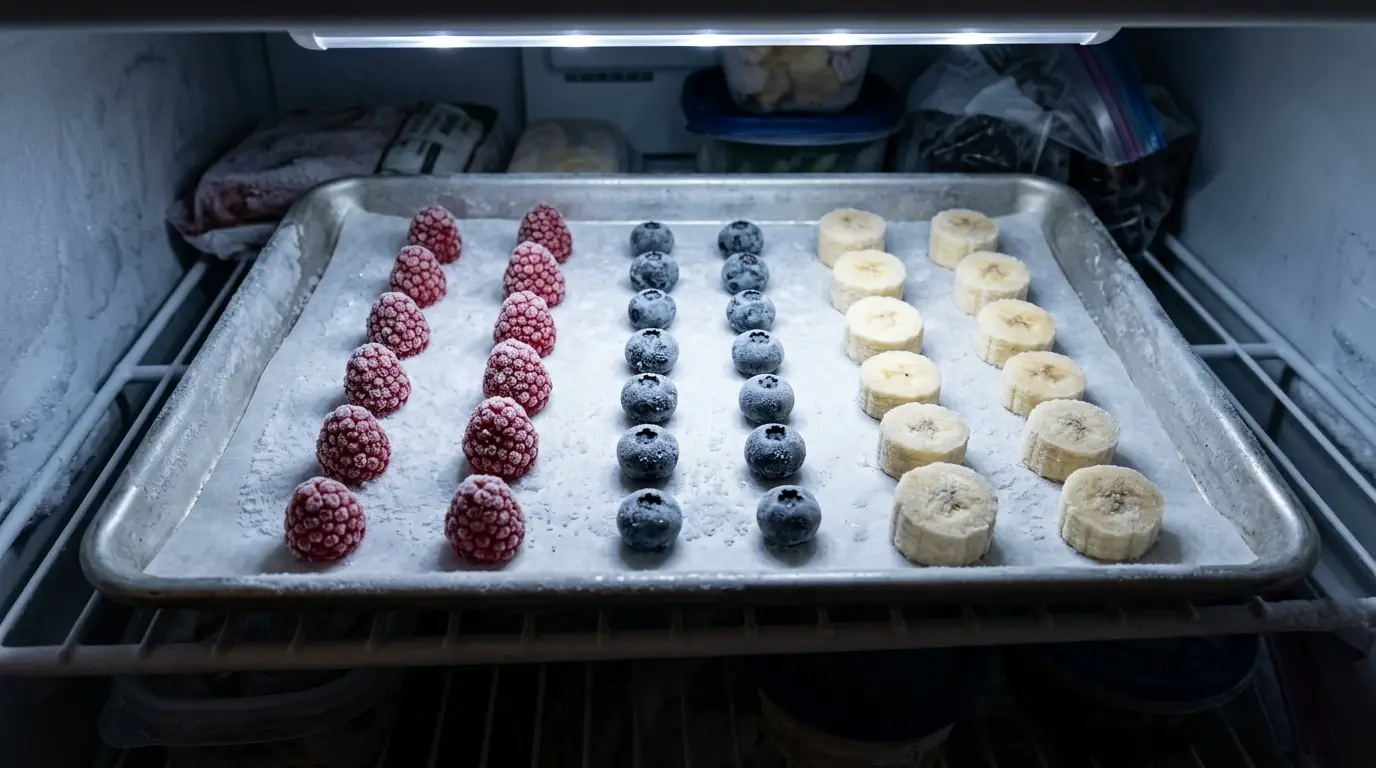
Line a large, flat metal baking sheet with a piece of non-stick parchment paper or a silicone baking mat. Carefully spread your fruit out in a single, even layer across the sheet. You must ensure the individual pieces of fruit do not physically touch each other. If they touch, they will freeze together permanently.
Step 3: The Flash Freeze
Place the baking sheet flat in the coldest, deepest part of your freezer. Leave it completely undisturbed for 2 to 3 hours until the individual pieces of fruit are rock-solid all the way through to the core.
Step 4: The Aggressive Seal
Remove the tray from the freezer. Quickly transfer the solid, frozen fruit into your heavy-duty vacuum bag. You can now confidently place the bag in your machine and seal it normally on your appliance’s highest, most aggressive suction setting.
The Physics: Because the internal water structure of the fruit is frozen entirely solid, the berries now act like a bag of hard glass marbles. They have immense structural integrity. The intense atmospheric vacuum pressure will suck the air out perfectly around the contours of the fruit without crushing or bursting a single delicate berry.
III. Mastering the “Pulse” and “Gentle” Settings
What if you do not want to freeze your fruit? What if you want to vacuum seal fresh, soft, juicy strawberries simply to keep them crisp in the refrigerator for the upcoming week? This requires you to bypass the machine’s brute-force programming and take manual control.
Most high-end, prosumer external sealers (which we heavily review and compare in our comprehensive FoodSaver V4840 vs. Nesco VS-12: Best Vacuum Sealer for the Money guide) come heavily equipped with two absolutely essential buttons designed specifically for delicate foods:
This mode digitally commands the internal motor to reduce the overall suction power of the vacuum pump. Instead of violently evacuating the air in 5 seconds, it pulls the plastic tight much slower and with significantly less total atmospheric force, giving you time to react before the food is crushed.
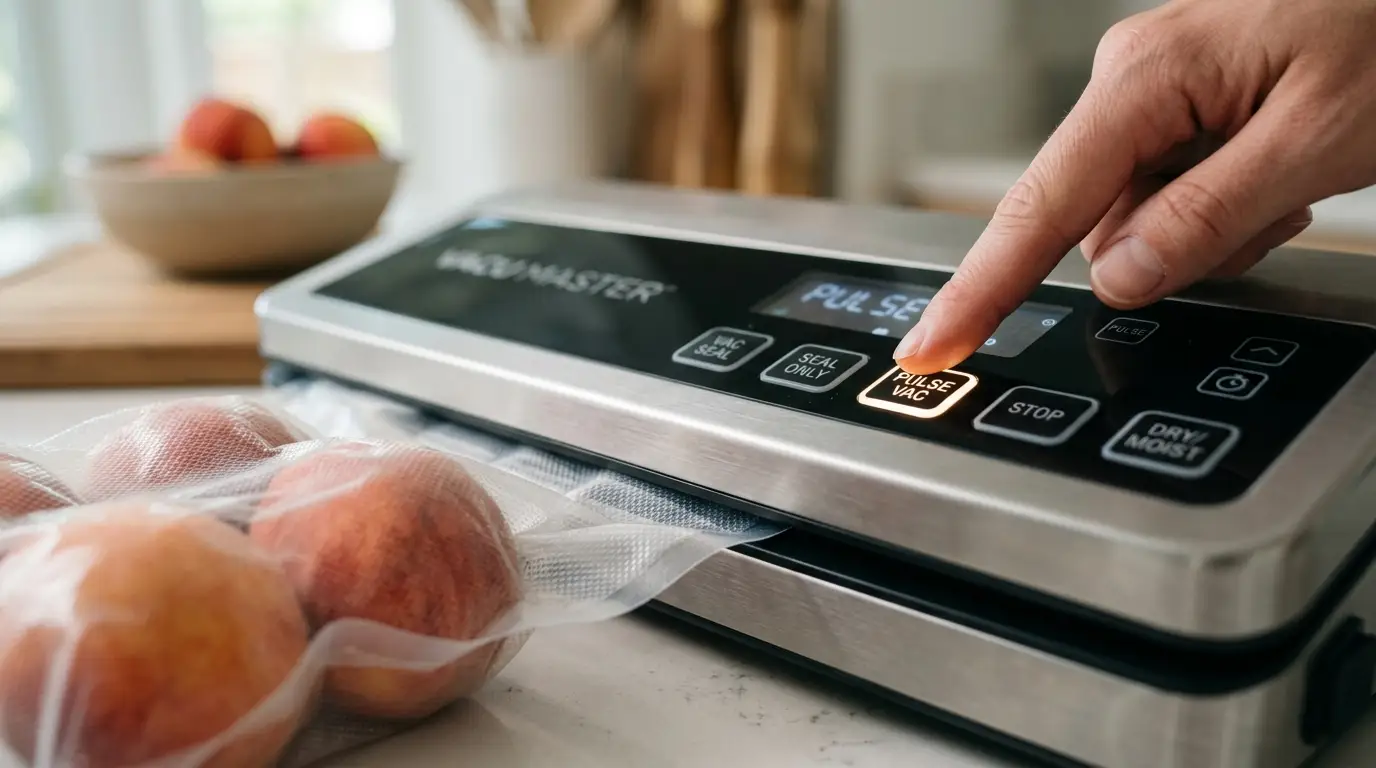
Instead of the machine acting automatically until the vacuum bottoms out and crushes everything, the Pulse button gives you total, manual precision control. You press and hold the button with your finger to suck air out, and release your finger to instantly stop the motor.
The Pulse Technique Workflow:
Place your fresh, soft strawberries into the bag. Tap and hold the “Pulse” button for two seconds at a time. Watch the plastic carefully. You want to “pulse” the air out slowly until the plastic is just barely, gently hugging the shape of the fruit. The exact moment the plastic touches the berries, take your finger off the Pulse button and quickly press the manual “Seal Only” button. You will trap the fruit in a low-oxygen environment before any crushing pressure occurs.
IV. The Ultimate Hack: Individual Smoothie Packs
If you are actively meal-prepping for a busy workweek, do not make the mistake of sealing your ingredients in one massive, bulk bag. Every time you cut the bag open to scoop out a cup of berries, you expose the remaining fruit to humid air, and you waste expensive plastic having to reseal a continuously shrinking bag.
Instead, you need to borrow a brilliant trick from commercial juice bars: Create individual, daily “Smoothie Packs.”
Step 1: The Assembly Line
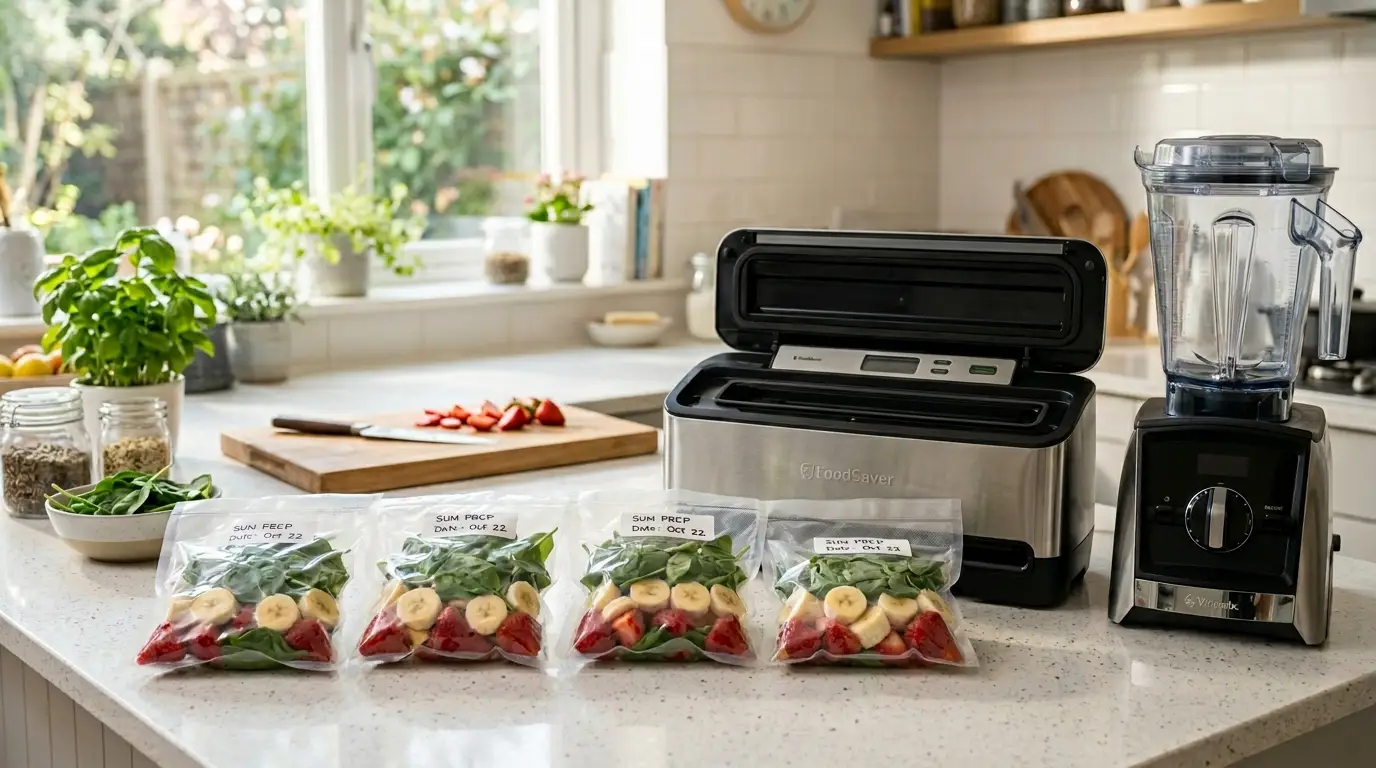
Grab five standard-sized vacuum bags. Set up an assembly line on your kitchen counter. In each bag, put exactly what you need for a single, perfect serving: half a sliced banana, a generous handful of spinach or kale, a scoop of chia seeds, and your delicate fresh berries.
Step 2: The Upright Freeze
Leave the bags completely open at the top. Stand the bags carefully upright inside a deep Tupperware container or a plastic pitcher to keep them from tipping over, and place them in the deep freezer for two hours. This utilizes the Flash-Freeze method on the entire pre-mixed batch.
Step 3: The Daily Payoff
Once the contents are frozen solid, run all five bags through your vacuum sealer. You now have five perfectly flat, highly stackable, zero-oxygen smoothie packs.
The Result: Every chaotic weekday morning, you simply grab one perfectly portioned, frozen vacuum pack, snip the top, dump the entire solid block straight into your blender, add your milk or whey protein powder, and blend immediately. It saves massive amounts of prep time, guarantees absolute nutritional consistency, and completely eliminates food waste.
V. The Hard-Sided Alternative: Mason Jars

What if you absolutely hate the idea of constantly monitoring a delicate Pulse button, and you lack the patience to wait three hours for fruit to freeze on a Sunday afternoon?
There is an incredibly simple, zero-waste solution: bypass flexible plastic bags entirely.
The Physics of Rigid Glass
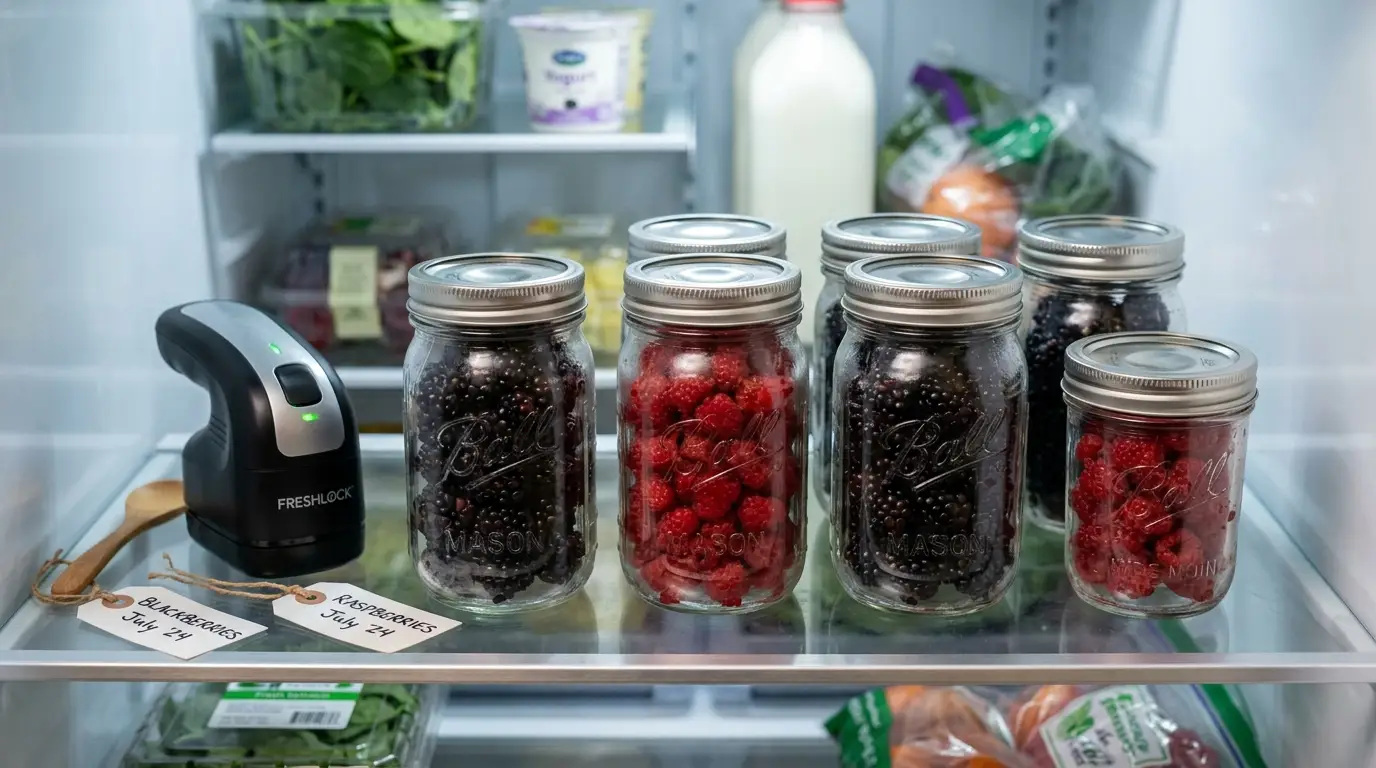
Vacuum pressure only crushes food if the container holding the food is highly flexible and capable of collapsing inward. If you place your fresh, delicate raspberries inside a rigid, heavy-duty borosilicate glass Mason jar, you can pull a massive, intense, zero-oxygen vacuum without ever physically touching the fruit.
The thick glass walls absorb and deflect 100% of the external atmospheric pressure, allowing the berries inside to sit perfectly unharmed in a completely oxygen-free, stasis-like environment.
This is the absolute ultimate, professional way to keep highly perishable, fresh berries crisp and completely mold-free in the refrigerator for up to two weeks. To learn exactly how to execute this technique quickly and efficiently without having to drag out a massive, heavy countertop machine, read our highly rated hardware guide: 7 Best Electric Mason Jar Vacuum Sealers in 2026: Tested & Reviewed.
Explore the Vacuum Sealing Hub
Don’t stop here! Dive deeper into the science of preservation, explore head-to-head machine comparisons, and read our latest hardware reviews for 2026.
FAQ: Vacuum Sealing Fruit
2026 Guide: Flash-Freezing, Browning, and Delicate Textures
Pro Tip: Always “flash-freeze” delicate berries like raspberries on a baking sheet for 2 hours before vacuum sealing them, so they don’t get crushed into jam!

