
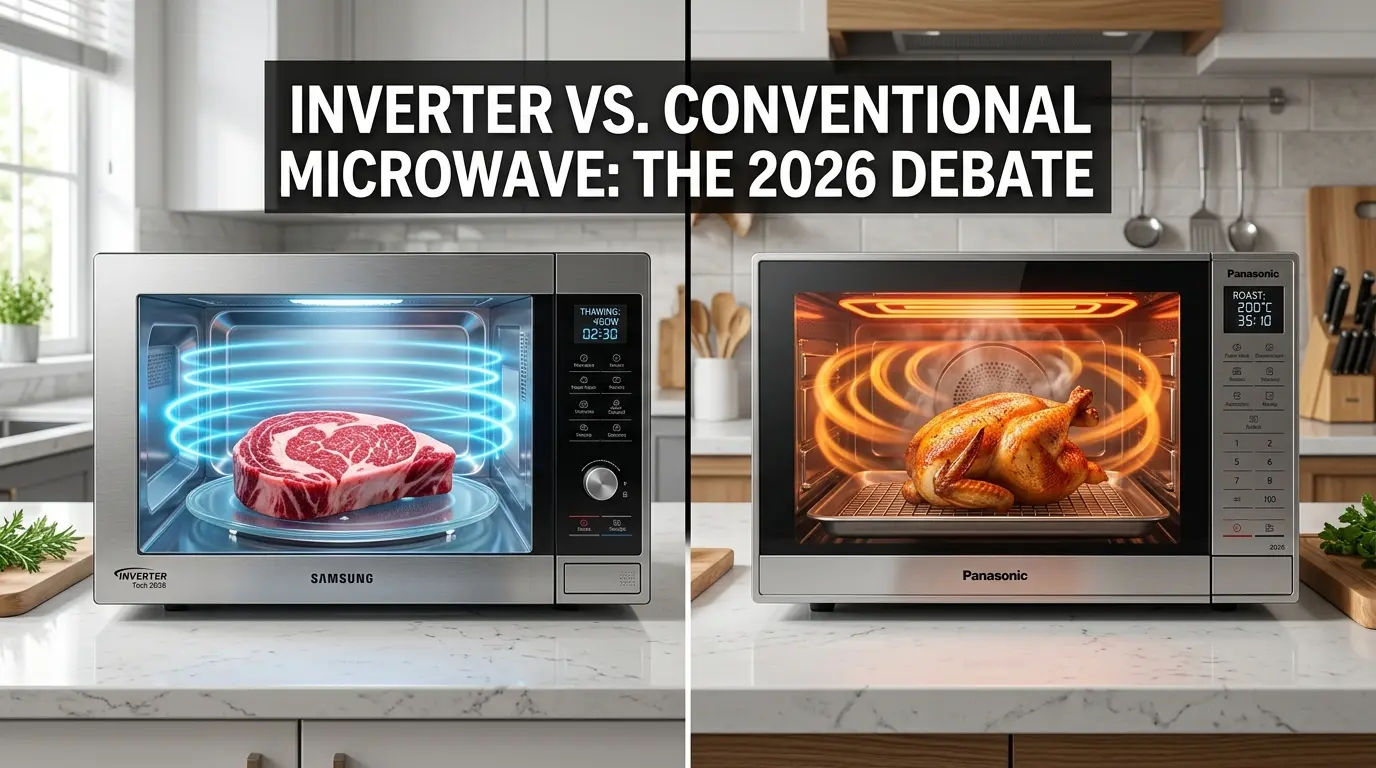
Inverter vs Convection Microwave: What’s the Exact Difference? (2026 Guide)
If you are shopping for a new kitchen appliance in 2026, walking down the microwave aisle can feel like studying for an engineering exam. You set out to buy a simple box to reheat your coffee, but suddenly you are faced with space-age terminology and drastically different price tags.
Two of the most prominent—and most confused—terms on the market today are “Inverter” and “Convection.” Because both features usually come with a premium price tag, buyers frequently find themselves staring at two different boxes, asking the ultimate question: What is the exact difference in the inverter vs convection microwave debate, and which one do I actually need?
The confusion usually stems from the assumption that these two technologies do the same thing. They do not. In fact, they solve two entirely different kitchen problems. One changes how the microwave radiation is delivered, while the other turns your microwave into a completely different type of oven.
Quick Answer
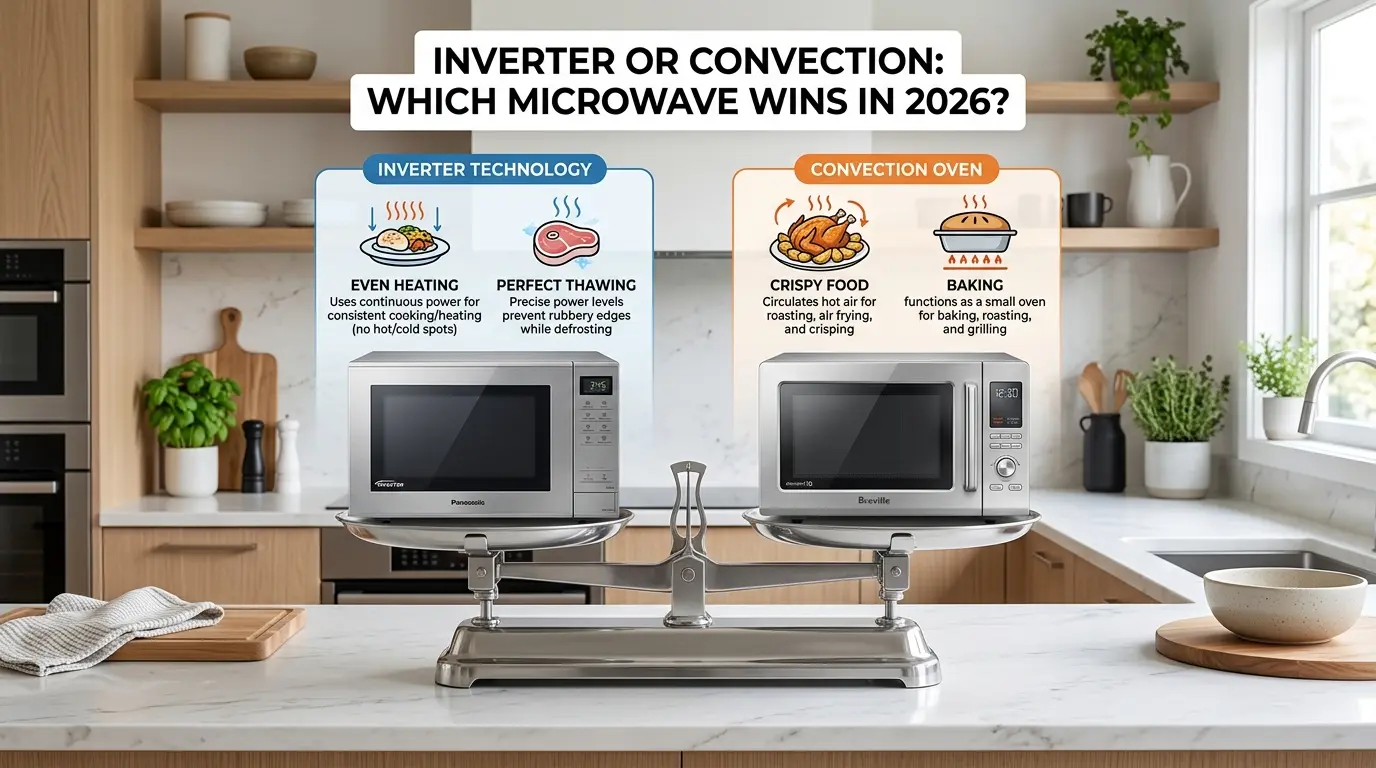
An Inverter Microwave improves how radiation is delivered, providing a continuous, steady stream of heat instead of violently pulsing on and off. It is perfect for even heating and flawless defrosting, but it cannot crisp food. A Convection Microwave adds a physical heating element and a fan, turning the appliance into a mini traditional oven. It uses hot air to bake, roast, and crisp food (like pizza crusts and cookies), but it cooks slower than radiation.
I. The Inverter Microwave: Perfecting the Radiation
To fully understand the difference, we first have to clarify what an Inverter actually is. A standard, cheap microwave uses a heavy magnetic transformer that powers the magnetron. This old-school transformer has a massive limitation: it can only operate at 100% power or 0% power.
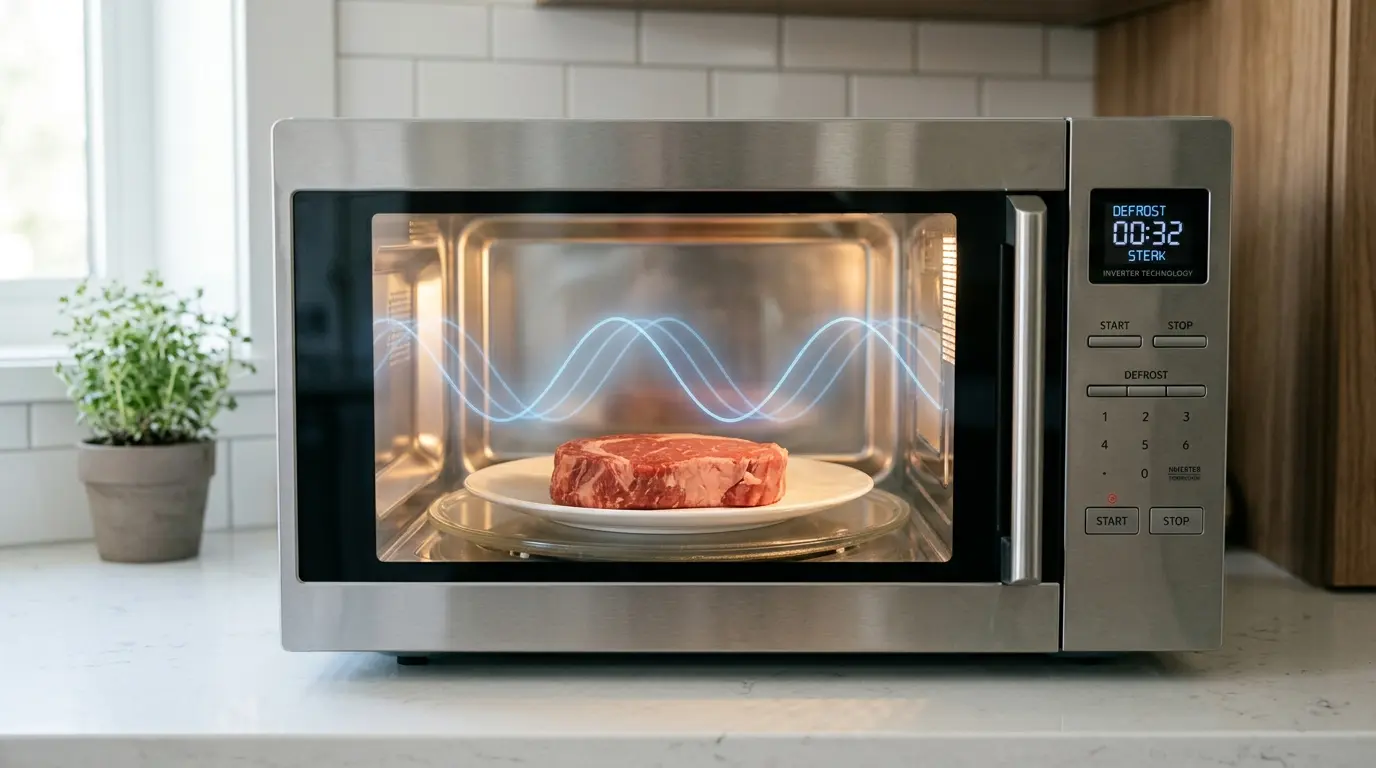
If you ask a conventional microwave for 50% power to gently defrost a steak, it simply blasts the food with 100% power for a few seconds, turns off completely for a few seconds, and repeats. This aggressive pulsing is exactly what causes the delicate edges of your food to burn, cook, and turn rubbery while the dense center remains completely frozen.
The Inverter Solution
An Inverter Microwave replaces that clunky magnetic transformer with a modern solid-state circuit board. This sophisticated circuitry allows the microwave to deliver a continuous, steady, uninterrupted stream of power to the magnetron.
If you ask an inverter microwave for 50% power, it delivers exactly 50% heat continuously.
- ✅ What it does: It provides perfectly even heating, flawless and safe meat defrosting, and gentle melting for delicate ingredients like baking chocolate and butter.
- ❌ What it DOES NOT do: It does not crisp, brown, or bake. It still cooks food strictly using microwave radiation, which heats by vibrating the water molecules inside the food. Therefore, a slice of pizza reheated in an Inverter microwave will be evenly hot from edge to edge, but the crust will still be soft and soggy.
For a deep dive into the physics of this process, check out our full Inverter vs Conventional Microwave Guide.
II. The Convection Microwave: The Mini-Oven
If an Inverter perfects the traditional microwave experience, a Convection Microwave attempts to replace your traditional kitchen stove entirely.
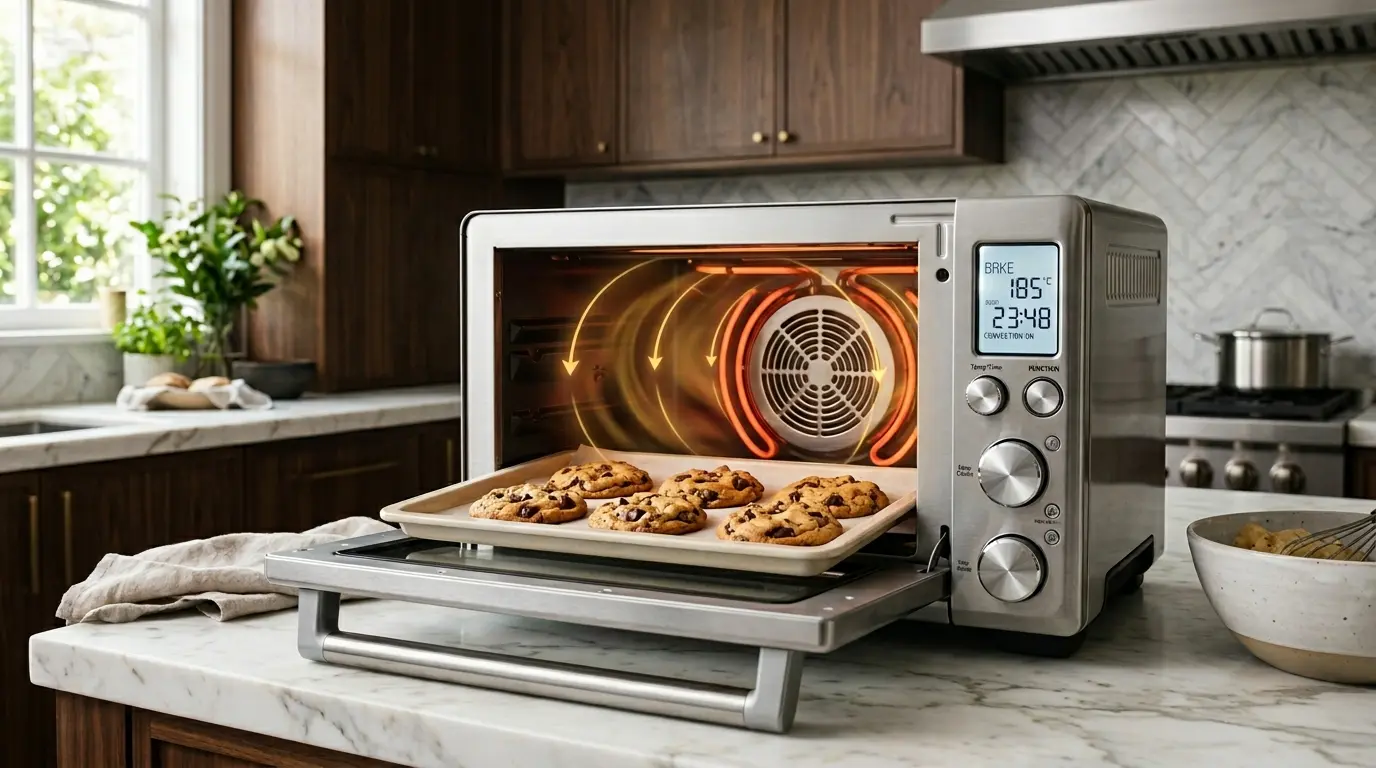
A Convection microwave still contains a standard magnetron to generate microwave radiation for quickly reheating a bowl of soup or popping a bag of popcorn. However, it adds two critical physical components to the inside of the box:
1. A Heating Element
Usually a thick metal coil located at the top or back of the interior cavity—exactly like the broiler element inside your traditional electric wall oven.
2. A Convection Fan
A powerful exhaust fan built into the back wall that forcefully circulates the extremely hot air generated by the heating element evenly around your food.
The Convection Solution
When you switch the appliance from “Microwave Mode” to “Convection Mode,” it stops using radiation entirely. Instead, the heating element gets red hot, and the fan blows that dry, hot air around the interior chamber. This hot, dry air triggers the Maillard reaction—the chemical process that causes food to brown and develop a crust.
- ✅ What it does: It bakes, roasts, browns, and crisps. You can literally bake a batch of chocolate chip cookies, roast a whole chicken with crispy golden skin, or reheat a slice of pizza so the crust actually “crunches” when you bite it.
- ❌ What it DOES NOT do: It is not as fast as a microwave. Baking cookies in a convection microwave takes the exact same 12-15 minutes it would take in a regular wall oven. It relies on ambient heat transfer, not direct molecular radiation.
III. Head-to-Head: Inverter vs Convection
Let’s look at how these two very different technologies handle everyday kitchen tasks, and which one comes out on top.
1. Reheating Leftover Pizza or Fries
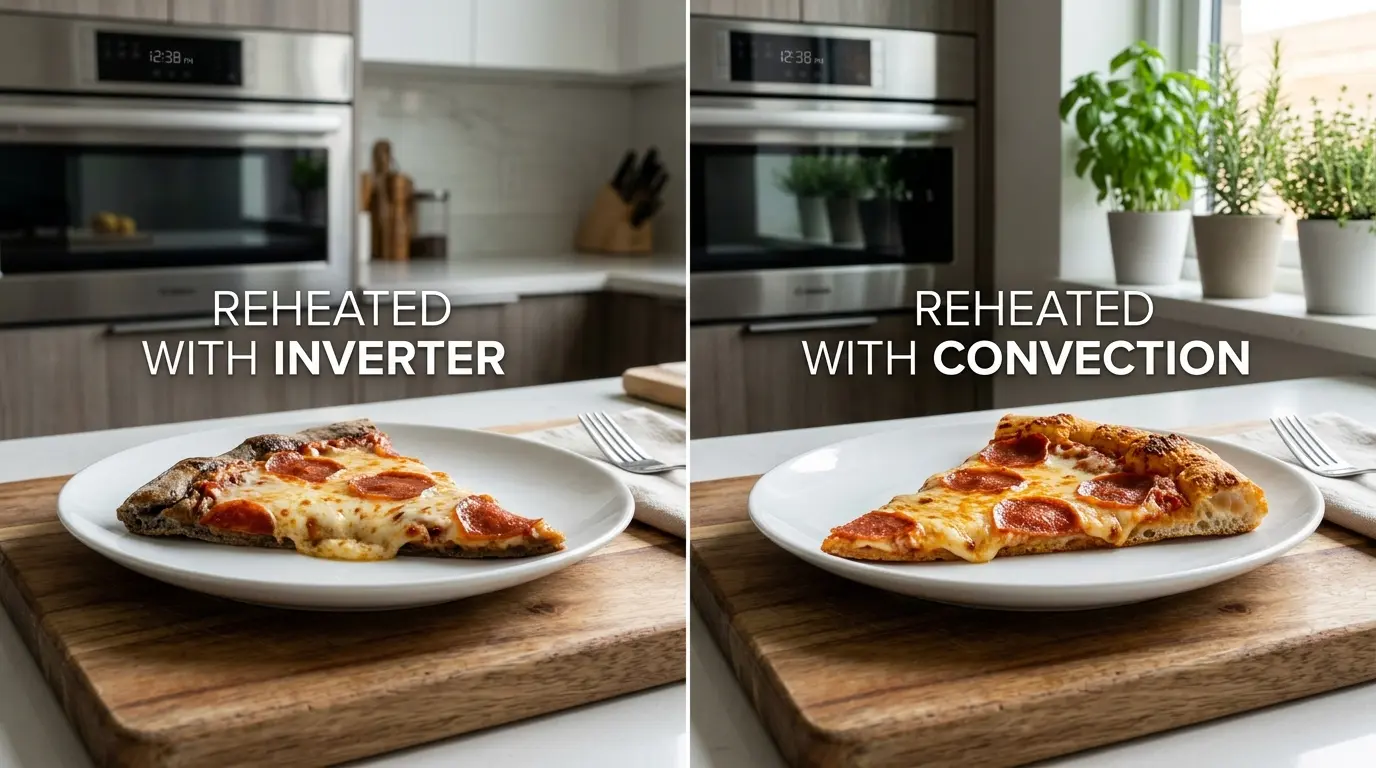
Inverter Microwave: Heats the pizza incredibly evenly. The cheese will be perfectly melted without cold spots, but because the technology relies on exciting water molecules, the moisture stays trapped. The crust and the fries will be completely limp and soggy.
Convection Microwave: By using the hot air fan, it drives moisture away from the surface of the food. The cheese melts slowly, and the pizza crust becomes crispy and firm, just like it was fresh from the pizzeria.
🏆 Winner: Convection.
2. Defrosting Frozen Meat
Inverter Microwave: The steady, continuous stream of low-wattage microwave energy thaws a thick steak or chicken breast evenly from edge to center without accidentally cooking the outside proteins. It safely takes just minutes.
Convection Microwave: Unless you are using its standard microwave mode (which likely uses the old pulsing method), you cannot use the convection fan to defrost without actually baking and browning the outside of the meat.
🏆 Winner: Inverter.
3. Baking and Roasting
Inverter Microwave: Impossible. You cannot bake a cake or roast a crispy chicken in an Inverter microwave. The radiation will simply boil the moisture inside the batter, resulting in a rubbery, pale, unappetizing sponge.
Convection Microwave: Flawless. It acts exactly like a high-end European convection wall oven. You can bake blueberry muffins, crisp up a lasagna top, or roast root vegetables to perfection.
🏆 Winner: Convection.
4. Speed of Reheating Liquids (Coffee, Soup)
Inverter Microwave: Extremely fast and efficient, vibrating the water molecules directly.
Convection Microwave: You would just use its standard microwave setting. Attempting to heat a mug of soup purely with hot convection air would take 30 minutes and evaporate the liquid.
🤝 Winner: Tie (Both function as normal microwaves for this task).
IV. The Ultimate Plot Twist: You Can Have Both
Here is the secret that appliance salespeople often fail to explain clearly: Inverter and Convection are not mutually exclusive.
Because “Inverter” is just a circuit board that powers the radiation, and “Convection” is just a physical fan and a heating element, many high-end manufacturers combine both technologies into a single, ultimate kitchen appliance known as a Combination Microwave (or Combi-Oven).
Models like the highly-rated Breville Combi Wave 3-in-1 or the Panasonic HomeChef 4-in-1 feature:
- An Inverter circuit board for perfectly even microwave reheating and precision defrosting.
- A Convection fan and heating element for baking, roasting, and crisping.
- Smart software that alternates between the two seamlessly. For example, the oven will use microwaves to cook the inside of a whole chicken incredibly fast, and then automatically switch to convection hot air to crisp the skin to a golden brown at the end of the cycle.
V. Pros, Cons, and Price Gap
| Feature | Inverter Microwave | Convection Microwave | Combination (Both) |
|---|---|---|---|
| Primary Benefit | Even heating, no cold spots | Crisping, baking, browning | Does everything perfectly |
| Crisps Food? | No (Soggy crusts) | Yes (Crispy crusts) | Yes |
| Defrosts Well? | Excellent | Poor (unless it has an inverter) | Excellent |
| Price Range | $150 – $300 | $200 – $400 | $350 – $600+ |
| Best For | Reheating meals, melting, thawing | RVs, dorms, replacing an oven | The ultimate home chef |
VI. The Verdict: Which One Should You Buy in 2026?
Choosing between an inverter vs convection microwave comes down entirely to your lifestyle, your budget, and what other appliances you already own in your kitchen.
You Should Buy an Inverter Microwave If:
You already have a fantastic, full-sized oven in your kitchen that you use for your baking and roasting needs. If you strictly use your microwave to reheat leftovers, steam vegetables, and safely defrost meat, an Inverter is exactly what you need. It perfects the “microwave” experience without forcing you to pay for a second oven you won’t use.
You Should Buy a Convection Microwave If:
You live in an RV, a dorm room, a tiny apartment, or an ADU (Accessory Dwelling Unit) that does not have a traditional wall oven. A convection microwave acts as a brilliant space-saver, allowing you to bake cookies, crisp pizzas, and roast chicken in a space where a full stove physically won’t fit.
You Should Buy a Combination Microwave If:
You love to cook, you host large Thanksgiving dinners and desperately need a “second oven,” or you simply want the absolute best appliance money can buy. Combining the speed and even heating of an Inverter with the crisping and browning power of Convection is the pinnacle of modern kitchen technology. It does everything, and it does it exceptionally well.
Explore More Appliance Guides
Don’t stop here! Visit our complete hub for more expert tips, side-by-side equipment comparisons, and updated buying recommendations for 2026.
FAQ: Inverter vs Convection Microwave
2026 Guide: Crisp, Bake, or Reheat?
The Best of Both Worlds: If budget allows, a “Combi” microwave gives you Inverter defrosting and Convection crisping in one unit.

