
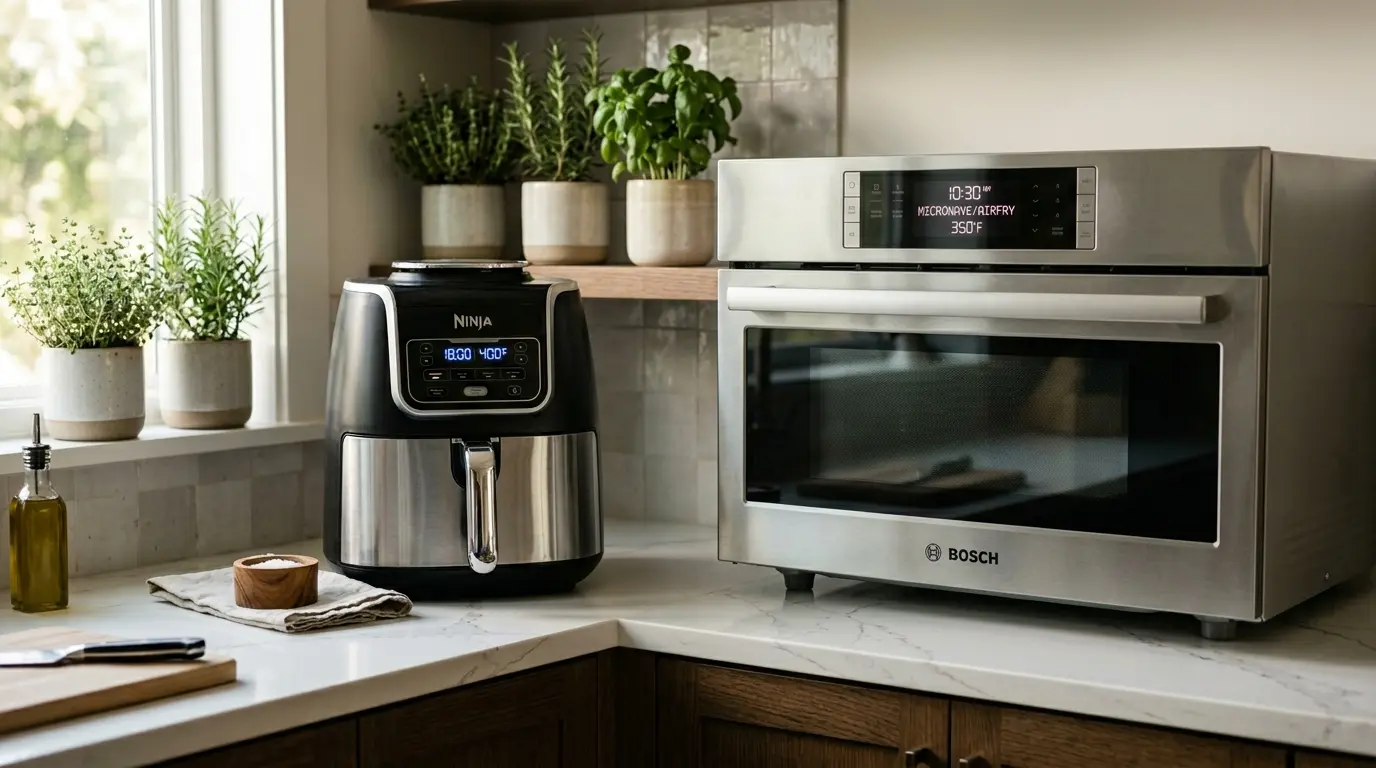
Microwave Air Fryer vs Air Fryer: Which is Better in 2026?
If you are upgrading your kitchen in 2026, you are inevitably going to face the ultimate countertop dilemma. You know you want the crispy, guilt-free crunch of air-fried food, and you know you still need to reheat your morning coffee and defrost meats quickly.
This leads to the biggest appliance debate of the year: Microwave Air Fryer vs Air Fryer. Should you buy a dedicated, standalone air fryer and find space for it next to your traditional microwave? Or should you spend a bit more money and buy a single 2-in-1 combo unit that does both?
Appliance salespeople will often tell you that a combo unit is the perfect, flawless solution, while culinary purists argue that a “jack of all trades is a master of none.” The truth lies somewhere in the middle. In this comprehensive guide, we are going to break down the exact differences in cooking speed, texture, capacity, and price so you can decide which appliance deserves a spot on your kitchen counter.
Quick Answer
A Standalone Air Fryer is faster, delivers a slightly crunchier texture, and is infinitely easier to clean due to its non-stick pull-out basket. It is the best choice for large families who cook lots of frozen foods. A Microwave Air Fryer Combo saves massive amounts of counter space, offers incredible “combi-cooking” features (microwaving and roasting simultaneously), and replaces up to three appliances. It is the undisputed winner for apartments, RVs, and minimalists who hate countertop clutter.
The Standalone Air Fryer: The Dedicated Crunch Machine

A standalone air fryer (like the incredibly popular Ninja, Philips, or Cosori models) is an appliance built with a single, aggressive purpose: to make your food as crispy as possible, as fast as possible, using little to no oil.
How It Works
It features a deep, removable pull-out basket. Directly above this basket sits a very powerful metal heating coil and a massive, high-speed exhaust fan. Because the cooking chamber is incredibly small and compact, the heat is highly concentrated. When you turn it on, a literal hurricane of blistering dry air hits the food immediately, evaporating surface moisture to trigger the Maillard reaction (browning) instantly.
The Pros:
- Unmatched Speed: Because the interior cavity is so small, there is almost zero preheat time required. It cooks frozen french fries, mozzarella sticks, or chicken wings in absolute record time compared to any traditional oven.
- The “Shake” Factor: The deep basket design allows you to pull the drawer out midway through the cook, violently shake your fries to redistribute them, and shove it back in. This physical agitation is the absolute secret to perfectly even crispiness on all sides of the food.
- Easy Cleanup: Most standalone air fryer baskets feature a high-quality non-stick coating. When you are done cooking greasy foods, you can literally toss the basket straight into the dishwasher or rinse it in the sink in 30 seconds.
The Cons:
- Counter Space Monopolization: It is a notoriously bulky appliance that only does one specific thing. It takes up a massive footprint on your counter, yet you still need to find space for a separate microwave to quickly reheat soup, thaw meat, or melt baking ingredients. For tips on that, see our How to Melt Chocolate in the Microwave Perfectly guide.
The Microwave Air Fryer Combo: The Space Saver
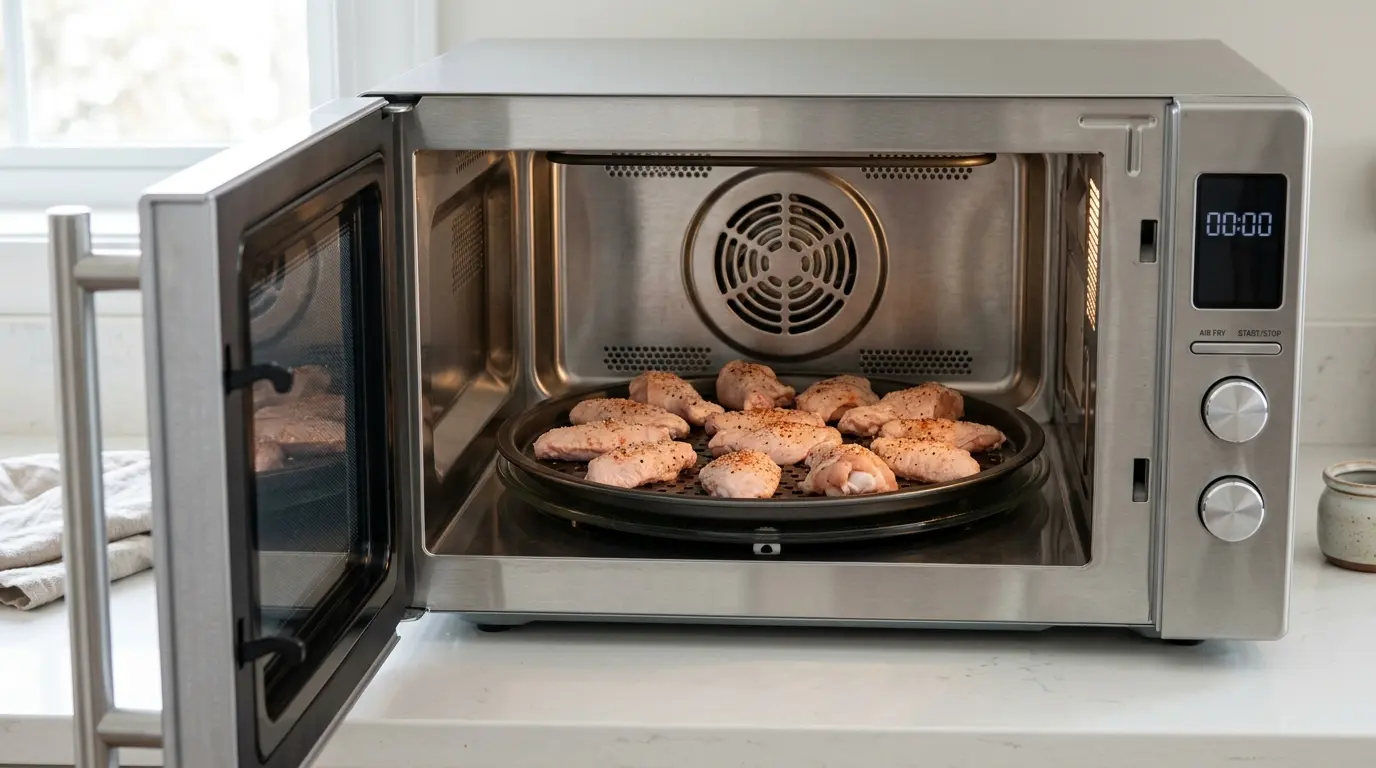
A microwave air fryer combo takes the traditional magnetron (the component responsible for generating microwave radiation) and seamlessly integrates a convection fan and a heating coil into the back wall or the ceiling of the appliance.
How It Works
When you want to reheat yesterday’s leftovers or pop popcorn, it acts like a normal, high-powered microwave. But when you want to roast vegetables or crisp frozen food, you switch it to “Air Fry” mode.
The microwave radiation shuts off entirely, and the convection fan begins circulating blistering hot air around the interior. For a deeper look at the specific models that perform this engineering magic best, check our comprehensive guide on the Best Microwave Air Fryer Combos of 2026.
The Pros:
- Ultimate Versatility: It reheats, defrosts, bakes, roasts, and air fries. High-end models (like those from Panasonic or Breville) even feature “combi-cooking.” This smart software automatically switches between microwave radiation (to cook the dense inside of a chicken fast) and hot air (to keep the outside skin crispy). It is a culinary game-changer.
- Saves Kitchen Space: It replaces your standard microwave, your bulky standalone air fryer, and often your toaster oven. It gives you back precious countertop real estate, making your kitchen look cleaner and more minimalist. Read our Microwave vs Toaster Oven guide to see why consolidation is trending.
- Larger Capacity: A 1.2 cubic foot combo microwave has a massive interior. It can easily fit a whole 12-inch pizza, bake a 9×13 casserole, or roast an entire whole chicken—something a small, narrow basket air fryer physically struggles to do.
The Cons:
- The Flat-Layer Rule: Combo units require you to use a flat metal crisper pan that sits elevated on the rotating glass turntable. You cannot pile food up in a mound, and you cannot “shake” the machine. You must meticulously lay your wings or fries in a single, flat, perfectly spaced layer so the air can circulate. This can be highly tedious if you are trying to feed a large family of five at the same time.
Head-to-Head Performance Showdown

Let’s look at how these two appliances compare in real-world kitchen scenarios, putting marketing claims aside.
1. Crispiness and Texture
A standalone air fryer will always give you a slightly crunchier, more “fried” result. Because the heating element is literally inches away from the food inside a tiny chamber, it blasts surface moisture away instantly. A combo microwave cavity is much larger, meaning the hot air has further to travel and takes a few extra minutes to build up the exact same intense, dry environment.
🏆 Winner: Standalone Air Fryer (by a narrow margin).
2. Cooking Speed
If you want frozen mozzarella sticks ready to eat in exactly 8 minutes, the standalone air fryer wins every time. A combo microwave requires preheating (just like a regular wall oven) to get the large stainless steel cavity hot enough to actually begin the air frying process. This preheat phase adds 3 to 5 minutes to your total cook time.
🏆 Winner: Standalone Air Fryer.
3. Cleaning and Maintenance
Washing a non-stick standalone air fryer basket in the sink takes exactly 30 seconds. Cleaning a combo microwave is a much harder, more annoying chore. When you air fry a greasy hamburger or chicken wings in a microwave, the convection fan forcefully blows aerosolized animal fat all over the interior stainless steel walls.
You must manually wipe out the inside of the microwave with a degreaser after heavy air frying. If you don’t, that residual grease will smoke and smell terrible the next time you use the machine. It can even lead to arcing—a problem we discuss heavily in our Microwave Sparking Inside guide.
🏆 Winner: Standalone Air Fryer.
4. Overall Utility and Value
A standalone air fryer is a one-trick pony. It is completely useless if you want to reheat a cup of coffee, gently melt baking chocolate, or quickly defrost a frozen steak without accidentally cooking the edges. A combo microwave, especially one equipped with premium Inverter technology (see our Best Inverter Microwave Guide), handles 95% of your daily kitchen tasks flawlessly.
🏆 Winner: Microwave Air Fryer Combo.
The Price Comparison
Let’s look at the financial math. At first glance, a combo unit seems vastly more expensive, but you have to consider the long-term value of the appliances you are replacing.
| Feature | Standalone Air Fryer | Microwave Air Fryer Combo |
|---|---|---|
| Average Price Range | $80 – $200 | $250 – $550+ |
| Appliances Replaced | 1 (Deep Fryer) | 3 (Microwave, Air Fryer, Toaster Oven) |
| Counter Space Required | High (Needs its own dedicated spot) | Low (Directly replaces the microwave) |
| Best Budget Brand | Ninja, Cosori | Toshiba |
| Best Premium Brand | Philips | Breville, Panasonic |
Financial Note: While a combo unit costs more upfront, you actually save money if you are buying appliances for a brand new kitchen or a remodel, as you do not have to purchase a separate high-end microwave ($200+) and a separate high-end air fryer ($150+). The combo unit is a break-even financial investment that pays dividends in spatial organization.
The Verdict: Which One Should You Buy?
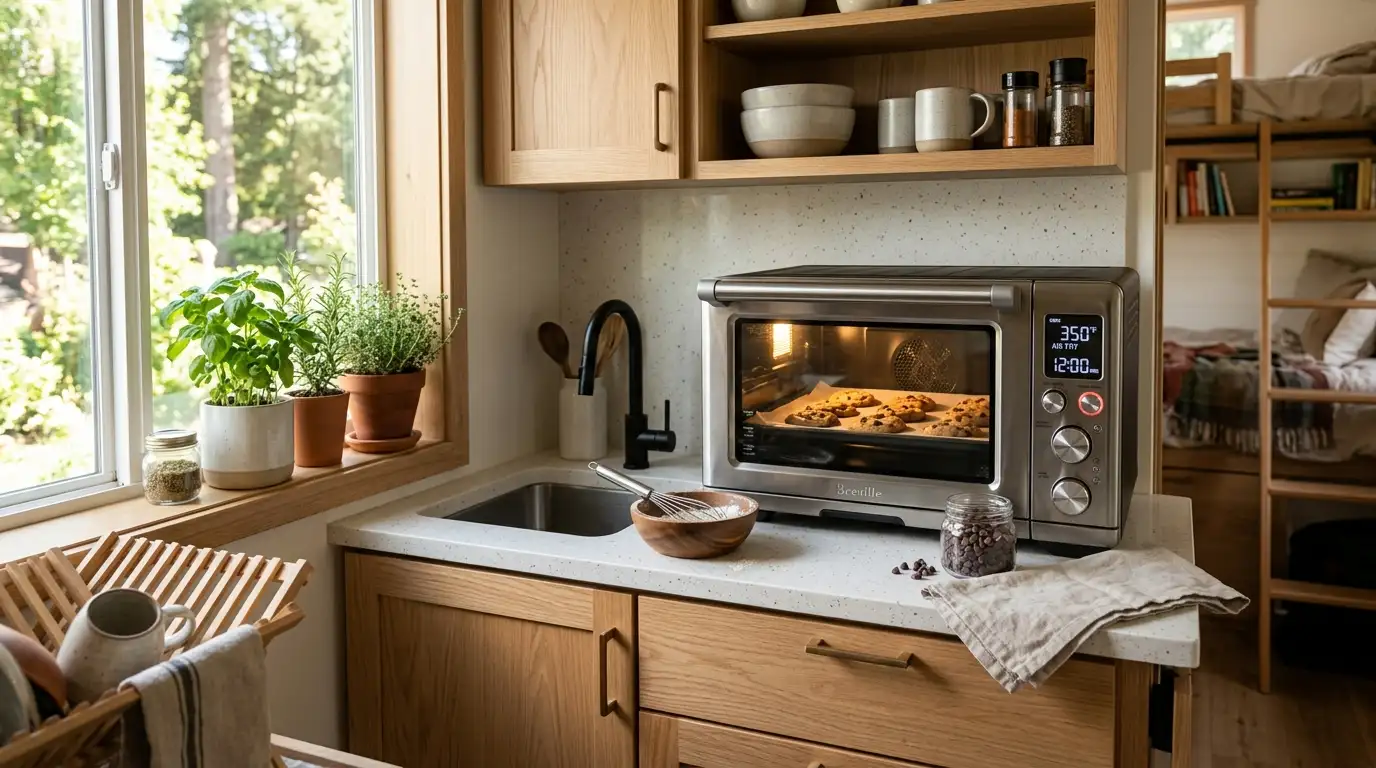
The microwave air fryer vs air fryer debate ultimately comes down to your living situation, your daily cooking habits, and your patience for cleaning.
Buy a Standalone Air Fryer If:
You have a large family, plenty of counter space, and you eat a massive amount of frozen fried foods (fries, wings, chicken nuggets). The raw speed, the shakeable basket design, and the incredibly easy cleanup make the standalone unit the undisputed king of pure crunch.
Buy a Microwave Air Fryer Combo If:
You live in an apartment, an RV, or you simply hate cluttered countertops. If you already need to replace your old, dying microwave anyway, upgrading to a combo unit is a no-brainer. You sacrifice a tiny bit of cooking speed to gain an incredibly versatile “second oven” that keeps your kitchen looking clean and minimalist.
Are You Leaning Towards the Combo?
Before you spend $400 on a space-saving hybrid, read our brutally honest breakdown of the exact models that perform best in 2026 to ensure it fits your cooking style.
Read: Are Microwave Air Fryer Combos Actually Worth It?FAQ: Microwave Air Fryer vs. Standalone Air Fryer
2026 Guide: The Ultimate Appliance Showdown
Comparison Tip: Standalone air fryers win on speed, but Combos win on saving precious counter space.
Explore More Appliance Guides
Don’t stop here! Visit our complete hub for more expert tips, side-by-side equipment comparisons, and updated buying recommendations for 2026.

