
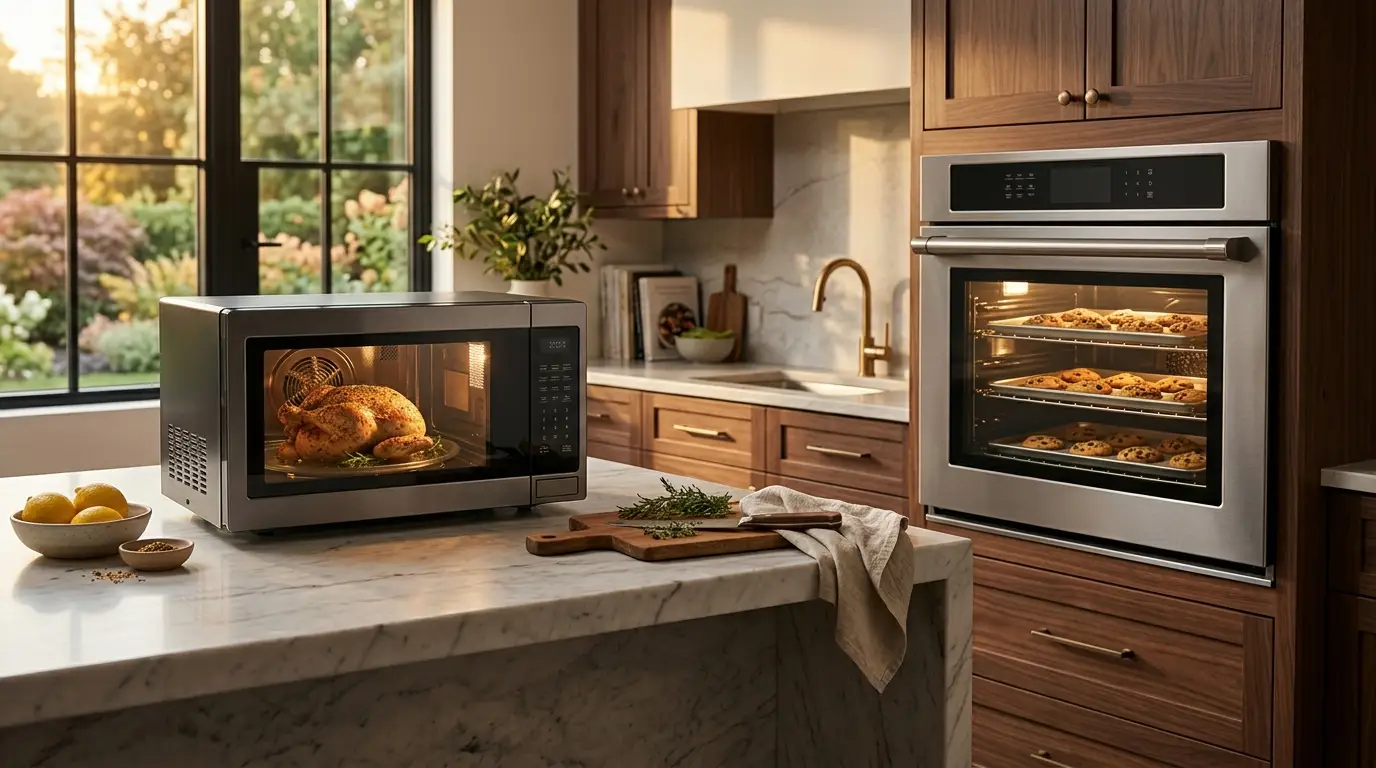
Convection Microwave vs Traditional Oven: Which Should You Use? (2026 Guide)
If you are renovating a small kitchen, designing a custom camper van, or simply tired of heating up your entire house just to bake a small batch of cookies, you are likely questioning the standard American kitchen setup. Do you really need a massive 30-inch traditional range taking up half your floor space?
The rapid rise of hybrid appliance technology has made the convection microwave vs oven debate more relevant than ever. Modern convection microwaves promise to seamlessly combine the lightning-fast reheating of microwave radiation with the crispy, golden-brown baking power of a traditional oven.
But can a countertop appliance truly replace a full-sized oven? In this comprehensive guide, we break down the exact differences in cooking science, energy efficiency, electrical requirements, and culinary results to help you decide which appliance deserves your hard-earned money and counter space.
The Quick Answer
A Traditional Oven is unmatched for massive capacity, precise baking of delicate pastries (like macarons and sourdough), and long-term durability. However, it wastes incredible amounts of energy on small meals. A Convection Microwave is a highly efficient 2-in-1 hybrid that cooks 25% faster, uses a fraction of the electricity, and perfectly roasts meats and vegetables. It can easily replace a full oven for singles, couples, and RV owners, but it lacks the physical volume needed for large families and holiday hosting.
1. The Traditional Oven: The Heavyweight Champion
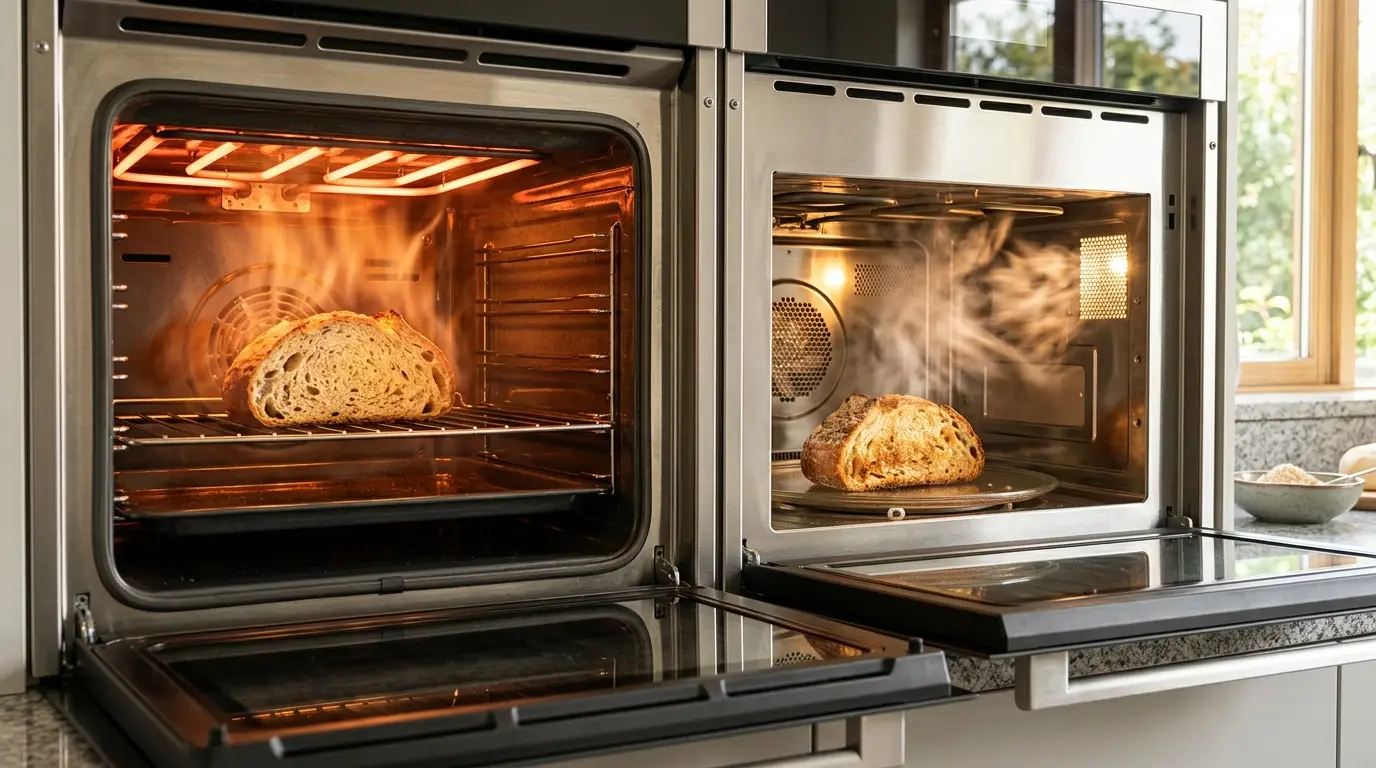
The traditional conventional oven (whether powered by a dedicated 240V electric circuit or a natural gas line) relies on large, exposed heating elements placed at the bottom and top of a massive, heavily insulated cavity.
It cooks food from the outside in using ambient, radiant heat. The heavy metal walls absorb the heat and radiate it back toward the center of the oven, creating a highly stable thermal environment. This thermal mass is what makes a traditional oven so reliable, but also so slow to preheat.
The Pros:
- Massive Capacity: You cannot cheat physical volume. You can roast a 20-pound Thanksgiving turkey, bake three distinct trays of cookies simultaneously, or fit a massive cast-iron Dutch oven inside. For large families, this volume is non-negotiable.
- Superior Baking for Delicate Items: The gentle, ambient heat of a traditional oven is the undisputed gold standard for delicate pastries, artisan bread, soufflés, and cakes. These items require precise, undisturbed temperature stability and physical vertical room to rise without hitting a heating element.
- Unmatched Durability: Traditional ovens are essentially giant insulated metal boxes with relatively simple resistance heating elements. Because they lack complex motherboards and delicate magnetrons, they can easily last for decades with minimal maintenance.
The Cons:
- Inefficient for Small Meals: Turning on a 4000W to 5000W electric oven just to bake two chicken breasts or a handful of pizza rolls wastes a tremendous amount of energy. Furthermore, it often takes 15 to 20 minutes just to preheat the massive cavity before you can even begin cooking.
- Kitchen Heating (The Radiator Effect): Especially in the peak of summer, or if you live in a small, poorly ventilated apartment, a traditional oven acts like a giant radiator. It bleeds heat into your living space, forcing your HVAC or air conditioner to work overtime, costing you double in utility bills.
- Electrical Requirements: An electric range requires a dedicated 240-Volt circuit. You cannot simply plug it into a standard wall outlet.
2. The Convection Microwave: The Hybrid Innovator
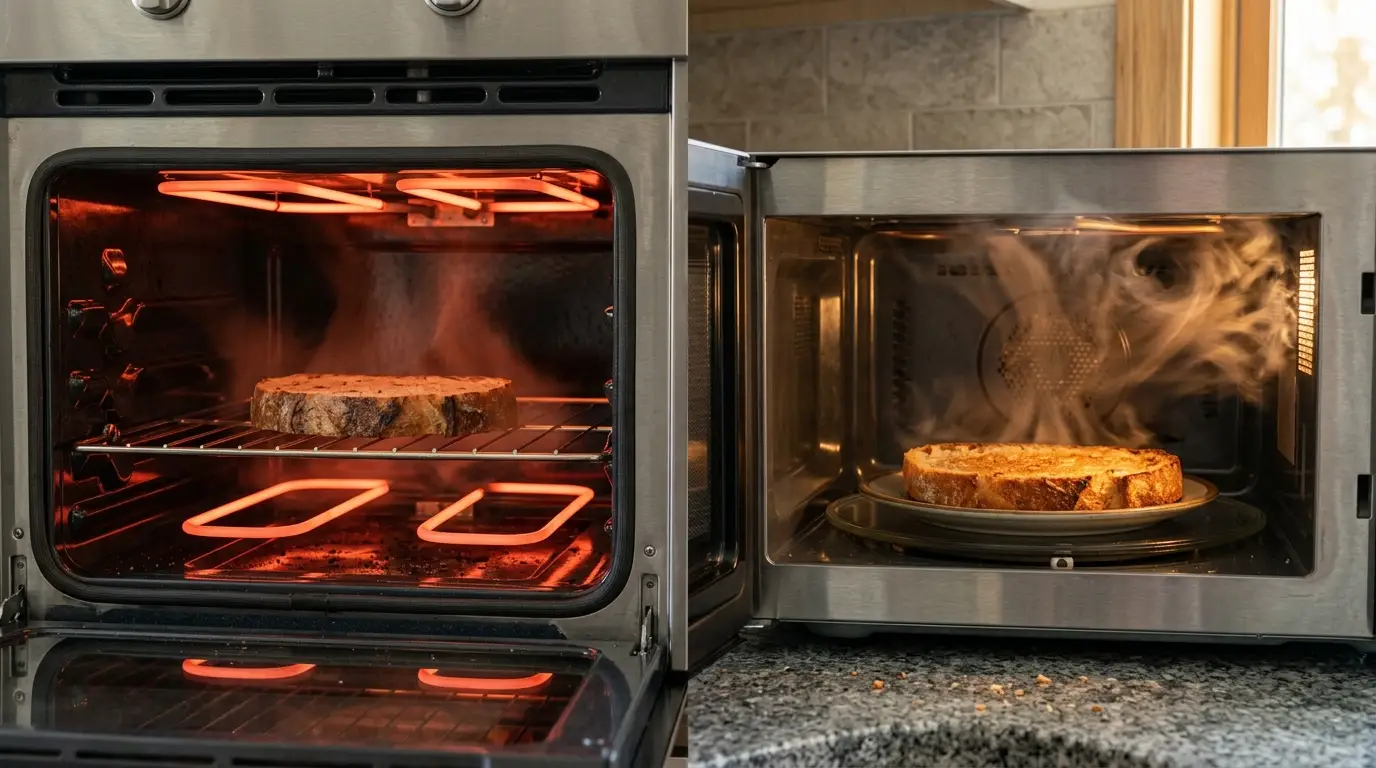
A convection microwave is a true 2-in-1 hybrid engineering marvel. It contains a standard magnetron to produce microwave radiation (for the incredibly fast reheating of liquids and defrosting of meats), but it also features a thick internal heating element and an exhaust fan built into the back wall of the cavity.
The fan actively forces the blistering hot air generated by the heating element around the food, stripping away surface moisture. This allows it to trigger the Maillard reaction—roasting, browning, and baking your food just like a high-end European convection oven.
The Pros:
- Ultimate Versatility (Combi-Cooking): You can microwave a cup of coffee in the morning, and use the exact same appliance to roast a whole chicken with crispy, golden skin in the evening. High-end units can even use both functions simultaneously—microwaving the dense center of a roast while baking the exterior—cutting cooking times in half.
- Unmatched Speed: Because the fan forcefully circulates the hot air directly against the food rather than relying on passive ambient heat, a convection microwave cooks food about 25% faster than a traditional oven.
- Space and Energy Saving: They take up a fraction of the physical space. Because the interior cavity is so small (usually around 1.2 cubic feet), they preheat in mere minutes and use significantly less electricity (operating on a standard 120V outlet). If you are living off-grid, this efficiency is absolutely crucial—read our Best Microwave for Solar Power Systems guide.
The Cons:

- Limited Capacity: Even the absolute largest convection microwaves on the market top out around 1.5 to 1.7 cubic feet. You cannot physically fit a large 20lb turkey, nor can you stack multiple baking sheets inside. You are limited to cooking in single, flat layers or using one casserole dish at a time.
- The Learning Curve: Converting traditional oven recipes to convection microwave times and temperatures requires trial and error. Because convection air is so efficient, you usually need to drop the standard recipe temperature by 25°F (e.g., baking at 325°F instead of 350°F) to avoid burning the outside before the inside is done.
- Mechanical Complexity: Cramming two distinct, powerful cooking technologies into one small box means there are significantly more electronic parts that can fail over time. If your hybrid unit starts acting up or making strange noises, consult our Microwave Sparking Inside: Causes and Fixes troubleshooting guide.
3. Head-to-Head Lifestyle Comparison
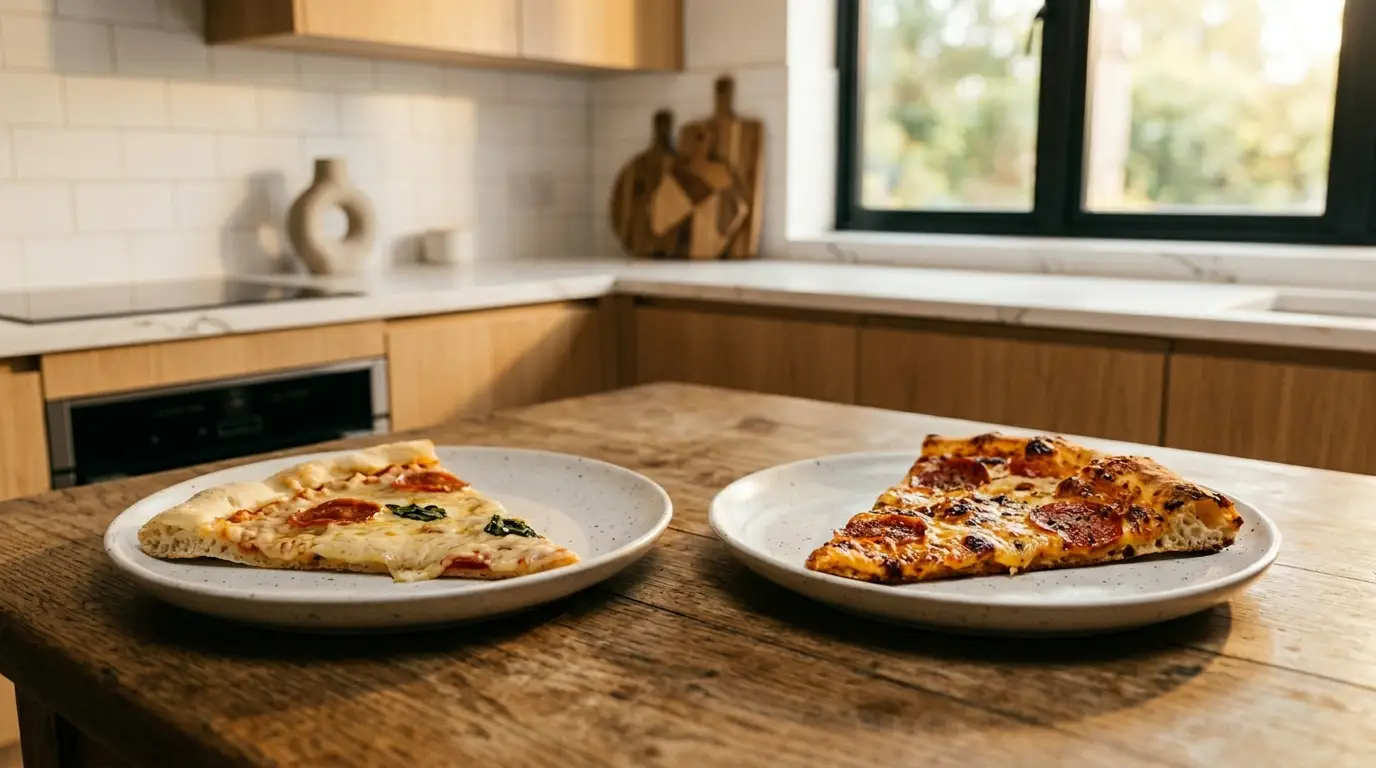
To definitively settle the convection microwave vs oven debate, you have to look past the spec sheets and evaluate your specific daily lifestyle and living constraints:
For Van Life, RVs, and Tiny Homes

Winner: Convection Microwave. Space and electrical power are your biggest daily constraints. A convection microwave gives you the ability to bake cookies, pizzas, and casseroles without sacrificing lower cabinet space to install a heavy, propane-guzzling traditional oven. Check out our top road-tested, low-draw picks in the Best Microwave for RV and Van Life article.
For Large Families & Holiday Hosting
Winner: Traditional Oven. If you regularly cook weeknight dinners for five or more people, or host Thanksgiving every year, the limited 1.2 cubic foot capacity of a hybrid unit will drive you crazy. You absolutely need the massive, multi-tiered racks of a full-sized 30-inch range.
For Studio Apartments & College Dorms
Winner: Convection Microwave. It eliminates the need for a bulky standard oven and completely replaces a separate toaster oven, clearing off precious counter space. (If you are still debating between smaller countertop appliances, read our detailed Microwave vs Toaster Oven Comparison to narrow it down further).
For the Luxury Kitchen Build
Winner: Both. You do not actually have to choose. Many high-end, modern kitchens are now installing a standard 30-inch wall oven flush below the counter for large roasts, and building a premium, built-in convection microwave directly into the upper cabinetry to handle 80% of daily tasks. Browse the Best High-End Microwave Ovens to see these stunning designer setups.
Can a Convection Microwave Completely Replace an Oven?
Yes, but with caveats.
If you are a single professional, a couple without children, or someone who primarily eats out and only cooks small, straightforward meals at home, a high-quality convection microwave can absolutely serve as your sole, everyday oven. You will save massive amounts of kitchen floor space, drastically reduce your monthly electric bill, and still be able to bake a frozen pizza, roast a tray of vegetables, or crisp up a chicken breast to perfection.
Where It Fails:
However, if you are an avid baker who makes highly sensitive artisan sourdough bread (which requires radiant heat and steam retention), or if you regularly host large dinner parties, a convection microwave simply lacks the physical volume and thermal mass to keep up. You will quickly find yourself frustrated by the inability to bake multiple sheets of cookies at once.
Assess your daily cooking habits honestly, measure your available kitchen space meticulously, and choose the appliance that makes your time in the kitchen faster, easier, and more enjoyable!
FAQ: Convection Microwave vs. Traditional Oven
2026 Guide: Baking, Roasting, and Energy Efficiency
Pro Tip: A Convection Microwave is the ultimate “second oven” for holiday cooking, handling sides and appetizers while the turkey takes over your main oven.
Explore More Appliance Guides
Don’t stop here! Visit our complete hub for more expert tips, side-by-side equipment comparisons, and updated buying recommendations for 2026.

