
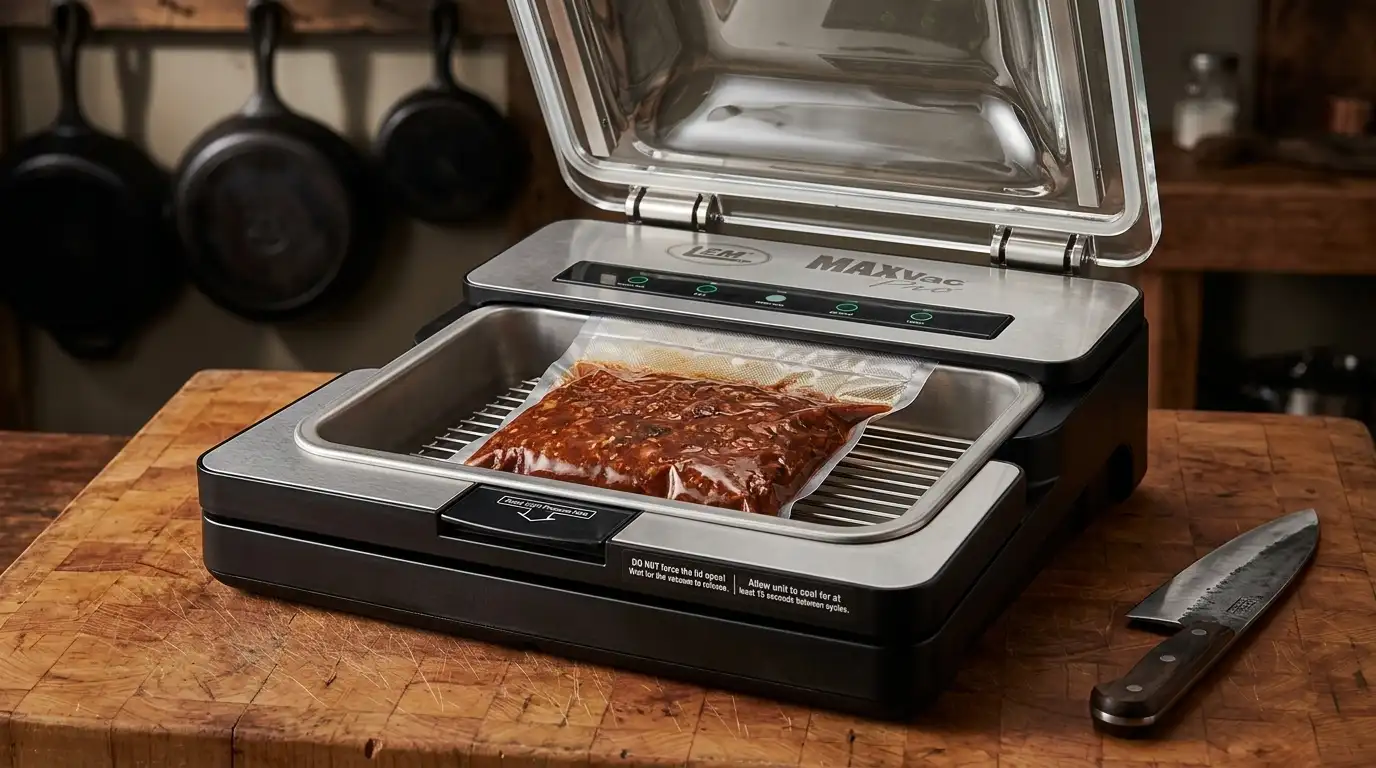
LEM MaxVac Pro Chamber Sealer Review: Is It Worth the Price? (2026)
You know that exact moment: you have just returned from a successful hunting trip, or you’ve brought home 50 pounds of bulk meat from the local butcher. You start processing everything, but by the 15th bag, your standard vacuum sealer overheats. You are forced to stand in your kitchen, waiting 30 minutes for it to cool down while your meat sits on the counter. Or worse, you try to seal a batch of wet chili, and the machine sucks the liquid directly into the motor, ruining the seal and creating a massive mess.
Honestly, standard suction sealers are great for casual weekend meal prep, but if you are processing heavy volume, they will fail you. When you reach that point, you start looking at commercial equipment.
The LEM MaxVac Pro Chamber Sealer is widely considered the holy grail for hunters, homesteaders, and hardcore bulk preppers. But with a price tag approaching (or exceeding) a thousand dollars, the burning question is: Is it actually worth the money? Let’s tear down the specs, the performance, and the drawbacks to see if this commercial beast deserves a spot in your kitchen.
📊 Quick Overview: LEM MaxVac Pro Specifications
This is not a standard kitchen gadget; it is a piece of commercial machinery. Here is what is under the hood:
| Feature | Specification / Detail |
|---|---|
| Machine Type | Commercial Chamber Vacuum Sealer |
| Pump Type | Heavy-Duty Oil Pump (Built for continuous use) |
| Construction | High-Grade Stainless Steel & Flat Lucite Lid |
| Seal Bar Length | 10.25 inches (with double seal wire) |
| Bag Compatibility | Smooth Chamber Pouches (Significantly cheaper than rolls) |
I. The Chamber Advantage: Why It Operates Differently
If you have never used a chamber sealer before, you need to understand why this machine commands such a high price. Standard sealers (like a FoodSaver or Nesco) clamp down on the edge of a bag and physically suck the air out of the bag. This creates a vacuum, but it also sucks up any liquid inside.
The Physics of Equalized Pressure
The LEM MaxVac Pro works entirely differently. You place the entire bag inside the stainless steel chamber and close the heavy lid. The machine removes the air from the entire chamber simultaneously. Because the atmospheric pressure inside the bag and outside the bag is perfectly equal, liquids do not boil or get squeezed upward.
When the air is gone, the heat bar seals the bag, and the air is let back into the chamber.
The result? You can flawlessly vacuum seal a bag of pure soup, water, or heavy marinades with zero mess. If you want to understand the exact science behind this, read our comprehensive guide: Chamber Vacuum Sealer vs. External Suction: Is the Upgrade Worth It?
II. The 3 Features That Justify the Price Tag
1. The Commercial Oil Pump (Zero Overheating)
Standard sealers use dry piston pumps that get incredibly hot quickly. The LEM MaxVac Pro utilizes a heavy-duty oil-lubricated pump. This allows the machine to run continuously for hours without triggering a thermal overload switch. If you are processing a whole deer or portioning out a massive wholesale meat purchase, this machine will keep sealing as fast as you can load the bags.
2. The ROI on Bag Costs
External suction sealers require expensive, embossed (textured) bags to create air channels. Because the LEM is a chamber sealer, it uses completely smooth, commercial chamber pouches. These pouches cost pennies compared to standard rolls. If you do high-volume sealing, the machine will literally pay for itself over a few years just in the money you save on plastic.
3. Bulletproof Construction
There is almost no plastic on this machine. The body is constructed from highly durable, easy-to-clean stainless steel. The lid is made from thick, heavy-duty clear Lucite, allowing you to watch the vacuum process and ensure the bag is perfectly positioned before the seal activates. It is built to outlast you.
⚠️ The Catch: Where Does the LEM MaxVac Pro Struggle?
Before you hit “Add to Cart,” you must be aware of the physical trade-offs that come with owning commercial equipment.
- ❌ The Weight & Size: This machine is a tank. It weighs well over 50 pounds and has a massive footprint. It is not something you can easily tuck away in a kitchen cabinet. It requires a dedicated spot on a heavy-duty counter, workbench, or rolling cart.
- ❌ Oil Maintenance: Unlike dry pumps, an oil pump requires basic routine maintenance. You will need to check the oil window to ensure it is clear and change the oil periodically (usually after every 60 hours of use or when it gets cloudy). It is a simple process, but it is a required chore.
- ❌ Size Limitations: The chamber size restricts what you can seal. You cannot seal a massive, whole rack of ribs or a 3-foot-long fish fillet like you can with an external suction machine. The item must physically fit inside the internal chamber dimensions (roughly up to a 10×13 inch pouch).
III. LEM MaxVac Pro vs. Avid Armor USV32
If you are looking at chamber sealers, you have likely seen the Avid Armor USV32. How do they compare?
The Avid Armor USV32 is an incredible “Prosumer” machine. It is lighter, cheaper, and features a dry pump (meaning zero oil maintenance). It is fantastic for daily meal prep and sous vide enthusiasts. (Read our full breakdown: Avid Armor USV32 Chamber Sealer Review: The Prosumer Choice).
However, the LEM MaxVac Pro is a true commercial workhorse. If you are a hunter processing hundreds of pounds of meat in a weekend, the Avid Armor’s dry pump will eventually need a break, while the LEM’s oil pump will easily handle the massive continuous workload.
IV. Frequently Asked Questions
Can I use FoodSaver bags in the LEM MaxVac Pro?
Technically, yes, you can use textured bags in a chamber sealer. However, it is a massive waste of money. The entire financial benefit of owning a chamber sealer is the ability to buy commercial smooth pouches in bulk, which are vastly cheaper than textured rolls.
How difficult is it to change the oil?
It is incredibly easy. The machine features a simple drain plug and a fill port. You place a cup under the drain, let the old oil flow out, close it, and pour the new synthetic vacuum pump oil in until it hits the middle of the sight glass. It takes less than 3 minutes.
Does it have an accessory port for Mason jars?
No. Chamber sealers typically do not feature external accessory hoses. However, if your Mason jar fits inside the chamber, you can place it in (with the lid resting loosely on top) and run a vacuum cycle. The pressure will seal the metal lid tightly onto the glass jar without needing any hoses.
Can I seal Mylar bags for long-term food storage?
Yes. The heat bar on the MaxVac Pro is adjustable. You can increase the sealing time to ensure it melts through the thick layers of heavy-duty Mylar bags, making it an excellent tool for hardcore prepping.
Is the machine loud?
Oil pumps are generally much quieter and have a deeper, smoother hum compared to the harsh, rattling whine of cheap, dry piston pumps found in standard suction sealers.
Explore the Vacuum Sealing Hub
Don’t stop here! Dive deeper into the science of preservation, explore head-to-head machine comparisons, and read our latest hardware reviews for 2026.

