
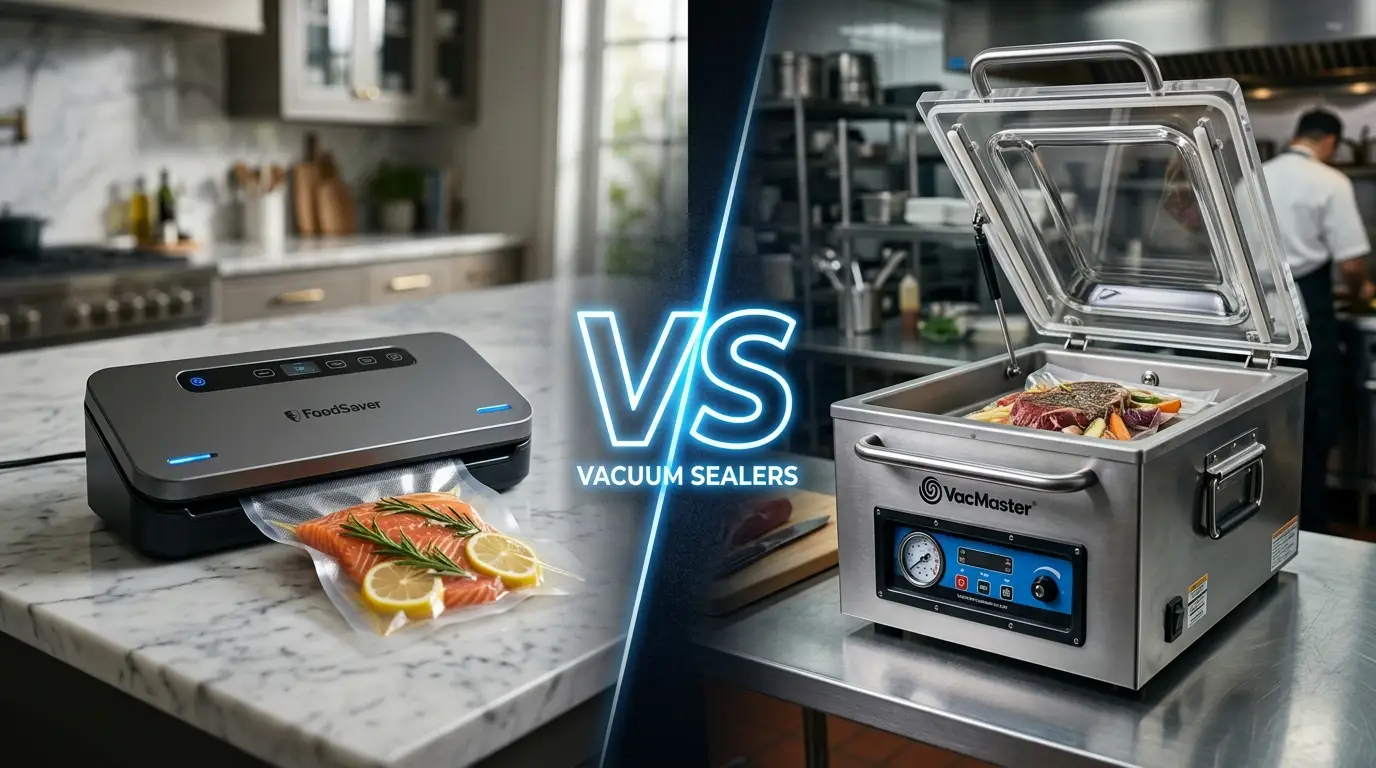
Chamber Vacuum Sealer vs. External Suction: Is the Upgrade Worth It? (2026 Guide)
If you have spent any amount of time aggressively meal prepping on a Sunday afternoon or practicing the art of precision sous vide cooking, you have inevitably felt the crushing frustration of a standard vacuum sealer struggling to handle its job. It usually starts well, but then—disaster—the machine violently sucks up the wet marinade, ruins the hot polymer seal, and leaves a sticky, greasy mess inside the vacuum channel.
This is the exact moment most dedicated home chefs begin eyeing the heavy-duty, stainless steel “tanks” of the commercial culinary world: Chamber Vacuum Sealers.
But with prices for entry-level chamber units often starting at five to ten times the cost of a high-end external suction sealer, you have to ask a serious financial question: Is the massive upgrade actually worth it? Are you paying for necessary industrial-grade performance, or just a bulky piece of counter-crowding machinery? In this head-to-head showdown, we compare the complex physics, the hidden long-term bag savings, and the unparalleled liquid-handling capabilities of both technologies. For a deeper look at the specific models we recommend, visit our Ultimate Vacuum Sealing Hub.
The Quick Answer
An External Suction Sealer is an affordable, compact machine that physically sucks air out of a textured bag. It is perfect for dry goods and casual meal prep but fails miserably with liquids. A Chamber Vacuum Sealer is an expensive, heavy-duty commercial appliance that places the entire bag inside a sealed box, manipulating atmospheric pressure to seal pure liquids (like soups and marinades) flawlessly without sucking them into the pump. If you process high volumes of food, the massive savings on cheap “smooth” chamber bags will completely pay for the expensive machine in just a few years.
I. The Physics of the Seal: Why It Matters
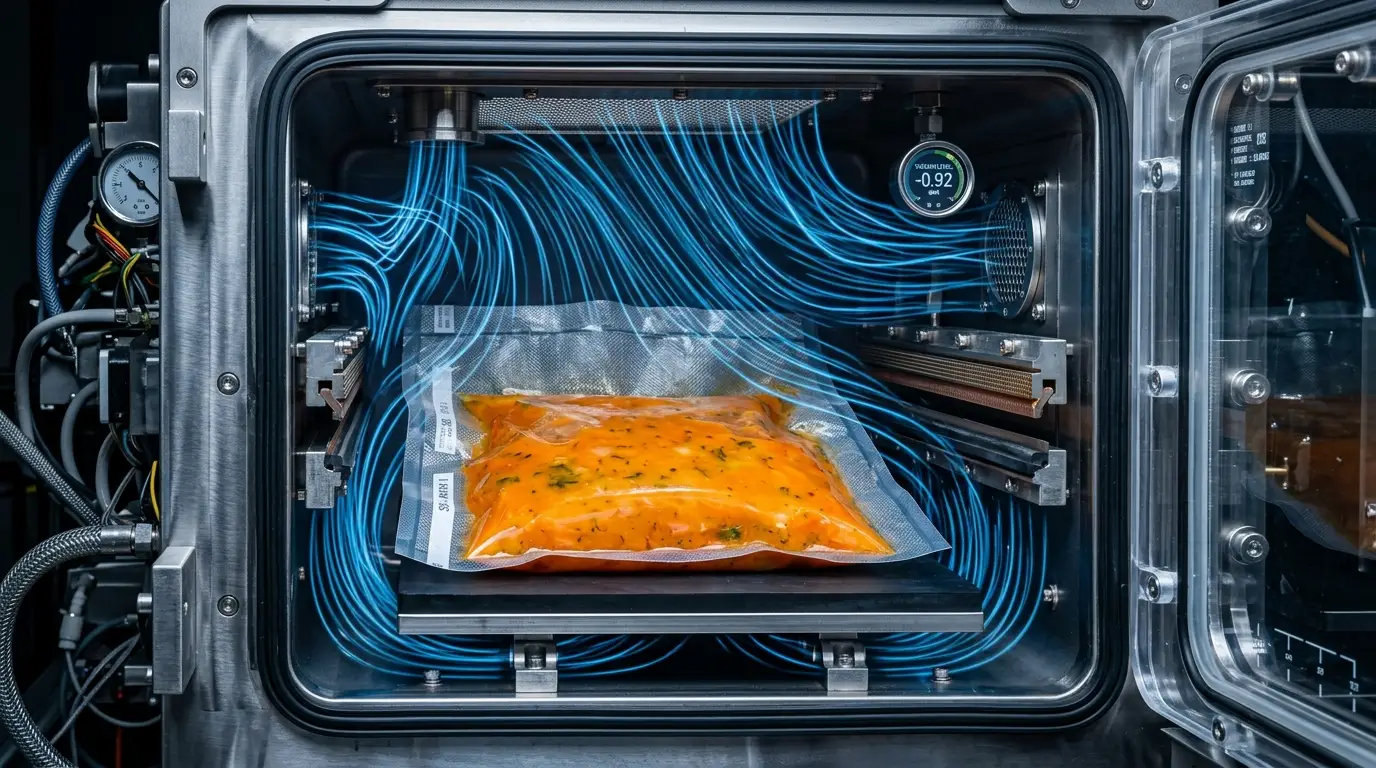
To truly understand the massive price gap between these two appliances, you have to understand exactly how they interact with atmospheric air pressure. They do not operate on the same scientific principles.
External Suction (The Straw Method)
Household machines like the Nesco VS-12 or the FoodSaver V4840 work exactly like drinking through a straw. They clamp their gaskets tightly onto the open edge of a plastic bag and use a small motor to physically pull air out from the inside.
This creates a massive pressure differential: low pressure inside the bag, and high normal atmospheric pressure outside the bag. The outside atmosphere aggressively crushes the bag flat. This is why delicate foods (like fresh berries or artisan bread) get instantly pulverized into a paste by external sealers.
Chamber Vacuum (The Space Method)
A chamber sealer, such as the Avid Armor USV32, takes a radically different approach. You place the entire unsealed bag inside a heavy-duty, airtight metal box. When you close the thick glass lid, the machine’s powerful pump evacuates the air from the entire chamber at once.
Because the pressure is perfectly equalized both inside and outside the bag, the air isn’t violently “pulled” out; it simply disappears from the entire environment. The bag does not collapse until the machine seals the plastic and then lets air back into the chamber. This allows you to safely seal incredibly fragile items without crushing them.
II. Liquid Handling: The Absolute Game Changer
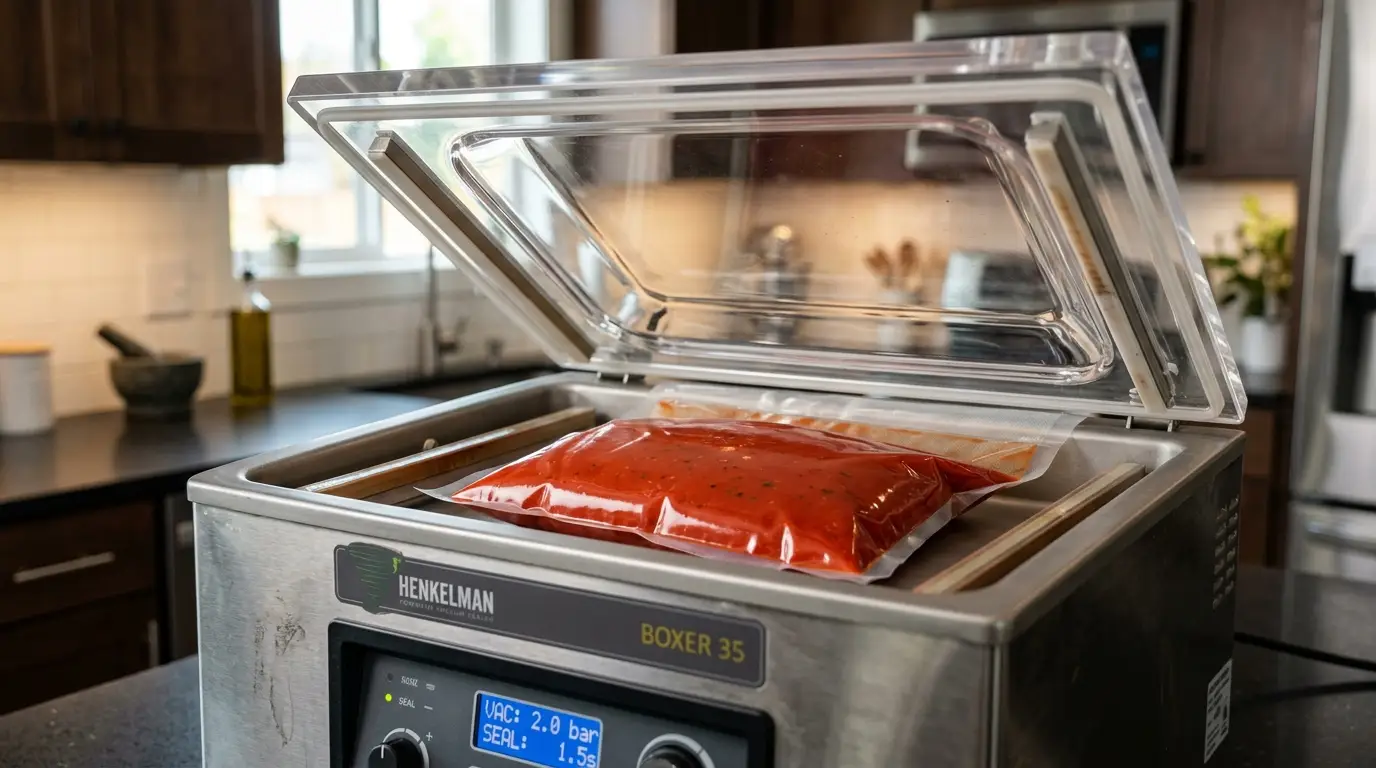
The most significant, life-changing advantage of a chamber sealer is its ability to vacuum seal pure liquids flawlessly.
Because a chamber sealer keeps the pressure perfectly equalized inside and outside the bag until the exact moment of heat-sealing, liquids are not forcefully pushed or pulled in any direction. They do not try to escape the bag. You can literally place a bag filled with pure chicken stock, chili, or a heavily marinated pork shoulder into the machine, and it will seal without a single, microscopic drop of liquid being sucked into the pump.
No More Kitchen Hacks
If you frequently find yourself using the frustrating “paper towel hack” or waiting hours for your soups to freeze solid (techniques we covered heavily in our guide on Vacuum Sealer Not Sealing Wet Foods), upgrading to a chamber sealer will be an absolute revelation.
It is the only way to achieve a truly professional, leak-proof result for Sous Vide Cooking, where massive amounts of wet marinades and compound butters are essential for flavor development.
The Magic of “Cold Boiling”
Because chamber sealers drop the atmospheric pressure so low, they physically lower the boiling point of liquids. You will actually see room-temperature water bubble and “boil” inside the chamber without any heat.
High-end chefs use this unique physical phenomenon to perform culinary magic. The rapid expansion and collapse of gases allow you to “flash pickle” vegetables in seconds, rapidly infuse alcohols and oils with herbs, and compress fruits (like watermelon) to dramatically change their texture. An external suction machine cannot do any of this.
III. The Hidden Math: Bag Costs Over Time
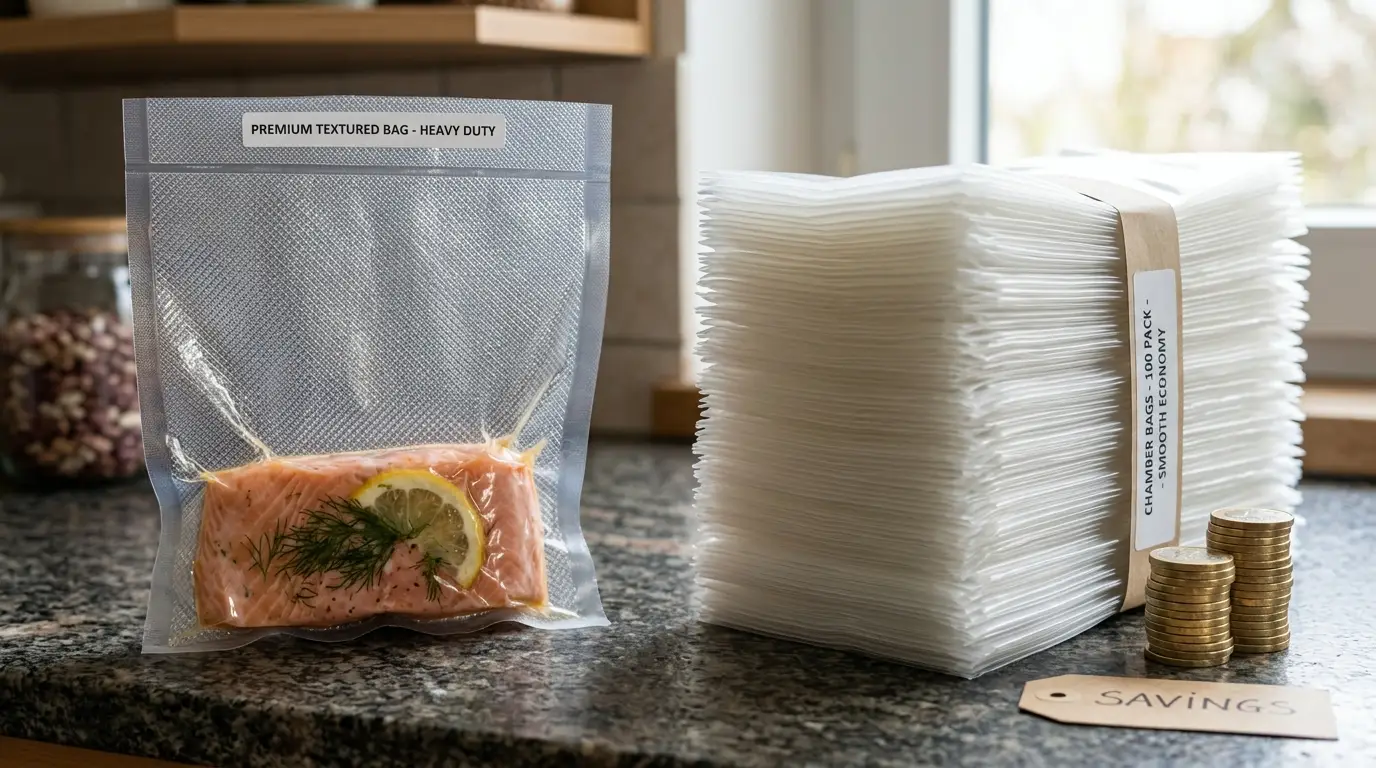
At first glance, a $150 external sealer seems vastly cheaper than a $700 chamber sealer. But experienced users know that the upfront cost of the machine is just the down payment. The true cost of vacuum sealing lies in the proprietary plastic bags. The “Bag Math” tells a wildly different story.
External Bags: The Expensive Toll
External suction machines require specialized “embossed” bags. These bags have a textured, diamond-patterned grid on one side. If the bag were perfectly smooth, the machine’s clamping jaws would squeeze the plastic shut, trapping the air at the bottom. The embossed texture creates microscopic air channels, allowing the machine to suck the air out.
Because they require complex manufacturing, embossed bags are highly expensive, often costing $0.30 to $0.50 per bag (or more, if you buy brand-name rolls).
Chamber Bags: The Bulk Savings
Because a chamber sealer evacuates the entire environment simultaneously, it does not need air channels to function. Therefore, chamber sealers use entirely “smooth” bags.
These are the exact same mass-produced, heavy-duty commercial plastics used in industrial butcher shops. They are incredibly cheap, costing as little as $0.05 to $0.10 per bag when purchased in bulk boxes of 1,000.
The ROI Calculation
If you are a high-volume user—processing hundreds of bags of meat a year after a hunting trip, prepping meals for a massive family, or doing bulk warehouse grocery runs—the math is undeniable. Saving $0.35 per bag on 1,000 bags saves you $350. The savings on the cheap, smooth bags alone will completely pay for the expensive chamber machine in just 18 to 24 months. For a deeper cost breakdown, see our FoodSaver vs Vacuum Chamber Sealer financial analysis.
IV. Maintenance: Oiled vs. Oil-Less Pumps
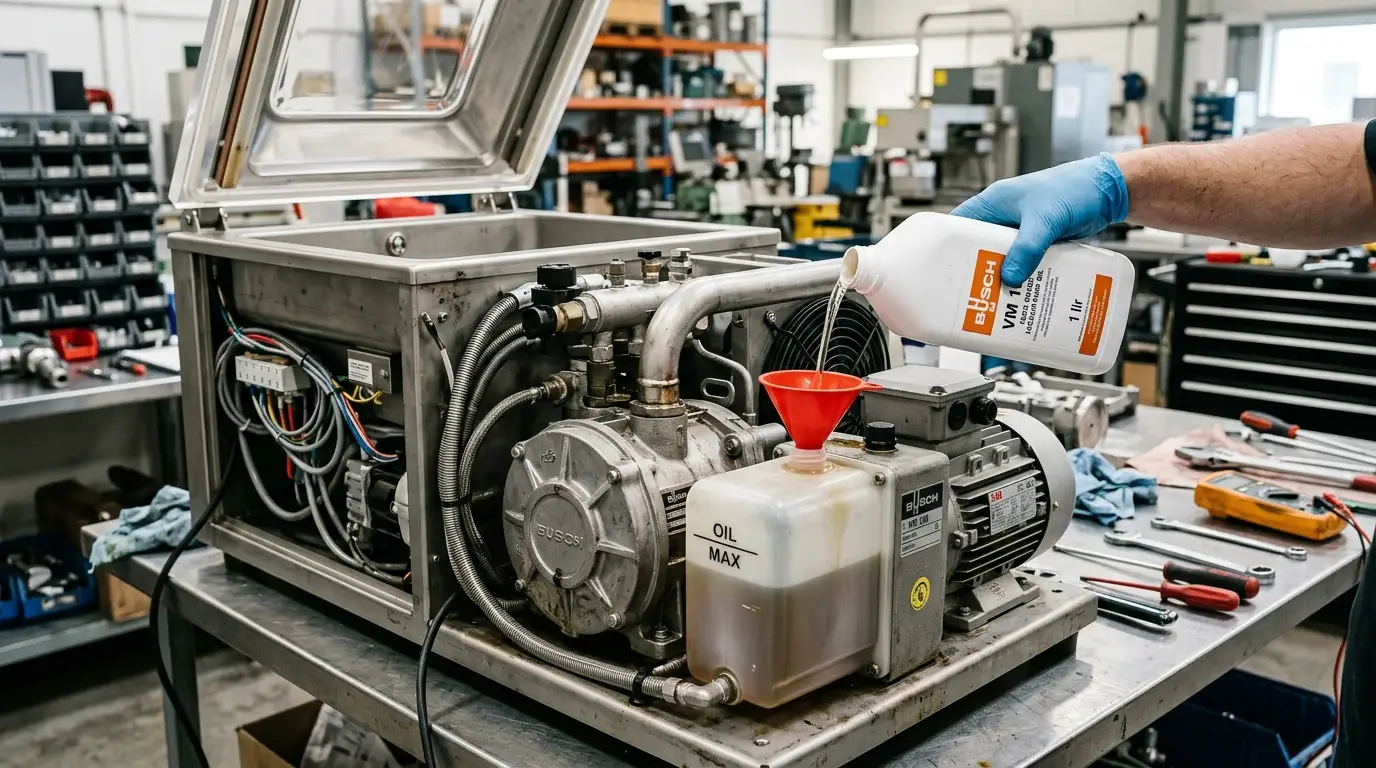
When you decide to upgrade to a chamber sealer, you aren’t just buying a heavier appliance; you are buying an actual industrial compressor. This brings up a new, highly technical choice you must make: the pump type.
Oil-Less Pumps (Dry Pumps)
These are incredibly common in modern “prosumer” countertop models designed for home kitchens. They utilize self-lubricating piston cylinders.
- Pros: 100% maintenance-free. You plug it in and never have to worry about fluids. Lighter weight.
- Cons: They run noticeably louder, pull a slightly weaker maximum vacuum, and have much shorter continuous run times before triggering thermal overload safety shutoffs.
Oiled Pumps (Rotary Vane)
These are the massive engines found in industrial beasts like the LEM MaxVac Pro. They use actual liquid oil to lubricate and seal the vacuum pump.
- Pros: Incredibly quiet, exceptionally fast at pulling a 99.9% vacuum, and can run continuously all day long without ever overheating.
- Cons: You must physically check the oil sight glass and perform routine oil changes (like a car engine) every few months to keep it running safely.
Not sure which engine fits your garage or kitchen? We break down the exact pros and cons of these mechanical engines in our highly technical Oiled vs. Oil-Less Chamber Vacuum Pumps diagnostic guide.
V. Direct Comparison: Spec by Spec
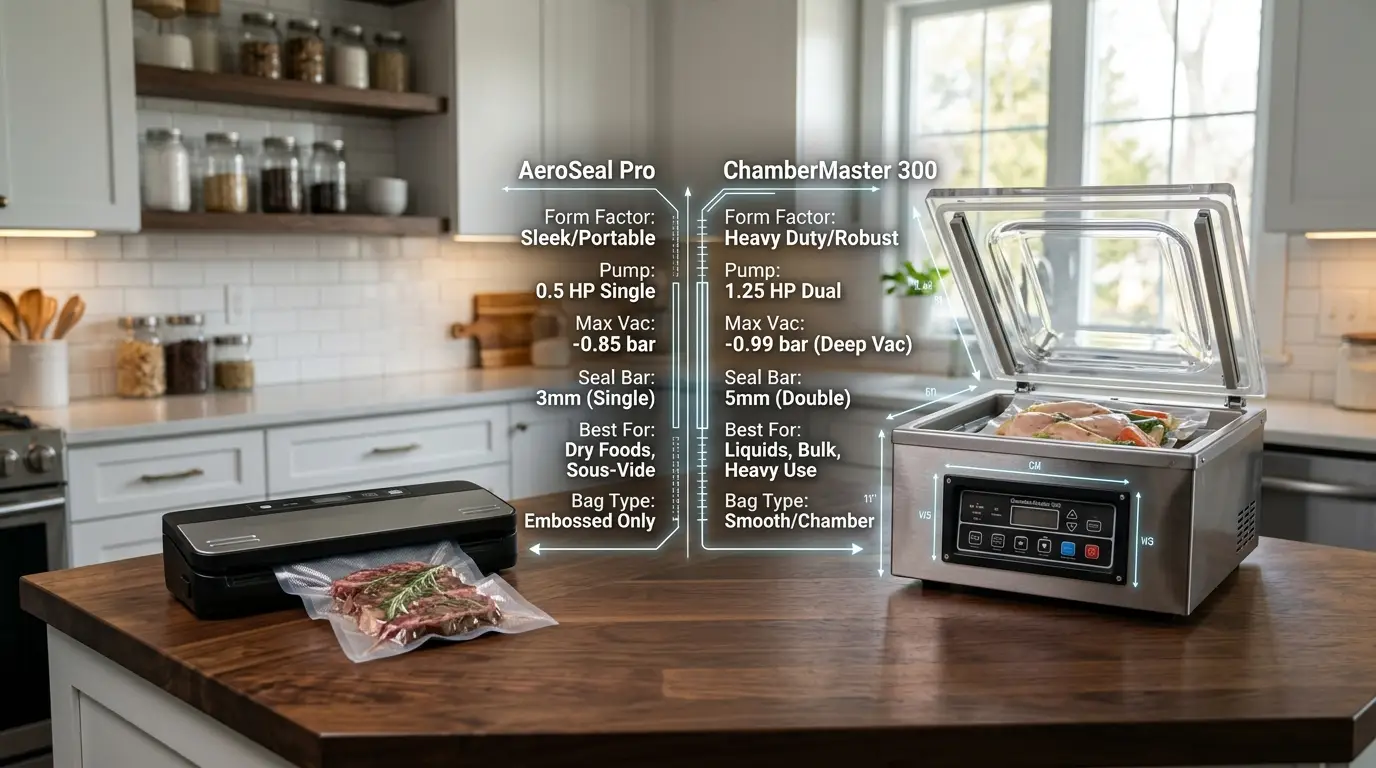
| Feature | External Suction Sealer | Chamber Vacuum Sealer |
|---|---|---|
| Upfront Machine Cost | $50 – $250 (Low) | $500 – $1,500+ (High) |
| Bag Type Required | Embossed / Textured | Smooth / Flat |
| Cost Per Bag | ~$0.35 (Expensive) | ~$0.08 (Extremely Cheap) |
| Sealing Pure Liquids | Fails (Sucks liquid into pump) | Flawless (Equalized pressure) |
| Weight & Footprint | 5 lbs (Stores in a drawer) | 50 to 90 lbs (Permanent counter spot) |
VI. The Verdict: Who Should Upgrade?

Choosing the right machine is a matter of analyzing your culinary ambitions, your kitchen real estate, and your processing volume.
Stick with External Suction If…
You primarily seal dry goods like grains, dehydrated jerky, or steaks that have been patted completely dry. If you only vacuum seal once or twice a week, have extremely limited counter space, and don’t mind the occasional struggle when freezing wet marinades, spending $600 on a chamber is massive overkill.
A reliable, high-quality external unit like the FoodSaver or Nesco is more than enough to handle your daily kitchen tasks efficiently.
Upgrade to a Chamber Sealer If…
You are a serious sous-vide enthusiast who loves wet marinades, a dedicated hunter processing massive, 200-pound yields of venison (check out the MEAT! Chamber Sealer Review), or a relentless bulk-buyer looking to save massive amounts of money on long-term bag costs.
The miraculous ability to flawlessly seal soups, infuse craft cocktails, and perform high-end culinary tricks makes it a highly versatile, professional tool that easily justifies its heavy premium price tag.
Explore the Vacuum Sealing Hub
Don’t stop here! Dive deeper into the science of preservation, explore head-to-head machine comparisons, and read our latest hardware reviews for 2026.
FAQ: Vacuum Sealing Liquids & Machine Comparison
2026 Guide: Wet Foods, Chamber Sealers, and Pro Hacks
Pro Tip: If using an external sealer for liquids, pre-freeze the soup in a container for 2 hours until it is a “slush” before sealing!
Vacuum Sealing Excellence: The Definitive Guide (2026)
