
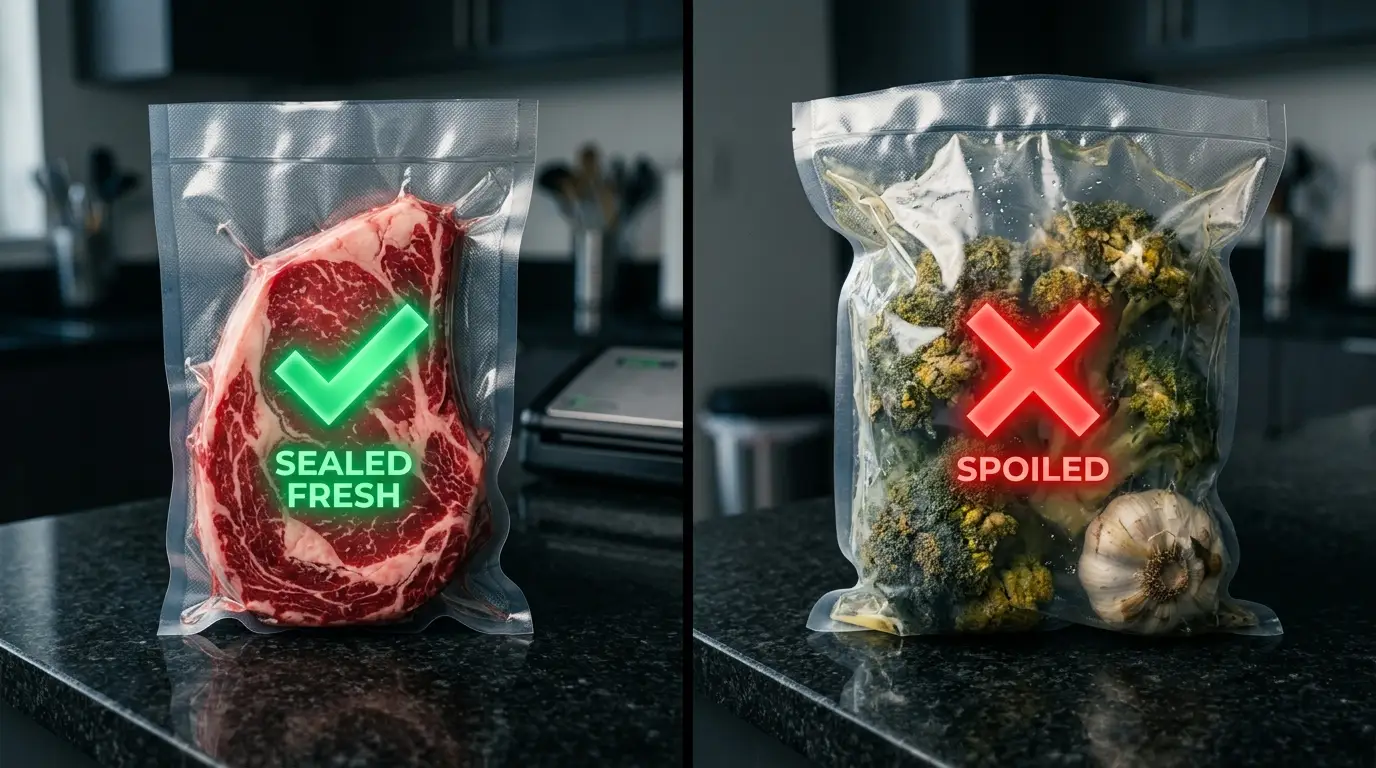
Foods You Should Never Vacuum Seal: The 2026 Safety Guide
Vacuum sealing is often treated as the ultimate kitchen magic trick. By physically extracting oxygen and creating an impenetrable airtight barrier, you can definitively stop freezer burn, preserve highly expensive steaks for years, and dramatically extend the shelf life of your everyday groceries.
However, removing oxygen fundamentally changes the chemical and biological environment inside that plastic bag. While most raw meats and dry goods thrive in a zero-oxygen space, certain foods react violently to it. In some cases, vacuum sealing the wrong vegetable will simply cause it to rot and turn to slime at an accelerated rate. In other, much more severe cases, it can create a perfect breeding ground for deadly anaerobic bacteria, turning a healthy ingredient into a lethal biological hazard.
Before you put your entire pantry into plastic, you must understand the strict rules of food preservation. In this comprehensive guide, we break down the specific foods you should never vacuum seal and explain the deep biochemistry behind why they fail. For a complete look at safe storage practices and machine reviews, explore our master directory: Vacuum Sealing Excellence: The Definitive Guide for 2026.
The Quick Answer
You should never vacuum seal raw garlic and onions, as the lack of oxygen creates the perfect environment for deadly botulism spores to produce toxins. Cruciferous vegetables (broccoli, cauliflower, cabbage) emit sulfur gases that will inflate the bag and cause rapid rotting unless they are blanched first. Fresh mushrooms will decay into slime, and soft cheeses (Brie, Ricotta) will grow bad mold because they need to “breathe.” Finally, never seal warm or steaming foods, as the steam prevents the bag from sealing properly and fosters bacterial growth.
1. The Anaerobic Danger: Raw Garlic & Onions
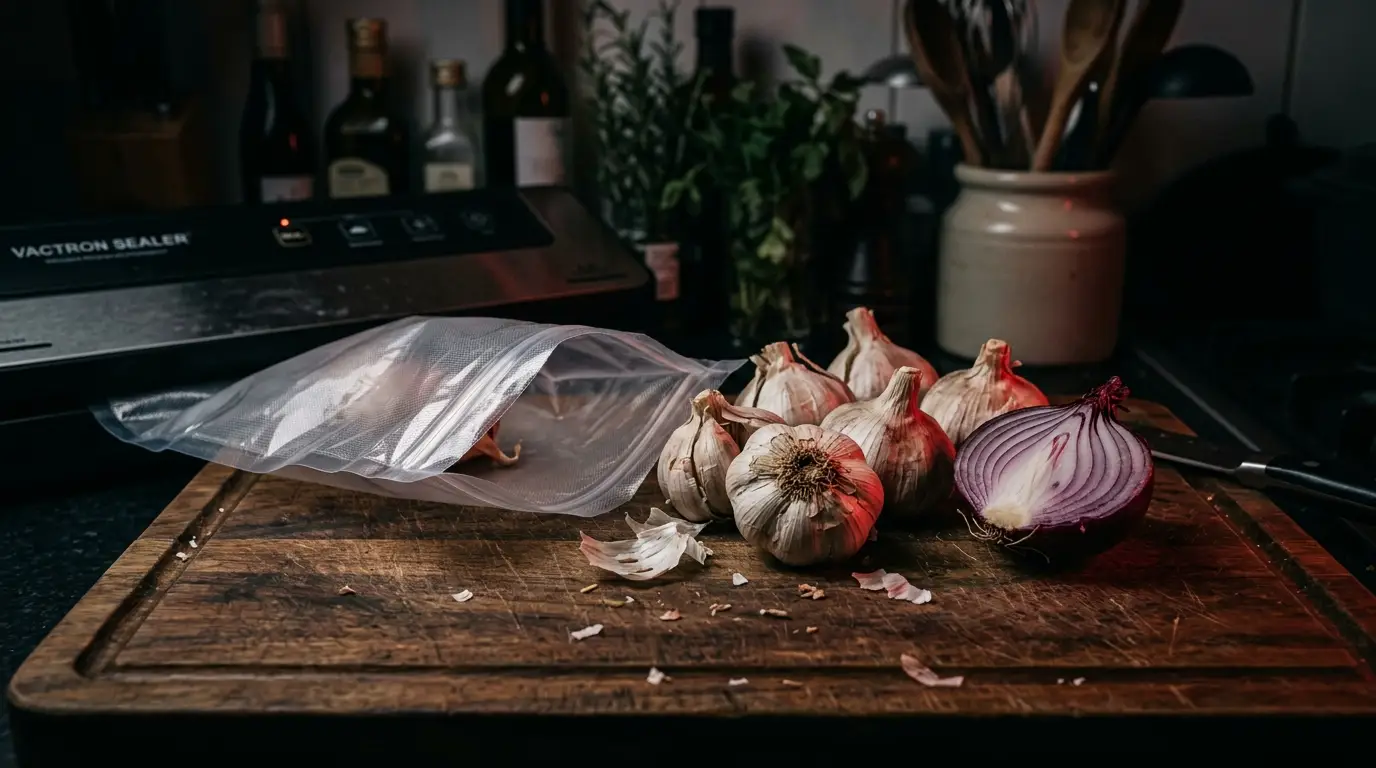
The absolute most dangerous, potentially lethal mistake you can make with a vacuum sealer is bagging raw garlic cloves or fresh, unpeeled onions and leaving them at room temperature.
The Science of Botulism
Garlic and onions grow deep in the soil, meaning they naturally carry microscopic traces of Clostridium botulinum spores. In the open air of your kitchen counter, these spores are completely inactive and harmless.
However, the bacteria that cause botulism are anaerobic—they only grow, multiply, and produce deadly neurotoxins in environments with zero oxygen, low acidity, and ambient room temperatures. When you vacuum seal raw garlic, you are intentionally, perfectly recreating the exact environment botulism needs to thrive. Worse, botulism does not change the taste, smell, or visual appearance of the food, making it a silent killer.
The Safe Alternative
If you want to preserve garlic or onions for long-term storage, you must alter their state. Chop them and freeze them in a standard container, or dehydrate them completely in a food dehydrator before vacuum sealing. You can also safely vacuum seal commercially peeled garlic if it is immediately and permanently stored in the deep freeze. Never seal raw alliums and leave them in the pantry.
2. Cruciferous Vegetables (The Gas Problem)
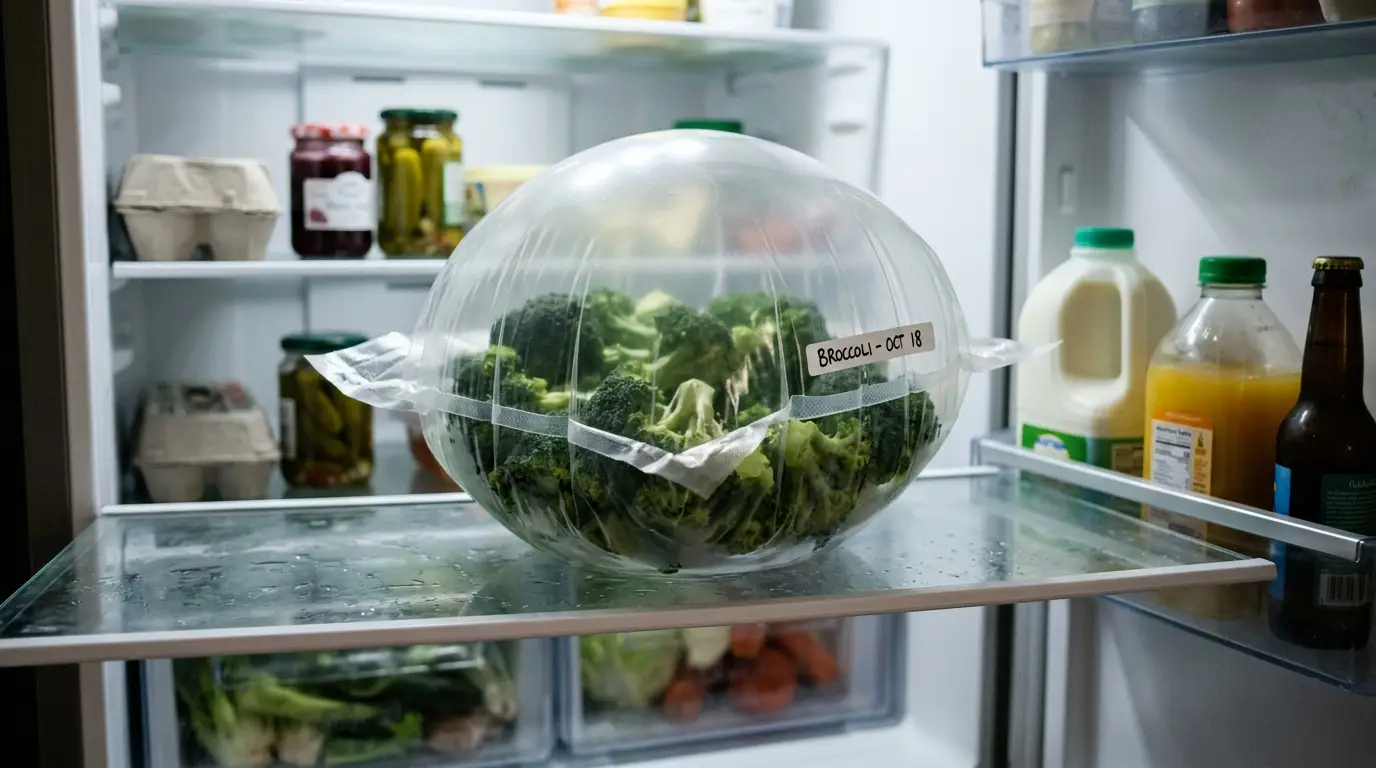
If you have ever tried to vacuum seal fresh broccoli, cauliflower, Brussels sprouts, cabbage, turnips, or radishes, you likely returned to your refrigerator a few days later to find the heavy-duty plastic bag puffed up like a birthday balloon.
These vegetables belong to the cruciferous (Brassicaceae) family. Even after they are harvested, they continue to respire and undergo active enzymatic ripening. As they age, they naturally emit nitrogen and highly pungent sulfur gases. In a standard, breathable crisper drawer, these gases safely dissipate into the air. But inside a hermetically sealed vacuum bag, the gas is violently trapped. The bag inflates, the vacuum seal is physically broken by the pressure, and the trapped sulfur causes the vegetables to rot, turn to mush, and smell absolutely horrible at an exponentially accelerated rate.
The Safe Alternative: Blanching
To successfully vacuum seal these vegetables, you must neutralize the active enzymes before bagging them. You do this through a culinary process called blanching.
- Bring a large pot of water to a rolling boil.
- Drop the vegetables in for exactly 2 to 3 minutes.
- Immediately remove them and plunge them into an ice-water bath to stop the cooking process (“shocking” them).
- Dry them completely with paper towels. The enzymes are now permanently deactivated. You can safely vacuum seal and freeze them for up to two years.
3. Fresh Mushrooms
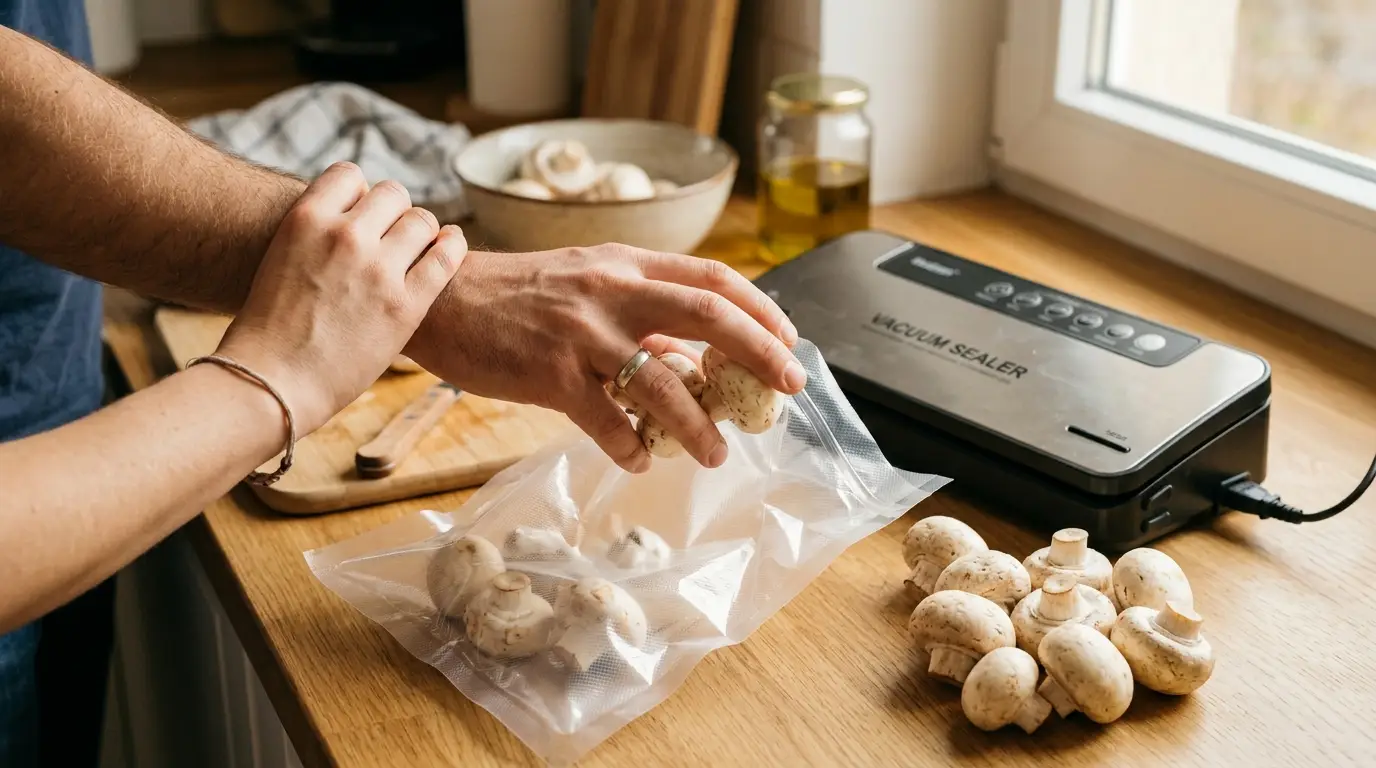
Mushrooms are not vegetables; they are fungi. This biological distinction drastically changes how they handle cold storage and oxygen deprivation.
Fresh mushrooms decay much faster when completely deprived of oxygen. They have a naturally immense moisture content and continue to actively ripen and respire after being harvested. If you vacuum seal raw mushrooms, the lack of air combined with their trapped internal moisture aggressively accelerates the enzymatic decay process. Rather than preserving them, vacuum sealing will cause fresh mushrooms to turn into a dark, slimy, highly unappetizing mush within a matter of days.
The Safe Alternative
Cook the mushrooms first. Sautéing them in a pan removes the excess water and entirely stops the enzymatic decay process. Once they are fully cooked and allowed to cool to room temperature, they are perfectly safe to vacuum seal and freeze. Alternatively, you can dehydrate raw mushrooms completely until they are “cracker dry” before vacuum sealing them for pantry storage.
4. Soft, Unpasteurized Cheeses
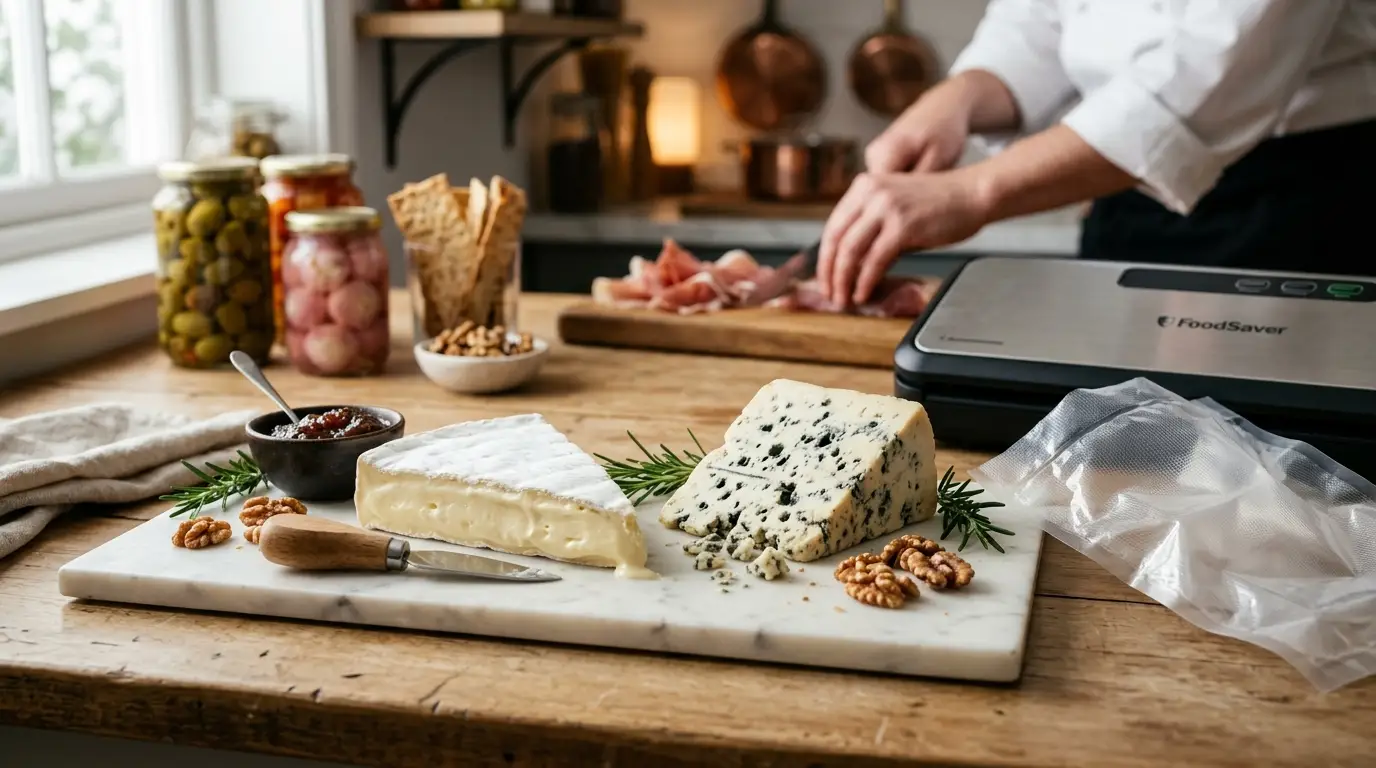
Vacuum sealing a dense, hard block of cheddar, aged gouda, or parmesan is an absolutely brilliant way to prevent surface mold and extend its life in the fridge for up to six months. But applying that exact same logic to soft cheeses is a recipe for culinary disaster.
Cheeses like Brie, Camembert, Ricotta, blue cheese, and unpasteurized soft goats’ milk cheeses are biologically active. They contain live cultures and have a very high moisture content. These specific cheeses physically require ambient oxygen to “breathe” and maintain their structural integrity and flavor profile.
Vacuum sealing them tightly traps their expelled moisture directly against the rind. This suffocates the intended bacterial cultures, causing harmful, toxic mold to rapidly overtake the good mold, souring the cheese and ruining it almost overnight. For a complete, comprehensive breakdown of dairy preservation rules, read our dedicated guide: Can You Vacuum Seal Cheese? Storage Times Explained.
5. Warm or Steaming Foods
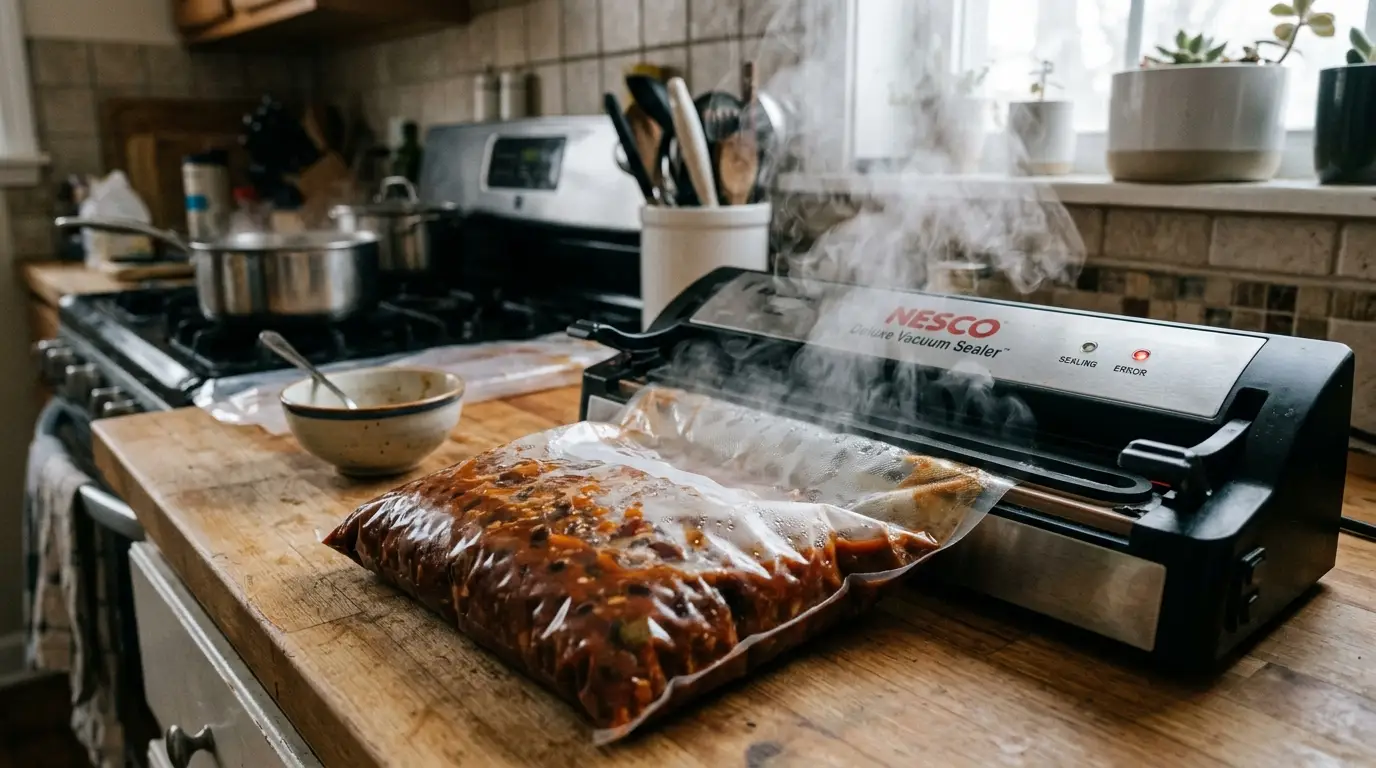
This restriction is less about the biology of the food itself and entirely about the physical thermodynamics of your expensive appliance. You should absolutely never vacuum seal food that is still warm to the touch or emitting visible steam.
Heat acts as a massive bacterial incubator. Vacuum sealing warm food traps that residual heat inside the thick plastic packaging, keeping the food insulated in the “Danger Zone” (40°F – 140°F) for significantly longer than if it were left to cool openly in the fridge. This encourages rapid bacterial multiplication before the food finally freezes.
As the machine pulls a vacuum, the intense suction will literally pull the steam directly into the vacuum pump. Moisture ruins the Teflon heating element, preventing the bag from fusing securely. Over time, inhaling hot moisture will completely corrode and destroy your machine’s internal motor.
The Safe Alternative
Patience is key. Always let your foods, soups, and roasted meats cool completely in the refrigerator before sealing. If you are constantly struggling to seal messy liquids like broths or wet marinades without ruining the plastic weld, read our step-by-step mechanical troubleshooting guide: Vacuum Sealer Not Sealing Wet Foods? Here’s the Fix.
Explore the Vacuum Sealing Hub
Don’t stop here! Dive deeper into the science of preservation, explore head-to-head machine comparisons, and read our latest commercial hardware reviews for 2026.
FAQ: Vacuum Sealing Master Guide
2026 Edition: Wet Foods, Machine Performance & Food Safety
Pro Tip: Always store your vacuum sealer in the ‘Unlocked’ position to prevent the gaskets from flattening and losing suction power!
Vacuum Sealing Excellence: The Definitive Guide (2026)
