
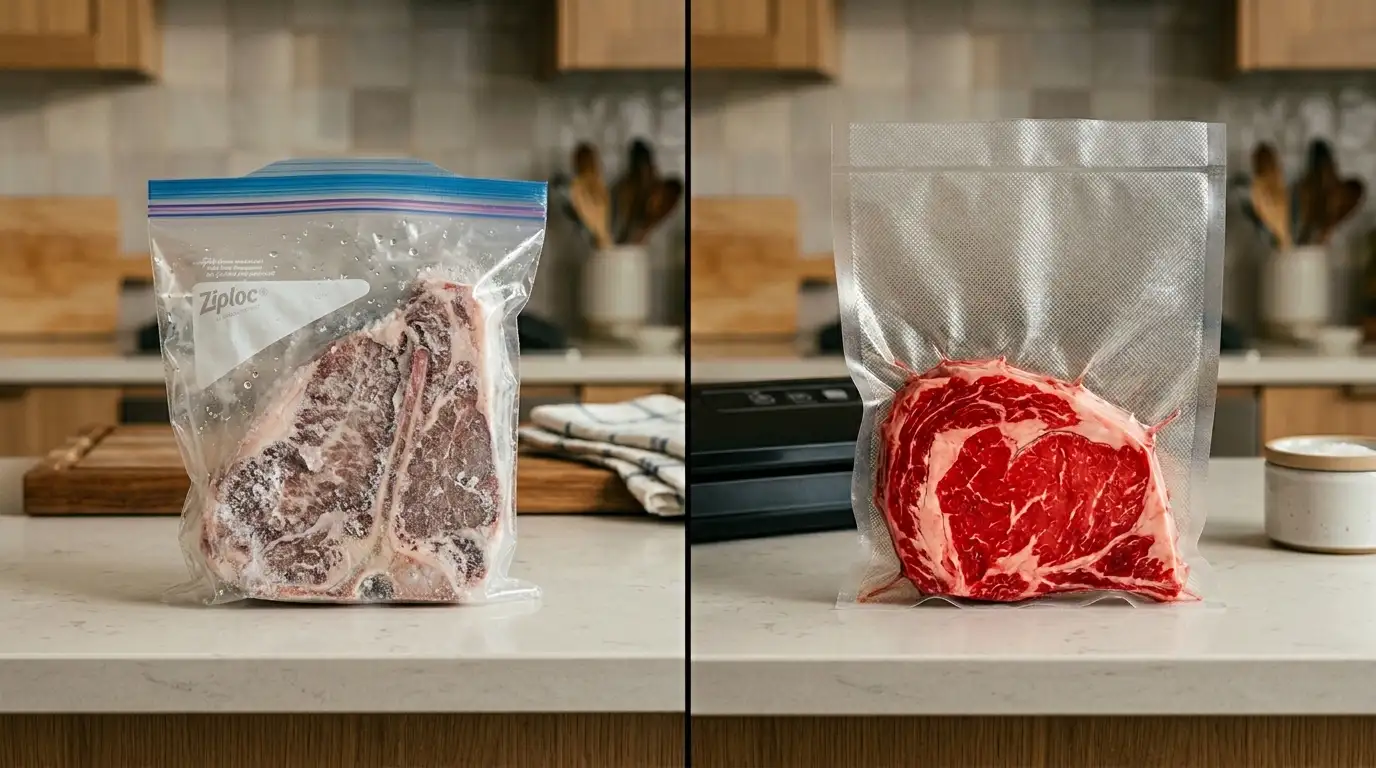
Vacuum Sealer Bags vs Freezer Bags: Is It Worth It? (2026 Guide)
When you return home from the grocery store or a successful autumn hunt with massive, bulk cuts of meat, the immediate instinct is to toss everything straight into the chest freezer as quickly as possible. For decades, the standard household weapon for this task has been the classic zipper-style freezer bag. They are cheap, accessible in every supermarket, and require absolutely zero specialized equipment to use.
However, as global food prices continue to climb in 2026, throwing away gray, freezer-burned chicken breasts and ruined steaks three months later is a massive financial leak that most households can no longer afford to ignore. This economic reality has led to a massive, unprecedented surge in home vacuum sealing.
But is upgrading to a specialized appliance and continuously buying proprietary plastic rolls actually worth the investment? In this vacuum sealer bags vs freezer bags breakdown, we compare the hidden costs of food waste, the microscopic chemistry of physical materials, and the strict culinary applications of both to determine what truly deserves a place in your kitchen.
The Quick Answer
Yes, vacuum sealer bags are completely worth the investment for any food stored longer than one month. Standard freezer bags are made of porous polyethylene that allows oxygen to bleed through over time, causing severe freezer burn and oxidation. Vacuum sealer bags are constructed with a heavy-duty nylon barrier that completely blocks oxygen. While vacuum bags cost slightly more upfront ($0.30 vs $0.15 per bag), they save hundreds of dollars a year by preventing expensive meat from spoiling. For a complete look at all our preservation testing, explore our Ultimate Guide to Vacuum Sealing.
I. The Material Difference (Why Ziplocs Fail)
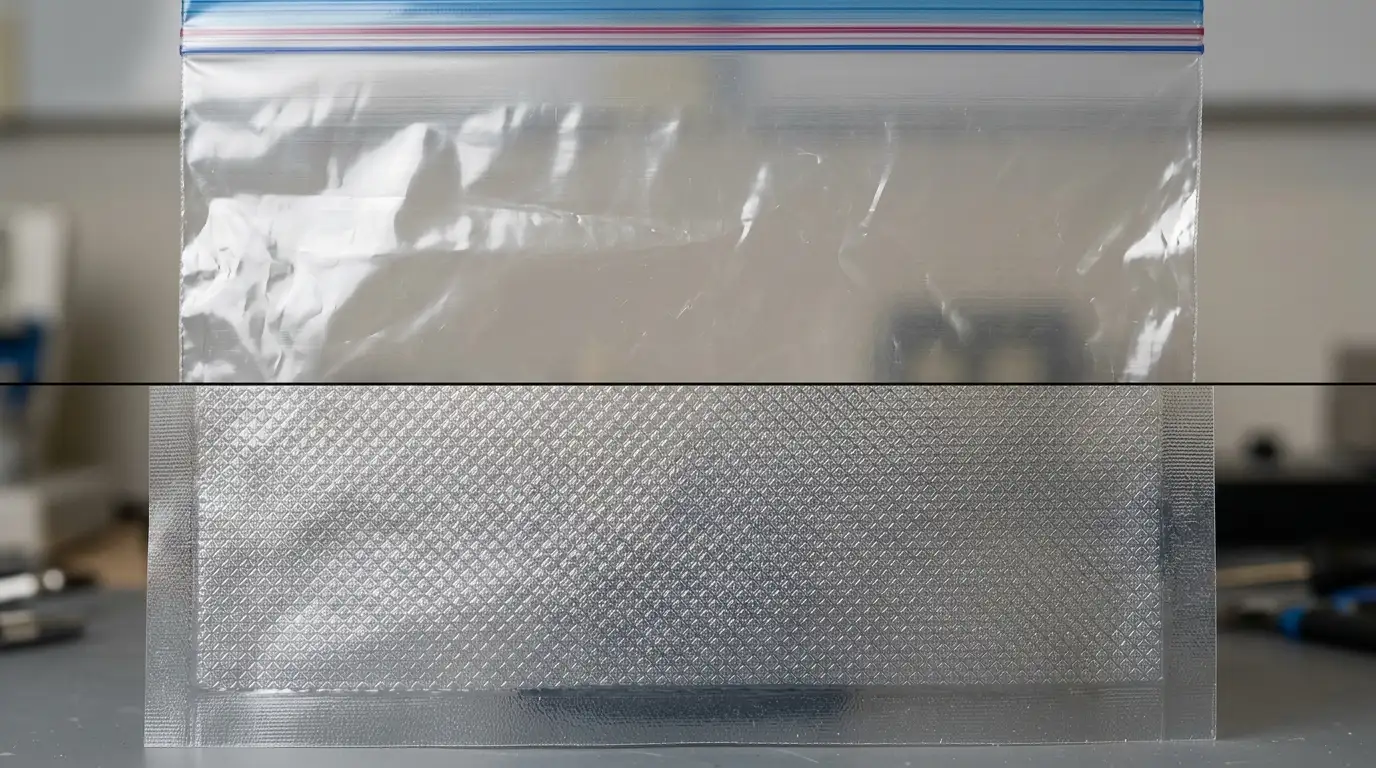
To the naked human eye, a clear plastic bag is just a clear plastic bag. But under a microscope, standard zipper freezer bags and vacuum sealer bags are highly specialized chemical polymers engineered for entirely different environments.
Standard Freezer Bags (LDPE)
Typical Ziploc-style freezer bags are made from a single, slightly thicker layer of Low-Density Polyethylene (LDPE). While they are excellent for short-term moisture retention (keeping liquids inside the bag), polyethylene has a massive molecular flaw: it is fundamentally permeable to oxygen.
Over a few months in the freezer, microscopic oxygen molecules pass right through the physical plastic walls. This slow bleed of oxygen inevitably leads to rapid fat oxidation (rancidity) and freezer burn.
Vacuum Sealer Bags (Nylon Barrier)
Vacuum bags are heavy-duty, multi-layer engineering marvels. They combine food-safe polyethylene on the inside with a tough, impenetrable outer layer of Nylon or EVOH. Nylon acts as an absolute, 100% oxygen and moisture barrier.
Furthermore, bags designed for external suction machines feature specialized “embossed” channels (the textured diamond pattern on one side). These micro-channels prevent the bag from sealing shut against itself, allowing the machine to powerfully suck all the air out of the bottom of the bag.
Pro Tip: If you are packaging sharp, jagged items like T-bone steaks or deer ribs, even standard vacuum bags might tear. If you want maximum puncture resistance, check out our highly technical guide on Heavy Duty 5-Mil Bags vs Standard Vacuum Bags for Bone-In Meat.
II. The Cost Breakdown: Pennies vs. Food Waste
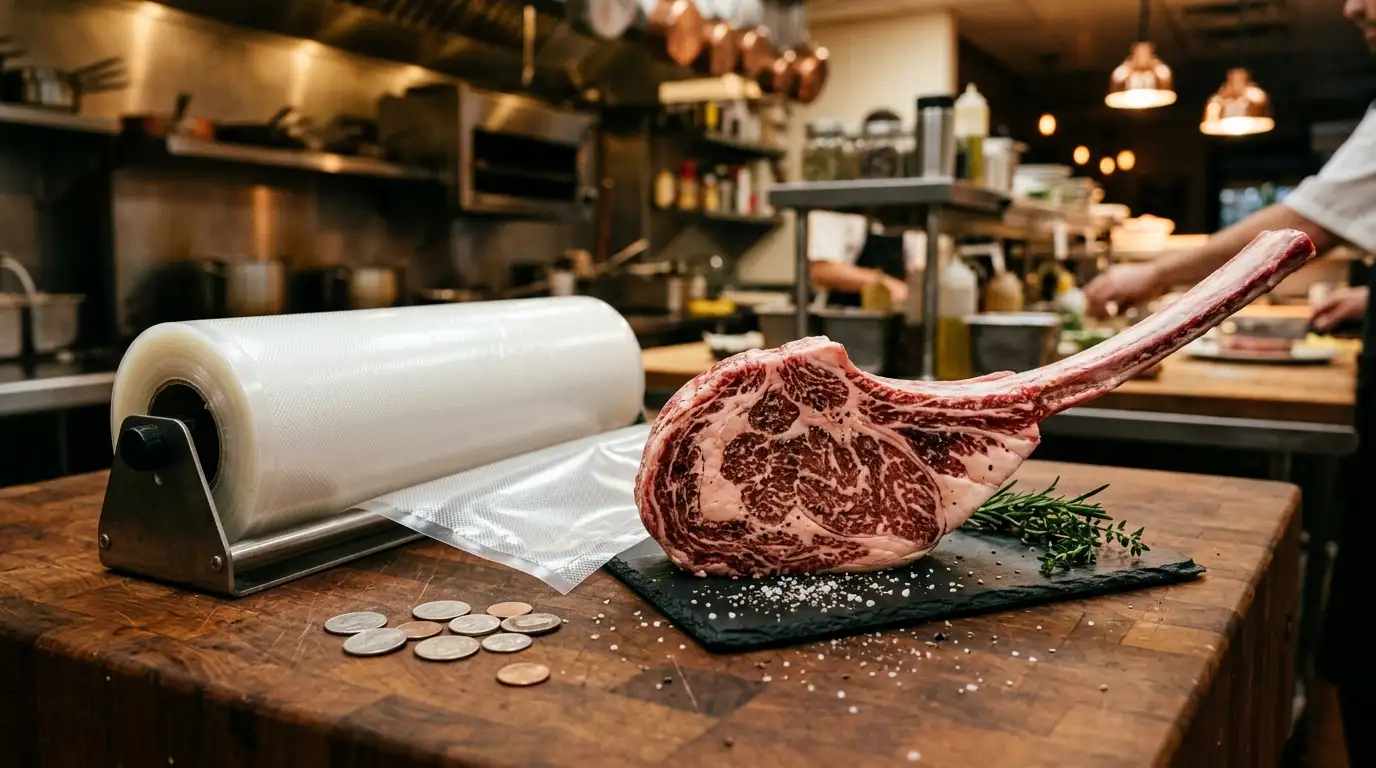
The absolute biggest, most vocal argument against vacuum sealing is the recurring, ongoing cost of the proprietary bags. Many consumers balk at the idea of paying for specialized plastic rolls. But to understand the true value, you have to do the mathematical ROI (Return on Investment).
1. The Upfront Material Cost
A premium, name-brand Ziploc gallon freezer bag costs roughly $0.15 to $0.20 per bag. A standard, high-quality vacuum sealer bag (especially if you are cutting custom sizes from a continuous bulk roll) costs around $0.25 to $0.40 per bag. Over a year of aggressive bulk prepping, that $0.15 price difference per meal absolutely adds up.
2. The Real Cost (The Price of Waste)
However, calculating the price of the plastic alone is a massive fallacy. You have to factor in the catastrophic cost of food waste.
A single $25 Prime Ribeye steak, a $15 salmon filet, or a hard-earned pound of venison ruined by freezer burn costs exponentially more than a 100-pack of premium vacuum bags. If you are freezing expensive proteins, the bags literally pay for themselves on the very first bulk grocery run by guaranteeing an immaculate, flavor-perfect lifespan of 2 to 3 years, exactly as we detailed in How Long Does Vacuum Sealed Meat Last in the Freezer?.
III. The Freezer Burn Factor (Air is the Enemy)
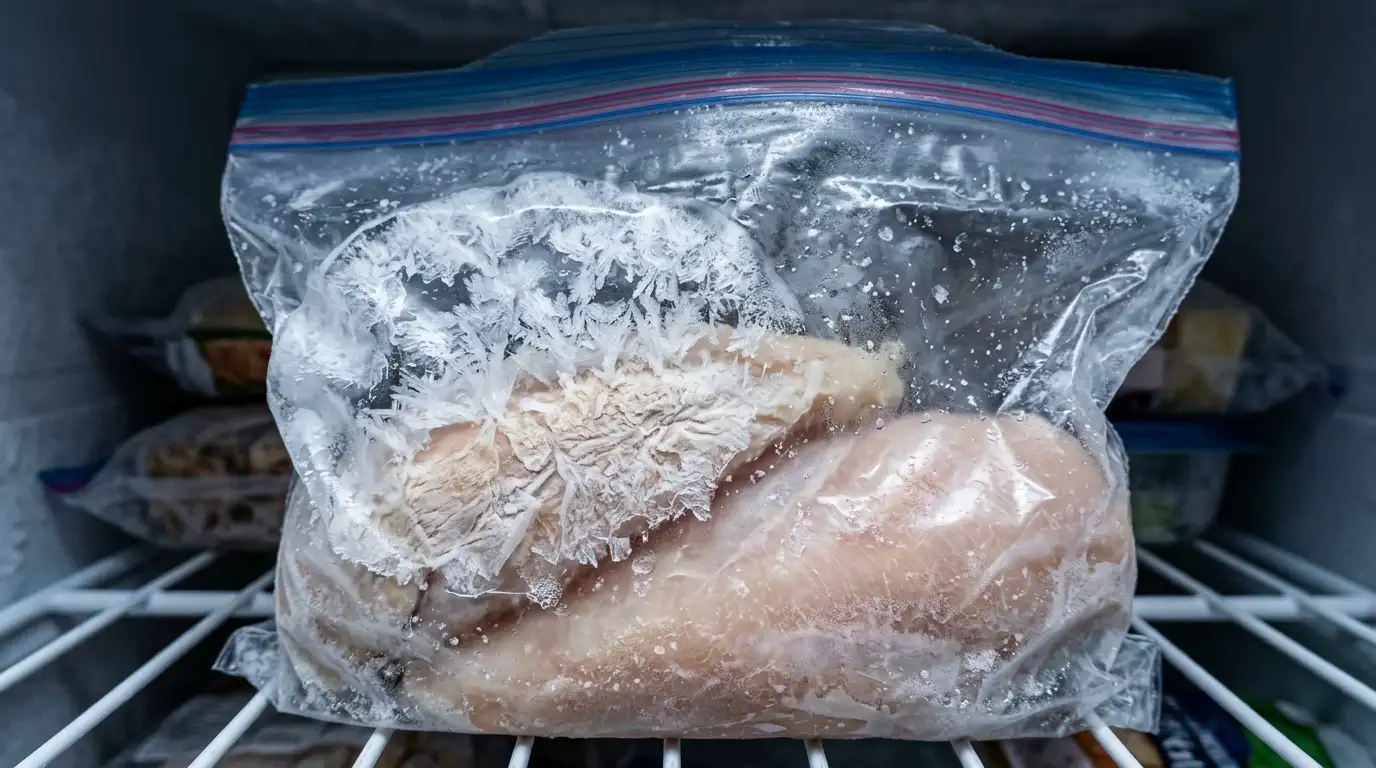
When you use a standard freezer bag, you usually press it against the counter, squeeze it with your hands, or roll it up tightly to push the air out before zipping it shut.
The harsh reality: No matter how tightly you roll, squeeze, or press a standard zipper freezer bag, you will never remove 100% of the ambient air.
The Physics of Sublimation
That trapped pocket of air is the enemy. In the ultra-dry, arid environment of a deep freeze, the moisture inside your meat will aggressively sublimate (turning directly from solid ice into vapor). That vapor is drawn out of the meat and into that trapped air space, where it crystallizes on the surface of your food. Vacuum sealer bags physically extract that air and use intense heat to weld the plastic perfectly tight against the meat, leaving zero atmospheric void for freezer burn to physically form.
IV. The Sous Vide Argument (High Heat Safety)
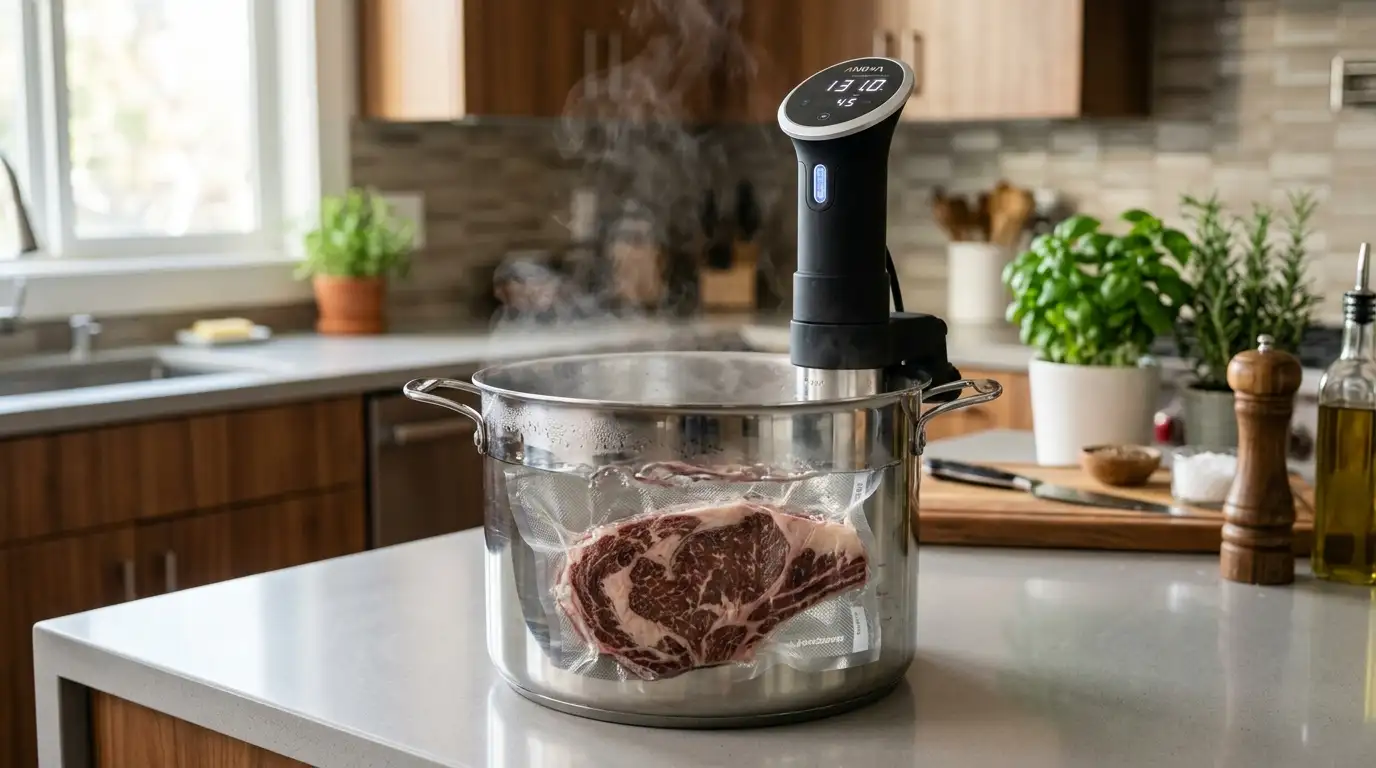
If you practice immersion circulation cooking (sous vide), bag selection transitions from a matter of long-term preservation to a matter of immediate culinary safety and performance.
Can You Sous Vide in a Ziploc?
Technically, yes. You can use a standard freezer bag for sous vide by using the manual water displacement method (which we test rigorously step-by-step in The Water Displacement Method: How to Vacuum Seal Meat with a Ziploc).
The Risk of Rupture
However, using a standard bag for a long cook is incredibly risky. The glued, pressed seams of standard zipper bags are highly prone to splitting and failing when exposed to sustained temperatures above 158°F (70°C). If the seam fails during a 4-hour cook, your water bath floods the bag, turning your expensive, perfectly seasoned steak into a boiled, flavorless soup.
Vacuum sealer bags, on the other hand, feature wide, thermally fused welds that easily withstand boiling water for 24+ hours. Furthermore, extracting the air completely removes internal buoyancy, ensuring your meat stays perfectly, safely submerged for even cooking, without the frustrating need to clip heavy weights or spoons to the bag.
V. The Verdict: When to Use Which
You do not have to throw away all your Ziploc boxes immediately. A highly efficient, smart kitchen utilizes both tools exactly where they excel.
Use Standard Freezer Bags For:
- Short-Term Storage: Dinner leftovers, meal-prepped chicken, or ground beef that you plan to eat within 2 to 3 weeks.
- Delicate Items: Freshly baked breads, muffins, or soft berries that would get instantly crushed into a paste by the intense pressure of an external vacuum sealer.
- High-Liquid Soups: Unless you learn specific freezing hacks or invest in specialized materials like The Best Vacuum Sealer Bags for Wet Food, trying to vacuum seal wet stews in standard bags is a messy, liquid-sucking nightmare.
Use Vacuum Sealer Bags For:
- Long-Term Storage: Any raw meat, fish, or blanched vegetable going into the deep chest freezer for more than one month.
- Sous Vide Cooking: High-heat, long-duration water baths requiring bulletproof, thermally welded seams.
- Bulk Buying: Breaking down massive family packs of poultry or large subprimal cuts of beef from Costco into individual, highly protected, freezer-safe portions.
Explore the Vacuum Sealing Hub
Don’t stop here! Dive deeper into the science of preservation, explore machine comparisons, and read our latest commercial hardware reviews for 2026.
FAQ: Vacuum Bags vs. Freezer Bags
2026 Guide: Embossed Texture, Reusability, and Heat Safety
Storage Tip: If you reuse bags for dry goods, trim the original seal off and give yourself an extra inch of plastic to ensure a fresh, clean seal line every time!
Back to Ultimate Vacuum Sealing Hub
