
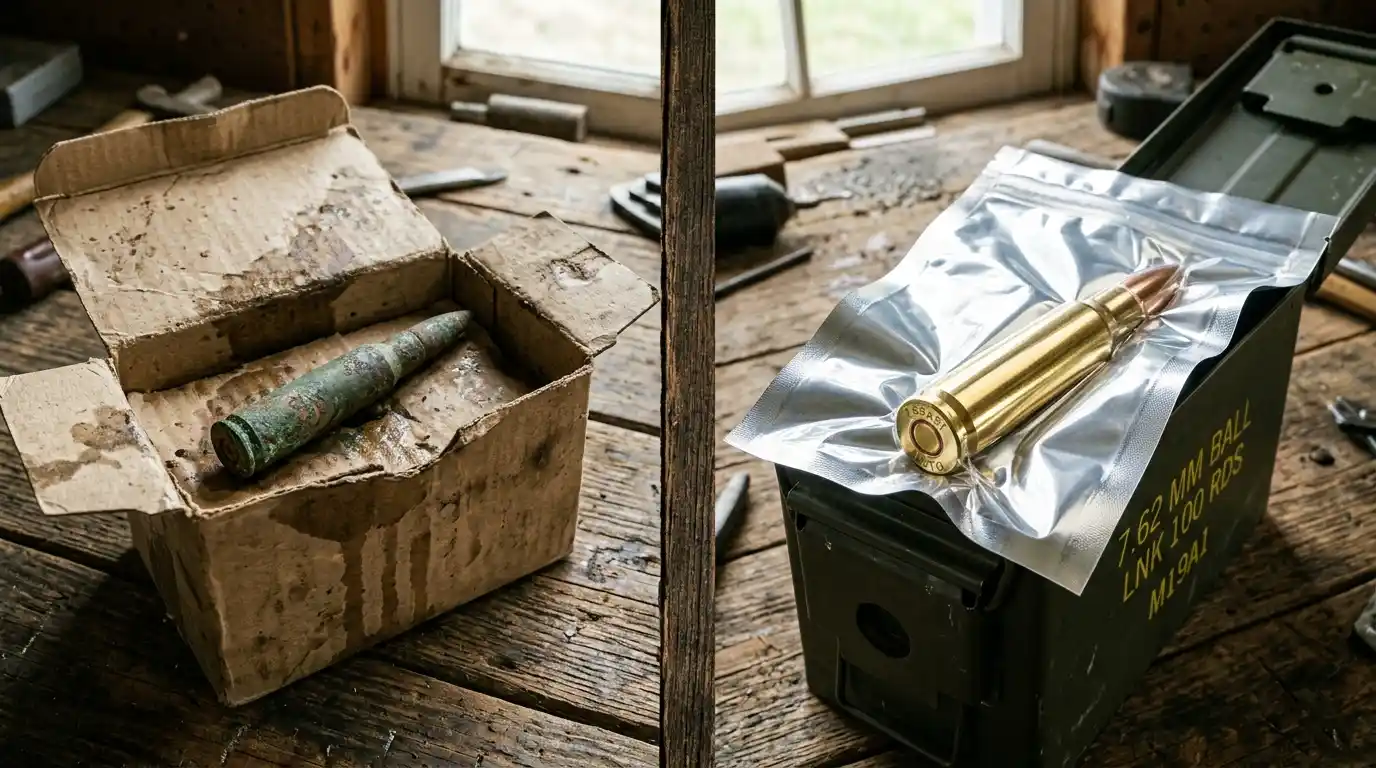
The Triple-Layer Method for Long-Term Ammunition Storage Using Mylar (2026)
Ammunition is a significant financial investment and, for many, a critical component of emergency preparedness. However, simply stacking cardboard boxes of brass in a damp garage or a hot attic is a guaranteed recipe for corrosion, degraded smokeless powder, and dead primers.
Unlike dry food goods, loaded ammunition is highly reactive to its environment. The brass casings can easily tarnish and corrode, while fluctuating temperatures and high humidity can permanently chemically alter the gunpowder inside. If you want your stockpile to remain 100% reliable 20 or 30 years from now, standard storage methods are not enough.
To achieve multi-decade viability, survivalists and off-grid planners rely on a specific preservation technique: The Triple-Layer Method.
By combining moisture control, a true oxygen barrier, and physical armor, you can create a micro-environment that completely halts the degradation process. In this guide, we break down exactly how to execute this protocol using heavy-duty Mylar and standard vacuum sealing tools. For a comprehensive look at all our off-grid preservation techniques, explore our master directory: The Ultimate Vacuum Sealing Hub: Food Storage, Sous Vide, Mason Jars & Buying Guides (2026).
1. Layer One: The Micro-Climate (Desiccants)
The first and most critical layer of defense sits directly alongside your ammunition: moisture control.
When you seal a bag of ammo, you are also sealing in whatever ambient humidity is currently in the room. If the temperature drops later, that trapped humidity will condense into microscopic water droplets directly onto the brass casings and primers. Over years, this causes green corrosion and primer failure.
The Solution: Silica Gel
You must include a high-capacity silica gel desiccant packet inside the packaging with the ammunition.
The Rule of Thumb: Use roughly 10 grams of silica gel for every 100 rounds of standard handgun ammunition (like 9mm), or 20 grams for larger rifle calibers (like 5.56 or .308).
What NOT to Use
Do not use oxygen absorbers for ammunition. While oxygen absorbers are mandatory for long-term food storage, they release a small amount of moisture as a byproduct of their chemical reaction, which can actually introduce condensation into your ammo bag. Stick strictly to moisture-absorbing desiccants.
2. Layer Two: The Absolute Barrier (Mylar Bags)
Standard clear plastic vacuum sealer bags (like FoodSaver rolls) are porous at a microscopic level. While they hold a vacuum for a few years, oxygen and moisture will eventually permeate the thin plastic over a decade. For true long-term storage, you must upgrade to Mylar.
Mylar is a metallized polyester film. Because it contains a layer of aluminum, it is 100% impermeable to oxygen, moisture, and light. It is the exact same material used by the military for long-term rations.
Do not buy cheap, thin Mylar. For ammunition—which is heavy and has relatively sharp edges on the bullet tips and casing rims—you need heavy-duty 7-mil or 9-mil Mylar bags to prevent punctures.
The Sealing Process
Place your cardboard boxes of ammo (or loose rounds) and your desiccant packet into the Mylar bag. Use a vacuum sealer to pull the air out and create a thick, thermal weld.
Note: Most standard external vacuum sealers struggle to heat-seal thick Mylar. You may need to use a commercial chamber sealer or specialized hacks.
3. Layer Three: The Armor (Ammo Cans)
A vacuum-sealed Mylar bag is biologically and chemically secure, but it is physically fragile. A single accidental drop, a mouse chewing through your storage shelf, or a sharp edge inside your 50-liter camping backpack can puncture the Mylar and ruin the entire micro-climate.
The final layer is physical armor.
Place your perfectly sealed Mylar bags into a military-surplus metal ammo can (like a .50 Cal M2A1 can) or a high-quality polymer tactical crate. Ensure the ammo can has an intact, high-quality rubber O-ring seal inside the lid. When you clamp the metal latch down tight, this creates a secondary airtight seal that protects the Mylar from extreme humidity swings and floodwater.
Store these sealed cans in a cool, dark, and dry location. The ideal storage temperature for smokeless powder is consistently between 55°F and 70°F (12°C to 21°C). Avoid garages or sheds that experience massive seasonal temperature swings.
4. Loose Bulk vs. Factory Boxes
Should you dump loose rounds directly into the Mylar bag, or keep them in their original cardboard boxes?
Factory Boxes (Recommended)
Keeping the ammo in its original cardboard and plastic trays prevents the sharp tips of the bullets from rubbing against each other and scratching the Mylar. It also ensures you retain the factory lot numbers in case of a future manufacturer recall.
Loose Bulk (Space Saving)
If you must store loose rounds to save space in your survival bag, use the double-bag method. Place the loose ammo in a standard Ziploc bag first, then place that Ziploc inside the heavy-duty Mylar bag. The inner plastic acts as a puncture-resistant buffer against the sharp brass edges. We cover similar puncture-prevention tactics in Stop Puncturing Bags: How to Vacuum Seal Bone-In Meat Perfectly.
FAQ: Ammunition Storage
2026 Guide: Mylar Bags, Desiccants, and Heat Degradation
Tactical Tip: Throwing a single 10-gram silica gel packet into your ammo bag before vacuum sealing guarantees zero corrosion during decadal storage!

