
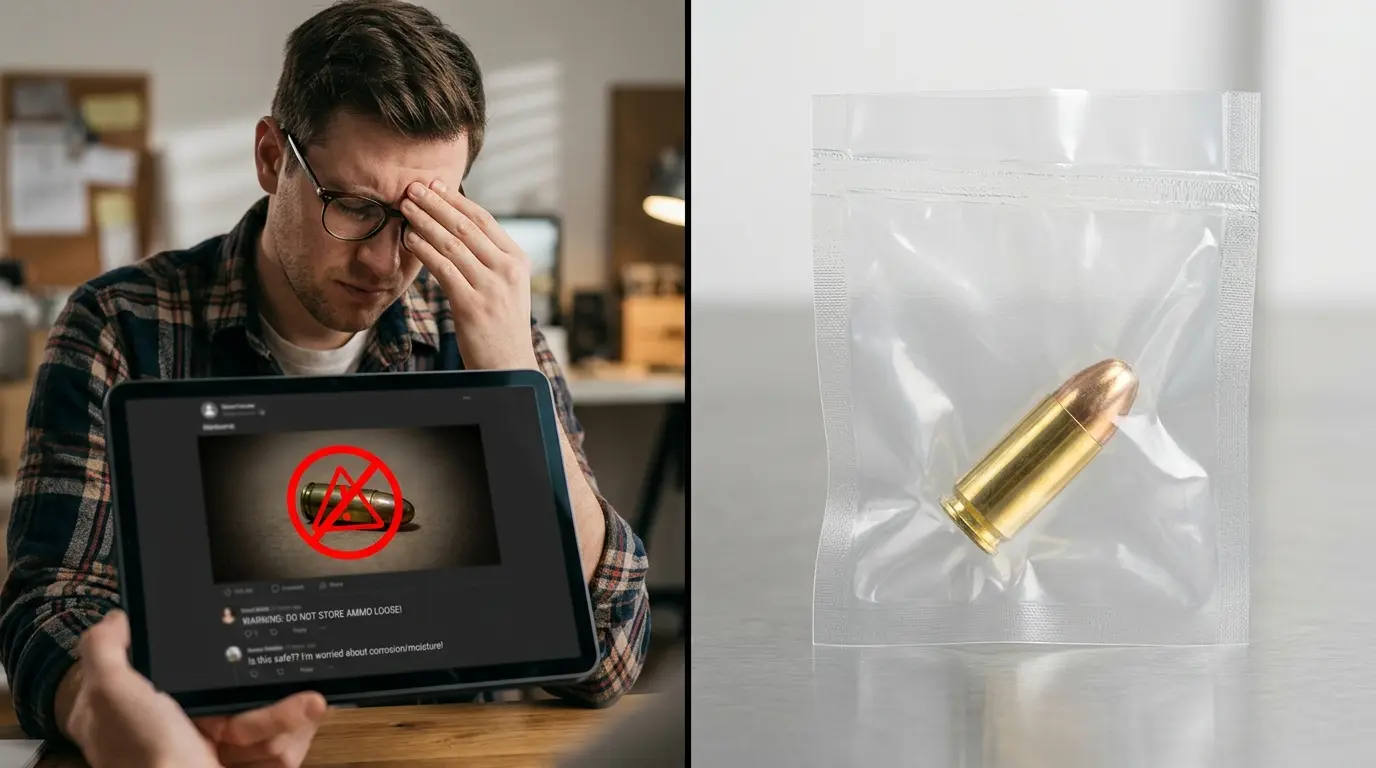
Myth Busted: Does Vacuum Sealing Ammo Actually Damage Primers? (2026 Guide)
If you spend enough time browsing online tactical forums and prepping communities, you will eventually stumble across a terrifying, highly persistent warning: “Never vacuum seal your ammunition! The suction will pull the primers out of the casings, unseat your bullets, and deactivate the gunpowder.”
For someone trying to build a reliable, long-term emergency stockpile, this rumor is enough to make you throw your vacuum sealer in the trash and resort to stacking loose cardboard boxes in a damp garage. After all, nobody wants to pull a vacuum-sealed bag of 5.56 out of an ammo can ten years from now only to find it completely inert and useless.
But is there any actual scientific truth to this claim? Can a $100 kitchen appliance actually dismantle a factory-pressed brass cartridge? The short answer is absolutely not. In this guide, we bust the internet’s most persistent ammunition storage myth by looking at the basic physics of atmospheric pressure, mechanical friction, and chemical stability. We will also reveal the actual, hidden mistake that ruins vacuum-sealed ammo. For a complete guide to bulletproof preservation methods, explore our master directory: The Ultimate Vacuum Sealing Hub: Food Storage, Sous Vide, Mason Jars & Buying Guides (2026).
The Quick Answer
Vacuum sealing ammunition is 100% safe. The negative pressure created by a kitchen sealer (roughly 14.7 PSI) is mathematically incapable of overcoming the immense mechanical friction required to unseat a factory-crimped bullet or pull a press-fit primer out of its brass pocket. Furthermore, removing oxygen does not “deactivate” gunpowder, as modern smokeless powder contains its own chemical oxidizer. However, you must include a silica gel desiccant packet in the bag before sealing to prevent trapped humidity from condensing into water droplets, which is the true cause of dead primers.
I. The Physics Myth: “The Vacuum Will Pull the Primer Out”
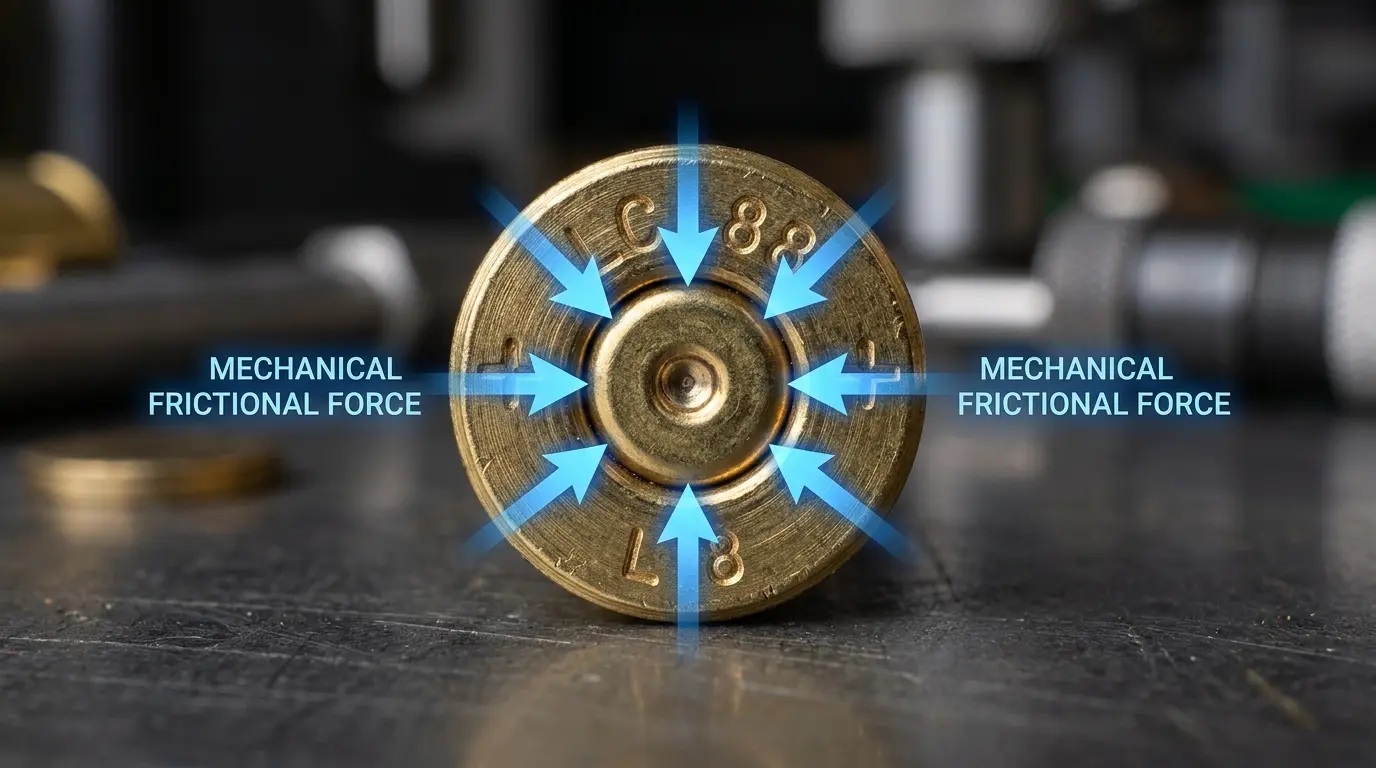
The most common fear parroted on survivalist forums is that the negative pressure created by a vacuum sealer will literally suck the primer backward out of the primer pocket, or pull the heavy lead bullet directly out of the neck of the brass casing.
To thoroughly debunk this, we have to put away the fear-mongering and look strictly at the mathematical numbers. It is a battle of atmospheric physics versus mechanical friction.
1. The Pull of the Machine
Even if you upgrade your kitchen counter and purchase a high-end, commercial-grade chamber vacuum sealer (the absolute strongest machines available to consumers, which we review heavily in our LEM MaxVac vs. MEAT! Chamber Sealer Showdown), the machine can only pull a maximum of roughly 1 atmosphere of negative pressure. That equates to about 14.7 pounds per square inch (PSI) of pulling force.
2. The Friction of the Ammo
A primer is not just gently resting loosely inside the casing; it is mechanically press-fit into the brass pocket using industrial machinery. If you are a home reloader, you know that it requires massive mechanical leverage (often exceeding 30 to 50 pounds of direct, focused force on a single tiny point) to seat or remove a primer using a steel reloading press.
The bullet itself is held in place by intense brass neck tension and, almost always, a factory crimp. Removing a seated bullet requires violent strikes with a specialized kinetic puller hammer. It is not going to slide out because the air in the room got a little thin.
The Verdict
14.7 PSI of atmospheric suction is mathematically, physically incapable of overcoming the intense mechanical friction holding a factory cartridge together. Your bullets and primers will not budge a single millimeter inside the bag.
II. The Chemical Myth: “It Deactivates the Primer”
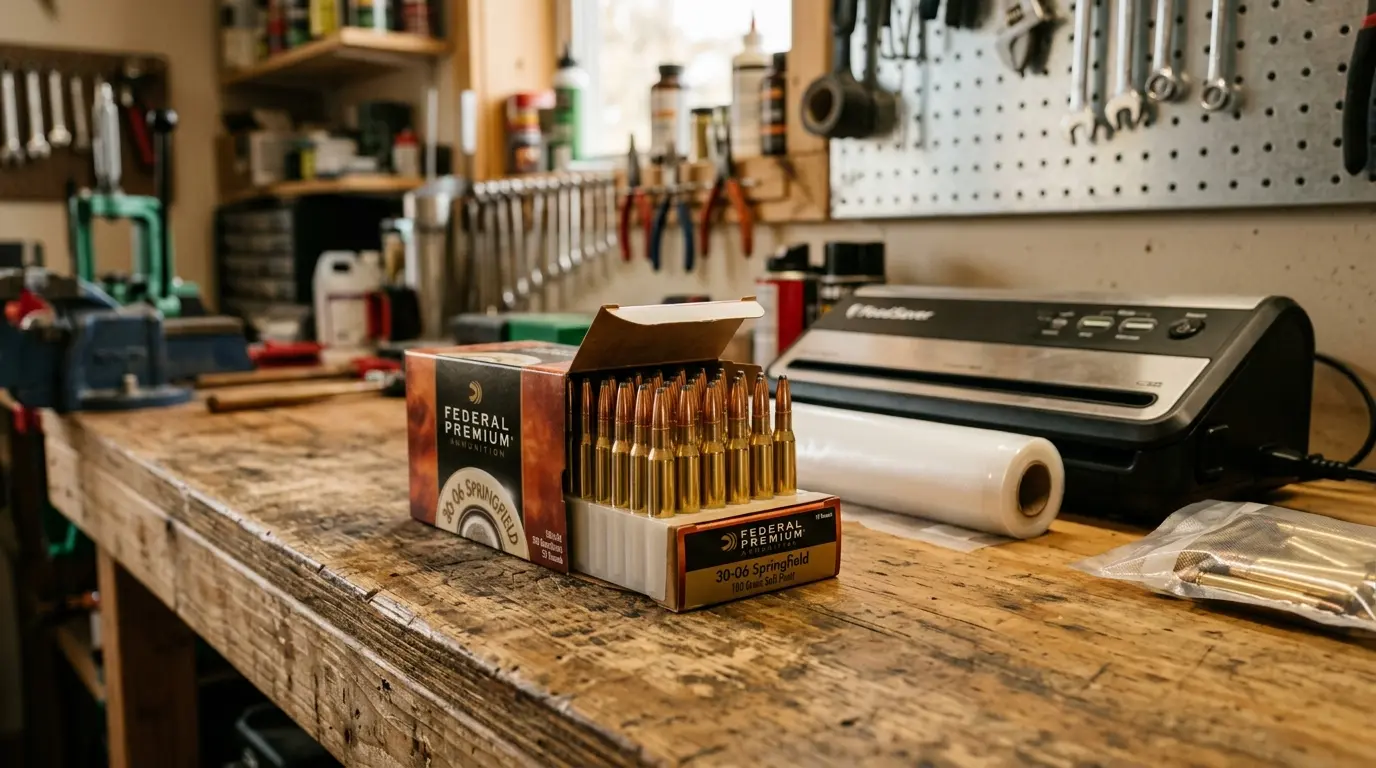
The second variation of the myth attempts to use chemistry rather than physics. It claims that pulling the oxygen out of the bag will somehow “deactivate” the chemical compound inside the primer or ruin the smokeless powder, rendering the ammunition incapable of firing.
How Primers Work
The explosive compound inside a standard modern primer (typically lead styphnate) is a highly sensitive contact explosive. It is activated by the kinetic, concussive impact of the gun’s firing pin striking the metal cup, not by the presence or absence of atmospheric air pressure. Removing the air around the bullet does not alter the chemistry of lead styphnate.
The Smokeless Powder
Unlike burning a piece of wood in a campfire—which requires pulling ambient oxygen from the surrounding air to sustain the flame—modern smokeless gunpowder (nitrocellulose) carries its own oxidizer chemically bound within its formula. It does not need ambient oxygen from the air to ignite and burn violently inside the sealed chamber of your firearm.
The Verdict
A vacuum environment actually protects the chemical compounds. By forcefully removing the ambient oxygen, you completely halt the oxidation process, permanently preventing the brass casings from tarnishing, turning green, and degrading over the decades.
III. The Real Danger: Trapping Moisture (Not the Vacuum)
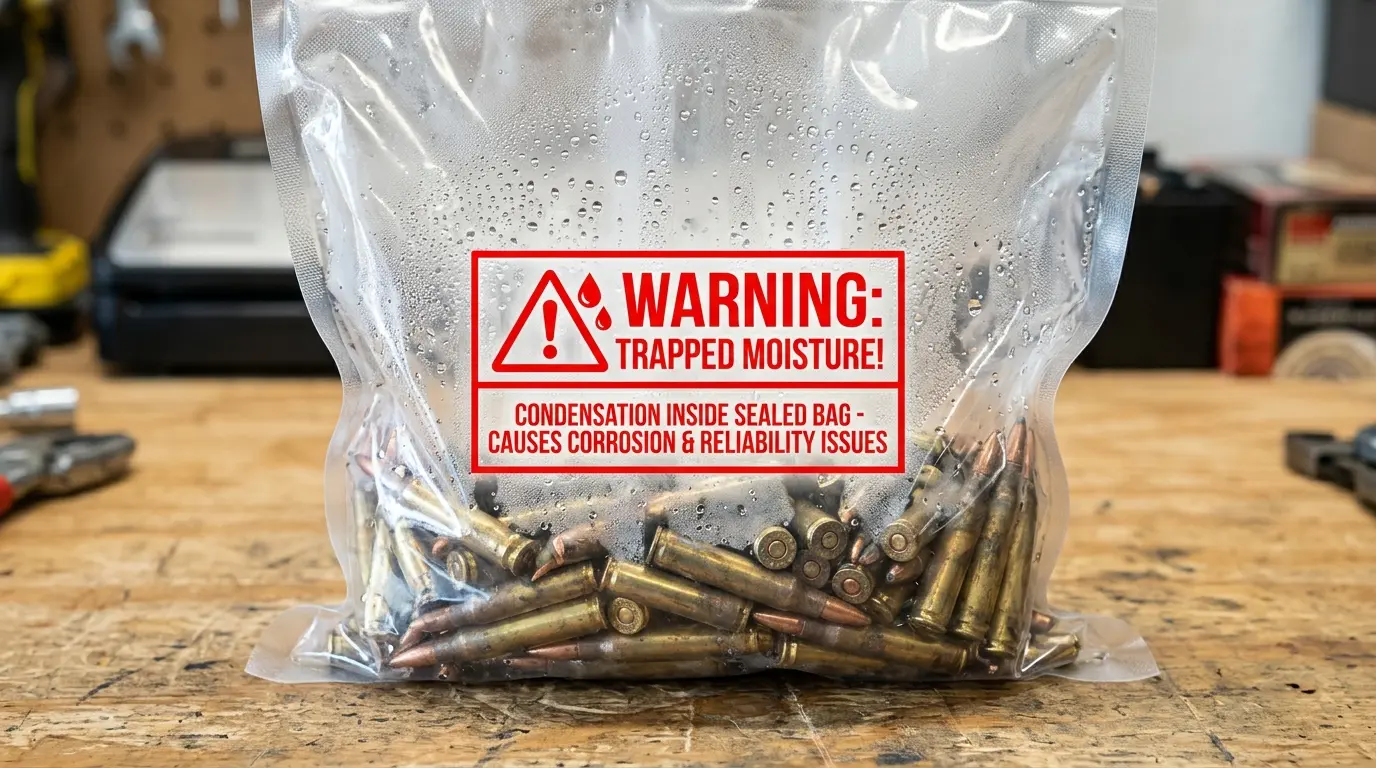
While the vacuum pressure itself will absolutely never harm your ammo, the sloppy way you seal the bag absolutely can.
The reason this myth is so persistent is because people have genuinely opened vacuum-sealed bags of ammo years later only to find dead primers and heavily corroded brass. Because the ammo was sealed in plastic, they incorrectly blamed the machine. The real culprit, however, is a fundamental lack of understanding of thermal physics: Humidity.
The Condensation Trap
When you seal a bag of ammo, you are also perfectly sealing in whatever ambient humidity is currently lingering in the air of the room. If you vacuum seal a massive box of 9mm ammo in a humid garage on a muggy, 85% humidity summer day, you are trapping that wet air tightly against the brass.
When winter eventually comes and the temperature in your storage room drops, that trapped humidity will instantly condense into microscopic liquid water droplets directly onto your brass casings and inside the primer pockets. Liquid water slowly seeps past the primer seal, deactivates the explosive compound, and ruins the bullet permanently.
The Mandatory Fix: Silica Gel
To permanently solve this issue, you must use a desiccant. As we outline heavily in our master protocol, The Triple-Layer Method for Long-Term Ammunition Storage Using Mylar, tossing a 10-gram silica gel packet directly into the plastic bag before you seal it absorbs 100% of the residual moisture, completely eliminating the threat of condensation regardless of future temperature swings.
IV. The Oxygen Absorber Mistake (Prepper Panic)
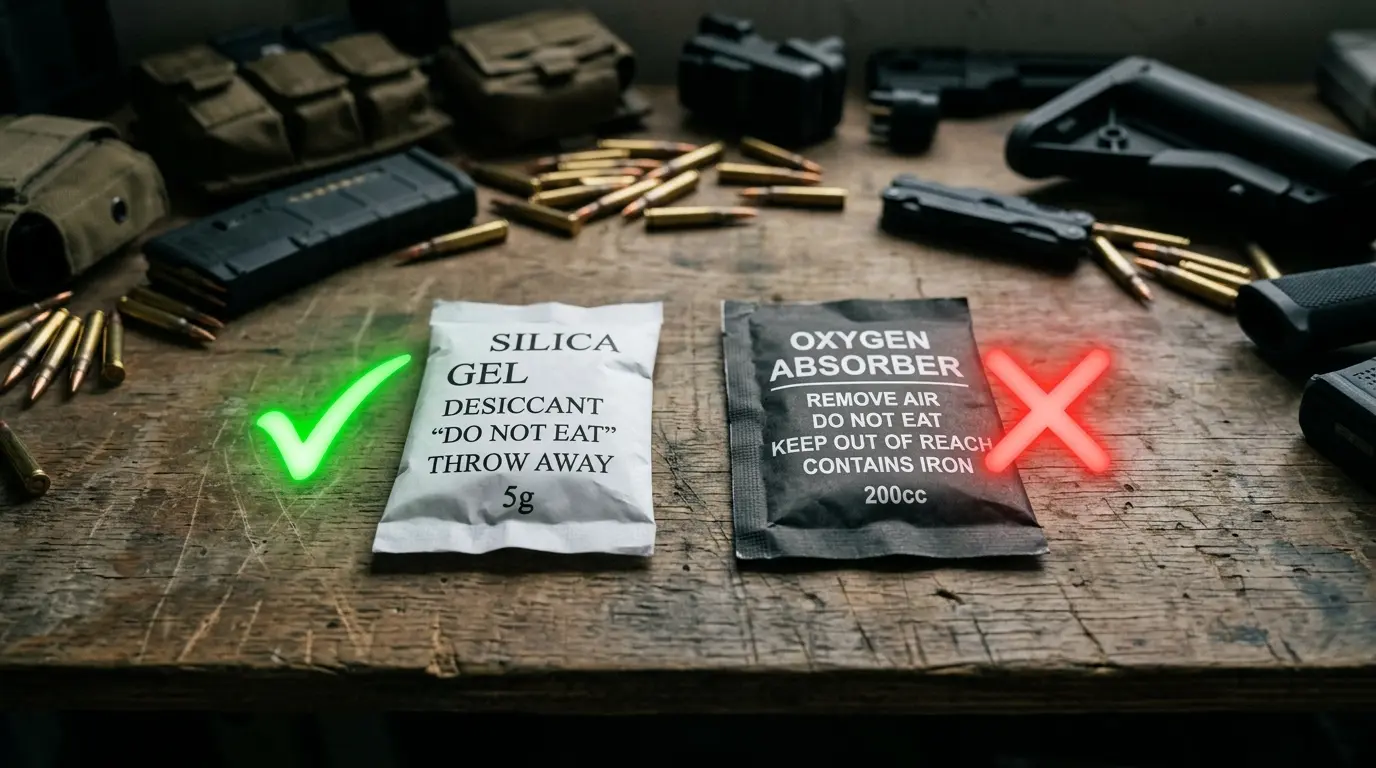
The final way well-meaning preppers accidentally destroy their own ammunition stockpiles is by confusing food storage rules with hardware storage rules.
When packing massive Mylar bags full of bulk rice, dried beans, or flour for a 25-year shelf life, survivalists aggressively use iron-oxide Oxygen Absorbers. Because ammo is stored alongside food in the prepper pantry, many people mistakenly throw these chemical absorbers directly into their ammo bags, thinking they are doing the brass a favor by eating the remaining oxygen.
The Chemical Danger
Standard iron-oxide oxygen absorbers actually require a microscopic amount of moisture to activate properly, and worse, their chemical reaction (the literal rusting of iron powder) actively releases trace amounts of moisture and heat as a byproduct.
If you put a powerful oxygen absorber inside a tightly sealed bag of ammunition, you are actively generating and introducing a corrosive element directly against your brass casings. The resulting moisture will tarnish the metal and risk seeping into the primer pockets over time.
The Golden Rule: Never use oxygen absorbers for ammunition, firearms, or metal tools. Stick exclusively to moisture-absorbing silica gel desiccants. We break down the exact math on how many packets to use in our guide on the Best Oxygen Absorbers for Ammo Storage and Mylar Bags.
Explore the Vacuum Sealing Hub
Don’t stop here! Dive deeper into the science of preservation, explore heavy-duty Mylar comparisons, and read our latest hardware reviews for 2026.
FAQ: Vacuum Sealing Ammo
2026 Guide: Pressure, Shotgun Shells, and Loaded Magazines
Tactical Tip: Always toss a 10-gram silica gel packet into your ammo bag before vacuum sealing to ensure absolutely zero moisture is trapped inside!

