

Recycling Is Only Half the Solution: How Reducing Waste at Home Makes an Even Bigger Difference (2026)
Recycling has become an essential, heavily promoted part of protecting the environment, but it is only one piece of the complex sustainability puzzle. Every year, millions of tons of supposedly recyclable materials still end up buried in municipal landfills or incinerated because they are biologically contaminated, improperly sorted by consumers, or simply never recycled at all due to massive systemic bottlenecks in local processing facilities.
While recycling undoubtedly helps recover valuable resources and prevents raw material extraction, reducing waste before it is ever physically created has an exponentially greater positive impact on global ecology.
The concept is brutally simple: the less physical waste people produce, the less mechanical energy, diesel transportation, chemical processing, and industrial manufacturing are required. This immediately reduces greenhouse gas emissions, conserves natural resources like fresh water and timber, and drastically lowers the overall environmental footprint of everyday modern life.
For households across the United States, adopting strict waste reduction habits does not require dramatic, painful lifestyle changes. Small, highly strategic improvements in grocery shopping, food storage technology, product selection, and pantry organization can significantly reduce the amount of trash generated every single week while making the recycling you actually do infinitely more efficient.
The Quick Answer
Recycling is an energy-intensive industrial process; it should be your last resort, not your first defense. True sustainability relies on the Waste Management Pyramid: reduce consumption first, reuse durable materials second, and recycle third. You can drastically cut household waste by stopping food spoilage through vacuum sealing techniques, replacing single-use plastics with indestructible glass or silicone containers, and investing heavily in “buy-it-for-life” durable goods that never enter the landfill cycle. Finally, ensuring your recyclables are 100% clean and dry prevents entire municipal batches from being rejected and thrown away.
I. Why Waste Reduction Comes Before Recycling
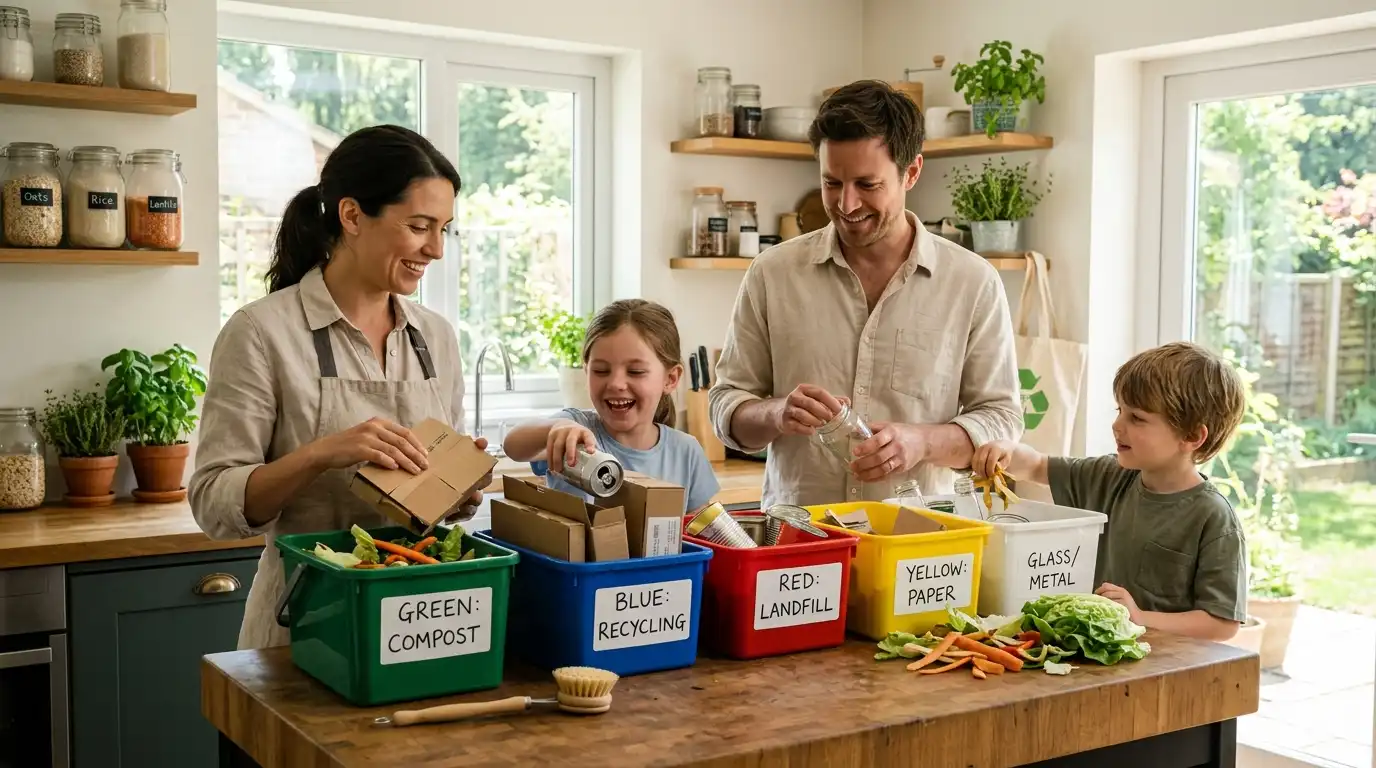
Environmental experts, civil engineers, and ecologists often describe sustainability using a rigid, scientific hierarchy known as the “Waste Management Pyramid.” At the absolute top of this inverted pyramid is reducing consumption, followed immediately by reusing products, then recycling materials, recovering energy (incineration), and finally, at the very bottom, disposing of waste in landfills.
This specific order exists for a highly mathematical reason: Energy Return on Investment (EROI).
The Hidden Cost of Recycling
Recycling is not magic. It requires massive diesel trucks to transport materials, giant mechanized facilities to sort them, heavy machinery to chemically melt and process them, and massive factories to create new products. While these steps are undeniably far better than sending waste directly to landfills or oceans, they still consume vast amounts of electrical grid energy, fossil fuels, and fresh water.
Reducing waste, however, eliminates all of these industrial steps entirely.
For example, bringing a heavy-duty reusable shopping bag instead of accepting a new, flimsy plastic bag every visit immediately, permanently prevents additional waste from being manufactured. Using insulated, refillable stainless steel water bottles instead of relying on cases of disposable plastic bottles has the exact same effect while saving you hundreds of dollars over time.
The exact same principle applies throughout the entire home. Choosing high-quality, repairable products designed for long-term use drastically reduces replacement frequency, exponentially decreases cardboard packaging waste, and severely limits the massive amount of electronic material entering the recycling stream.
This does not mean recycling is unimportant. Instead, it means that recycling works best and is most efficient only after people have already strictly minimized the amount of raw waste they generate.
II. Simple Habits That Significantly Reduce Household Waste
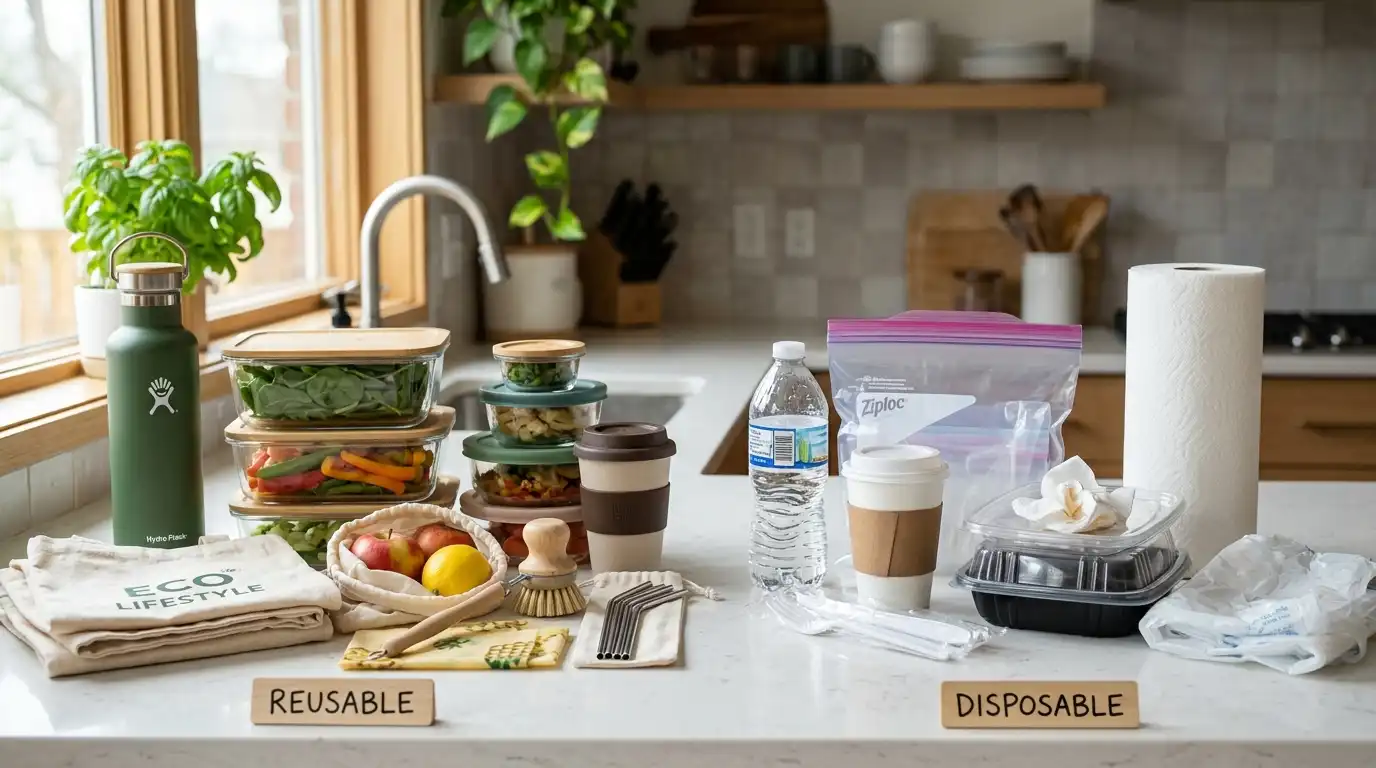
Many people falsely assume that sustainable living requires expensive, high-tech investments or major, uncomfortable lifestyle changes. In reality, some of the biggest, most impactful ecological improvements come from incredibly simple daily habits.
1. Combating Food Waste (The Ultimate Culprit)
Planning meals before grocery shopping helps drastically reduce food waste, which is currently one of the absolute largest contributors to municipal household trash. Purchasing only what will actually be cooked and consumed prevents expensive, spoiled food from rotting and ending up in garbage bins, where it releases potent methane gas.
Proper food storage also plays a massive, critical role. You must stop relying on cheap, permeable plastic wrap. Airtight containers, heavy-duty reusable storage solutions, and advanced vacuum sealing methods can exponentially extend the freshness of almost all foods, completely halting the biological oxidation process, reducing unnecessary waste, and saving immense amounts of money.
2. Embracing Reusable Alternatives
Choosing reusable alternatives whenever physically possible also makes a highly measurable difference. Refillable glass cleaning bottles, reusable metal coffee filters, high-quality cloth napkins, stainless steel water bottles, and highly durable food containers actively replace hundreds, if not thousands, of disposable plastic items over their lifetime.
If you want to transition your kitchen away from throwaway plastics permanently, read our extensive breakdown on the safest, most durable vessels: Mason Jars vs Reusable Silicone Bags for Vacuum Sealing.
3. The Power of Pantry Organization
Organization is another heavily overlooked factor. When kitchens, deep pantries, garages, and storage spaces remain highly visible and organized, products are significantly less likely to expire, become moisture-damaged, or simply be forgotten and thrown away.
Consumers can also actively reduce packaging waste at the source by purchasing larger refill sizes of dry goods, concentrating their cleaning products, or selecting raw ingredients with minimal, compostable packaging whenever practical. Even these small adjustments, repeated consistently, create massive, lasting environmental benefits over months and years.
III. Making Recycling More Effective at Home

Once waste has been successfully reduced as much as possible through smart consumption, the physical act of recycling becomes even more valuable. However, simply throwing plastic into a blue bin and hoping for the best (known in the industry as “wish-cycling”) often does more harm than good.
The Danger of Contamination
One of the absolute biggest challenges facing modern recycling facilities is biological contamination. Sticky food residue, unwashed liquids, greasy pizza boxes, rogue plastic shopping bags, and non-recyclable materials mixed with highly recyclable items often force commercial sorting facilities to reject and discard entire multi-ton batches directly into the landfill.
Keeping your recyclables completely clean and dry greatly, mathematically improves the likelihood that they will actually survive the sorting process and be successfully processed into new products.
Local Guidelines & E-Waste
Learning your highly specific, local municipal recycling guidelines is equally important because accepted materials vary drastically by municipality. What can be easily recycled in one community (like #5 Polypropylene) may not be accepted in another. Separating materials correctly also massively increases the speed and recycling efficiency. Paper, cardboard, glass, metals, and hard plastics should generally be strictly sorted according to local recommendations.
Electronic waste (E-waste) deserves special, immediate attention. Lithium batteries, old computers, smartphones, televisions, and other dead appliances often contain highly valuable, toxic heavy metals that should absolutely never be placed in regular household trash. Instead, they must be taken directly to certified electronic recycling centers fully equipped to safely recover these rare resources without poisoning the groundwater.
Community resources such as RecycleFind , which provides a nationwide directory of recycling centers along with community-reported scrap pricing, make it significantly easier for residents to identify nearby facilities that accept specific recyclable materials. Access to accurate location data and transparent pricing helps people recycle more efficiently while avoiding unnecessary trips to facilities that may not accept the items they need to recycle.
IV. Choosing Durable Products Supports Long-Term Sustainability
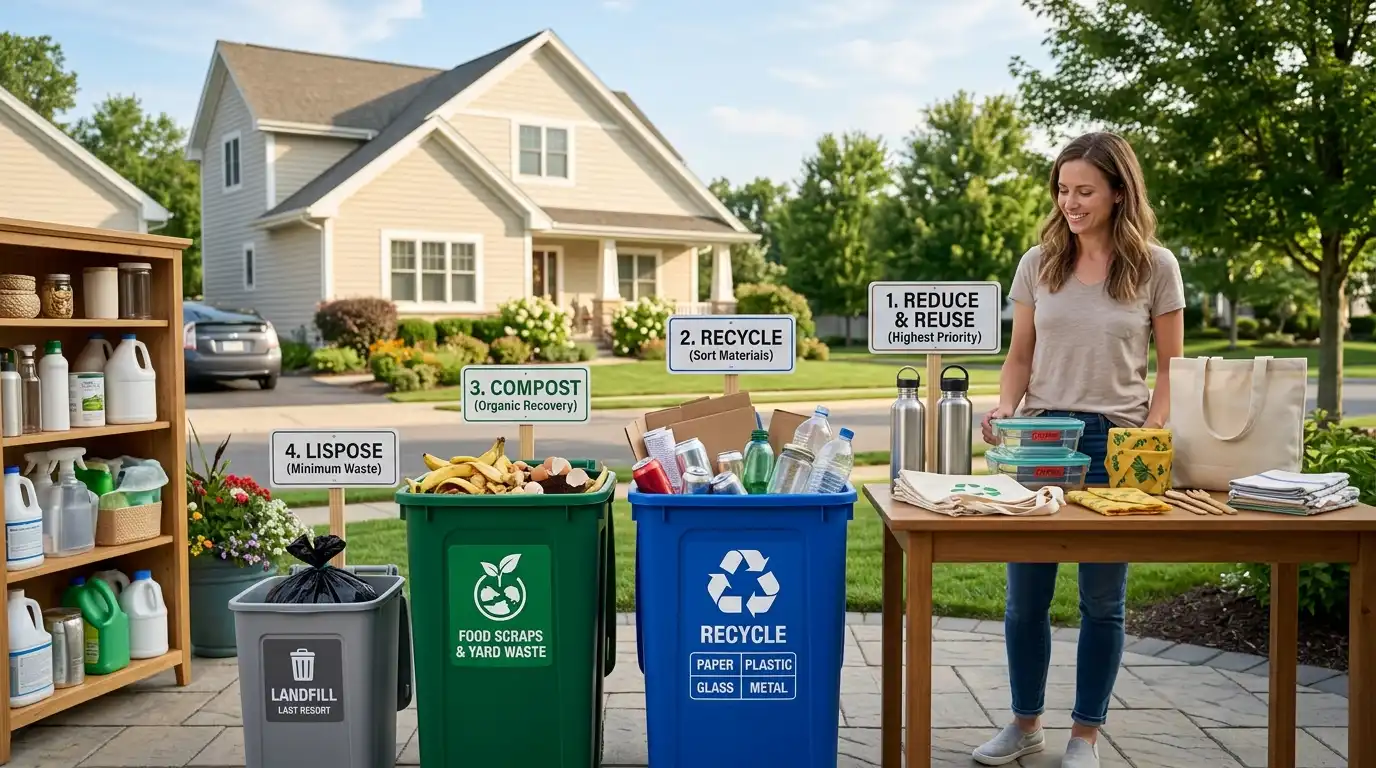
One of the absolute most effective ways to aggressively reduce waste is a simple economic philosophy: purchase products explicitly designed to last a lifetime.
Low-cost, highly disposable products often appear economical at first glance on the store shelf, but they almost always require frequent, frustrating replacement. Over time, this “cheap” cycle massively increases both your household financial expenses and your permanent environmental impact. Investing heavily in higher-quality, commercial-grade alternatives typically results in drastically fewer replacements, significantly less unrecyclable packaging waste, and much lower overall material consumption.
Heavy stainless steel kitchen tools, thick borosilicate glass storage containers, heavy-duty canvas reusable shopping bags, high-capacity rechargeable batteries, under-sink water filtration systems, and highly durable, repairable cleaning supplies are all prime examples of purchases that can provide immense environmental benefits for years.
Consumers actively researching practical household products heavily benefit from reading independent, rigorous buying guides that aggressively compare internal mechanical durability, actual value, and long-term usability over flashy marketing buzzwords.
Resources such as The Bridge Finds provide meticulously detailed, scientific recommendations for everyday products that actively help households reduce unnecessary, rapid purchases and build far more sustainable, reliable routines without ever sacrificing modern convenience.
True sustainability is not about buying more “green” products just because they have a leaf on the label. Instead, it is strictly about purchasing fewer products overall, while intentionally choosing heavy-duty items that perform flawlessly and last significantly longer. Every single durable purchase delays future manufacturing, heavy transportation, plastic packaging, and eventual disposal, creating compound ecological benefits that extend far beyond a single household.
Having access to reliable recycling information is just as important as developing sustainable habits. Platforms like RecycleFind’s recycling center directory make it easier to locate nearby facilities, compare community-reported scrap prices, and identify the right destination for everything from aluminum cans to electronic waste. Reliable resources like these remove much of the guesswork from recycling and encourage more people to recycle correctly.

