
Can Microwaves Destroy Nutrients? The Science of “Nuking” Food (2026 Guide)
For decades, the microwave has been the victim of terrible culinary public relations. Because of the scary-sounding word “radiation” and the popular 1980s slang term “nuking,” many health-conscious eaters still firmly believe that putting a bowl of fresh broccoli into a microwave will zap away all its nutritional value, leaving behind a sterile, radioactive husk of a vegetable.
This leads to the ultimate kitchen question for meal-preppers and busy families alike: Do microwaves actually destroy the nutrients in your food?
The short answer is yes, but not for the sinister reason you think—and it is actually one of the healthiest cooking methods available in your kitchen today. Every single form of cooking destroys some nutrients. Whether you are boiling, roasting, frying, or microwaving, thermal heat inevitably alters the chemical structure of food. However, when you look at the strict science of food chemistry, the microwave is secretly a nutritional champion. Here is exactly why.
The Quick Answer
Yes, but far less than other methods. Heat destroys nutrients regardless of the appliance used. However, nutrient loss is driven by three factors: high heat, long cooking times, and excess water. Because a microwave cooks food in a fraction of the time and requires almost zero water, it is scientifically proven to preserve significantly more water-soluble vitamins (like Vitamin C and B-complex) than boiling or roasting. Steaming vegetables in a microwave is actually one of the most nutritionally efficient ways to prepare a meal.
Debunking the “Radiation” Myth
Before we talk about vitamins, we must address the elephant in the room: radiation. The word itself conjures images of nuclear fallout and glowing green toxic waste. However, in physics, “radiation” simply refers to energy traveling through space.
There are two types of radiation: Ionizing and Non-Ionizing.
- Ionizing Radiation (like X-rays and Gamma rays) carries enough energy to strip electrons from atoms, altering human DNA and causing cancer.
- Non-Ionizing Radiation (like radio waves, visible light, and microwaves) does not have nearly enough energy to alter atomic structures.
How “Nuking” Actually Works
Microwaves use dielectric heating. The magnetron inside the appliance emits electromagnetic waves at a specific frequency (usually 2.45 GHz). These waves specifically target water molecules inside your food. Because water molecules are dipoles (they have a positive and a negative end), the electromagnetic field causes them to flip back and forth millions of times per second. This rapid, violent molecular friction creates localized thermal heat that cooks the food from the inside out. It does not make the food radioactive.
The Golden Rule of Nutrient Loss
To understand how your food loses its vitamins, you have to understand what causes the molecular degradation in the first place. According to food scientists and dietitians, nutrient degradation during any form of cooking comes down to three main environmental factors:
1. Heat (Temperature)
High temperatures physically break down the molecular bonds of heat-sensitive vitamins. While fat-soluble vitamins (like Vitamins A, D, E, and K) are relatively heat-stable, water-soluble vitamins (like Vitamin C and the entire B-complex family) are highly volatile and degrade rapidly when exposed to intense heat.
2. Time (Duration of Exposure)
Nutrient loss is a compounding equation. The longer food is exposed to thermal heat, the more the cellular walls break down, and the more vitamins degrade. A vegetable roasted for 45 minutes will inevitably lose more heat-sensitive vitamins than one steamed for 4 minutes.
3. Water (The Leaching Effect)
This is the biggest culprit of all. When you boil vegetables on a stovetop, you are exposing them to high heat, for a long time, in a massive pool of rolling water. The vegetables’ cellular walls rupture, and all those beautiful, water-soluble vitamins (Vitamin C, Folate, Potassium) literally leach out of the food and into the cooking water. You are left with pale, limp vegetables, and all the nutrients are floating in the green-tinted water that you inevitably pour straight down the sink drain.
Why Microwaving Preserves More Nutrients
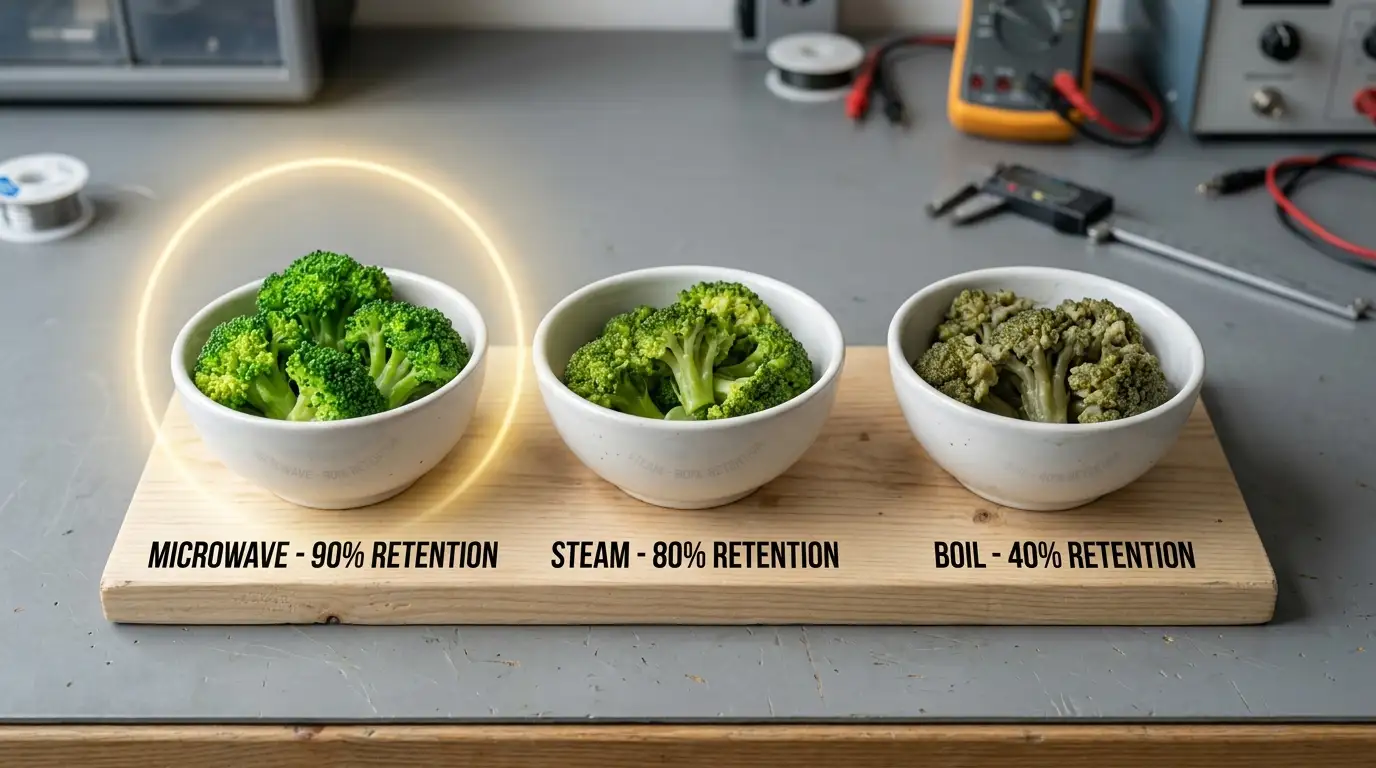
When you apply the “Golden Rule of Nutrient Loss” to different appliances, the microwave emerges as the undisputed champion of preserving health. Because of its specific mechanism of targeting water molecules directly via dielectric friction, microwaving beats traditional stovetop cooking in two critical, scientifically proven areas:
1. Drastically Reduced Cooking Time
A dense bowl of raw broccoli or carrots that takes 15 to 20 minutes to boil on a stovetop takes only 3 to 4 minutes in a 1000W microwave. Less time exposed to heat means exponentially higher retention of delicate, heat-sensitive compounds.
2. Minimal Water Usage
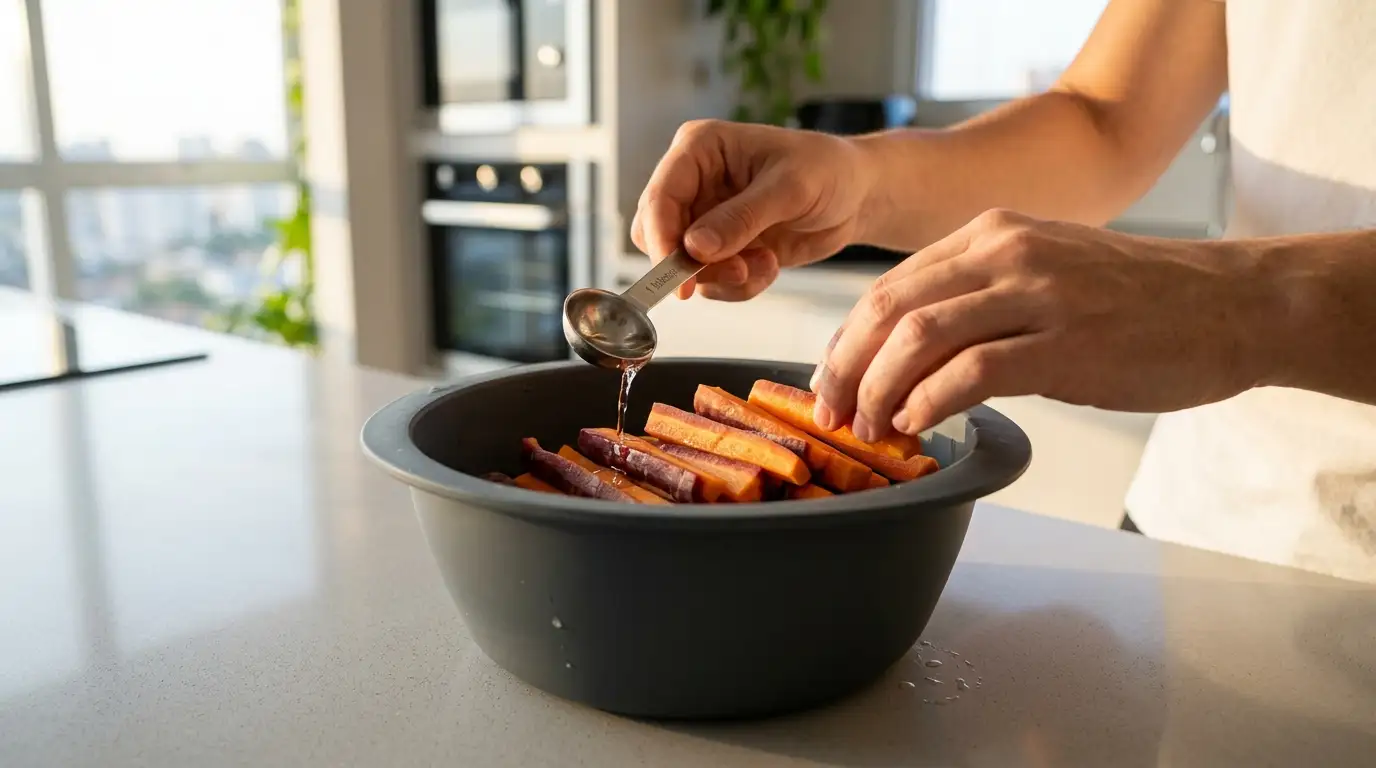
You only need a tiny splash of water (1-2 tablespoons) to generate massive amounts of steam in a microwave. Because the vegetables aren’t swimming in a deep pot of boiling liquid, the delicate water-soluble vitamins have nowhere to leach into. They stay locked safely inside the cellular walls of the food.
*Note: These findings align perfectly with published nutritional data from Harvard Medical School, which states that “the cooking method that best retains nutrients is one that cooks quickly, heats food for the shortest amount of time, and uses as little liquid as possible.” The microwave meets all three criteria flawlessly.
Cooking Methods Compared: The Nutrient Retention Table
If you are strictly tracking your macros and micronutrients for daily meal prep or athletic training, choosing the right cooking method is just as important as choosing the right organic ingredients. Here is exactly how microwaving stacks up against traditional culinary methods:
| Cooking Method | Heat Exposure Time | Water Usage | Nutrient Retention Level | Best Used For… |
|---|---|---|---|---|
| Microwaving | Very Short (2-5 mins) | Very Low | ⭐⭐⭐⭐⭐ (Highest) | Broccoli, spinach, carrots, rapid steaming. |
| Steaming (Stovetop) | Medium (10-15 mins) | Low (Steam vapor only) | ⭐⭐⭐⭐ (High) | Delicate greens, fish, dumplings. |
| Roasting/Baking | Long (20-40 mins) | None | ⭐⭐⭐ (Medium) | Root vegetables, meats (can heavily degrade Vitamin B and C). |
| Boiling | Long (10-20 mins) | Extremely High | ⭐⭐ (Lowest) | Pasta, grains, soups (nutrients leach heavily into the discarded water). |
How to Microwave Your Food for Maximum Health
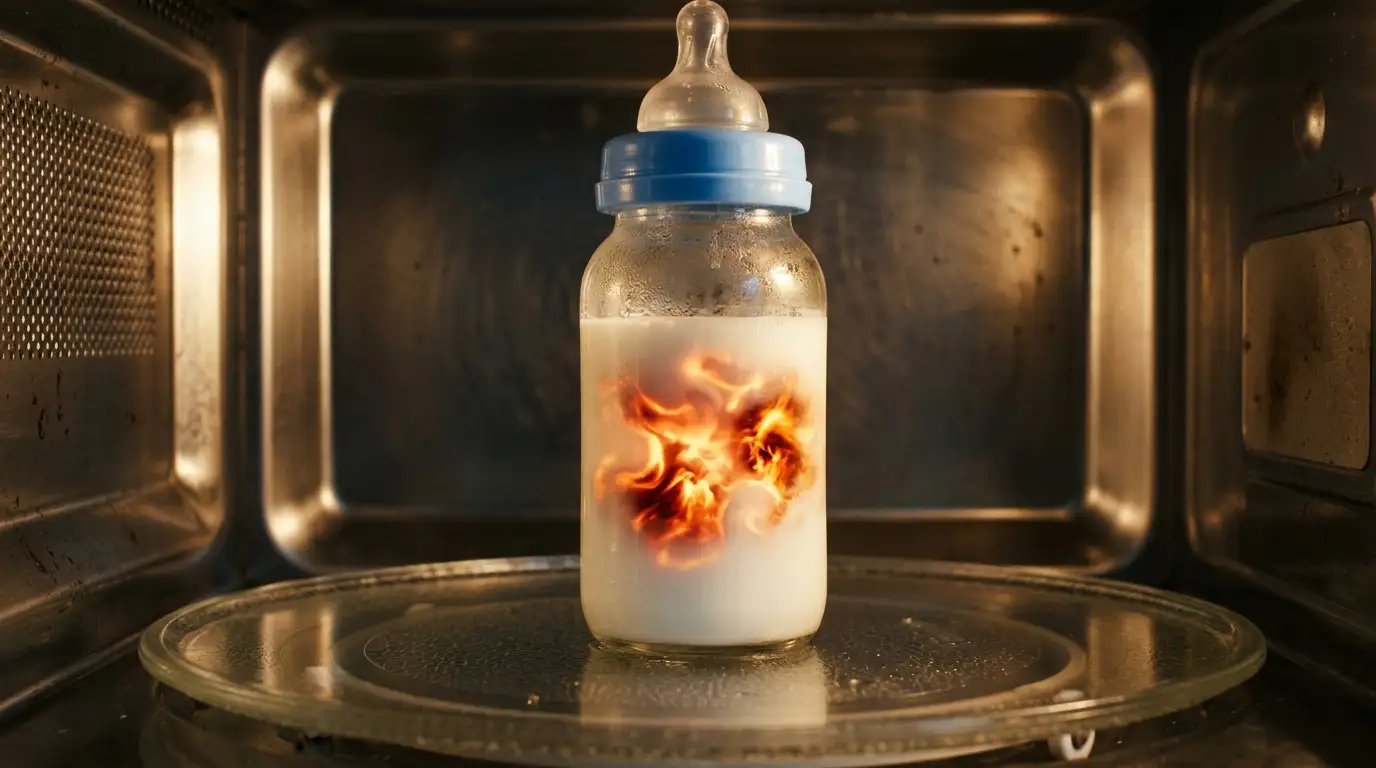
While the appliance itself is highly efficient at preserving vitamins, user error can still completely ruin the health benefits of your meal. To get the absolute most out of your weekly prep, you must follow these three strict rules:
1. Use Vented, Non-Toxic Containers (No Plastic)
This is the most critical step. Preserving vitamins doesn’t matter if you are actively poisoning your food with endocrine-disrupting chemicals. Never microwave your vegetables in cheap, single-use plastic takeout bins, as the boiling water will cause severe chemical leaching (BPA, phthalates, and microplastics).
You must use a premium tempered glass container or a platinum-cured, food-grade silicone steaming bowl. Read our head-to-head scientific breakdown in Silicone vs Plastic Microwave to fully understand the toxicity risks, or shop our top lab-tested picks in the Best Microwave Safe Containers of 2026 guide.
2. Add Just a Splash of Water
Do not submerge your vegetables like you would in a pot. Place your chopped broccoli or carrots in your glass or silicone container and add just 1 or 2 tablespoons of water to the very bottom. This tiny amount of liquid is all the appliance needs to agitate into a rolling boil, creating a perfect, high-pressure steaming environment without washing away the water-soluble vitamins.
3. Trap the Steam (But Vent the Pressure)
Cover the container loosely. If you are using a premium Tritan or glass container with latches, flip the latches up to expose the hidden exhaust vents. This traps the intense steam inside the micro-environment, cooking the vegetables incredibly fast while preventing them from drying out. The vents ensure the container doesn’t explode from pressure buildup. This method leaves your vegetables with a vibrant, bright color and a satisfying, healthy crunch.
Pro Tip for Even Heating: If you want to avoid soggy edges and cold centers during your steam, upgrading to an appliance with continuous-power technology makes a massive difference. Read our Panasonic vs Toshiba Microwave guide to see why Inverter Technology is the chef’s choice for steaming.
Explore More Culinary Science Guides
Don’t stop here! Visit our complete hub for more expert troubleshooting tips, safety protocols, and updated buying recommendations for 2026.
FAQ: Microwaves and Food Nutrition
2026 Guide: Safety, Radiation, and Preserving Vitamins
Nutrition Tip: Because microwaves cook food quickly and require very little water, they are actually one of the best methods for preserving water-soluble vitamins like Vitamin C!

