
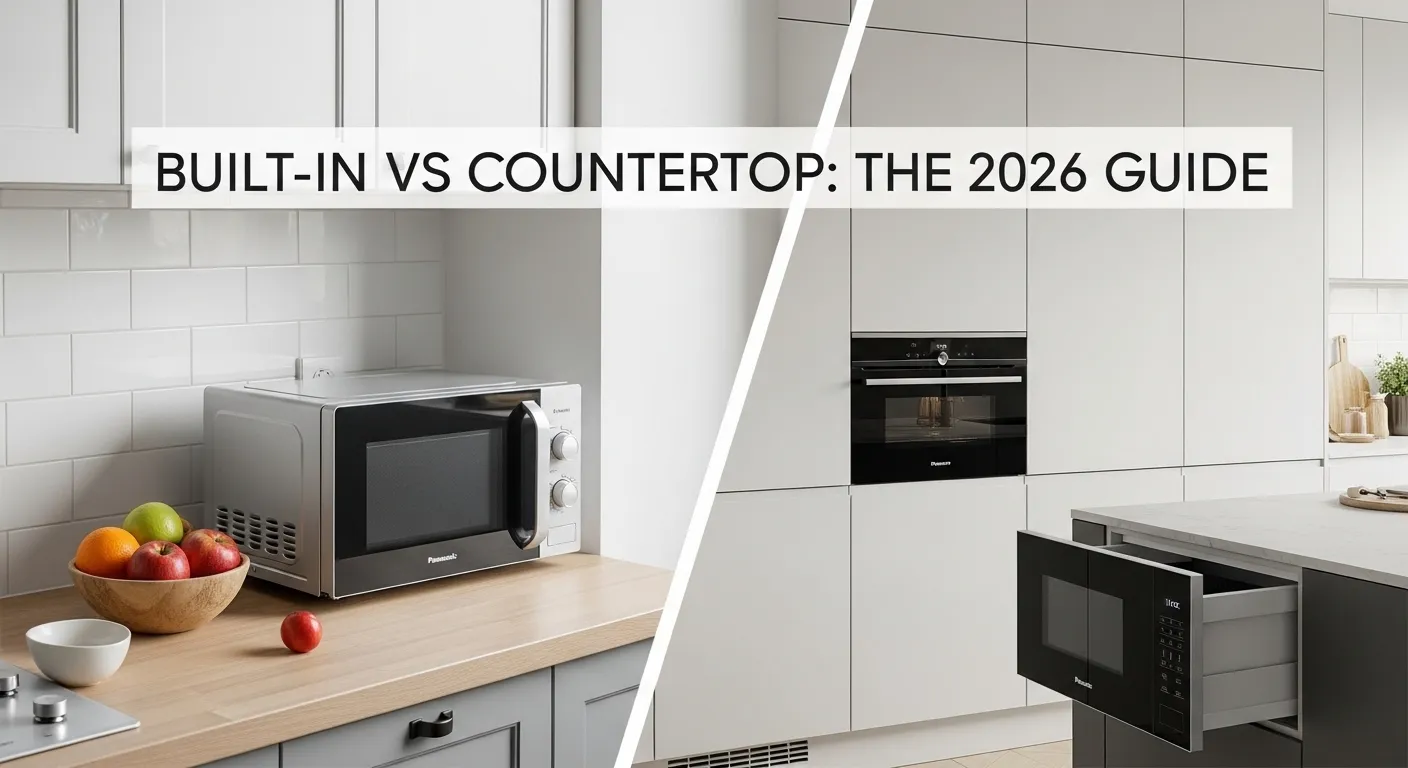
Built-in Microwave vs. Countertop Microwave: The 2026 Kitchen Dilemma
An exhaustive technical and aesthetic analysis of ergonomics, home valuation, and the mandatory June 2026 Department of Energy efficiency standards.
The Countertop King

Panasonic NN-SN97JS: Unbeatable cost-to-performance ratio and maximum versatility for modern homes.
 Check Price
The Built-in Standard

Sharp SMD2470ASY: Seamless architectural integration designed for premium ergonomics and high real estate ROI.
Check Price
When you are designing your dream kitchen or simply looking for an upgrade in March 2026, you are standing at a technological crossroads. The microwave, once a simple “reheating box,” has been caught in the crossfire of architectural design and federal energy mandates. The debate of built-in vs. countertop microwaves is no longer just about where you hide your leftovers—it’s about ergonomics, home valuation, and preparing for the June 2026 Department of Energy (DOE) efficiency standards.
Choosing between these two formats will dictate your kitchen’s workflow for the next decade. If you choose wrong, you end up with a cluttered countertop or a $2,000 “hole in the wall” that is impossible to repair. This guide explores every technical and aesthetic angle of the built-in vs. countertop debate to ensure your kitchen remains functional and future-proof.
I. The Countertop Microwave: The Champion of Versatility
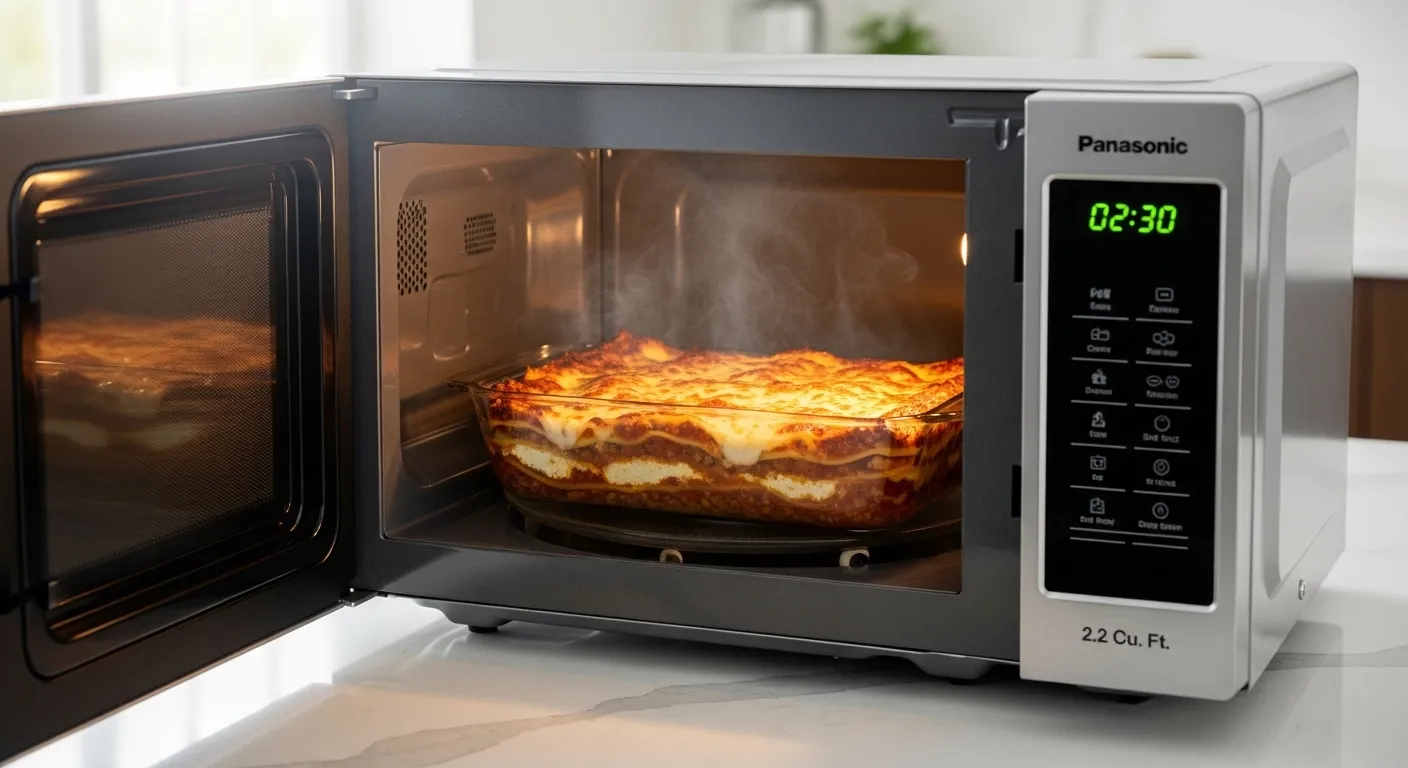
The countertop microwave is the classic choice, and in 2026, it remains the most popular for a reason. Modern units like the Panasonic NN-SN97JS Cyclonic Wave have pushed the boundaries of what a portable unit can do, integrating Inverter technology that rivals professional ovens.
The Benefits of Staying “On the Counter”
- Unbeatable Cost-to-Performance Ratio: You can purchase a flagship countertop model with the latest 2026 Inverter technology for a fraction of the cost of a mid-tier built-in unit. There are no hidden fees, no professional installation costs, and no need to hire a carpenter to modify your cabinets.
- The “Van Life” and Renter Advantage: If you are living in a temporary space or optimizing a mobile setup, portability is king. Countertop units are the backbone of the off-grid community. For more on this specific niche, see our guide on the Best Microwaves for Solar and Van Life.
- Plug-and-Play Maintenance: If a countertop unit fails, the solution is simple: you unplug it and buy a new one. In the world of 2026 electronics, where repair costs often exceed replacement costs, this simplicity is a financial safeguard.
The Drawbacks: Clutter and Footprint. The primary enemy of the countertop microwave is the loss of real estate. A large, 2.2 Cu. Ft. unit occupies significant square footage that could be used for food prep. Additionally, even with the sleekest stainless steel finishes, a countertop unit can break the visual “flow” of a minimalist kitchen design.
II. The Built-in Microwave: Architecture Meets Utility
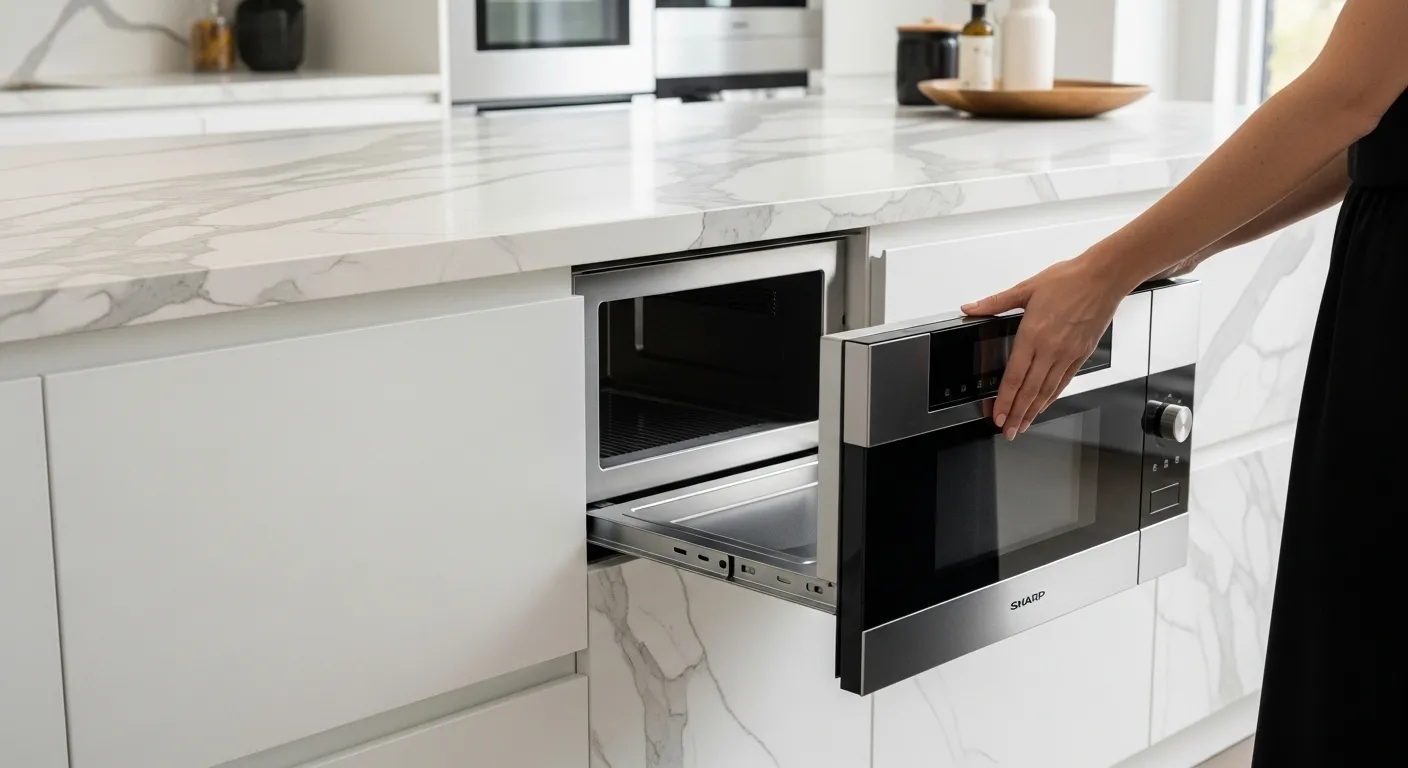
A built-in microwave is designed to be a permanent part of your home’s infrastructure. This category includes wall-mounted units, over-the-range (OTR) models, and the increasingly popular Microwave Drawers, like the industry-standard Sharp SMD2470ASY.
Integrated Design
In a high-end remodel, the “appliance garage” or the under-counter drawer is the gold standard. By removing the unit from the counter, your kitchen feels larger and more expensive.
Superior Ergonomics
Wall-mounted units can be placed at eye level. Conversely, microwave drawers (installed in islands) follow the principles of Universal Design (ADA compliance), making them safer and more accessible for children and seniors.
Home Equity: Unlike a countertop unit, a built-in microwave is considered a “fixture.” Real estate data in 2026 suggests that kitchens with integrated appliances see a higher return on investment (ROI) during home appraisals.
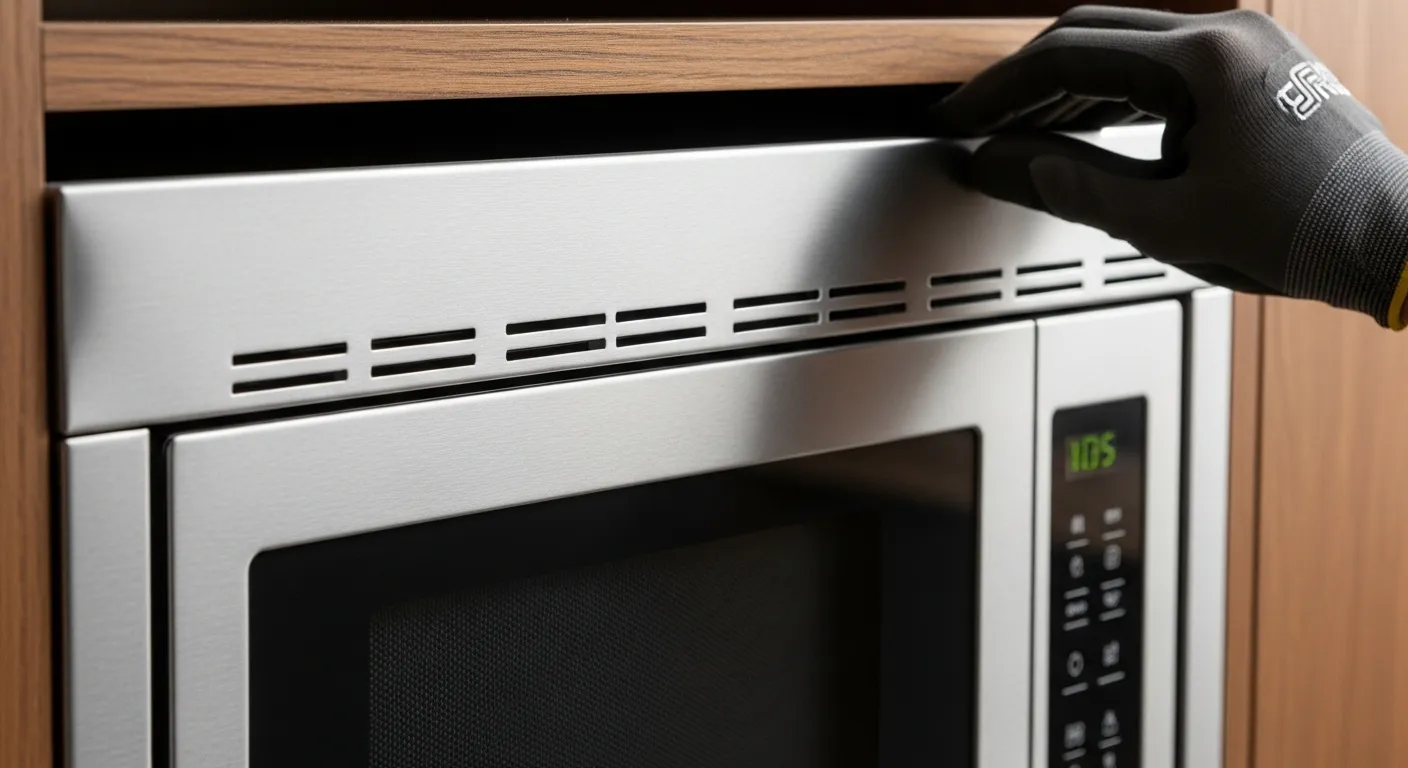
The Financial and Technical Burden: The cost of “going built-in” is steep. Beyond the unit’s price tag, you must account for specialized trim kits (which can cost $200+ on their own) and professional labor. Furthermore, built-in units have specific ventilation requirements to prevent heat buildup within the cabinetry.
III. The June 2026 Factor: Standby Power and Efficiency
As we approach the June 22, 2026, DOE deadline, energy efficiency has become a central part of the comparison. The new federal mandates treat built-in and countertop units slightly differently due to their internal cooling needs:
- Countertop Standards: These units must now consume less than 0.6 watts in standby mode. Because they sit in open air, they don’t require high-powered auxiliary fans to cool down after use.
- Built-in Standards: Because they are enclosed in wood or stone cabinetry, built-in models are allowed up to 1.0 watt in standby. They often use “post-cooking” ventilation cycles to dissipate heat, which adds a slight increase to their baseline energy draw.
If you are a high-efficiency enthusiast, a countertop unit with Inverter technology is technically the “greener” choice. To calculate exactly how much these differences will affect your monthly bill, use the formula found in our comprehensive article: How Much Electricity Does a Microwave Use?.
IV. The Middle Ground: The “Trim Kit” Solution
Crucial Warning: You cannot simply “hide” a standard microwave in a cabinet.
Many homeowners try to get the built-in look on a countertop budget by placing a model like the Panasonic NN-SN97JS into a cabinet shelf and surrounding it with a Trim Kit.
Without a manufacturer-approved kit that manages airflow, the magnetron will overheat, leading to a total system failure within months. A proper trim kit redirects the hot air out through the front of the cabinet. This “Hybrid” approach is an excellent way to save counter space without paying the $1,500 premium for a dedicated built-in drawer.
V. Durability and the “Right to Repair”
In 2026, repairability is a major concern. Countertop units are easy to service; you can easily access the waveguide cover (mica sheet) or clean the internal components. As we discuss in our Microwave Sparking Inside: Causes and Fix guide, keeping your unit clean is the best way to prevent arcing.
Built-in units, however, are notoriously difficult to repair. Accessing the internal fuses or the magnetron often requires a two-person team to unscrew the trim kit and slide the heavy unit out of the wall. If you own a Samsung model and encounter the Samsung SE Error Code, a countertop unit can be fixed on your kitchen table, whereas a built-in unit might require a $300 service call just for the technician to “pull” the appliance.
VI. Material Science: Does Location Affect Safety?
One area where the two formats are identical is the requirement for safe materials. Whether your microwave is on the counter or in the wall, the way it interacts with your food containers is the same. However, built-in convection models (3-in-1 units) reach much higher internal temperatures.
Recommended Materials:
In these high-heat environments, Platinum-Cured Silicone and Borosilicate Glass are the only materials you should trust.
Cheap plastics, even if labeled “microwave safe,” can warp and release chemicals when subjected to the high-intensity energy of a modern Inverter unit. For a deep dive into why your old Tupperware might be a risk, see our guide on Silicone vs. Plastic Microwave Containers.
VII. The Financial Reality: ROI and Replacement Cycles
When making your final decision, consider the “Lifecycle Cost” over a 10-year period:
Countertop Path
Initial Cost: $250
Installation: $0
Expected Life: 7-10 years
Replacement: $250 (Plug-and-play)
Built-in Path
Initial Cost: $1,200
Installation/Trim: $500
Expected Life: 8-12 years
Replacement: $1,200 + Labor
VIII. Final Verdict: The 2026 Scorecard
Choose Countertop IF:
- ✔️ You want the highest power (1250W+) for the lowest price.
- ✔️ You are a renter or move frequently.
- ✔️ You want to maximize standby energy savings (0.6W vs 1.0W).
- ✔️ You prefer DIY maintenance and easy replacement.
Top Pick: Panasonic NN-SN97JS
Choose Built-in IF:
- ✔️ You are performing a full kitchen remodel and need space.
- ✔️ You prioritize the “clean” minimalist integrated look.
- ✔️ You want better ergonomics (eye-level or under-counter).
- ✔️ You want to increase home resale value with fixtures.
Top Pick: Sharp SMD2470ASY
No matter which path you choose, ensure the model you select is 2026 DOE-compliant. By aligning your kitchen with these new efficiency standards, you are ensuring that your home remains modern, safe, and cost-effective for years to come.
FAQ: Built-in vs. Countertop Microwaves
2026 Edition: Making the Right Choice for Your Home
Home Value Tip: A built-in microwave drawer in a kitchen island is one of the most requested features for 2026 buyers.
Explore Our 2026 Microwave Hub
Don’t stop here! Our experts have curated the ultimate guides for Inverter tech, small spaces, and cooking hacks.

