
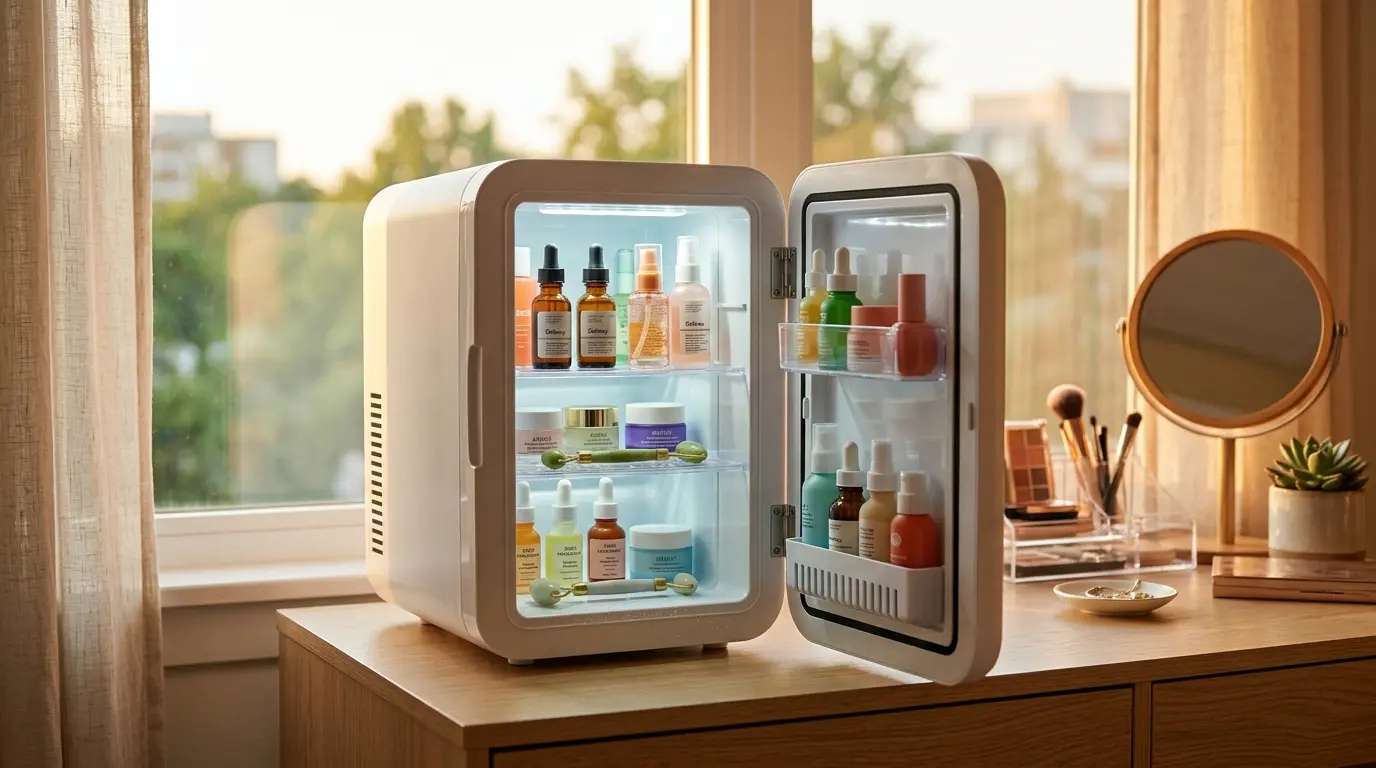
How to Stop Condensation in a Mini Skincare Fridge (2026 Fix Guide)
You finally upgraded your bathroom vanity setup. You carefully arranged your expensive, unstable Vitamin C serums, your heavy stone jade rollers, and your soothing sheet masks inside a beautiful new beauty fridge. But a few days later, you open the door to find a miniature swimming pool at the bottom of the unit, and the delicate cardboard packaging of your luxury eye cream is completely ruined.
If your skincare fridge is “sweating” or actively pooling water, take a deep breath. You likely didn’t buy a defective, broken unit. Condensation is the absolute number one complaint among beauty fridge owners, and it is a completely natural, unavoidable physical byproduct of how these specific appliances work.
Fortunately, managing and entirely preventing this moisture is incredibly easy once you understand the physics behind it. Here is exactly why your mini fridge is creating water out of thin air, and the five specific steps you need to take to stop it today.
The Quick Answer
Beauty fridges use thermoelectric cooling, which lacks the robust dehumidification cycles found in large kitchen refrigerators. When warm, humid room air enters the fridge, it hits the cold back wall and instantly condenses into liquid water. To stop this pooling, you must move the fridge out of the humid bathroom, place reusable silica gel packets inside to absorb moisture, elevate your products in acrylic bins, ensure proper rear fan ventilation, and strictly limit how long you leave the door open.
Why Do Skincare Fridges Sweat? (The Science)
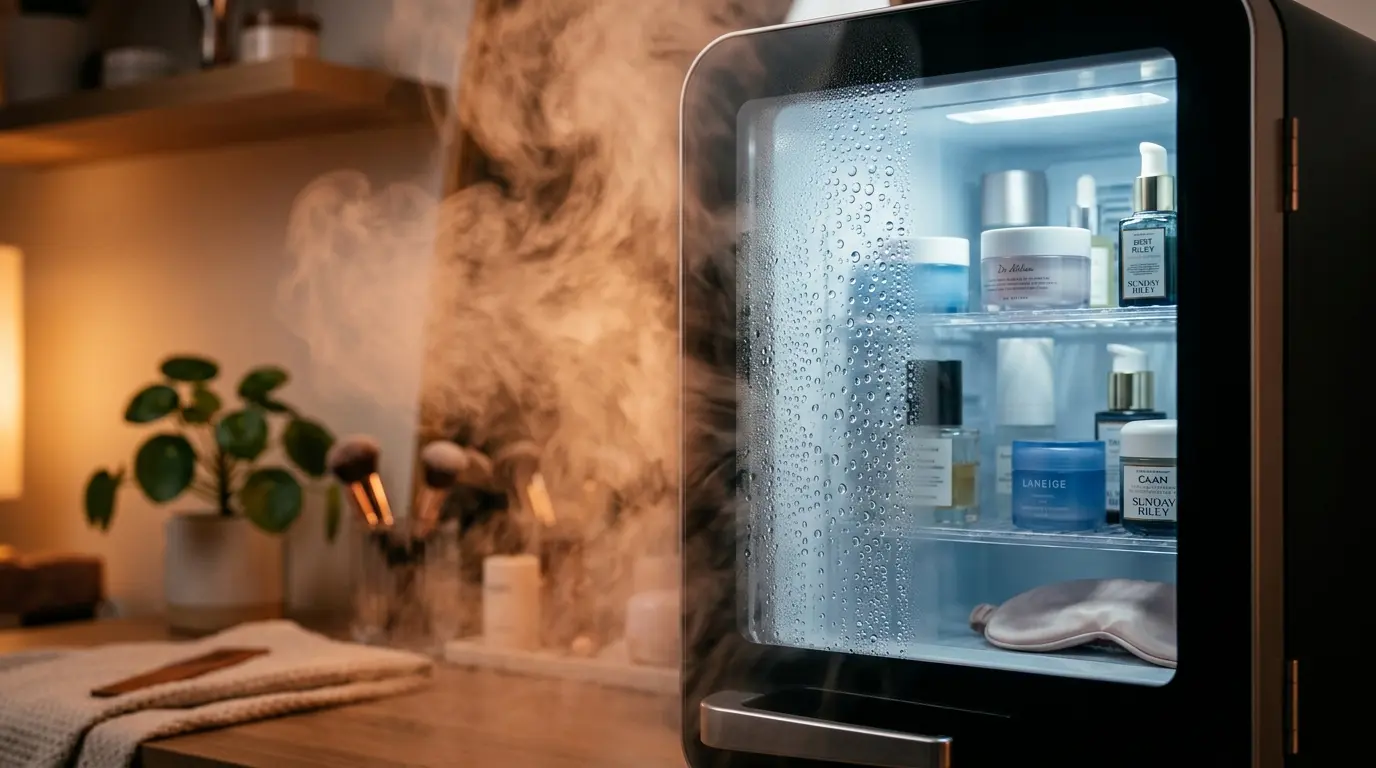
To permanently fix the problem, you first need to understand exactly where the water is coming from. Your mini fridge is not leaking a mysterious internal cooling fluid or freon; it is literally pulling water vapor directly out of the ambient air in your room.
Almost all desktop beauty fridges use thermoelectric cooling systems (the Peltier effect). Rather than using loud, heavy compressors, complex copper coils, and chemical liquid refrigerants (like a standard, massive kitchen fridge), they use a small, solid-state electronic chip and an electric exhaust fan to pull thermal heat out of the interior chamber. You can read our deep dive on the exact mechanics of this technology in our Thermoelectric vs Compressor Mini Fridge for Skincare guide.
The Dew Point Dilemma
Because thermoelectric fridges are incredibly simple, they do not have a robust, automatic “defrost” or dehumidifying cycle. Therefore, they are entirely at the mercy of the ambient room temperature and relative humidity.
When you open the fridge door, warm, humid room air rushes inside. When that warm air hits the ice-cold plastic back wall of the fridge, it immediately cools down. Physics dictates that cold air cannot hold as much moisture as warm air. The sudden temperature drop forces the air below its “dew point,” causing the invisible water vapor to instantly condense into physical liquid water droplets. Over a few days of opening and closing the door, those droplets roll down the walls, combine, and form a puddle at the bottom.
5 Ways to Stop Condensation in Your Beauty Fridge
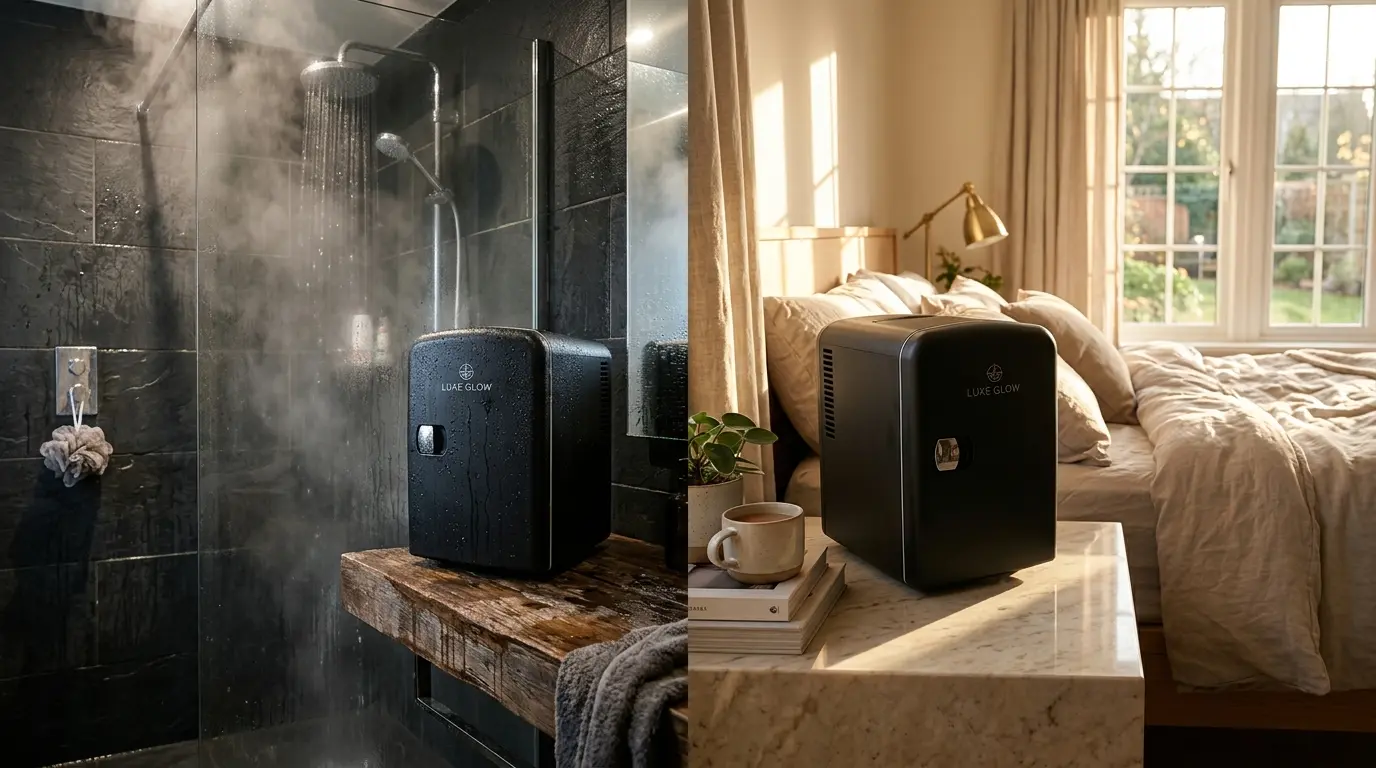
You cannot change the fundamental laws of thermodynamics and physics, but you can easily control the environment around your fridge to stop the sweating. Follow these five steps to protect your expensive serums.
1. Move It Out of the Bathroom (or Away from the Shower)
This is the absolute most common mistake new owners make. Many people intuitively keep their skincare fridge right next to their bathroom sink because that is where they apply their makeup. However, the bathroom is the most hostile environment in your entire house for a thermoelectric cooler.
When you take a hot shower, the bathroom fills with thick, heavy, 100% relative humidity steam. If you open your fridge door while the bathroom is humid, or if the fridge’s rear intake fan sucks in that lingering steam, heavy internal condensation is mathematically guaranteed.
2. Use Silica Gel Desiccant Packets
This is the ultimate, inexpensive secret weapon against internal moisture. Those little “Do Not Eat” packets that come inside new shoe boxes and vitamin bottles are made of silica gel—a highly porous substance designed to aggressively absorb excess moisture directly from the air.
(Note: This is the exact same, highly effective method professional photographers use to protect delicate, temperature-sensitive analog film, as detailed in our technical guide: How to Prevent Condensation in a Film Storage Fridge).
3. Elevate Your Products
Even with precautions, a few drops of water might still form during humid summer months. If water does pool, you want to make sure your expensive products are not sitting directly in the puddle. Sitting in stagnant water will cause the expensive paper labels on your bottles to peel off, and worse, it can promote dangerous black mold growth on the bottom of your containers.
4. Improve External Airflow
Your beauty fridge relies on a small exhaust fan in the back to expel the hot air being pulled out of the interior chamber. If you push the fridge completely flush against a bathroom wall, or if you hide it tightly inside a wooden cubby to conceal the power cord, the hot exhaust air gets trapped.
When the hot air cannot escape, the cooling chip overheats. The fridge has to work twice as hard to cool down the interior, creating erratic internal temperature swings. These rapid temperature differentials drastically increase the rate of internal sweating.
5. Limit Door Openings (The “Standing Open” Habit)
Every single time you swing open the door, 100% of the cold, dry air falls out of the fridge and is instantly replaced by warm, wet room air. If you stand there for three minutes with the door wide open trying to decide which of your five sheet masks to use tonight, you are actively filling the fridge with humid air.
Maintenance: The Weekly Wipe Down
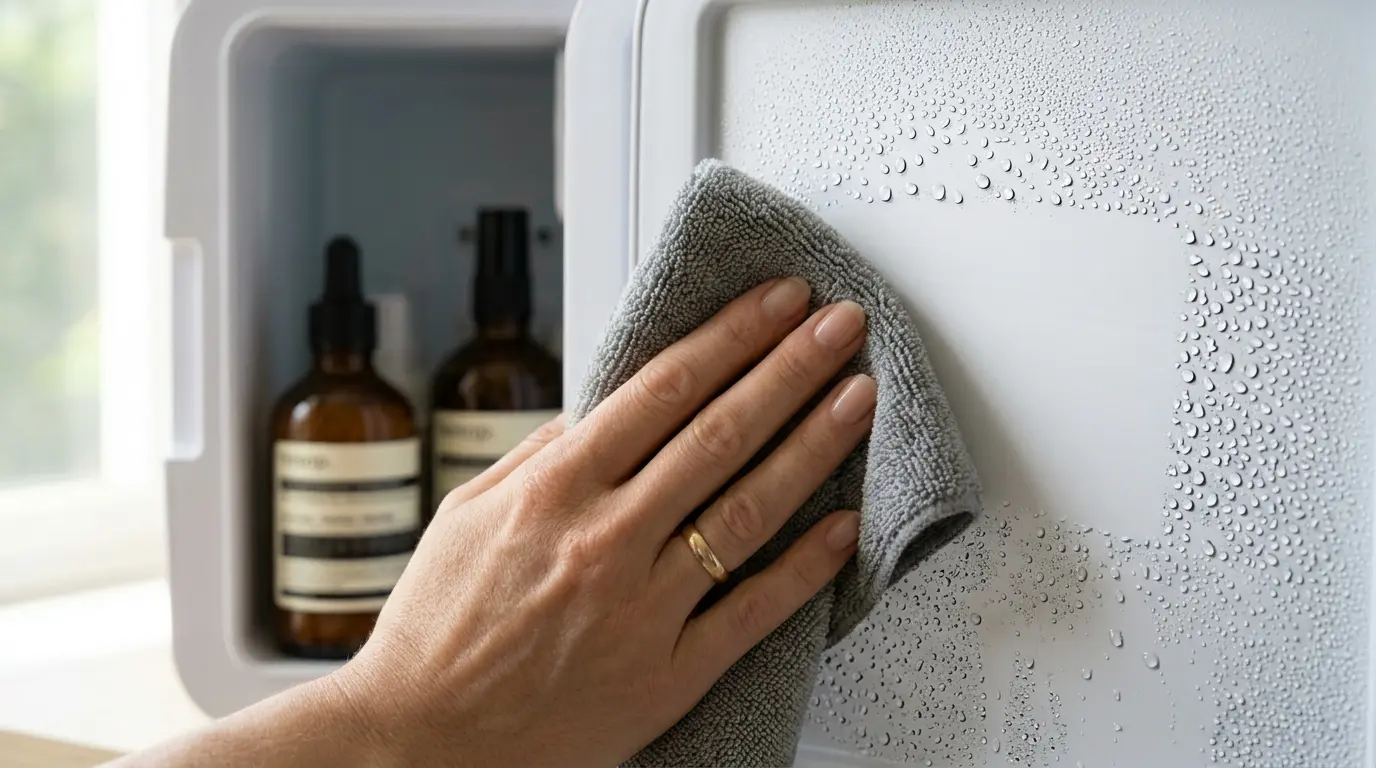
Let’s be realistic: even with perfect placement in a dry bedroom, optimized airflow, and fresh silica gel packets, a tiny bit of surface moisture is physically inevitable in entry-level thermoelectric coolers. It is highly recommended that you incorporate a rapid “fridge wipe down” into your weekly room cleaning routine.
Once a week, take a clean, dry microfiber cloth (or a simple paper towel) and simply wipe down the internal plastic back wall and the floor of the fridge. This takes less than 10 seconds of your time and mathematically guarantees that toxic mold, mildew, and bacteria will never have a chance to form in your pristine beauty setup.
Troubleshooting: Is My Fridge Actually Broken?
If you have meticulously followed all five steps above, but your fridge is still pooling massive amounts of water daily, or if the internal temperature feels surprisingly warm to the touch, you may be dealing with a hardware failure.
- ❌ Listen Closely to the Fan: Put your ear near the back of the unit. Do you hear a harsh, mechanical grinding noise, a loud clicking, or absolutely no fan noise at all? If the exhaust fan has failed or the bearings are shot, the cooling chip cannot operate. If your fan sounds broken or is vibrating your desk, consult our step-by-step mechanical repair guide on How to Fix a Mini Fridge Rattling Noise.
- ❌ The Peltier Chip is Dead: If the fan is spinning beautifully, but the inside of the fridge is completely room temperature, the internal thermoelectric cooling chip has burned out. Because these appliances are relatively inexpensive, it is almost always cheaper to replace the entire unit rather than paying a technician to solder a new chip onto the motherboard.
If your cooler is officially dead and you are ready for a more reliable, visually stunning replacement for your vanity, browse our heavily researched top picks for the year in our Best Mini Fridge for Skincare Products master guide.
Explore More Appliance Guides
Don’t stop here! Visit our complete hub for more expert troubleshooting tips, safety protocols, and updated buying recommendations for 2026.
FAQ: Skincare Fridge Condensation
2026 Guide: Managing Moisture & Protecting Products
Maintenance Tip: Place a fresh microfiber cloth at the bottom of your fridge. It absorbs daily condensation and can be easily swapped out and washed!

