
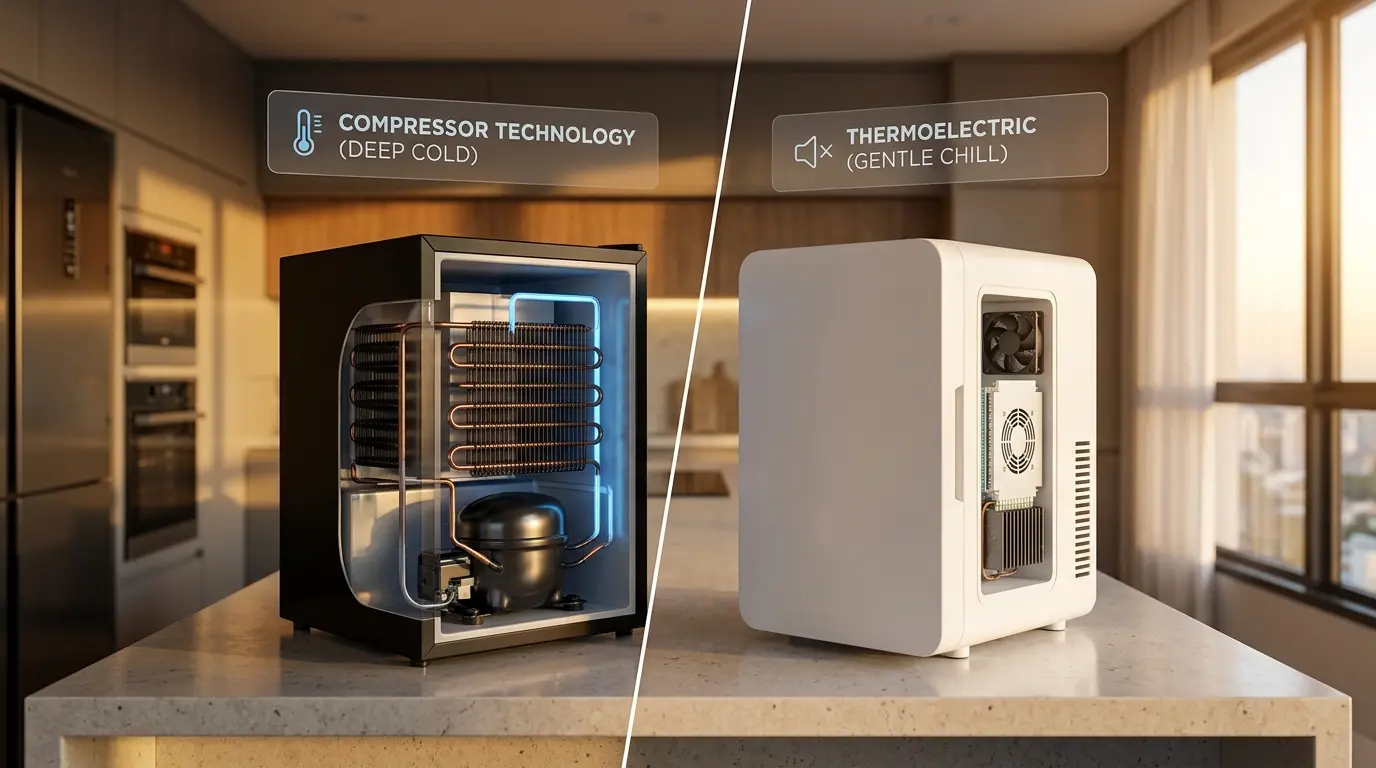
Thermoelectric vs Compressor Mini Fridge for Skincare: The Ultimate Tech Breakdown
You have invested hundreds, perhaps thousands, of dollars into your daily skincare routine. You have highly unstable Vitamin C serums, delicate retinol emulsions, and luxurious organic face masks. To protect that massive financial investment and get the ultimate, spa-like depuffing experience every morning, you decide to buy a mini fridge for your vanity.
But before you purchase the absolute cheapest dorm-style cube you can find online, you need to understand one crucial piece of appliance science: not all cold is created equal.
There are two completely different types of cooling technologies dominating the market today: Thermoelectric and Compressor. Choosing the wrong one for your delicate cosmetics won’t just be a loud inconvenience; it can permanently alter the chemical structure of your products, turning a $150 luxury serum into useless, separated water. Here is the definitive 2026 guide on thermoelectric vs compressor mini fridges, and which technology is actually safe for your skincare collection.
The Quick Answer
You must buy a Thermoelectric Mini Fridge for skincare. Compressor fridges use harsh chemical refrigerants to drop temperatures rapidly to near-freezing (32°F), which will irreparably destroy cosmetic emulsions and cause ingredients to separate. Thermoelectric fridges use gentle, solid-state electronic cooling to maintain a safe, “cellar-like” temperature of 45°F to 50°F. They are also whisper-quiet, incredibly lightweight, and free of the violent vibrations that plague compressor models.
How Does a Compressor Mini Fridge Work?
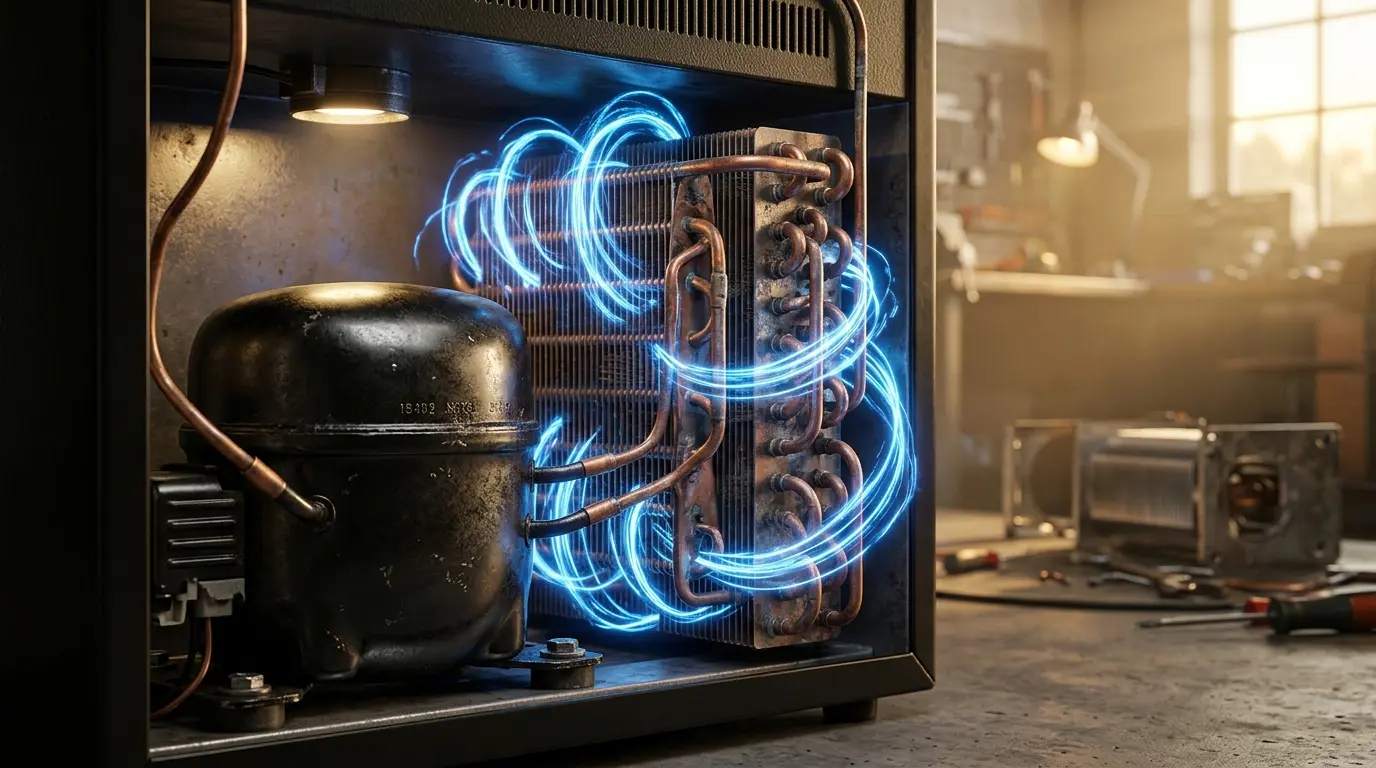
If you have a standard, full-sized refrigerator sitting in your kitchen, it runs on a compressor. This is the traditional, heavy-duty method of refrigeration that has dominated the appliance industry for over a century.
It works using a complex mechanical system: a powerful motorized pump (the compressor) and a chemical liquid refrigerant gas (like R-134a or modern R-600a). The compressor aggressively pushes the refrigerant gas through a series of copper expansion coils, rapidly absorbing massive amounts of thermal heat from the inside of the fridge and forcefully expelling it out the back. This thermodynamic process is incredibly powerful, highly aggressive, and extremely efficient at dropping internal temperatures very quickly.
The Pros of Compressors
- Deep, Powerful Cold: They are immune to room temperature. They can easily drop the internal temperature to 32°F (0°C) or below, regardless of whether your room is a comfortable 70°F or a sweltering 95°F.
- Absolute Precision: They are excellent for holding exact, medically necessary temperatures. If you need cold, highly stable storage for sensitive prescriptions or biologics, you should read our critical guide on the Beverage Cooler vs Mini Fridge for Medication Storage.
- Longevity: Traditional compressor units are built like tanks. For full-size kitchen reliability and decades of uninterrupted performance, we cover this technology heavily in our Most Reliable Refrigerator Without Ice Maker guide.
The Cons for Skincare
- Too Cold: Compressors are simply too aggressive for delicate cosmetics. They frequently drop temperatures too low, resulting in accidental freezing. As we will explore below, freezing temperatures will permanently destroy your expensive products.
- Vibration and Noise: Compressors physically shake and vibrate when the heavy motor cycles on and off. Furthermore, they emit a loud, noticeable mechanical hum. This constant vibration can actually agitate delicate serums over time, and the noise is unacceptable for a serene bedroom environment.
- Heavy and Bulky: Because of the heavy copper coils and thick metal compressor housing, these units are incredibly heavy, making them totally unsuitable for resting on a delicate glass or wood bedroom vanity.
How Does a Thermoelectric Mini Fridge Work?
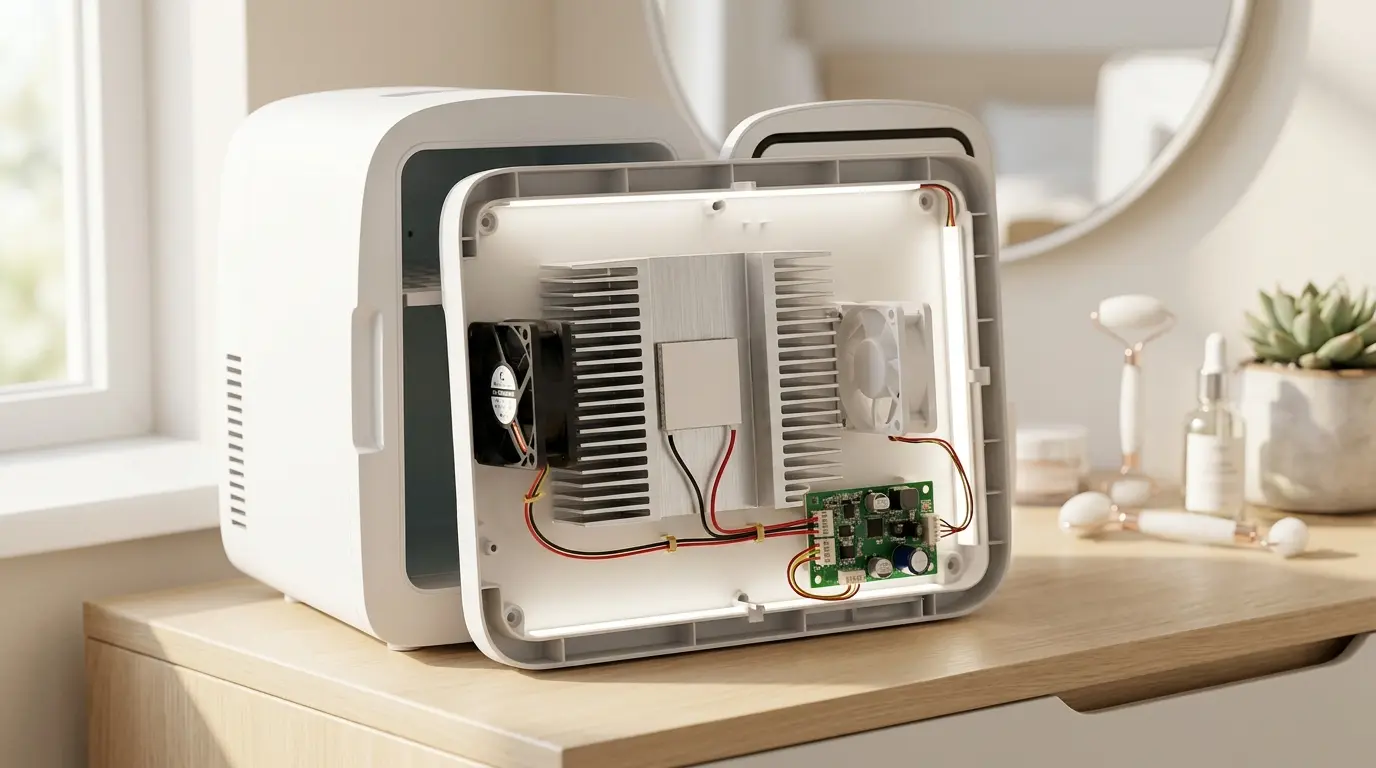
Instead of using a mechanical pump, copper coils, and toxic liquid refrigerants, thermoelectric fridges use a brilliantly simple, solid-state electronic component called a Peltier node.
The Peltier effect is a phenomenon in physics. When an electrical current passes through two different types of semiconductor materials joined together (the node), heat is actively transferred from one side of the device to the other. One side of the node becomes ice cold, while the other side becomes incredibly hot.
A small internal fan blows across the cold side to gently chill the interior of the fridge, while an external exhaust fan blows across the hot side to expel the thermal energy into the room. Because they use absolutely zero gas and no heavy motors, they are the driving technology behind almost all dedicated beauty fridges, including the top models we review in our Cooluli vs Chefman Beauty Fridge showdown.
The Pros of Thermoelectric for Skincare
- Gentle, Safe Cooling: Thermoelectric units deliberately do not achieve “deep freezing” temperatures. Instead, they cool the air based on a temperature differential (usually dropping the air roughly 15°F to 20°F below the ambient room temperature). This creates a perfect, gentle chill (around 45°F to 50°F) that feels highly refreshing on your face but will absolutely never freeze your liquids.
- Whisper Quiet: Because there is no compressor motor and no bubbling refrigerant gas, the only noise is the gentle, continuous whir of a small computer-style fan. This makes them the ultimate, peaceful choice for bedroom nightstands, as detailed in our Best Quiet Mini Fridge for Office or Work guide.
- Lightweight and Portable: They are incredibly light. You can easily pick one up with one hand, move it around your vanity, pack it in your car for travel, or sit it on a delicate glass shelf without worrying about structural support.
The Cons of Thermoelectric
- Condensation (Sweating): Because they rely heavily on ambient air and lack an automatic defrost cycle, they are prone to internal “sweating” when placed in highly humid environments like bathrooms. You must learn how to manage this moisture by reading How to Stop Condensation in a Mini Skincare Fridge.
- Sensitive to Room Heat: Because they operate on a differential, they cannot battle extreme external heat. If you place the fridge in a sunroom that reaches 90°F, the fridge will only cool down to about 70°F.
The Danger of Freezing: Why Skincare Needs Gentle Cold

The absolute biggest, most expensive mistake you can make is placing your cosmetics in a compressor fridge (like a dorm beverage cooler or a hotel mini-bar).
Skincare products—especially thick lotions, night creams, and specialized serums—are not simple liquids. They are emulsions. An emulsion is a highly complex chemical mixture of water, oils, and active ingredients held together by delicate stabilizing agents (surfactants).
The Rupture of Emulsions
If these carefully crafted products drop below 35°F, the water molecules inside the emulsion begin to crystallize and freeze. These microscopic ice crystals act like tiny knives, physically puncturing and breaking the bonds holding the oil and water together. Once a delicate emulsion breaks, it is permanently destroyed. You cannot just shake it back together. The texture will become grainy, watery, and separated, and the active ingredients will be rendered entirely useless on your skin.
A compressor fridge is designed to get beer ice-cold, keep milk from spoiling, or help you craft the perfect steak environment (see our highly technical Mini Fridge vs Beverage Cooler for Dry Aging Beef guide). It is fundamentally the wrong environment for a $150 bottle of La Mer or a delicate Vitamin C serum. Thermoelectric cooling provides the exact “wine cellar temperature” (45°F-50°F) needed to preserve your skincare’s shelf life without the catastrophic risk of crystallization.
Head-to-Head Comparison Table
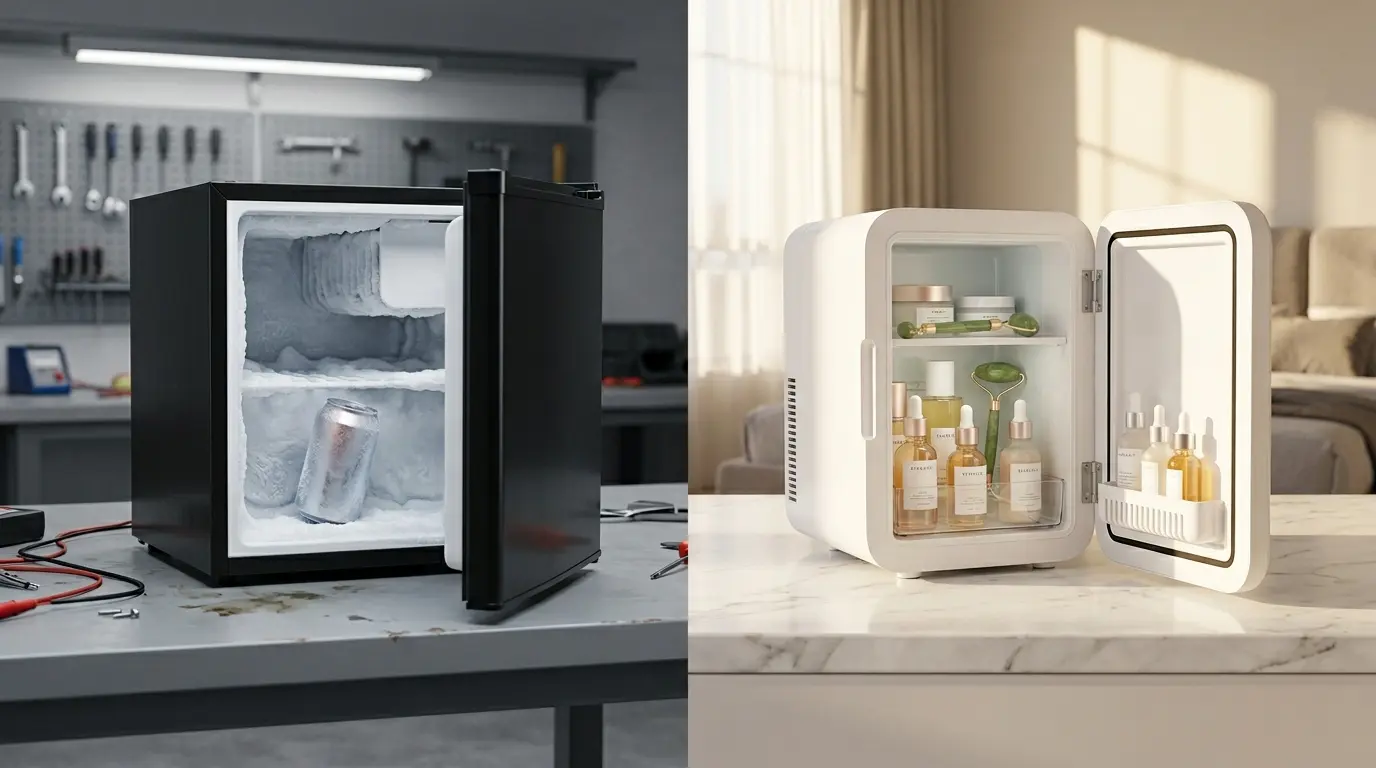
If you are setting up your vanity or bathroom, use this technical cheat sheet to understand exactly what you are bringing into your personal space.
| Technical Spec | Thermoelectric Fridge | Compressor Fridge |
|---|---|---|
| Cooling Mechanism | Solid-state Peltier node | Mechanical pump & chemical gas |
| Average Temperature | 45°F – 55°F (Gentle) | 32°F – 40°F (Aggressive) |
| Noise Level | ~25 dB (Quiet fan hum) | ~40+ dB (Loud motor clicking) |
| Vibration | Zero vibration | High (Shakes when turning on) |
| Weight | 4 to 8 lbs (Portable) | 35 to 60+ lbs (Stationary) |
| Ideal Use Case | Cosmetics, serums, jade rollers | Beverages, food, medication |
FAQ: Skincare Fridge Technology & Safety
2026 Guide: Cooling Mechanisms, Noise, and Medical Storage
Tech Tip: To maximize your thermoelectric fridge’s lifespan, ensure the back fan is at least 3 inches away from the wall to allow hot exhaust air to escape.

