
Beverage Cooler vs Mini Fridge for Medication Storage: The Safety Guide (2026)
If your luxury beauty serums accidentally freeze and separate, it is an incredibly annoying financial loss. But if your life-saving insulin, expensive biologics, or highly sensitive liquid antibiotics freeze, it is a dangerous, immediate medical emergency.
Many people require dedicated cold storage for their daily medications to keep them out of the chaotic, busy family kitchen fridge or safely tucked away in a private bedroom or home office. When shopping for a small cooling appliance, the two most common options you will find lining the aisles at big-box stores are glass-front beverage coolers and traditional, solid-door dorm-style mini fridges.
However, before you blindly trust your health and hundreds (or thousands) of dollars worth of vital prescriptions to a cheap, mass-produced appliance, you deeply need to understand the extreme mechanical and thermal differences between them. In this beverage cooler vs mini fridge for medication storage guide, we break down the severe, hidden risks associated with standard consumer cooling technology and reveal what you actually need to keep your prescriptions biologically safe.
The Quick Answer
Neither a standard mini fridge nor a glass-front beverage cooler is completely safe for storing critical, temperature-sensitive medication like insulin or GLP-1 agonists. A traditional mini fridge presents a severe freezing hazard because its exposed rear cooling plate routinely drops below 32°F, destroying proteins upon contact. A beverage cooler exposes sensitive medications to harmful UV light degradation through its glass door and lacks the thermal insulation to hold exact temperatures. You must use a purpose-built medical cooler with a true digital thermostat and forced-air circulation.
I. The Golden Rule of Medical Storage: 36°F to 46°F
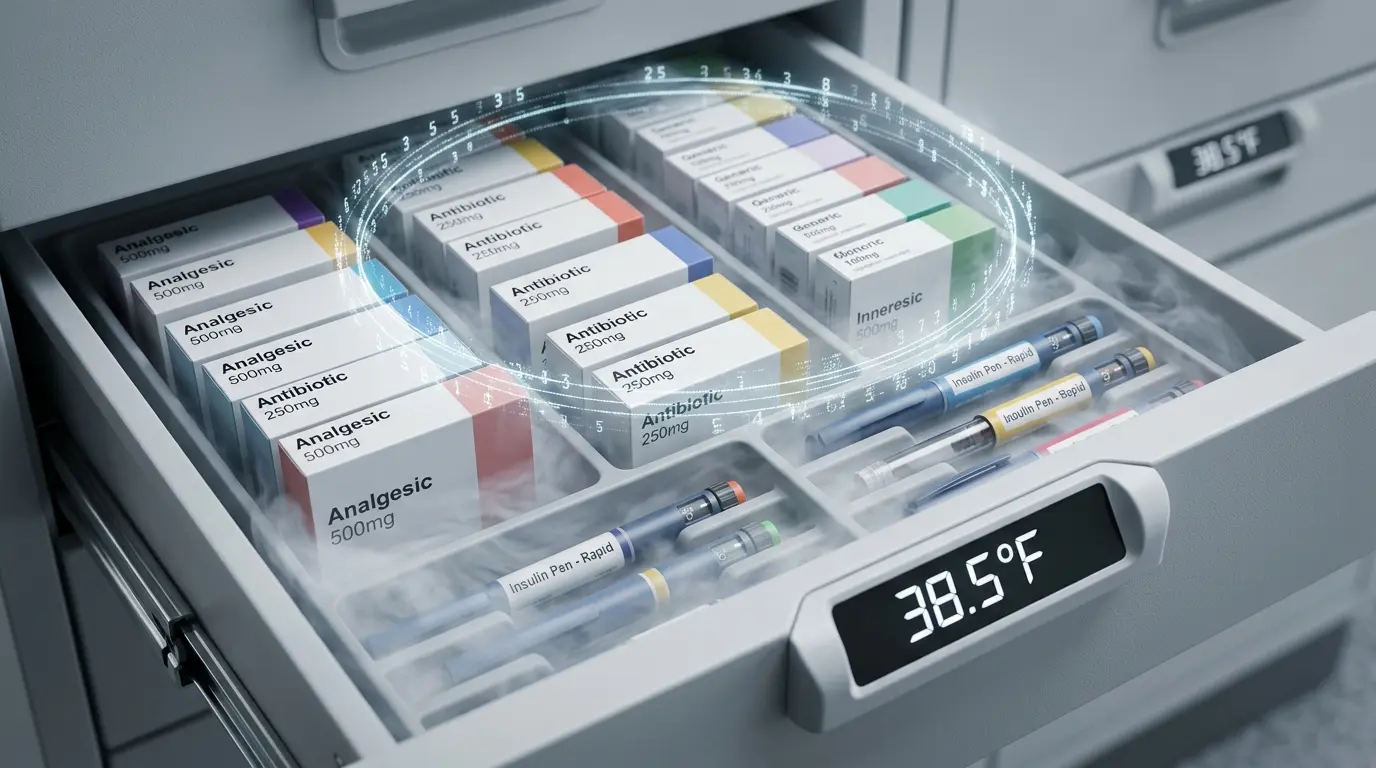
To understand why standard appliances fail, you must first understand the fragile biochemistry of modern pharmaceuticals. Most refrigerated medications—including insulin, GLP-1 agonists (like Ozempic, Wegovy, or Mounjaro), peptide therapies, and specific prescription eye drops—must be kept strictly between 36°F and 46°F (2°C and 8°C).
If the liquid gets too warm, the active proteins and complex molecular structures begin to rapidly break down and denature. The medication loses its required efficacy, and in some compounded solutions, excessive warmth can promote dangerous bacterial growth.
If the liquid drops below 32°F (0°C) and freezes, the microscopic water crystals physically slice and permanently destroy the fragile peptide chains. The molecular structure is irrevocably ruined, even after it thaws out and looks normal again.
Therefore, the primary job of a medical fridge is not simply to “get cold,” but to hold an exact, unwavering, hyper-specific temperature range without experiencing aggressive thermal spikes or drops. Standard consumer appliances are simply not engineered or manufactured for this level of precision.
1. Traditional Mini Fridges: The Freezing Hazard
A standard compressor mini fridge (the classic, solid-door dorm cube) is arguably the most dangerous place you can store delicate medications. While it will definitely keep things cold, it does so with terrifying, uncontrolled aggression.
The Mechanical Flaw
These units use powerful, oversized compressors designed to chill dense foods and massive volumes of liquids quickly. However, to keep manufacturing costs low, their internal thermostats are incredibly cheap bimetallic strips. Instead of offering exact digital temperatures, they use a vague mechanical dial simply numbered 1 through 7. You have absolutely no idea what temperature “Setting 4” actually equates to on any given day.
The Back Wall Danger (Cold Spots)
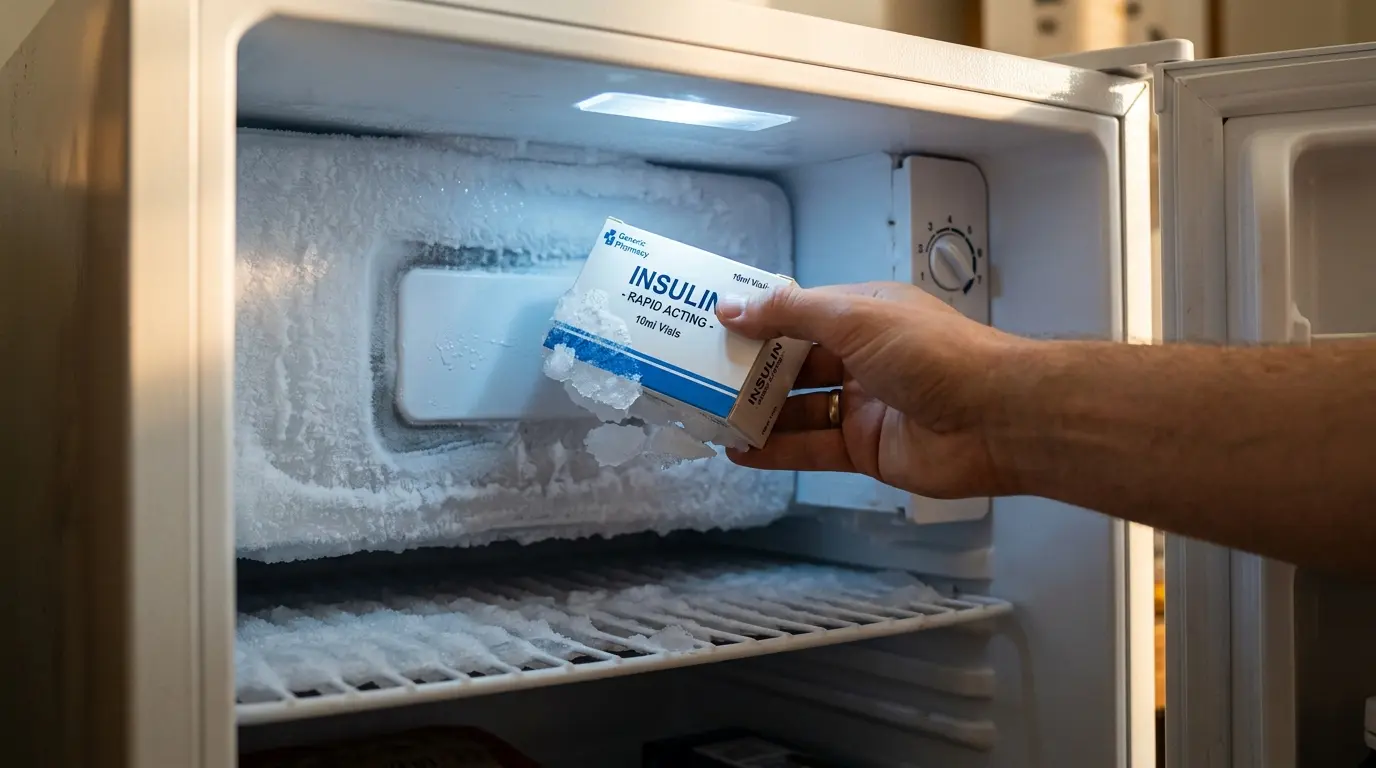
Standard mini fridges utilize a “cold plate” (the evaporator) located directly on the exposed back internal wall of the unit. Because these fridges do not have internal fans to circulate the air, they rely on passive radiant cooling. To maintain a safe 40°F in the front and center of the fridge, the internal cooling plate at the back of the unit must routinely drop to 20°F or lower.
The Fatal Risk: If your small cardboard insulin box or Ozempic pen gets pushed back and physically touches that frost-covered rear wall, the liquid inside will freeze solid within hours, permanently destroying your medication without you ever realizing it.
Aggressive Temperature Swings
Furthermore, these basic fridges suffer from massive temperature swings. The compressor turns on, blasts freezing air until the unit is cold, shuts off, and waits until the fridge is dangerously warm before turning on again. It is incredibly common for a cheap mini fridge to fluctuate up to 10 full degrees between compressor cycles.
While a high-quality, heavily insulated, multi-sensor full-size kitchen appliance is generally stable enough for medicine (see our Most Reliable Refrigerator Without Ice Maker guide for top kitchen picks), a cheap $90 dorm fridge is fundamentally too aggressive and unpredictable for medical use.
2. Beverage Coolers: The UV Light Problem
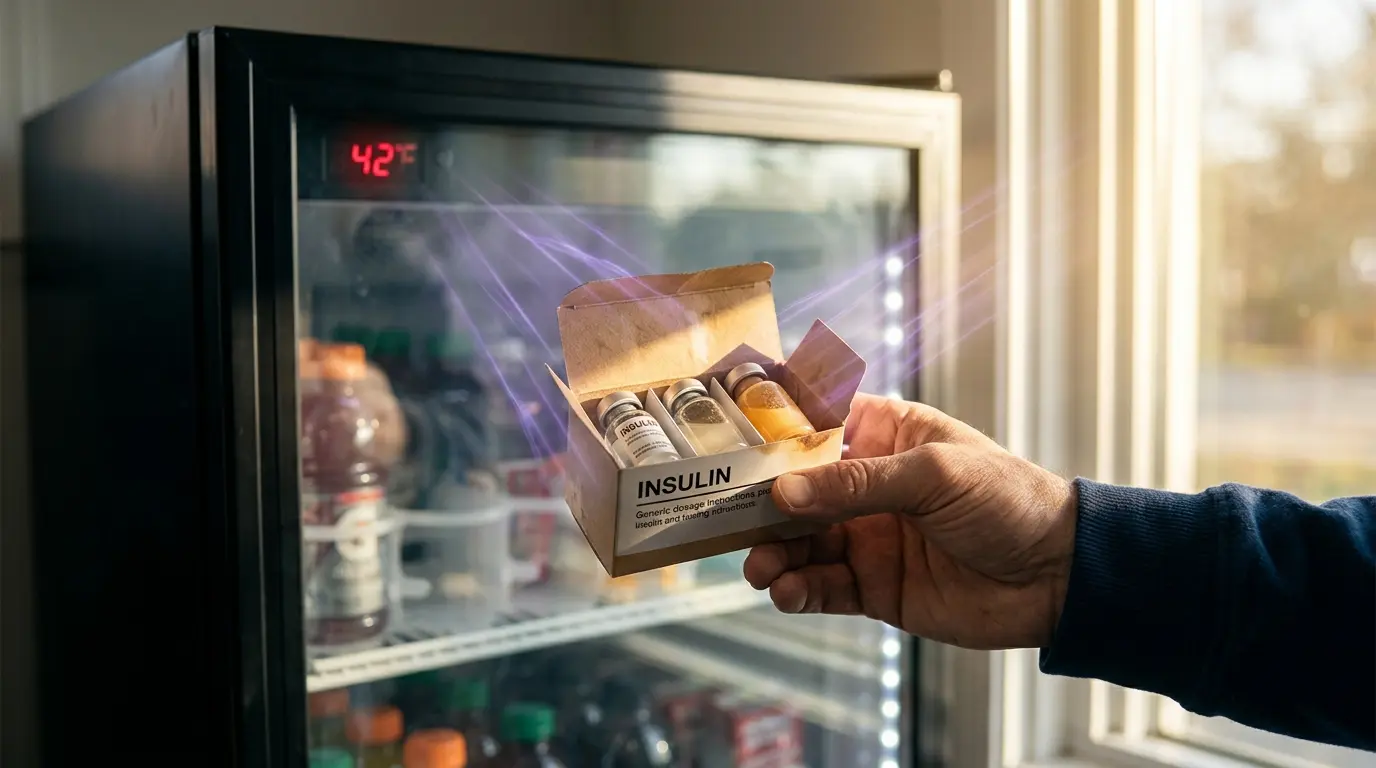
At first glance, glass-front beverage coolers seem like the perfect solution. They look highly professional, feature digital displays, and are designed to hold cans of soda, beer, or wine at a moderate, consistent chill. Because they are designed for display, they usually utilize an internal fan to actively circulate the cold air, completely preventing the dangerous “freezing back wall” issue found in standard mini fridges.
Why They Still Fail for Medication:
- Severe Light Exposure (Photodegradation): The most obvious, striking feature of a beverage cooler is the large glass door. This is its fatal flaw. Many sensitive medications, especially insulin and complex biologics, degrade rapidly when exposed to ultraviolet (UV) light. A clear glass door allows ambient room light and direct sunlight to hit your delicate prescriptions, breaking down the peptide bonds.
- Insulation Weakness: Glass is a fundamentally terrible thermal insulator compared to solid polyurethane foam. If the morning sun hits the front of a glass beverage cooler, the internal temperature will spike quickly. This forces the compressor to work in overdrive to cool it back down, creating the exact dangerous temperature fluctuations you are trying to avoid.
- Limited Temperature Range: Beverage coolers are engineered for drinks, not vaccines. Many are factory-set to not drop below 40°F to 45°F. Because they sit so close to the upper 46°F medical limit, they leave very little room for error if the room gets overly warm or if the door is opened frequently.
The Rule of Thumb: If you are looking for a sleek, glass-front unit purely for storing sparkling water and soft drinks in your workspace, stick to our Best Quiet Mini Fridge for Office guide. Do not use a glass-front cooler for UV-sensitive medicine.
3. What About Thermoelectric Beauty Fridges?
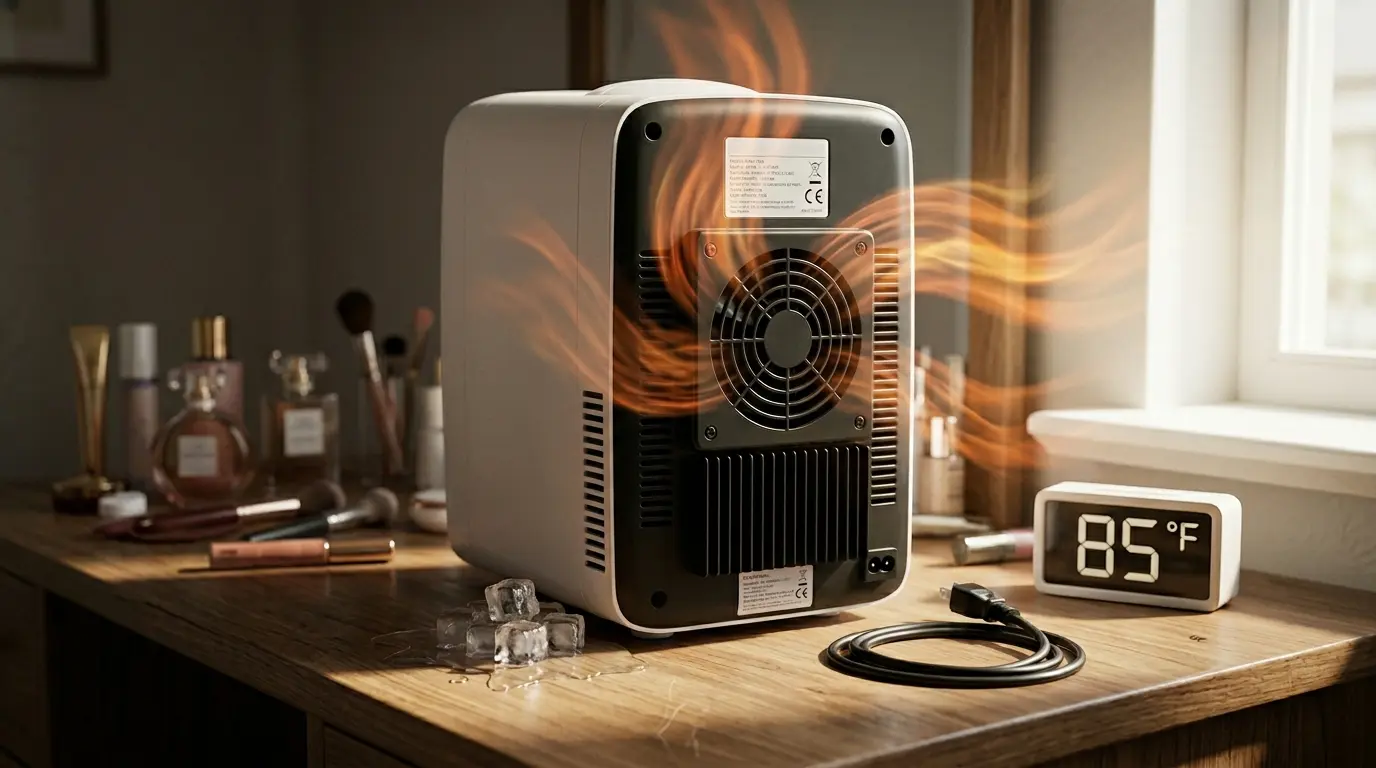
Because standard compressor mini fridges are dangerously cold and risk freezing medications, many people logically wonder if they can use a gentle, solid-state, pastel-colored “beauty fridge” instead.
Do Not Use Them For Critical Medication.
As we extensively covered in our highly technical Thermoelectric vs Compressor Mini Fridge breakdown, thermoelectric units do not possess actual thermostats. They are entirely reliant on the outside environment, cooling the internal air based entirely on a differential from the room’s ambient temperature (usually cooling 15°F to 20°F below room temp).
- The Heat Risk: If your bedroom air conditioning breaks on a hot summer day and the room reaches 85°F, the inside of your beauty fridge will slowly climb to an unsafe 65°F—completely ruining your medication in a matter of hours.
- The Moisture Risk: Because they lack defrost cycles, the internal condensation they inherently create (which you can learn to properly manage for cosmetics in How to Stop Condensation in a Mini Skincare Fridge) can easily soak through and degrade the mandatory cardboard prescription boxes housing your vials, making dosing labels unreadable.
The Verdict: What Should You Actually Buy?
When it comes to the beverage cooler vs mini fridge for medication storage debate, the safest and most medically responsible answer is neither.
Do not rely on standard, cheap consumer appliances designed for leftover pizza and soda cans for critical healthcare storage. Instead, you must invest in purpose-built medical cooling technology.
What to Look For in a Medical Fridge:
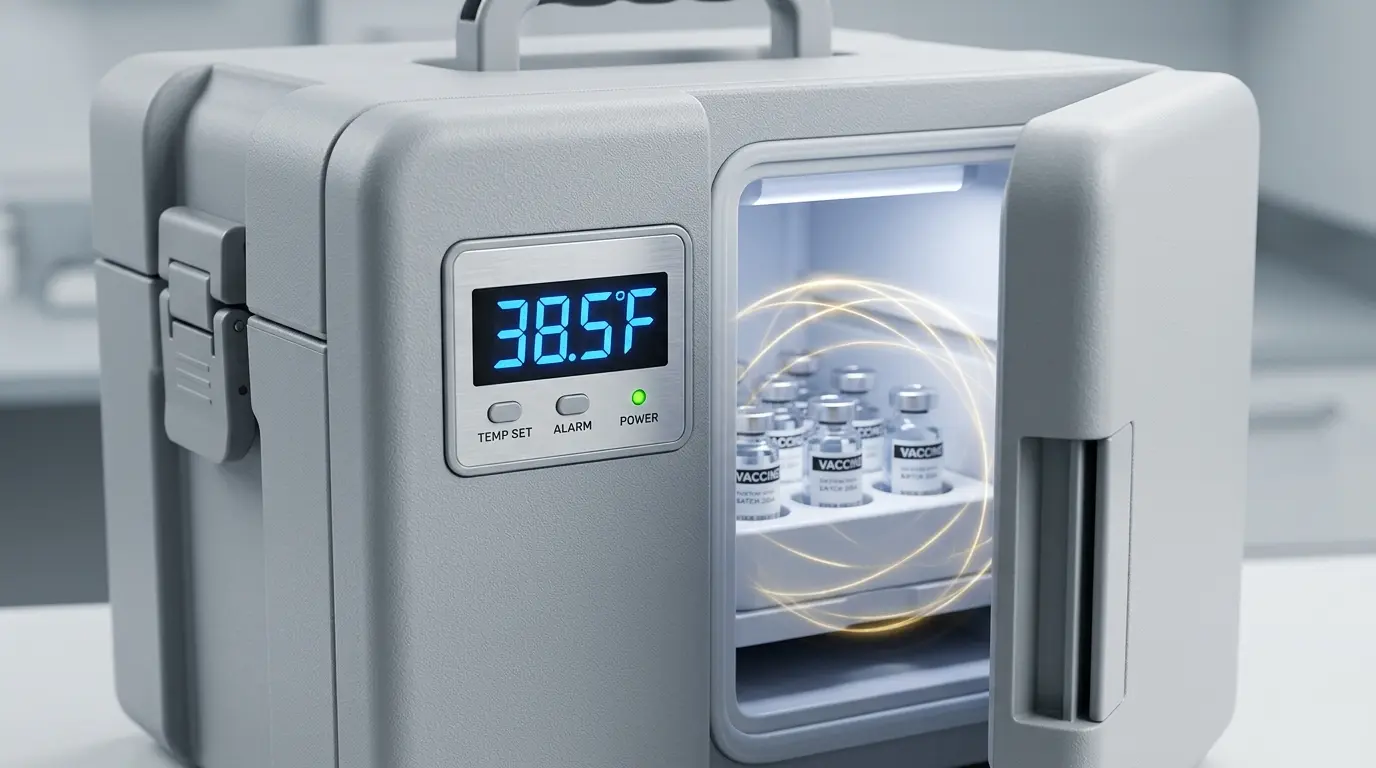
- True Digital Thermostats: You need a unit where you can explicitly set the exact temperature (e.g., 38°F) and the machine’s microprocessors will hold it within a single degree of variance.
- Forced-Air Circulation: This internal fan system actively prevents stagnant cold spots and ensures the entire chamber is precisely the same temperature, entirely removing the catastrophic risk of freezing against a back wall.
- Solid Doors: Avoid glass at all costs. You need thick polyurethane insulation and absolute zero light penetration to prevent UV degradation.
- Alarms and Battery Backups: True medical coolers feature audible alarms that trigger if the temperature drifts out of the safe 36°F to 46°F range, alerting you before the medication is ruined.
Explore More Specialized Refrigeration
Don’t guess with your health or expensive goods. Visit our complete hub for expert tips on medical storage, skincare preservation, and precise temperature control.
FAQ: Medication Cold Storage
2026 Guide: Safety, Temperature Control, and Best Practices
Medical Safety Tip: Always keep your medication in its original packaging. The cardboard box provides an extra layer of insulation and protects against light exposure.

