
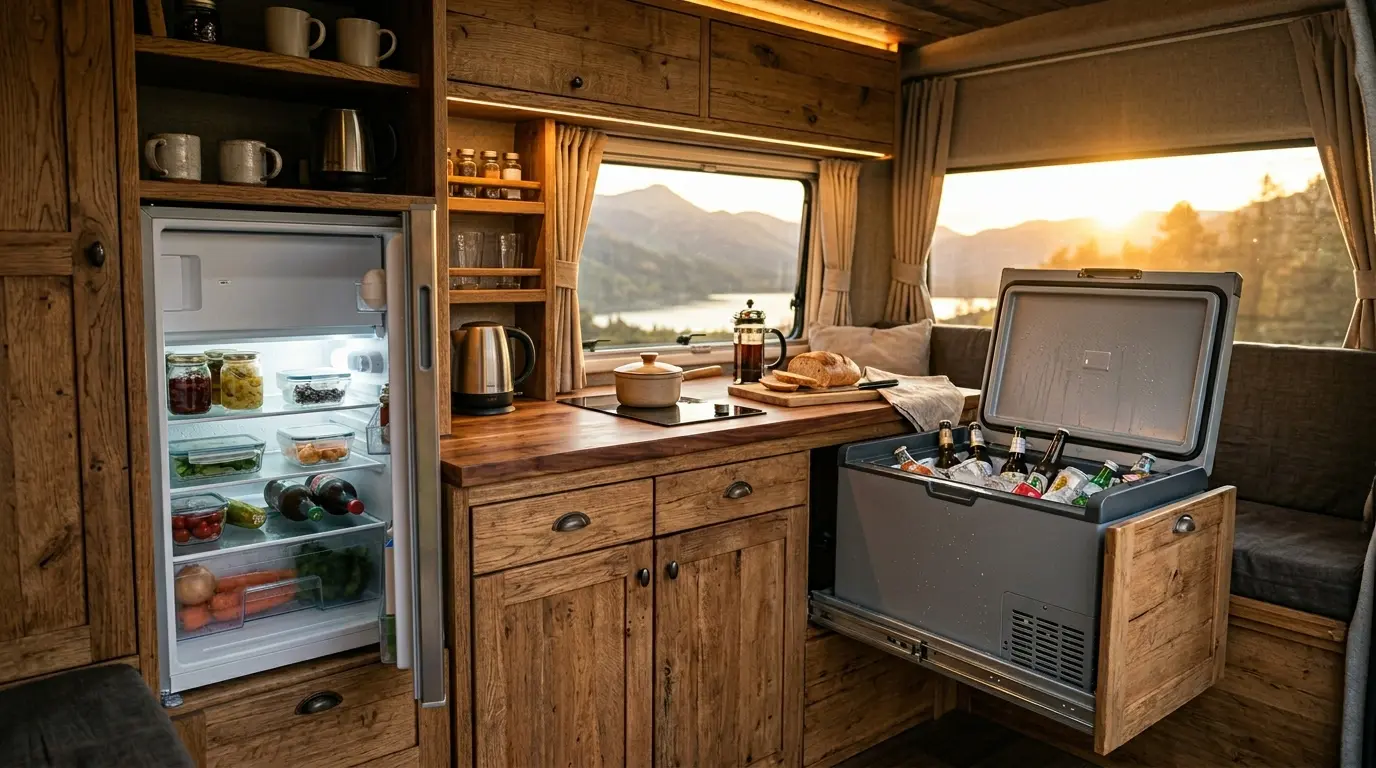
Chest Fridge vs Upright Fridge for Vanlife: Which is Better in 2026?
When outfitting a custom campervan, a rugged overlanding rig, or a tiny off-grid cabin, you quickly learn that mobile living is an exercise in extreme micro-engineering. Among all your appliances, the refrigerator is the undeniable anchor of your entire floorplan. It dictates the height of your countertops, the depth of your custom cabinets, and the total size of the lithium battery bank you need to build.
If you have already read our master technical guide on the 12V DC Compressor Fridge vs Propane Fridge for Off-Grid Living, you already know that a dedicated 12V compressor is the absolute safest, most electrically efficient, and most reliable choice for a moving vehicle.
But once you settle on the cooling technology, you are immediately faced with a massive spatial and architectural design dilemma: Should you buy a top-loading chest fridge or a front-loading upright fridge? In this comprehensive breakdown, we compare thermodynamics, layout impact, and daily ergonomic convenience so you can confidently design the ultimate mobile kitchen.
The Quick Answer
A Chest Fridge (Top-Loading) is the champion of thermodynamic efficiency and off-road security; it prevents cold air from spilling out when opened and stops food from falling during sharp turns, but it requires frustrating daily “digging” to find items at the bottom. An Upright Fridge (Front-Loading) provides the familiar, organized comfort of a residential home kitchen and saves aisle floor space, but it loses massive amounts of cold air every time you open the door, draining your solar battery bank significantly faster.
I. The Chest Fridge (Top-Loading): The Thermodynamic Champion
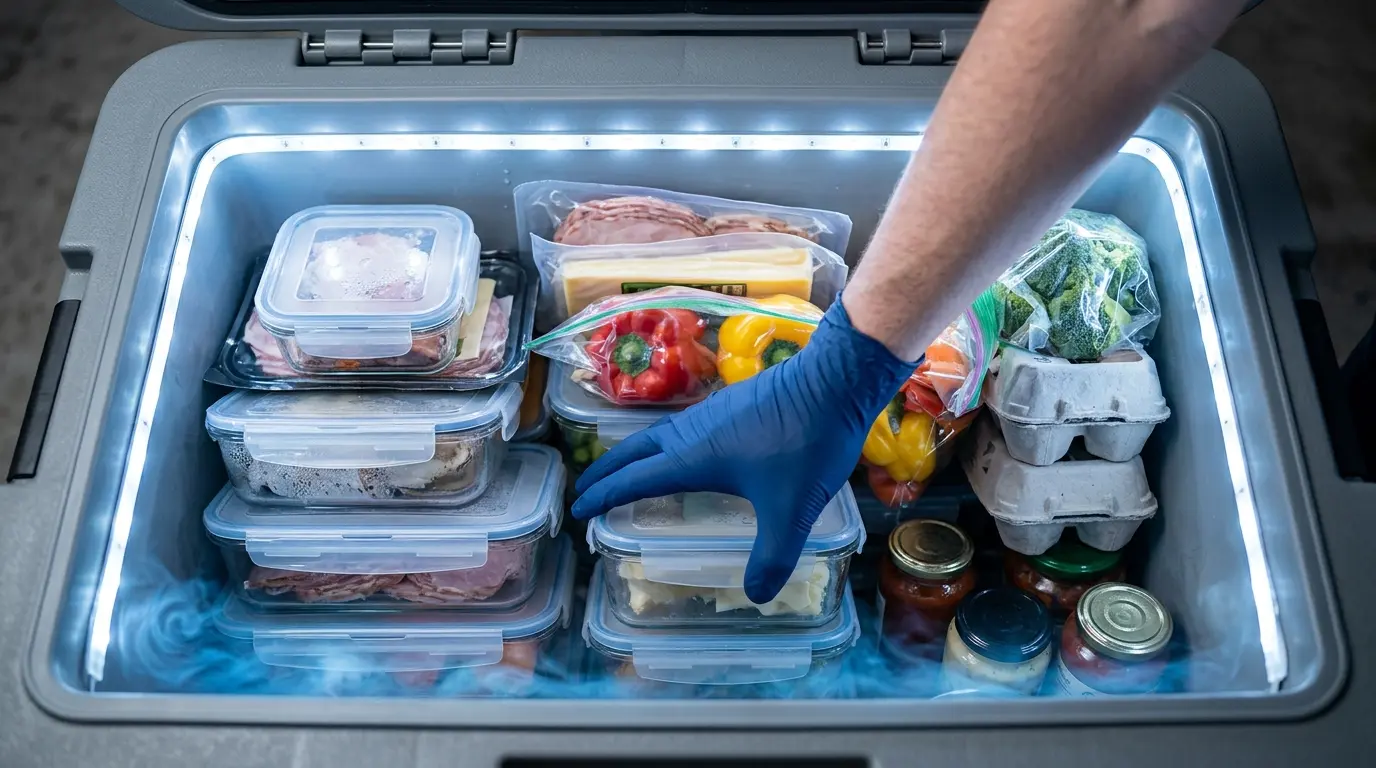
Chest fridges look exactly like high-tech, ruggedized camping coolers. They open from the top via a heavy, insulated lid. In a van build, they are usually mounted on heavy-duty, 250-pound locking sliding rails hidden inside a lower base cabinet, or they are cleverly built into the floorplan to double as a bench seat for a dinette table.
The Pros: Absolute Efficiency
- Cold Air Sinks (The Physics Advantage): This is the ultimate superpower of the chest fridge. Because cold air is physically denser and heavier than warm air, it naturally sinks. When you open the lid from the top to grab a drink, the pool of heavy, freezing air stays trapped inside the deep bin. You lose almost zero thermal efficiency, meaning your compressor rarely has to kick on just because you wanted a snack.
- Zero Spills on the Trail: If you are off-roading, crawling over BLM washboard dirt roads, or simply navigating tight mountain switchbacks, your vehicle will violently sway. With a top-loading chest fridge, gravity is your friend. You never have to worry about a door latch failing, flying open, and your glass jars of pickles and mustard shattering all over the van floor.
- Multi-Functional Space Optimization: In a 60-square-foot living space, everything must have two purposes. You can easily build a custom upholstered cushion for the top of a chest fridge and use it as a primary seating area, or tuck it completely out of sight in a deep pull-out drawer, keeping your visual sightlines perfectly open and airy above the waistline.
The Cons: The “Digging” Problem
- Food Tetris: Because a chest fridge is essentially one massive, deep bin, your groceries inevitably get stacked directly on top of each other. If you want the yogurt at the very bottom, you have to pull out the heavy vegetables, the tupperware, and the meat sitting on top of it. It requires strict, exhausting daily organization and mental mapping of where you placed things.
- Aisle Space Blocking: If your chest fridge is mounted on a heavy-duty slide-out drawer beneath your bed or counter, pulling the massive fridge out completely blocks the walking aisle of your van. If one person is cooking, the other person cannot physically walk past them.
II. The Upright Fridge (Front-Loading): The Comfort of Home
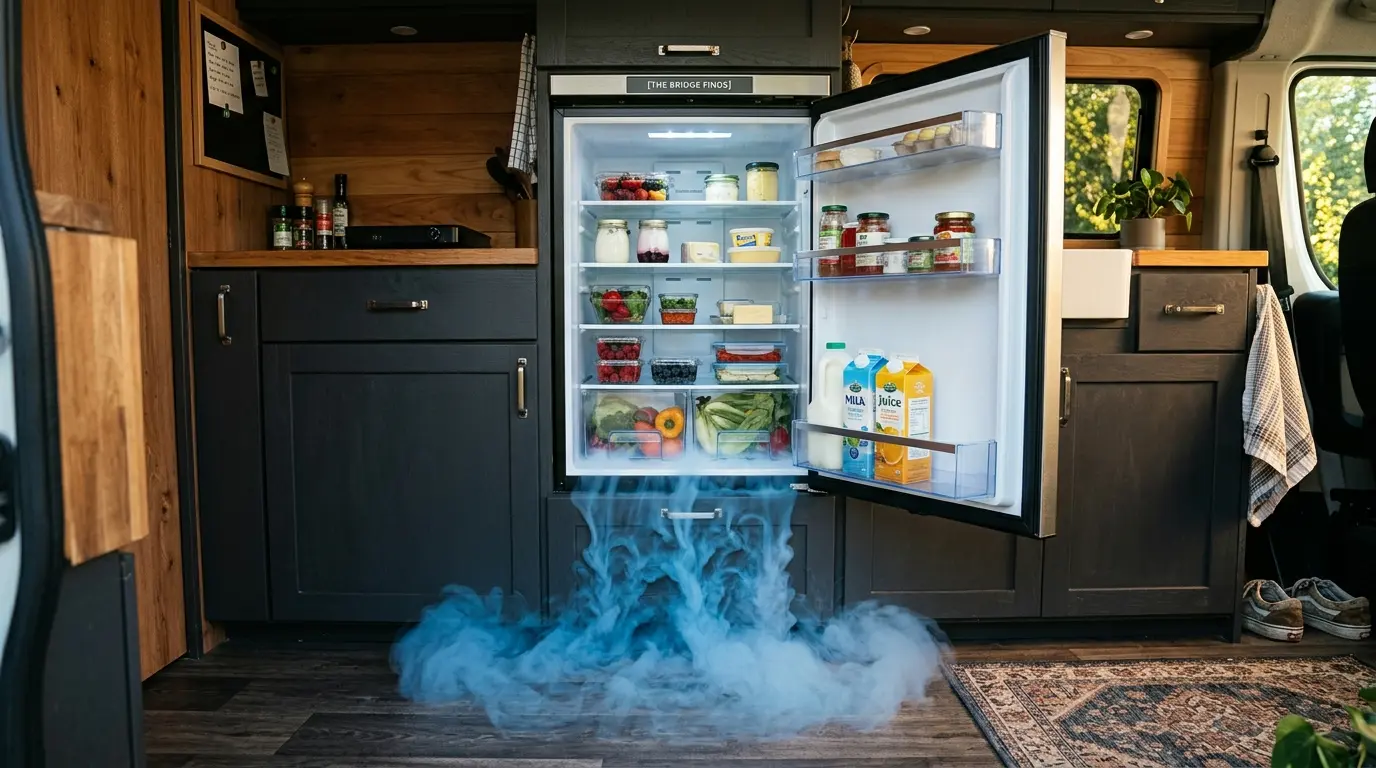
Upright fridges look exactly like miniaturized versions of a standard home kitchen appliance. They are built directly into your cabinet walls at eye level or tucked neatly under the counter. They feature swinging front doors, internal shelves, crisper drawers, and often a tiny dedicated freezer compartment at the top.
The Pros: Convenience and Aesthetics
- The “Home” Feel: Having a front-loading fridge makes your van or cabin feel like a legitimate, permanent home rather than a camping trip. You open the door, and all your food is beautifully displayed on shelves just like a residential appliance. (Note: If you prefer this traditional style for a completely stationary off-grid cabin rather than a van, check our Most Reliable Refrigerator Without Ice Maker roundup for larger, high-efficiency upright options).
- Instant, Easy Access: Absolutely no digging required. You can see everything you own at a glance, reach in, and grab the exact ingredient you need without disturbing the rest of your meticulously packed groceries.
- Aisle Clearance: Because only the thin door swings open rather than pulling a massive 50-liter heavy drawer out into the walkway, an upright fridge takes up much less of your precious floor space when actively in use.
The Cons: The Cold Air Waterfall
The Massive Power Loss: Every single time you open the swinging door of an upright fridge, the heavy, dense cold air literally spills out like a waterfall onto the floor of your van, and warm, humid ambient air violently rushes inside to replace it.
When you close the door, the compressor has to kick on and work in overdrive to cool that entirely new batch of warm air back down to 35°F. If you have a habit of staring blankly into the fridge to decide what you want to eat, you will drain your expensive LiFePO4 solar battery bank significantly faster than if you owned a chest fridge.
- Projectile Danger: If you forget to lock the mechanical safety latch before getting into the driver’s seat, the very first sharp turn or sudden braking maneuver will send the heavy door flying open, ejecting a week’s worth of food crashing out onto your floor.
- Complex Installation Requirements: Upright fridges require highly precise cabinet framing. More importantly, they require adequate ventilation gaps behind them (and often a secondary computer fan pulling air through the cabinetry) to prevent the hot compressor coils from overheating inside the enclosed wood box.
III. Layout Impact: How They Dictate Your Build
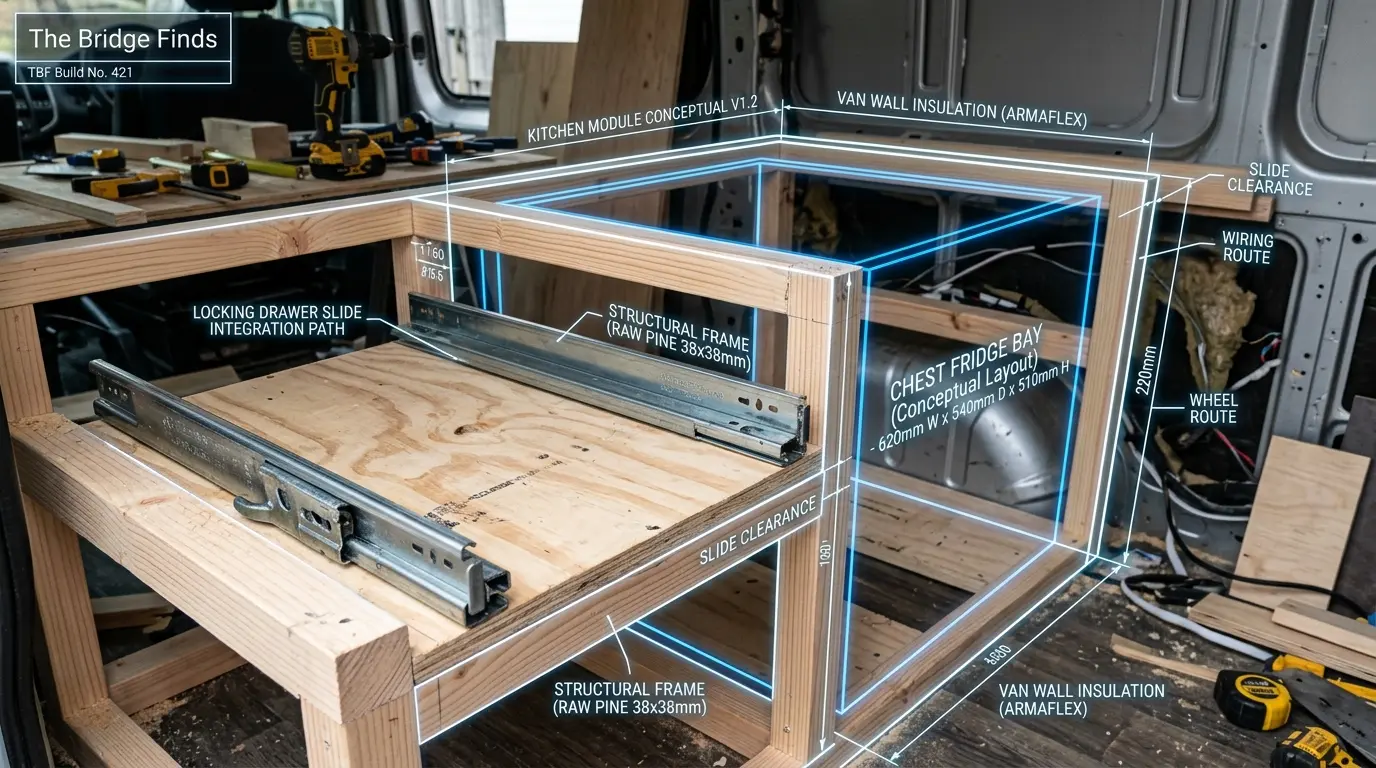
The physical shape of your refrigerator will completely alter how you approach the carpentry and woodworking of your mobile tiny home.
If you choose a Chest Fridge, you are committing to building heavy-duty, locking slider drawers capable of supporting 150+ lbs of dynamic weight. This means you sacrifice an entire lower cabinet of storage space, but in return, you keep your van’s interior feeling incredibly open, airy, and spacious above the waistline, allowing for more windows and natural light.
If you choose an Upright Fridge, you are committing to building a tall, floor-to-ceiling “tower” cabinet or a very deep under-counter cubby. A tall tower can visually divide a small van, creating a physical wall that makes the space feel slightly more cramped and segmented, but it provides a highly ergonomic, stand-up cooking experience worthy of a luxury apartment.
If you are on a tight budget and are tempted to simply buy a cheap $100 dorm-style AC upright fridge and physically modify it (drilling holes through it to bolt it securely into your custom van cabinets), proceed with extreme caution. You absolutely must read our safety manual on How to Find Coolant Lines in a Mini Fridge Before Drilling to avoid accidentally puncturing a pressurized Freon pipe, which will permanently destroy the appliance before your road trip even begins.
IV. The Verdict: Which One Should You Buy?
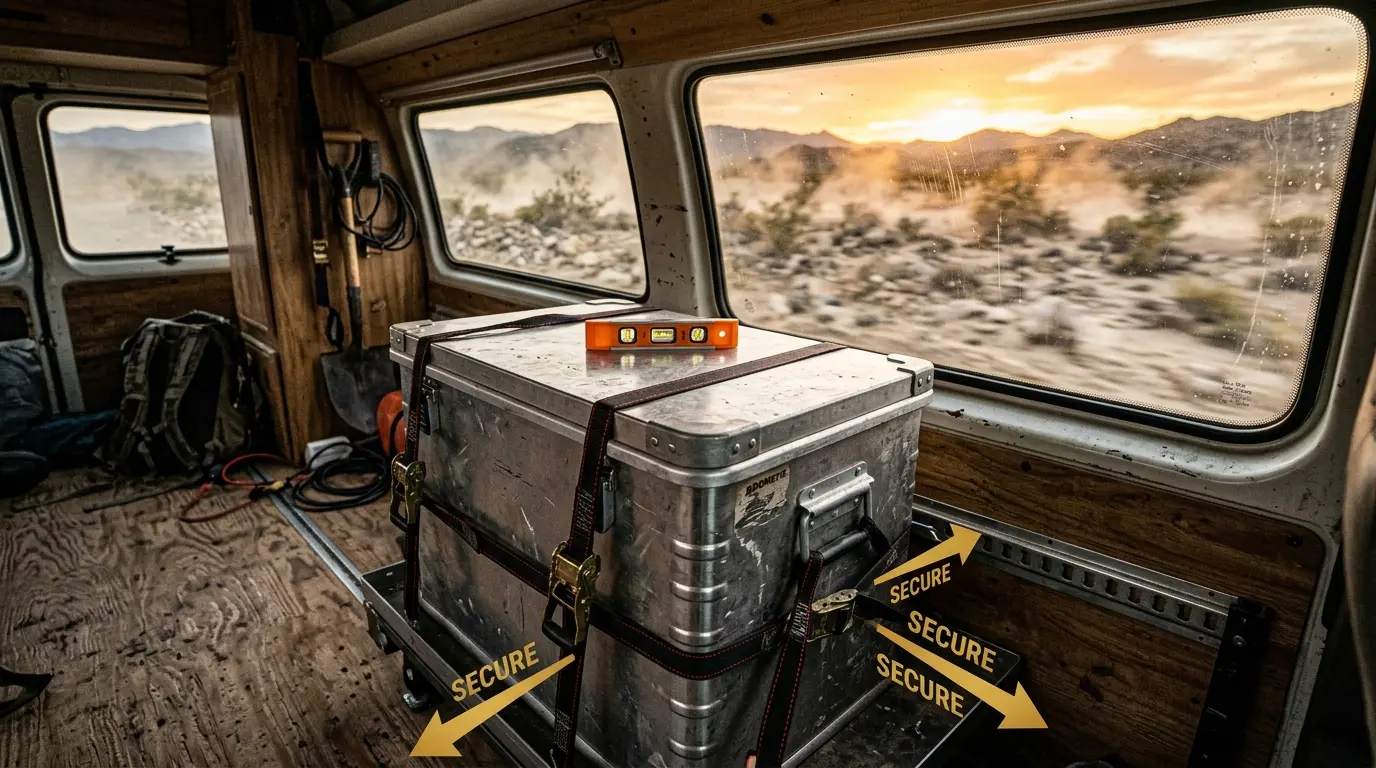
Choosing between a chest fridge and an upright fridge is a highly personal decision that balances your solar capabilities with your patience for organization.
Buy a Chest Fridge If…
You prioritize maximum battery efficiency and off-road ruggedness above all else. If you have a smaller 200W solar array, love driving down bumpy BLM washboard roads, hate finding broken eggs on the floor, or want to keep your short-wheelbase van’s interior feeling as visually spacious as possible, the top-loading chest fridge is the undisputed, rugged champion.
Buy an Upright Fridge If…
You prioritize daily culinary convenience and ergonomic cooking comfort. If you have built a massive electrical system (400Ah+ of lithium) that can easily handle the inevitable power loss of opening a swinging door, and you absolutely hate the idea of digging through a freezing deep bin just to find your butter, the front-loading upright fridge will make your van feel like a premium, uncompromised tiny home.
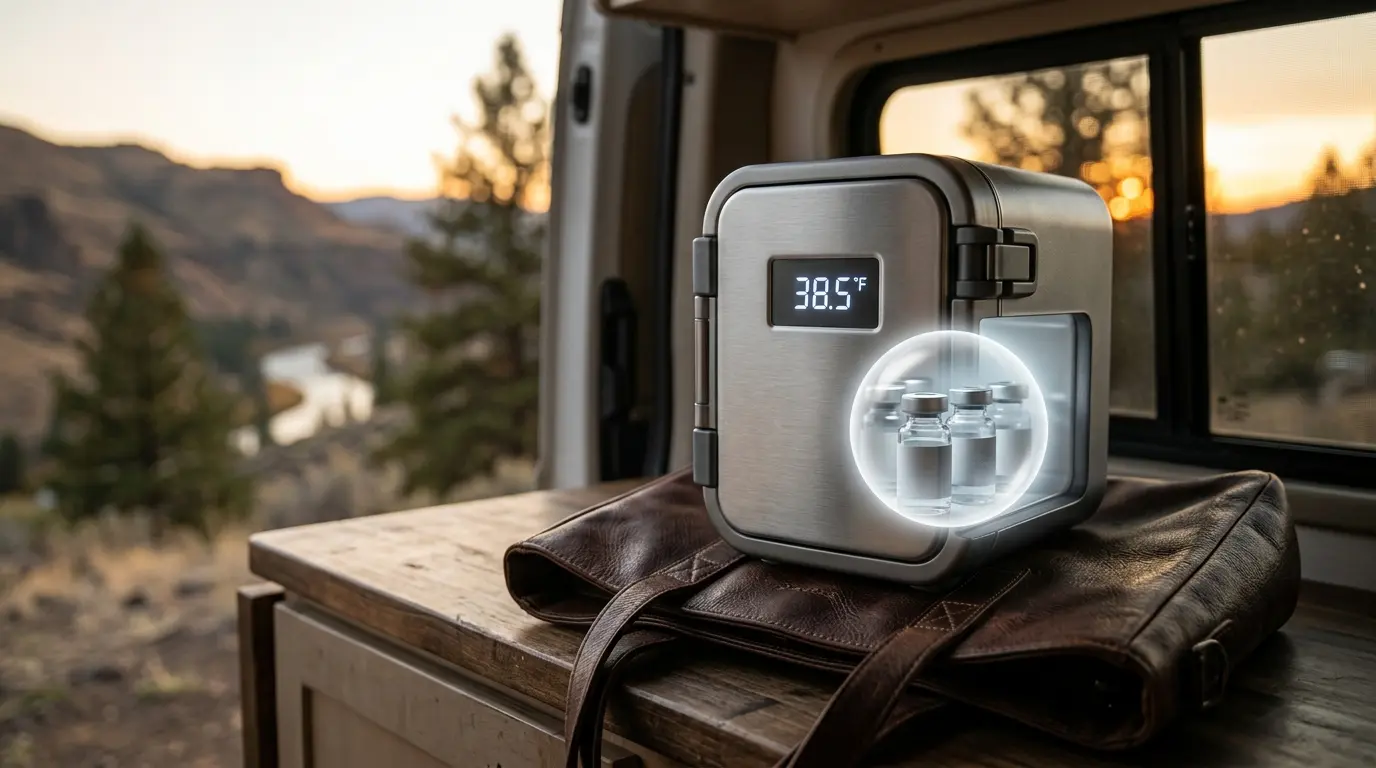
V. A Crucial Note on Medical Storage
No matter which style of campervan fridge you choose, it is vital to understand that bulk food refrigerators placed inside metal vehicles fluctuate wildly in temperature due to extreme external weather changes and frequent door openings.
If you are traveling across the country with highly temperature-sensitive prescriptions (like insulin, GLP-1 agonists, or biologics), you cannot rely on either of these large appliances to safely hold the strict 36°F to 46°F medical range without risking accidental freezing. Furthermore, using glass-door beverage coolers is even more dangerous due to UV light degradation (as explained deeply in our Beverage Cooler vs Mini Fridge for Medication Storage breakdown).
To securely protect your life-saving medication and your health off-grid, you must use a dedicated, TSA-approved medical cooling device with its own backup battery. Discover the top, fail-safe options in our Best Portable Insulin Cooler for Travel guide.
Explore the Refrigerator Hub
Don’t stop here! Dive deeper into the mechanics of 12V systems and discover the best layouts tailored specifically for off-grid living, overlanding, and van life.
FAQ: Vanlife Fridges & Kitchen Layouts
2026 Guide: Battery Efficiency, Custom Builds, and Off-Grid Cooling
Vanlife Tip: A chest fridge not only saves battery life by retaining cold air, but the top lid can double as extra prep space or a bench seat in a tiny van!

