
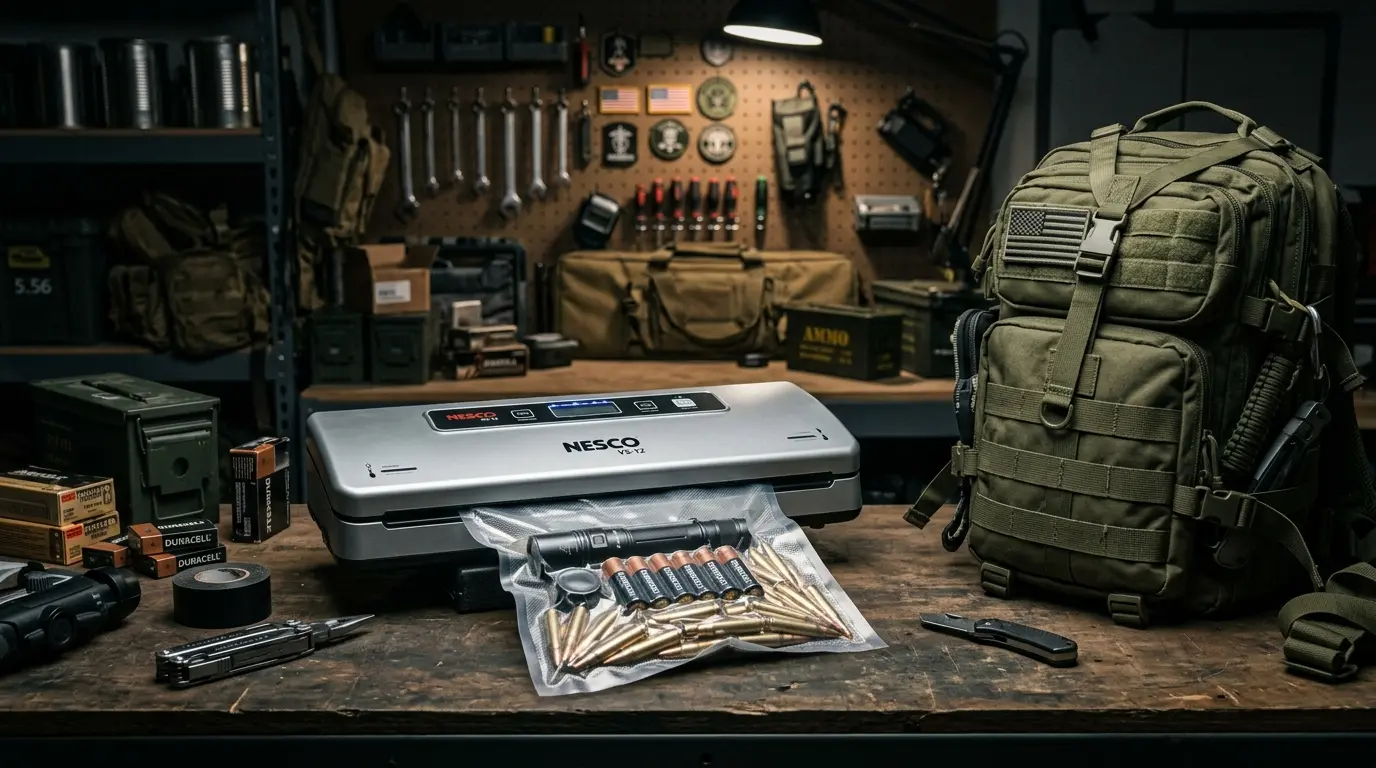
Prepper’s Guide: The Best Vacuum Sealers for Tactical Gear and Ammo (2026)
You know that exact moment of sinking dread: you are doing a routine, yearly audit of your bug-out bags and emergency subterranean caches. You pull out an expensive Individual First Aid Kit (IFAK), only to find the sterile trauma bandages are damp, and the medical adhesives are compromised. You check your backup 9mm ammunition, and the brass casings are already showing the early, powdery green signs of oxidation. Yeah. Moisture, oxygen, and time are the absolute silent killers of emergency preparedness.
Honestly, most people think vacuum sealers are just benign kitchen gadgets for keeping chicken breasts fresh in the deep freezer. But in the survival, tactical, and hardcore prepping communities, a heavy-duty vacuum sealer is one of the most critical pieces of logistical gear you can own. When you are trying to maximize every single cubic inch of a 50L backpack for a weekend overland trek or a rapid bug-out scenario, bulky packaging is your ultimate enemy. Vacuum sealing compresses thick clothing, tactical gear, and medical supplies into rock-hard, flat, waterproof bricks that slide perfectly into tight compartments. Let’s break down the best machines, the thermodynamic science of moisture control, and the exact techniques for preserving your tactical gear indefinitely.
📊 Quick Overview: The Tactical Sealers
Not all fragile plastic kitchen gadgets are built to withstand the rigorous demands of tactical applications and heavy Mylar bags. Here is how the top contenders stack up for gear preservation.
| Feature | Nesco VS-12 Deluxe | FoodSaver V4840 / V4400 |
|---|---|---|
| Motor Power | 130 Watts (Dual Pump, 25.1 InHG) | Standard High-Efficiency Home Motor |
| Best Tactical Feature | Manual Double Heat Seal | Automatic Bag Detection & Moisture Sensor |
| Operation | Manual / Heavy-Duty Easy-Lock Handle | Fully Automated (Insert and walk away) |
| Best For | Heavy-Duty IFAKs, Ammo, Thick Mylar | Basecamp Prep, Bulk Food Rations |
I. The Science: Why Oxygen and Moisture Destroy Gear
Before looking at the hardware, you must understand the physics of degradation. You cannot simply throw a box of 5.56mm rounds into an ammo can and expect them to fire perfectly a decade later.
Brass Oxidation and Primer Failure
Atmospheric oxygen and ambient humidity cause brass casings to corrode. More dangerously, moisture can seep past the primer pocket or bullet seating over years of temperature fluctuations in a garage or bunker, deadening the gunpowder inside and causing catastrophic misfires when you need reliability the most. Vacuum sealing creates a localized, completely anaerobic (oxygen-free) environment that halts this chemical oxidation immediately.
The Physics of Spatial Compression
When packing a bug-out bag, textiles (like heavy wool winter socks, thermal base layers, and cotton gauze in medical kits) are mostly comprised of empty, interstitial air. A high-powered vacuum sealer physically extracts all of this useless air, compressing a fluffy pair of winter socks into a rigid, waterproof brick that is less than half its original size. This allows you to carry twice the amount of life-saving gear in the same physical backpack.

1. The Prepper’s Champion: Nesco VS-12 Deluxe
If you visit any serious survivalist forum, the Nesco VS-12 is universally praised as the ultimate budget-friendly prepper machine. It is a highly robust, 130-watt workhorse built specifically for people who need vastly more control and stronger physical performance than basic, automated home models.
Why it dominates tactical prep:
- The “Double Seal” Feature: This is the single most important feature for tactical gear. When you are sealing an IFAK (Individual First Aid Kit) that might get submerged during a river crossing, you absolutely cannot rely on a single heat weld. The Nesco VS-12 features an optional double heat seal, creating two distinct, heavy-duty airtight closures. If one fails under extreme pressure, the second holds the line.
- Extreme Suction (25.1 InHG): To compress trauma dressings and bulky winter clothing into flat, packable bricks, you need serious vacuum pressure. The double vacuum pump on this machine aggressively extracts air, maximizing your storage space.
- Variable Pressure Settings: Ammunition boxes can have sharp cardboard edges, and tactical flashlights have protruding metal buttons. The adjustable “Gentle” vacuum pressure allows you to manually pulse the suction, ensuring the machine doesn’t pull so hard that the gear punctures the bag.
This machine is also one of the few consumer models hot enough to properly seal thick Mylar bags. To see exactly how this machine compares to its biggest rival in the kitchen space, read our highly detailed Nesco VS-12 Deluxe Vacuum Sealer Review.
 Check Price on the Nesco VS-12
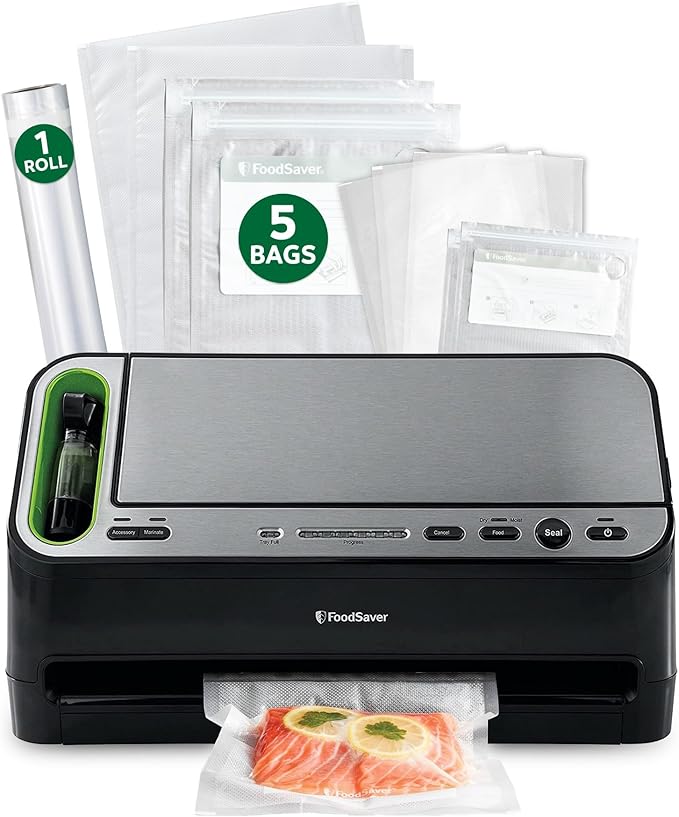
2. The Basecamp Workhorse: FoodSaver V4840 / V4400 2-in-1
While the Nesco is the manual tactical favorite, the FoodSaver V4840 (and its V4400 sibling) is the ultimate “home bunker” machine. It is designed for maximum convenience and automation, making it absolutely perfect for processing massive amounts of emergency food rations alongside your gear.
Why it belongs in your setup:
- Automatic Moisture Detection: Tactical gear isn’t always perfectly dry. If you are sealing freshly oiled gun parts or damp field gear, the V4840 senses the moisture and automatically switches sealing modes to prevent liquid from ruining the heat weld. For more on this wet-sealing tech, see Vacuum Sealer Not Sealing Wet Foods? Here’s the Fix.
- Hands-Free Automation: The automatic bag detection system makes processing a breeze. You literally just insert the bag into the slot, and the machine clamps down, vacuums, and seals automatically. If you are packing away 50 individual bags of emergency rice and beans, this automation saves hours of physical wrist fatigue.
- Ecosystem Versatility: It includes built-in roll storage and an integrated cutter, plus it features a retractable accessory hose. This works beautifully with FoodSaver’s massive ecosystem of mason jar attachments for your long-term pantry storage.
Curious how this heavy-hitter compares directly to the Nesco above? Read our brutal head-to-head showdown: FoodSaver V4840 vs. Nesco VS-12, or dive into the specific features in our FoodSaver V4840 2-in-1 Vacuum Sealer Machine Review.
⚠️ The Golden Rules of Tactical Vacuum Sealing
Having the right machine is only half the battle. If you seal your gear incorrectly, you will actually accelerate its destruction. You must integrate these critical techniques into your protocol.
1. The Moisture Trap: Silica Gel
Never vacuum seal ammunition or electronics on a hot, humid day without a desiccant. If you pull a vacuum on ambient humid air, you physically trap that microscopic moisture inside the bag. As temperatures drop in your subterranean cache or bug-out vehicle overnight, that trapped moisture will cause heavy condensation, leading directly to rusted ammo and ruined radio circuits.
👉 The Fix: Always drop a rechargeable Silica Gel packet (or specific Oxygen Absorber) into the bag before you seal it. Read our guide on the Best Oxygen Absorbers for Ammo Storage and Mylar Bags.
2. The Supreme Barrier: 7-Mil Mylar
Standard transparent vacuum rolls (even the name-brand ones) are micro-porous. Over a period of 2 to 3 years, light and microscopic amounts of oxygen will penetrate the plastic. If you are building a cache to bury underground or store for 10+ years, transparent plastic is entirely useless.
👉 The Fix: You must use Heavy-Duty 7-Mil Mylar Bags, which block 100% of light and oxygen. We break down the exact physics in our guide: Mylar Bags vs Standard Vacuum Bags for Long Term Food Storage.
3. Protecting the Plastic from Sharp Gear
Ammunition boxes have sharp cardboard corners, rifle magazines have sharp feed lips, and tactical knives will instantly pierce a bag when put under -25 InHG of vacuum pressure. If you do not protect the edges, the bag will inevitably puncture and lose its seal within a week.
👉 The Fix: Wrap sharp items in a small piece of folded paper towel or butcher paper before sealing. We cover this extensively in our meat preservation guide: Stop Puncturing Bags: How to Vacuum Seal Bone-In Meat Perfectly.
V. Top 5 Items Every Prepper Should Vacuum Seal
Beyond food, these are the five most critical items you should be compressing and waterproofing today.
- Ammunition: As noted, use Mylar and an oxygen absorber. For a highly specific tutorial on this exact process, read The Triple-Layer Method for Long-Term Ammunition Storage Using Mylar.
- IFAK / Medical Supplies: Compressing gauze and bandages saves massive space. More importantly, it keeps sterile dressings 100% dry and prevents medical tape adhesives from degrading in high humidity.
- Spare Winter Clothing: A bulky pair of wool socks and a thermal base layer can take up half your bag. Vacuum sealing shrinks them to the size of a paperback book and guarantees you have dry clothes if you fall in a river.
- Batteries & Radios: Prevents battery terminal corrosion and keeps vital Ham/GMRS radios perfectly dry if your bag is submerged.
- Matches & Fire Tinder: Dryer lint and storm matches are useless if they absorb ambient humidity. Sealing them in tiny, segmented bags ensures you can always start a fire in a torrential downpour.
Frequently Asked Questions
Does vacuum sealing ammo actually damage the primers?
This is a highly debated topic on survival forums. Some claim the extreme negative pressure can unseat the primer or suck the powder out. In reality, modern centerfire ammunition is incredibly robust and usually sealed tightly at the factory. We break down the exact physics of this controversy in our article: Myth Busted: Does Vacuum Sealing Ammo Actually Damage Primers?
Can I use a vacuum sealer to store important documents or maps?
Yes, absolutely. Sealing topographical maps, passports, cash, and backup IDs protects them from flooding and humidity. However, be sure to place a piece of stiff cardboard behind the documents so the pressure doesn’t aggressively crumple or fold the paper during the suction phase.

