
Microwave Sparking Inside: Causes and Fixes (2026 Guide)
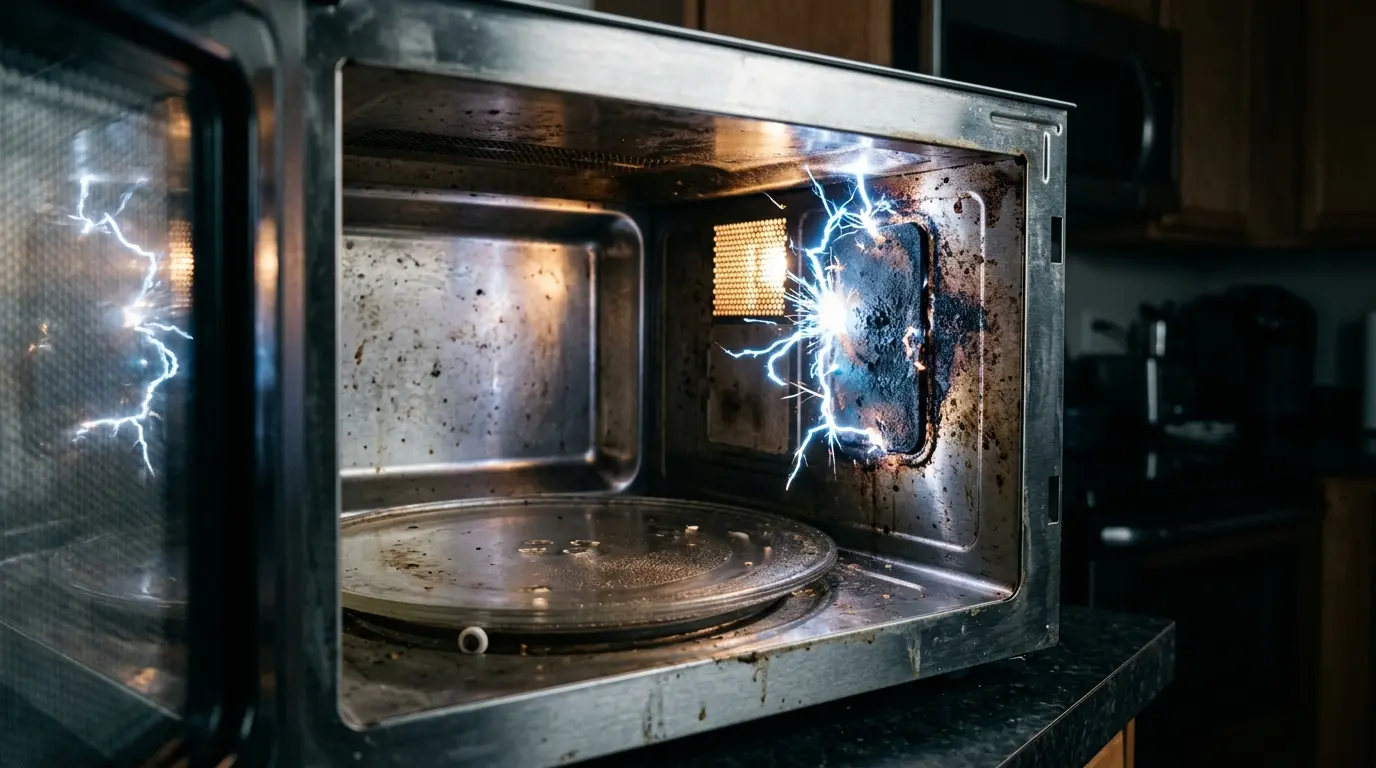
Seeing flashes of light, hearing loud popping noises, or watching your microwave sparking inside can be an incredibly alarming experience. This phenomenon is scientifically known as “arcing,” and while it looks like a severe electrical fire is about to break out in your kitchen, the cause is often a simple, highly fixable issue.
However, safety must always come first. If you see your microwave sparking inside, press the STOP button and unplug the appliance immediately. Do not attempt to use it again until you have identified and resolved the exact source of the arcing. Continuing to run a sparking microwave can destroy the internal magnetron or cause a catastrophic house fire.
In this comprehensive diagnostic guide, we break down the five most common causes of a sparking microwave, the physics behind why it happens, and the exact step-by-step repairs you need to take to fix them safely.
The Quick Answer
If your microwave is sparking, immediately unplug it. The most common cause is a dirty or burned waveguide cover (the small cardboard-like sheet inside the cavity), which can be replaced for less than $10. Other common culprits include accidentally leaving metal objects inside (like foil or gold-rimmed plates), chipped interior paint exposing bare metal, or running the machine completely empty. If none of these are the issue, you likely have a burned high-voltage diode or a failing magnetron, which typically requires replacing the entire appliance.
1. The Waveguide Cover is Dirty or Damaged
This is the absolute most common cause of a microwave sparking inside, yet the vast majority of homeowners do not even know this crucial part exists.
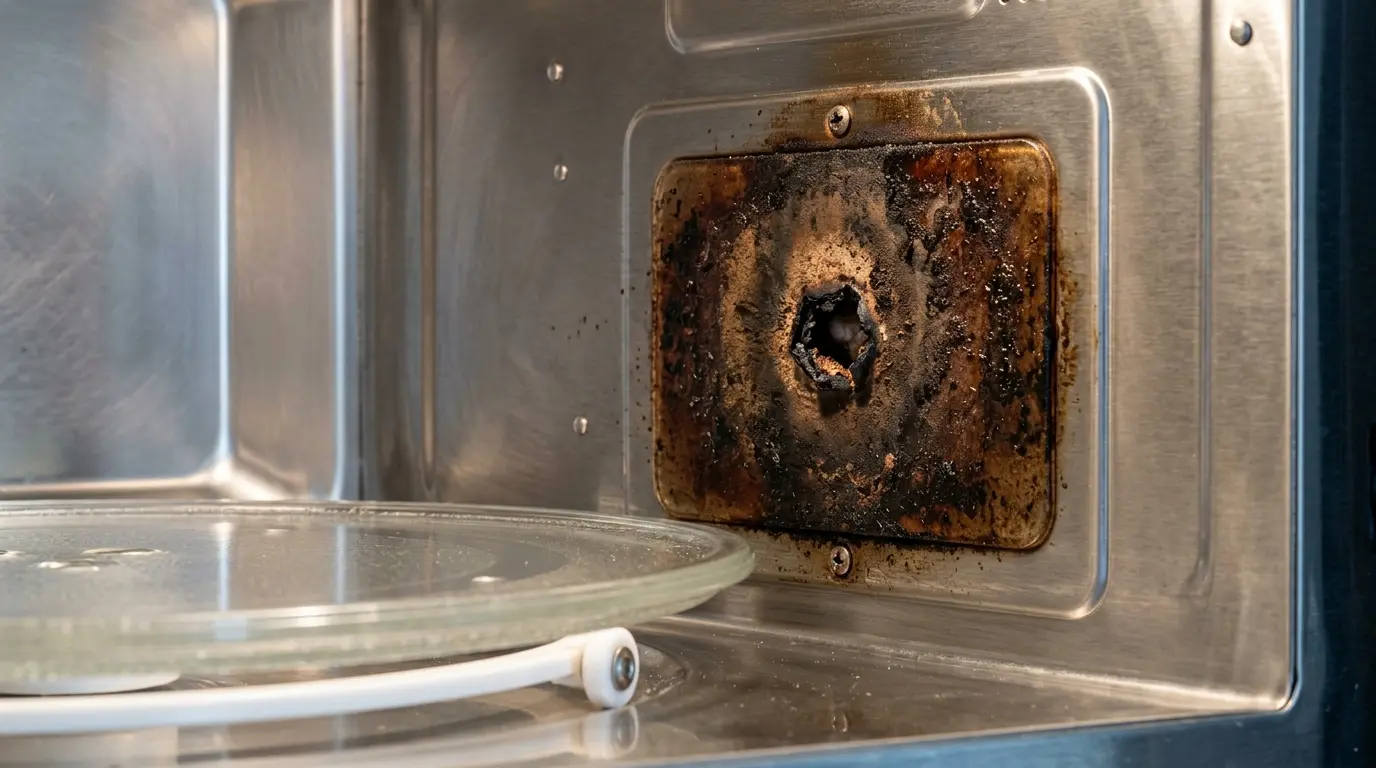
The waveguide cover is a small, usually rectangular piece of material located on the right-hand or top internal wall of the microwave cavity. It often resembles a piece of stiff, metallic cardboard, but it is actually made from mica—a naturally occurring silicate mineral that allows microwave radiation to pass through it while blocking physical matter. Its job is to guide the energy from the magnetron into the food cavity while protecting the sensitive internal electronics from boiling food splatters and grease.
The Problem: Carbonized Grease
Over time, grease, oil, and food particles splatter onto this mica cover. When heated repeatedly day after day, this grease carbonizes (turns into pure carbon). Carbon is highly electrically conductive. The raw microwave energy exiting the magnetron arcs against this carbon buildup instead of passing through it, causing aggressive, terrifying sparking and popping sounds.
The Fix: Replace the Waveguide Cover
Inspect the waveguide cover with a flashlight. If it is covered in dark black burn marks, heavy grease, or has a hole literally burned through the center of it, it must be replaced immediately.
- Fortunately, mica waveguide covers are universal and incredibly cheap. You can buy a large, uncut sheet of microwave-safe mica online for under $10.
- Carefully remove the old, burned cover (it usually pops out of tabs or is held by a single plastic screw).
- Lay the old cover over the new mica sheet, trace the exact shape with a pencil, and cut it out using heavy-duty scissors or a utility knife.
- Pop the new, clean cover back into the slots. Your microwave is now safe to use!
2. Hidden Metal Objects Left Inside
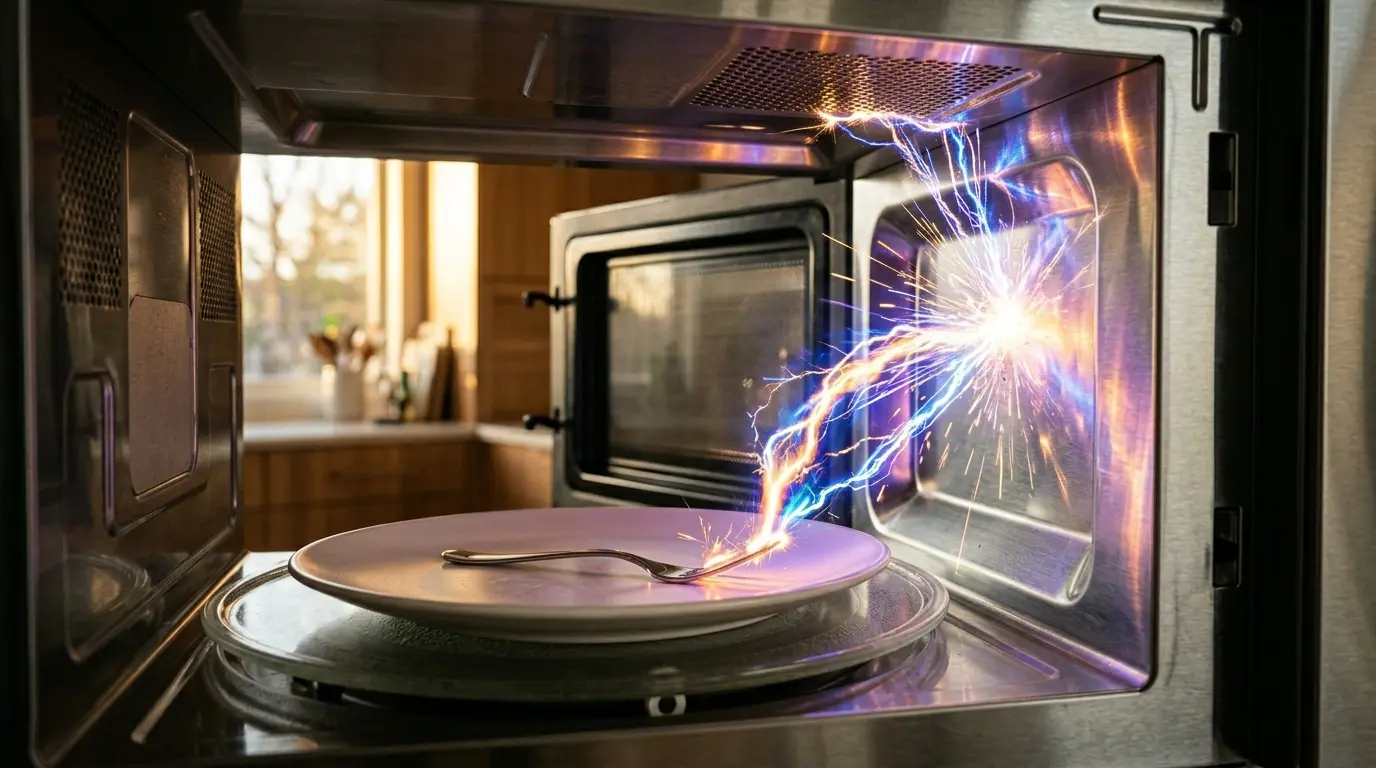
It is the oldest, most fundamental rule of microwave safety, but it still happens constantly in busy households. Microwaves bounce off metal. When electromagnetic waves hit metallic surfaces, they cause the electrons in the metal to move rapidly.
The Physics of the Problem
If the metal object has sharp points or distinct edges (like the tines of a fork or the crinkled edge of aluminum foil), the electrons gather at those sharp points. Eventually, the electrical charge becomes so concentrated that it overcomes the dielectric resistance of the air, and a literal bolt of mini-lightning (plasma) shoots from the metal to the nearest grounded surface (the wall of the microwave). This is the visual spark you see.
Forks, spoons, aluminum foil, and stainless steel travel mugs are the most common offenders. These will spark almost instantly.
Plates with decorative gold or silver metallic trim, tiny wire twist-ties from bread bags, metal handles on Chinese take-out boxes, and even recycled paper towels containing microscopic metal flakes.
The Fix: Immediate Removal
Press stop and remove the metal object immediately. Do not test it to see if it will stop. If the sparking stops upon removal and the interior walls are completely undamaged, the microwave is perfectly safe to continue using. To avoid this in the future, read our Best Microwave Safe Containers Guide to ensure your Tupperware and plates are verified safe.
3. Chipped Paint or Exposed Metal Cavity
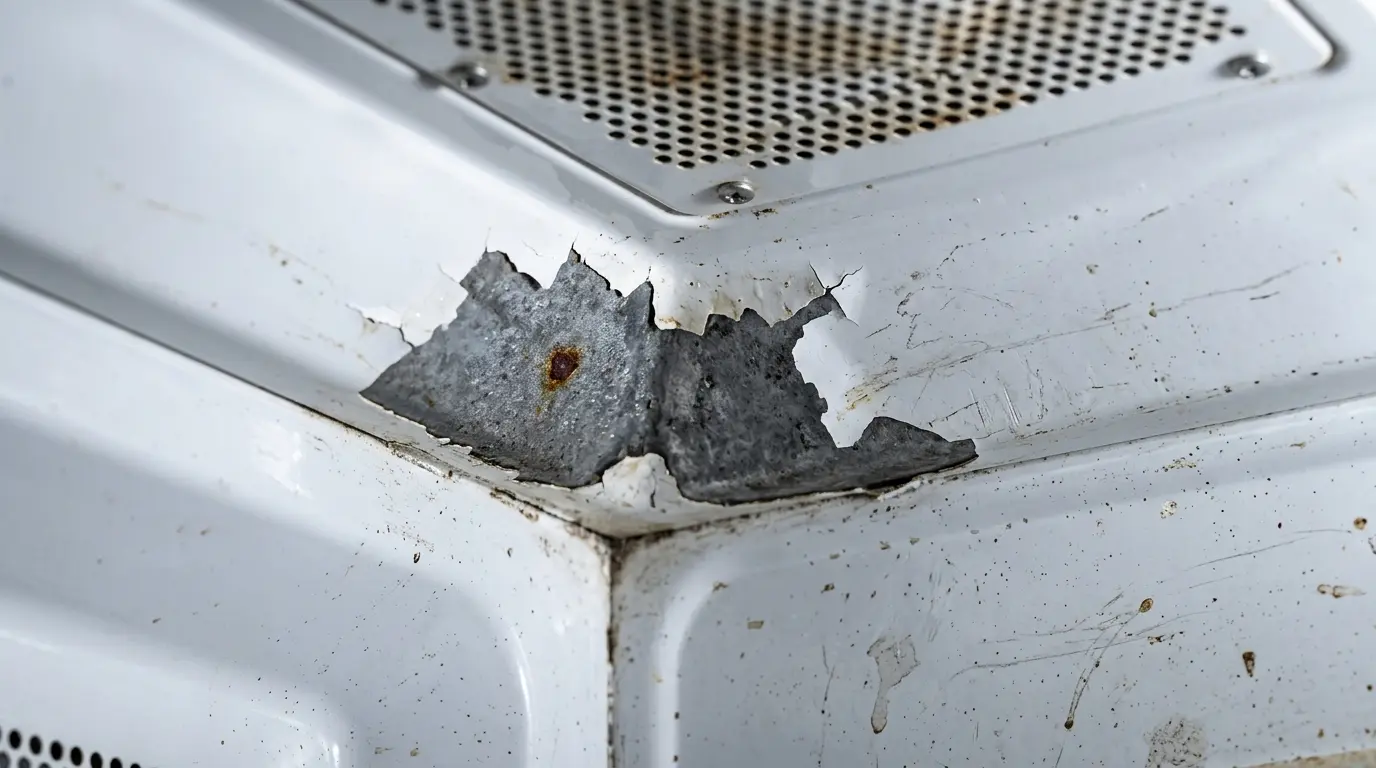
The inside of your microwave is essentially a highly engineered metal box known as a Faraday Cage, designed to keep the deadly radiation trapped inside. However, the internal walls are thickly coated with a specialized, microwave-safe epoxy paint or enamel. This non-conductive layer is what prevents the microwaves from arcing against the structural metal walls.
The Problem
Aggressive scrubbing with steel wool, repeatedly slamming heavy glass casserole dishes against the walls, or simple age and humidity can cause this protective paint to chip, bubble, or flake off. Once the bare, raw metal wall is exposed to the cooking cavity, the microwave energy will arc directly against it, causing sparks and eventually burning a hole entirely through the side of the appliance.
The Fix: Repainting the Cavity
If the exposed area is small (the size of a coin), you can repair it yourself:
- Unplug the microwave and let it sit for a few minutes.
- Lightly sand the chipped area with fine-grit sandpaper to remove any rust, grease, or flaking paint. Wipe it perfectly clean with rubbing alcohol.
- Apply a specialized “Microwave Cavity Touch-Up Paint” (available at hardware stores or online). Do not use standard spray paint, as it will melt and release toxic fumes into your food.
- Allow the epoxy to cure completely (usually 24 hours) before using the appliance again.
Note: If the rusting or chipping is extensive and covers the entire floor or ceiling, the structural integrity is compromised. It is time to buy a new microwave.
4. Running the Microwave Empty
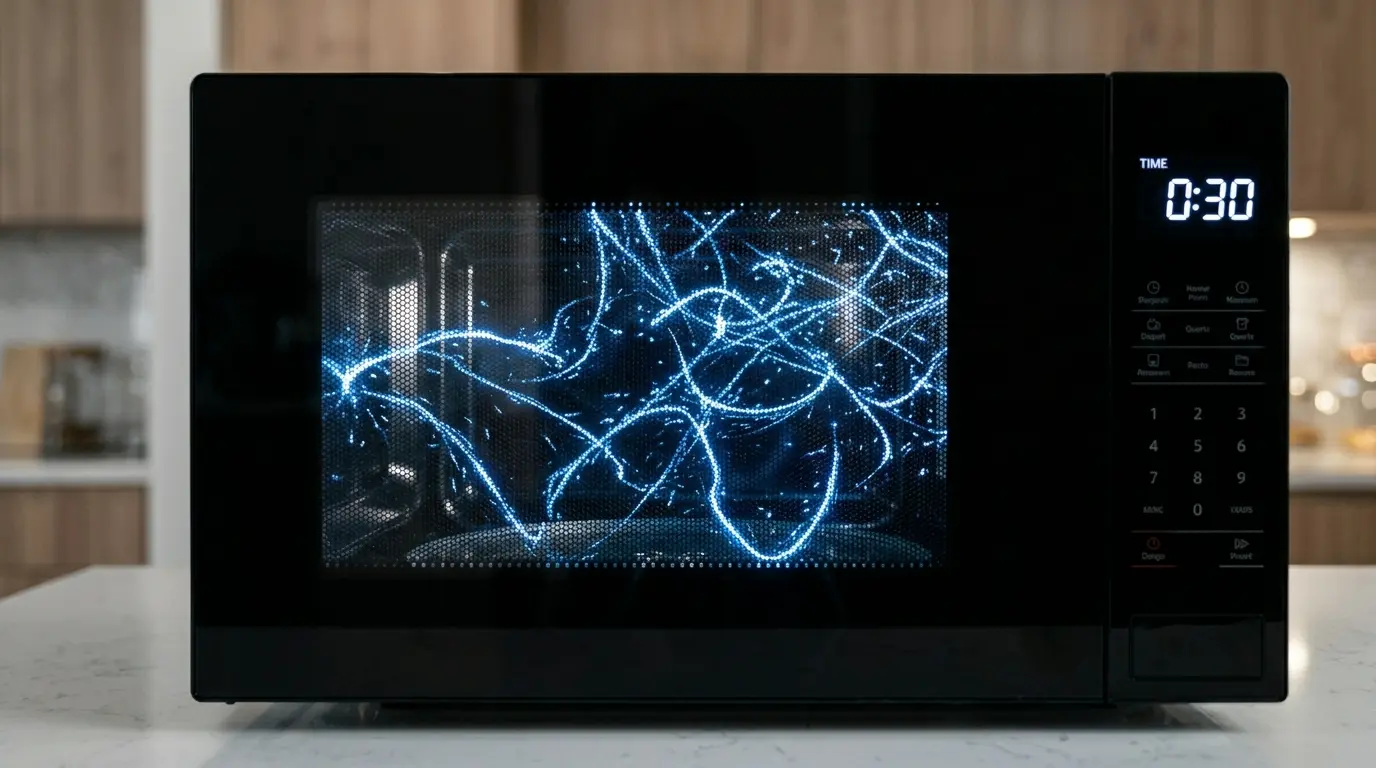
Microwaves are designed to emit high-frequency radio waves (usually at 2.45 GHz) that are specifically absorbed by water, fats, and sugars present in your food. The food acts as an energy sink, absorbing the radiation and turning it into thermal heat.
The Problem: Standing Waves
If you accidentally start the microwave with nothing inside (or if you put in something completely devoid of moisture, like a dry sponge), there is nothing to absorb the massive output of energy. The microwaves bounce endlessly around the metal cavity. Eventually, these waves reflect back into the waveguide and directly into the magnetron tube that generated them. This creates standing waves that can cause intense internal sparking and instantly fry the internal electronics through overheating.
The Fix: The Water Test
Never run the unit empty. If you accidentally did this, heard loud popping, and shut it off, you need to test if the machine survived. Place a microwave-safe glass measuring cup filled with 8 ounces of tap water inside. Run it on HIGH for one minute.
- If it heats the water normally without sparking, you got lucky and the machine is likely safe.
- If it sparks, makes a loud buzzing noise, or fails to heat the water at all, the magnetron has been permanently destroyed. See our Microwave Not Heating Fix Guide for confirmation.
5. Burned Diode or Failing Magnetron
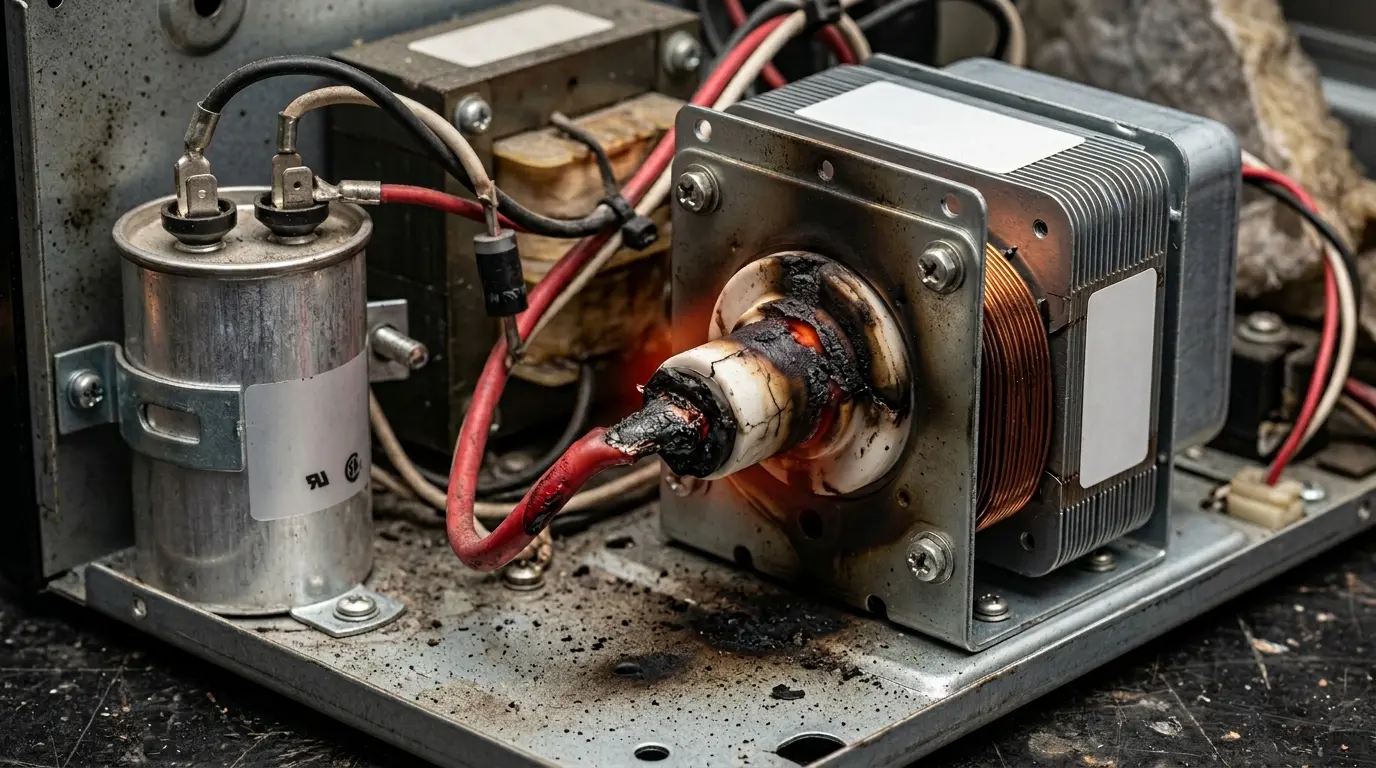
If you have successfully checked the waveguide cover (it’s clean), confirmed there is absolutely no metal inside, and the interior walls are pristine with no chipped paint, you are likely dealing with a catastrophic internal hardware failure.
The high-voltage diode or the magnetron itself has short-circuited, burned out, or cracked. When these components fail, they often emit loud electrical buzzing and internal sparking that is visible through the side vents.
LETHAL VOLTAGE WARNING
The Fix: This is NOT a DIY repair. Do not attempt to take the outer casing off your microwave to inspect the magnetron.
Microwaves contain a High-Voltage Capacitor that can hold a lethal electrical charge (often exceeding 2,000 to 4,000 volts) for days or even weeks after the appliance has been completely unplugged from the wall.
Touching the internal circuitry without properly discharging the capacitor using specialized insulated tools can result in severe injury or death. Repairing a magnetron or a high-voltage diode requires a licensed appliance technician.
When to Repair vs. Replace in 2026
If your appliance has suffered a mechanical failure, you face a financial decision. Should you call a technician or just buy a new box?
When to Repair
If your microwave is sparking strictly due to a dirty waveguide cover, a stray piece of foil, or a tiny chip in the paint, you can resolve the issue yourself in minutes for less than $10. Do not throw away a perfectly good machine for a $5 mica sheet replacement.
When to Replace
If the appliance has a failing magnetron or a blown diode, you must hire a pro. In 2026, the cost of an OEM magnetron ($80-$120) plus the technician’s hourly labor fee ($100-$150) will almost always exceed the cost of a brand-new countertop unit. If your unit is over five years old, replacement is the safer, more logical financial choice.
Time for a New Microwave?
If your magnetron is dead, don’t panic. Visit our complete buying hub to find the perfect, modern replacement for your kitchen layout.
FAQ: Microwave Sparking Inside (Arcing)
2026 Guide: Safety, Troubleshooting, and Repairs
Safety Warning: Never operate a sparking microwave. Unplug it immediately to prevent internal fires or permanent magnetron damage.

