

Smart Fridge vs Regular Refrigerator: Is the Tech Worth the Price in 2026?
The kitchen is the absolute operational center of any home, and the refrigerator is its immovable anchor. For decades, buying a new fridge was a purely mechanical and spatial decision: you measured your cabinet space, chose between a classic top freezer or modern French doors, picked a stainless steel finish, and moved on with your life.
Today, however, walking into a high-end appliance showroom feels suspiciously like walking into a consumer electronics store. Modern refrigerators now feature massive integrated touchscreens, internal AI cameras, Bluetooth speakers, and 24/7 Wi-Fi connectivity. But when you are faced with a towering $3,000 to $4,500 price tag for a fully connected appliance versus a sensible $1,200 price tag for a traditional model, you have to stop and ask a fundamental question: Does a refrigerator really need an operating system?
If you are designing a new kitchen layout or simply replacing a broken, aging appliance, understanding the actual day-to-day utility of these digital features is crucial to protecting your budget. In this comprehensive smart fridge vs regular refrigerator breakdown, we compare daily functionality, hidden maintenance costs, and the ultimate, inescapable lifespan of both cooling options.
The Quick Answer
A Smart Fridge offers unparalleled daily convenience—allowing you to look inside your fridge from the grocery store via cameras, stream music, and receive diagnostic alerts on your phone. However, it suffers from rapid “software obsolescence,” meaning the tablet will become outdated and laggy long before the cooling compressor dies. A Regular Refrigerator is vastly cheaper, aesthetically timeless, and significantly more reliable over a 15-year lifespan because it lacks the fragile electronic motherboards that routinely fail in smart models.
I. The Smart Fridge: The Connected Hub
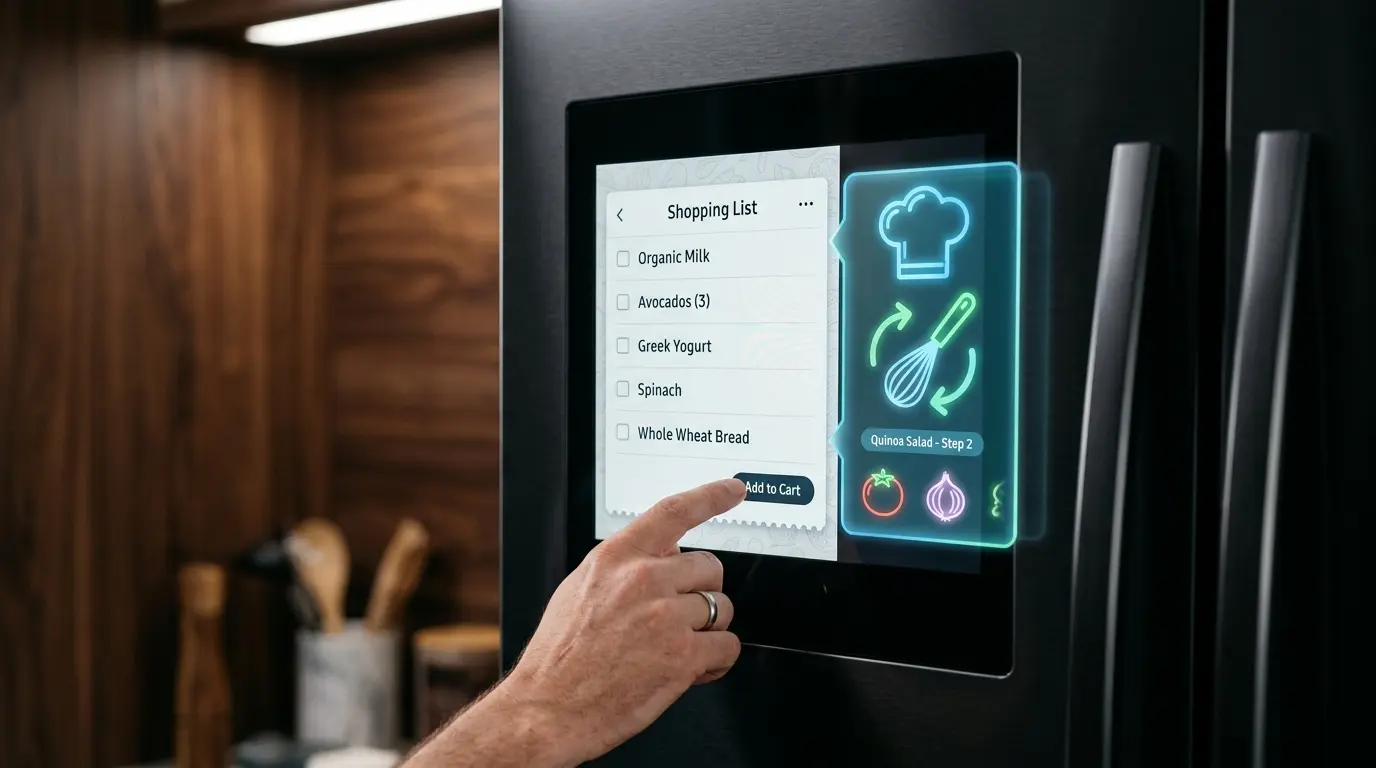
A smart fridge is essentially a heavy-duty, traditional cooling compressor permanently paired with a giant tablet, a Wi-Fi card, and an array of sophisticated internal sensors. It is explicitly engineered by brands like Samsung (Family Hub) and LG (InstaView) to be the digital command center of your entire smart home.
The Pros: Ultimate Convenience
For highly organized, tech-savvy families, the features offered by a smart fridge can genuinely alter how a household operates on a daily basis.
This is the defining, flagship feature of a true smart fridge. You can open an app on your smartphone while standing in the middle of the grocery store aisle to visually check if you are out of milk or eggs in real-time, completely eliminating the “did we already buy that?” guessing game.
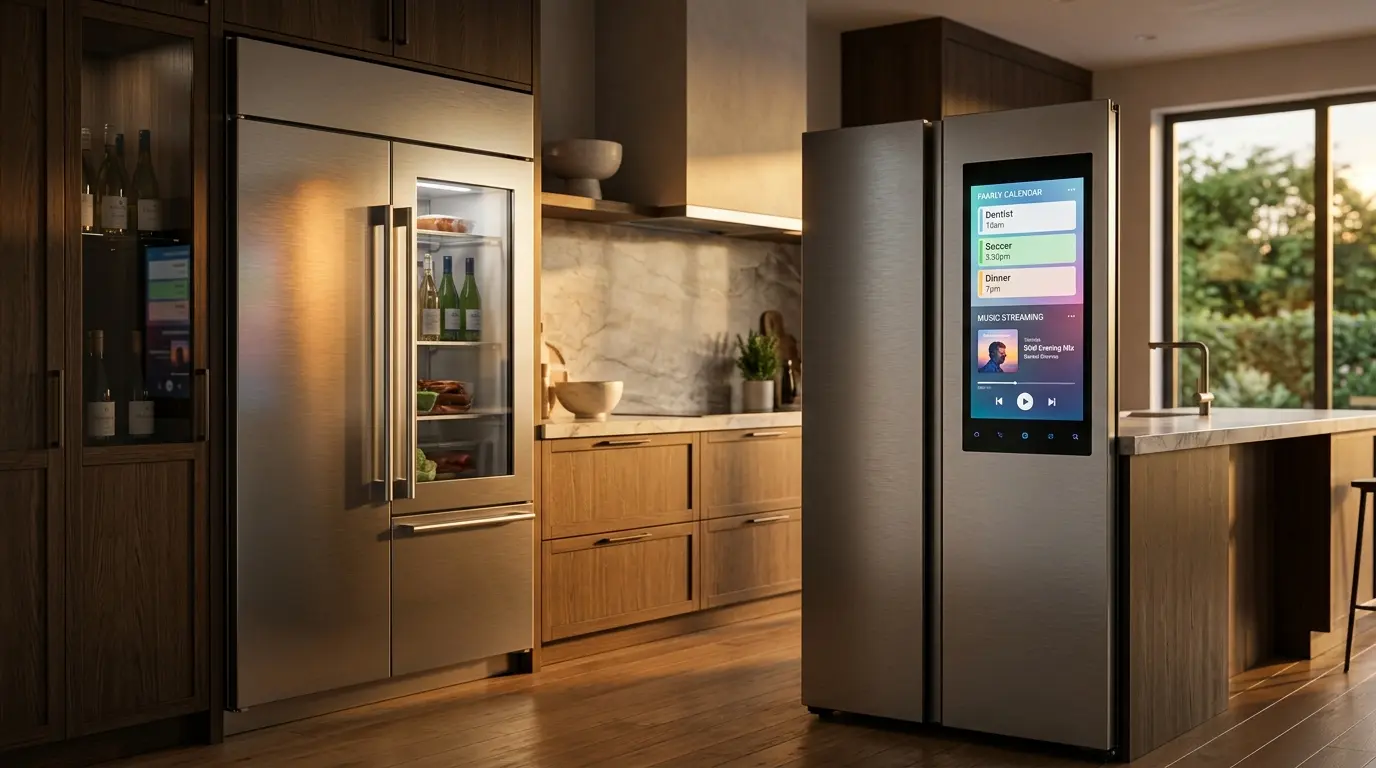
The large, 21-inch touchscreen on the door acts as a digital whiteboard. You can seamlessly sync family Google calendars, leave digital sticky notes for your spouse, stream Spotify playlists while cooking dinner, and pull up step-by-step recipe tutorials on YouTube directly on the fridge door.
Many smart fridges can monitor their own mechanical health. They will actively send a push notification to your phone if a child leaves the door ajar, if the water filter needs replacing, or if the internal compressor temperature is fluctuating dangerously, saving hundreds of dollars in spoiled food.
The Cons: The Software Obsolescence Trap
The benefits of a smart fridge are incredible on day one. But the reality of owning an Internet of Things (IoT) appliance becomes glaringly obvious by year five.
- Rapid Tech Decay: This is the biggest, most expensive hidden flaw. A high-quality refrigeration compressor is built to last 10 to 15 years. However, the tablet embedded in the door runs on an operating system (like Android or Tizen) that requires constant software patches, API updates, and security fixes. In the tech world, a tablet from five years ago is already painfully slow and unsupported. You risk having a perfectly functional, ice-cold fridge permanently attached to an obsolete, laggy, and totally unsupported touchscreen.
- Cybersecurity Vulnerabilities: Any appliance connected to your home Wi-Fi is a potential backdoor for hackers. If the manufacturer stops releasing security patches for your 6-year-old fridge, it becomes a permanent vulnerability on your network. (If you own a smart appliance and are worried about this, read our tutorial on How to Disable Wi-Fi on Samsung Bespoke Fridge to safely take it off the grid).
- Astronomical Repair Costs: If a digital sensor, the Wi-Fi card, or the screen fails, you cannot simply call a traditional, local appliance mechanic to swap a cheap mechanical relay. You are dealing with complex electronic motherboards. Out-of-warranty repairs for these proprietary digital components are incredibly expensive, often pushing owners to scrap the entire machine prematurely.
II. The Regular Refrigerator: The Undefeated Workhorse

A regular refrigerator proudly skips the Wi-Fi antennas, the interior cameras, and the glowing touchscreens. Instead, it focuses 100% of its engineering budget and manufacturing cost on exactly what matters: mechanical reliability, deep cold-air retention, and robust door seals.
If you are currently renovating and looking for heavily reliable, standard appliances without the digital bloat, check our highly curated expert roundup of the Most Reliable Refrigerator Without Ice Maker to find machines built to last decades.
The Pros: Uncomplicated Longevity
- Built to Last: Without complex motherboards, fragile touchscreens, or operating systems to constantly update, there are drastically fewer points of failure. A traditional fridge does one single job, and it does it quietly and reliably for well over a decade. When a mechanical thermostat fails, it is a cheap, easy $30 fix.
- Massive Cost Efficiency: You can purchase a premium, beautifully designed, high-capacity French door regular refrigerator for an absolute fraction of the cost of a mid-tier smart fridge. You are paying purely for high-quality stainless steel and better insulation, not Silicon Valley software.
- Aesthetic Timelessness: A sleek, minimalist stainless steel regular fridge will look just as modern and appropriate in ten years as it does today. Conversely, a smart fridge with a glowing 21-inch screen will eventually look like a dated piece of vintage 2020s technology, instantly aging your kitchen design. (For the ultimate timeless look, explore the Best Affordable Panel Ready Refrigerator to hide the appliance entirely).
The Cons: Manual Management
- No Remote Access: If you forget your grocery list at home, your fridge cannot help you. You are entirely responsible for the mental load of managing your inventory, tracking expiration dates, and writing physical notes on the door with a dry-erase marker.
- Silent Failures: If the door seal cracks, someone leaves the door cracked open overnight, or the compressor slowly starts to struggle, you won’t get a convenient, life-saving app notification. You will only find out you have a problem when you open the door the next morning and realize your milk is warm and your meat is spoiled.
III. Head-to-Head Comparison
To quickly summarize the reality of owning both appliances over a 10-year lifespan, review the comparison table below.
| Feature | Smart Refrigerator | Regular Refrigerator |
|---|---|---|
| Average Purchase Price | $2,500 – $4,500+ | $900 – $2,000 |
| Mechanical Lifespan | 10 – 12 Years | 12 – 15+ Years |
| Software Lifespan | 5 – 7 Years (Obsolescence) | N/A (No software to age) |
| Out-of-Warranty Repairs | Very Expensive (Motherboards) | Cheap (Mechanical Relays) |
| Daily Convenience | Incredible (Apps, Cameras, Hub) | Basic (Just keeps food cold) |
Explore the Refrigerator Hub
Don’t stop here! Dive deeper into appliance mechanics and discover the best setups tailored specifically for custom kitchen upgrades and smart home management.
FAQ: Smart Fridges vs. Traditional Refrigerators
2026 Guide: Reliability, Cameras, and Wi-Fi Features
Smart Home Tip: Treat your smart fridge like your smartphone—check the settings menu every few months to ensure the firmware is fully updated!

