
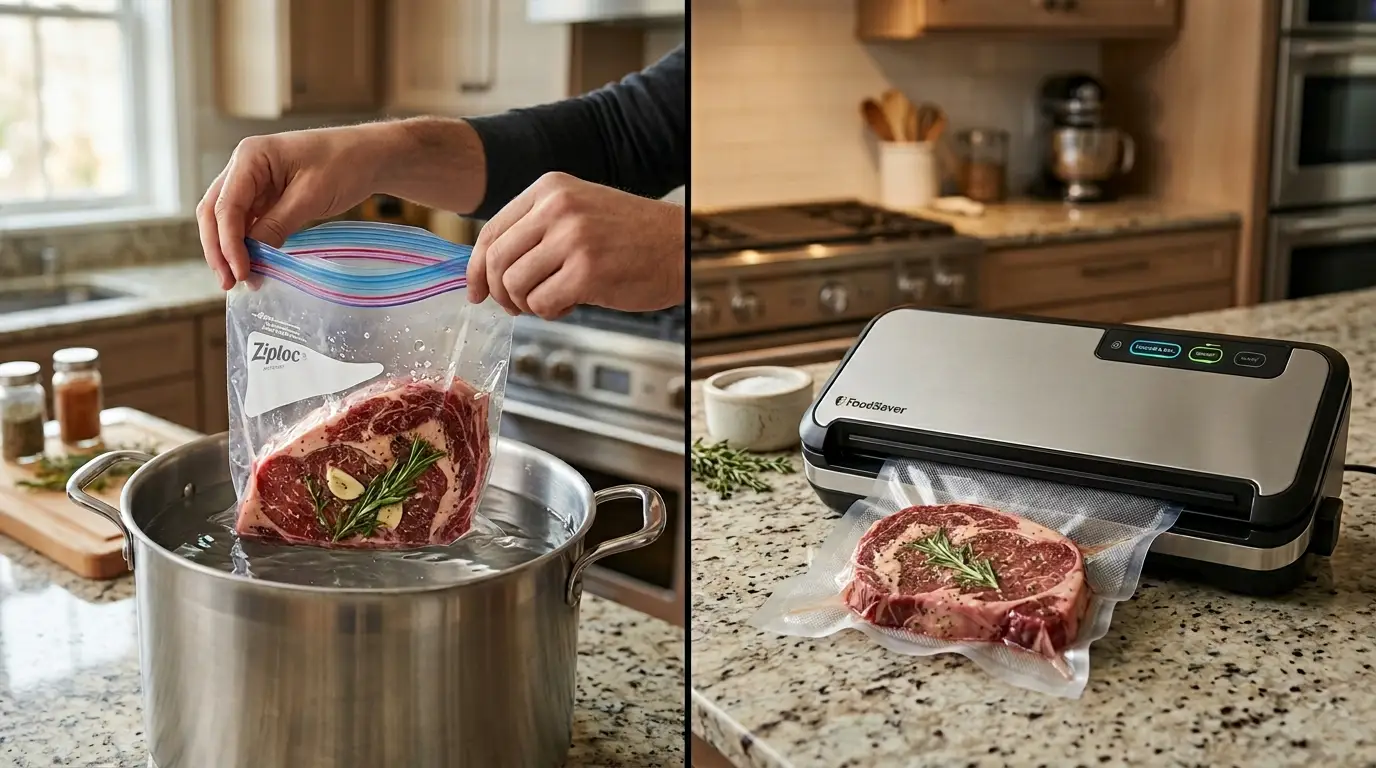
Ziploc Water Displacement Method vs. Vacuum Sealing for Sous Vide (2026)
Sous vide is the ultimate culinary equalizer. By safely sealing food inside a waterproof bag and cooking it in a precisely temperature-controlled, circulating water bath, a casual home cook can consistently achieve the exact same edge-to-edge, perfectly pink medium-rare steak as a highly trained, Michelin-starred restaurant chef.
However, the traditional barrier to entry for this cooking method has always been the expensive kitchen equipment. While premium immersion circulators have become highly affordable over the last few years, many beginners still balk at the intimidating idea of buying a dedicated, heavy-duty vacuum sealer machine and specialized plastic rolls just to boil a piece of chicken.
This hesitation popularized the absolute greatest free hack in modern cooking: The Water Displacement Method (often called the Archimedes Principle). Using absolutely nothing but a deep bowl of water and a standard Ziploc bag, you can manually force the ambient air out of your packaging.
But does a cheap $0.15 plastic zipper bag truly perform as well as a machine-pulled vacuum? In this comprehensive, head-to-head showdown, we compare the physical thermodynamics, the extreme thermal safety limits, and the frustrating buoyancy issues of both methods to determine which one belongs in your kitchen.
The Quick Answer
The Water Displacement Method (using a freezer-grade Ziploc) is a brilliant, completely free hack that works perfectly for short, low-temperature cooks (like a 2-hour steak at 130°F) and handles wet marinades effortlessly. However, for extreme high-temperature cooking (like vegetables at 185°F) or multi-day long cooks (like a 48-hour brisket), you absolutely must use a dedicated Vacuum Sealer. Standard Ziploc glued seams will violently melt and burst at high temperatures, ruining your meal, whereas a thermally welded vacuum bag is virtually bulletproof in boiling water.
For a complete guide to all our sous vide and preservation tests, visit: The Ultimate Vacuum Sealing Hub: Food Storage, Sous Vide, Mason Jars & Buying Guides (2026).
I. The Physics: Archimedes vs. The Pump
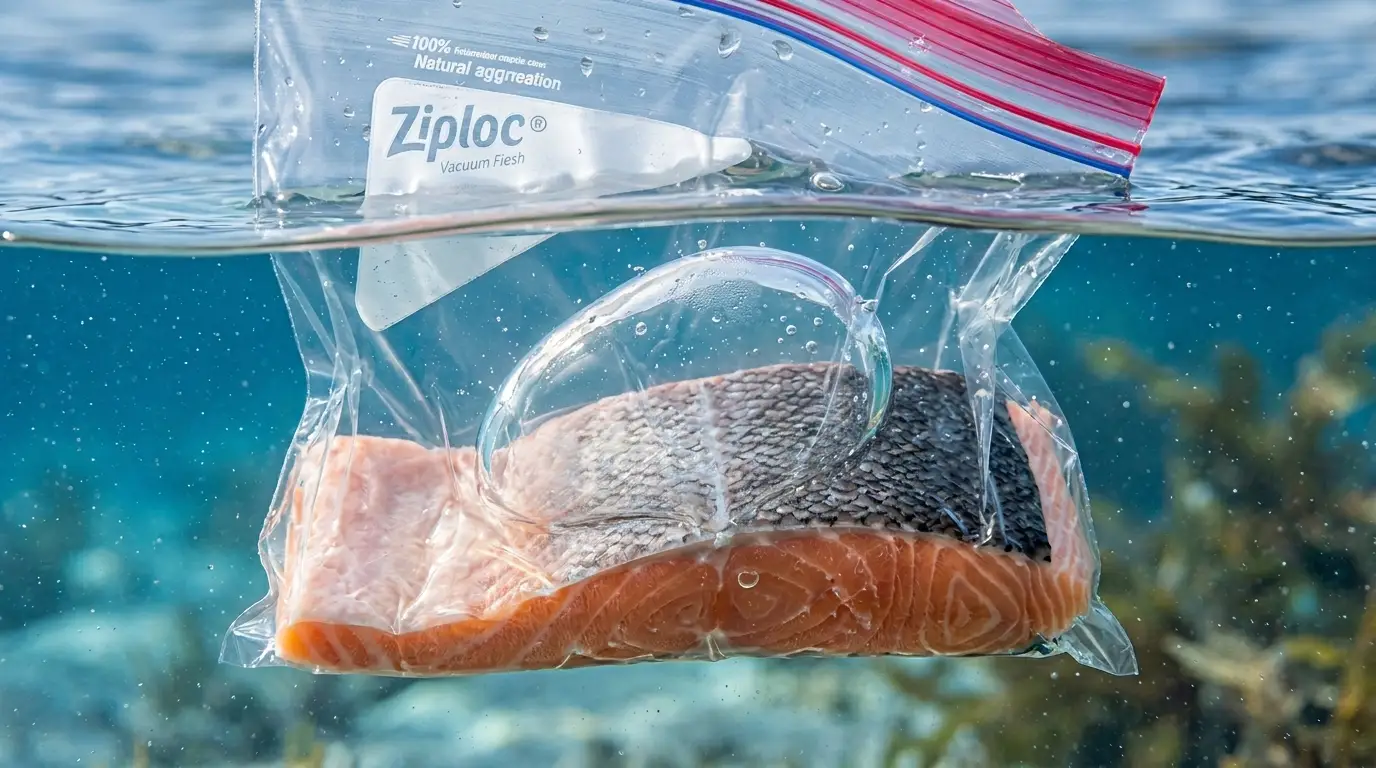
Before declaring a winner, it is critical to understand why we remove air in the first place. Air is a terrible conductor of heat; it is an incredible thermal insulator. If there is a large pocket of air trapped inside your bag, the hot water in the sous vide bath cannot transfer its thermal energy directly into the meat. Both methods share the exact same culinary goal: aggressively remove the insulating oxygen to achieve perfect, direct plastic-to-meat thermal contact.
The Water Displacement Method
You place your food in a standard, heavy-duty freezer bag and press the zipper mostly shut, making sure to deliberately leave the zipper open about one inch at the very edge.
You then slowly, vertically lower the bag into a deep pot of water. As the bag submerges deeper, the immense hydrostatic pressure of the heavy surrounding water physically crushes the flexible plastic bag tightly against the meat, forcefully pushing the ambient air up and out the tiny open zipper gap. Once the water line safely reaches the zipper, you press it completely shut.
Mechanical Vacuum Sealing
A heavy-duty machine actively, forcefully sucks the air out of the open bag using a motorized pump, creating a highly stable negative pressure environment inside the plastic.
Once the internal pressure bottoms out and all oxygen is removed, the machine uses a searing hot thermal heating bar to permanently melt and weld the plastic completely shut. To see the top-rated appliances that do this flawlessly, we review them extensively in our Best Vacuum Sealer for Sous Vide Cooking guide.
II. The Buoyancy Problem (Why Bags Float)
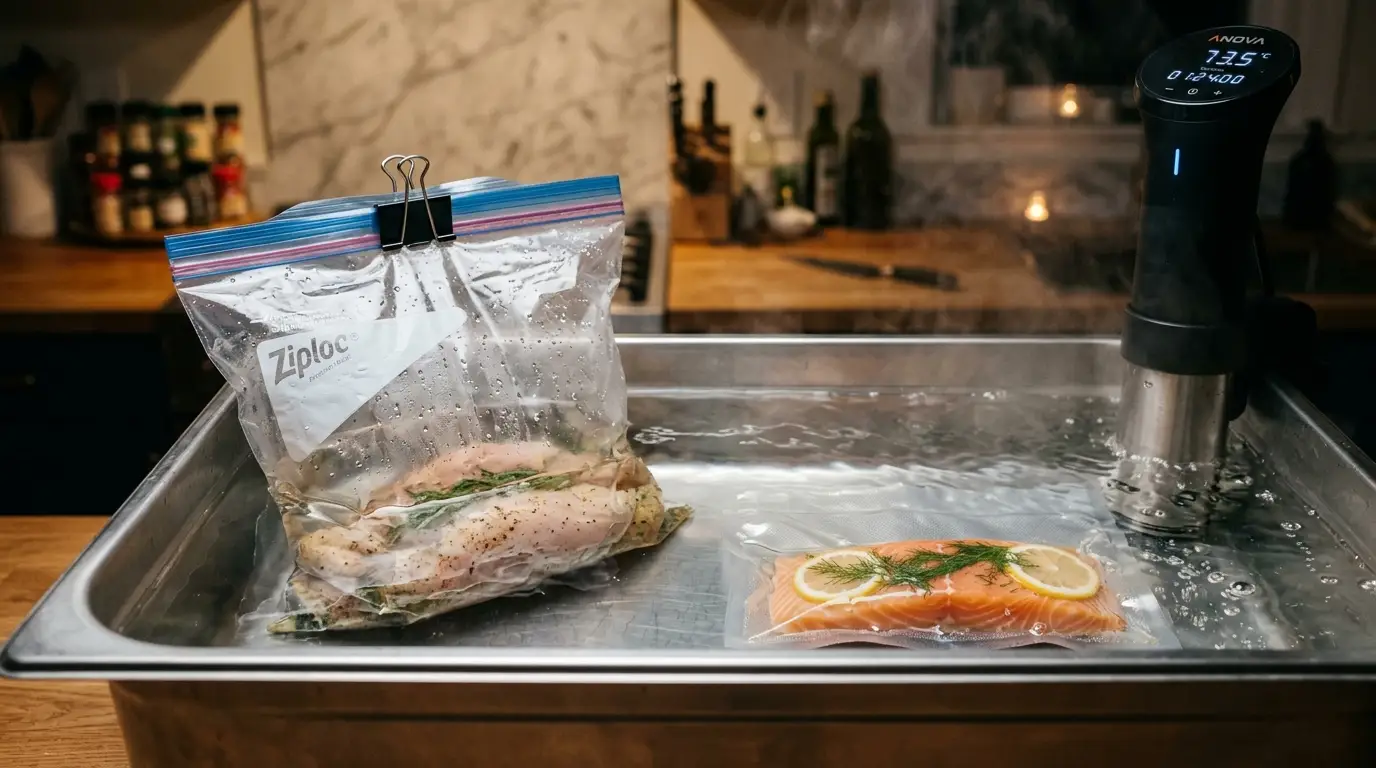
If your bag of food floats to the surface of a circulating sous vide bath and bobs above the water line, it will cook unevenly. The exposed top section of the meat will remain raw, completely defeating the entire purpose of the precision immersion technique. You need your food to sink like a stone.
The Flaw with Water Displacement
The water displacement method is brilliant in its simplicity, but it is rarely, if ever, perfect. No matter how carefully and slowly you submerge a Ziploc bag into the pot, a tiny, microscopic pocket of air almost always remains trapped in the corners or around the uneven contours of the food.
During a long, high-heat cook, the thermodynamics take over. The intense heat of the water causes this tiny trapped air pocket to drastically expand, turning your Ziploc bag into a highly buoyant balloon that stubbornly bobs at the surface. You frequently have to babysit the pot, weighing the plastic bag down with heavy metal binder clips, butter knives, or cumbersome sous vide racks to keep it submerged.
The Vacuum Sealer Advantage: A true, machine-pulled vacuum seal removes 100% of the ambient air. Because there is absolutely zero air left inside the bag to expand under heat, vacuum-sealed bags naturally sink straight to the bottom and stay perfectly, safely submerged for the entire duration of the cook, requiring absolutely zero manual babysitting.
III. Heat Tolerance & Safety (The Seam Split)
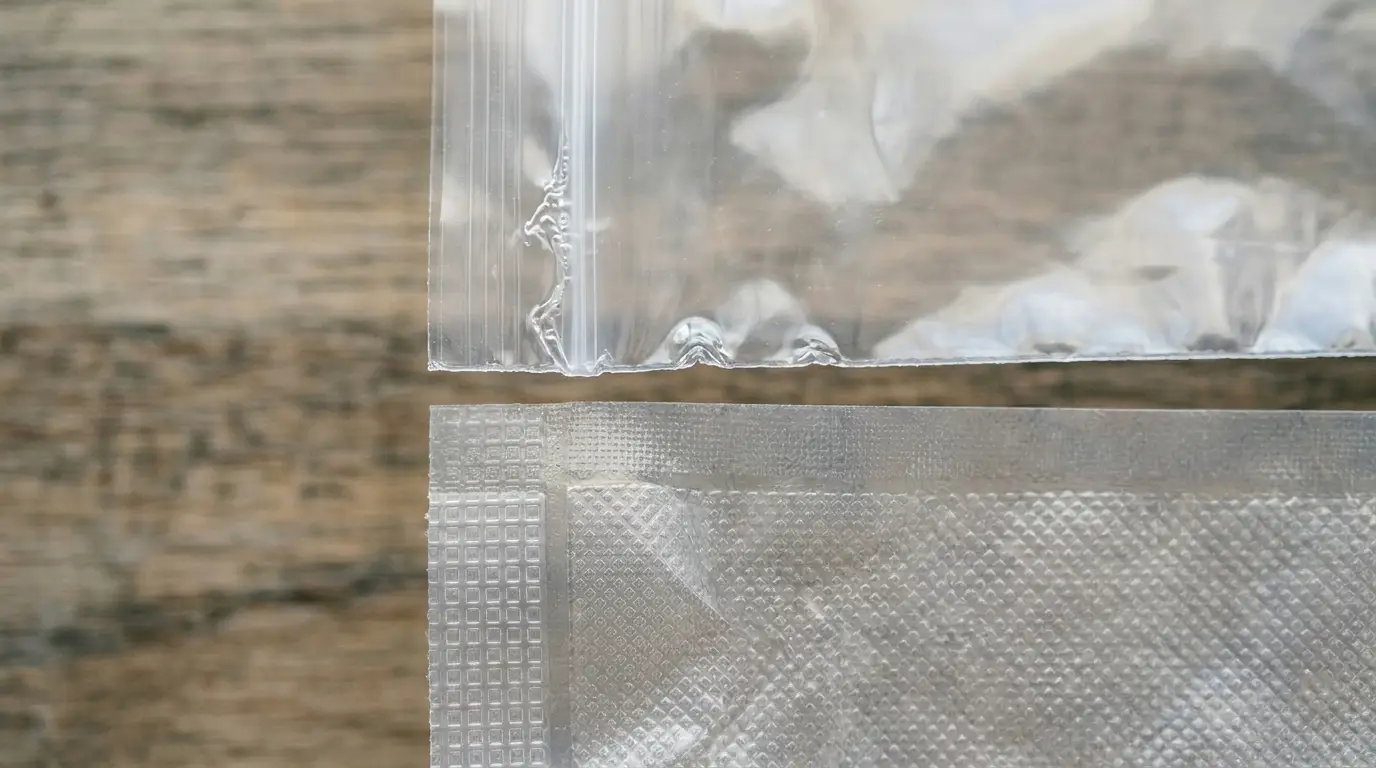
This is the absolute most critical, disastrous difference between the two methods, and the primary reason high-end professional chefs universally rely on heavy-duty vacuum machines rather than cheap plastic bags.
The Ziploc Danger: Glued Seams
Standard Ziploc freezer bags (and generic store-brand equivalents) are primarily manufactured with glued seams. While they are rigorously tested to be food-safe and 100% BPA-free, that specific chemical glue is only engineered and guaranteed for deep-freeze cold environments.
If you are cooking a delicate steak at a low 130°F (54°C), a high-quality, name-brand Ziploc freezer bag will usually hold up perfectly fine. However, if you are cooking dense root vegetables at a blistering 185°F (85°C), or doing a massive, 24-hour long cook on a tough pork shoulder, the ambient heat will physically melt the glued seams of the zipper bag. The bag will split wide open and dump your expensive food directly into the murky water bath, ruining dinner entirely.
The Vacuum Bag Advantage: Thermal Welds
Dedicated vacuum sealer bags do not use glue. They are specialized, multi-layer nylon polymers that feature incredibly wide, thick, thermally fused welds. They are specifically engineered by packaging scientists to withstand boiling water and intense pressure for days at a time without chemically degrading or splitting.
We rigorously break down the exact molecular material differences, the thickness ratings, and the overall cost-benefit ratio in our detailed financial guide: Vacuum Sealer Bags vs Freezer Bags: Is It Worth It?.
IV. Handling Liquids and Heavy Marinades
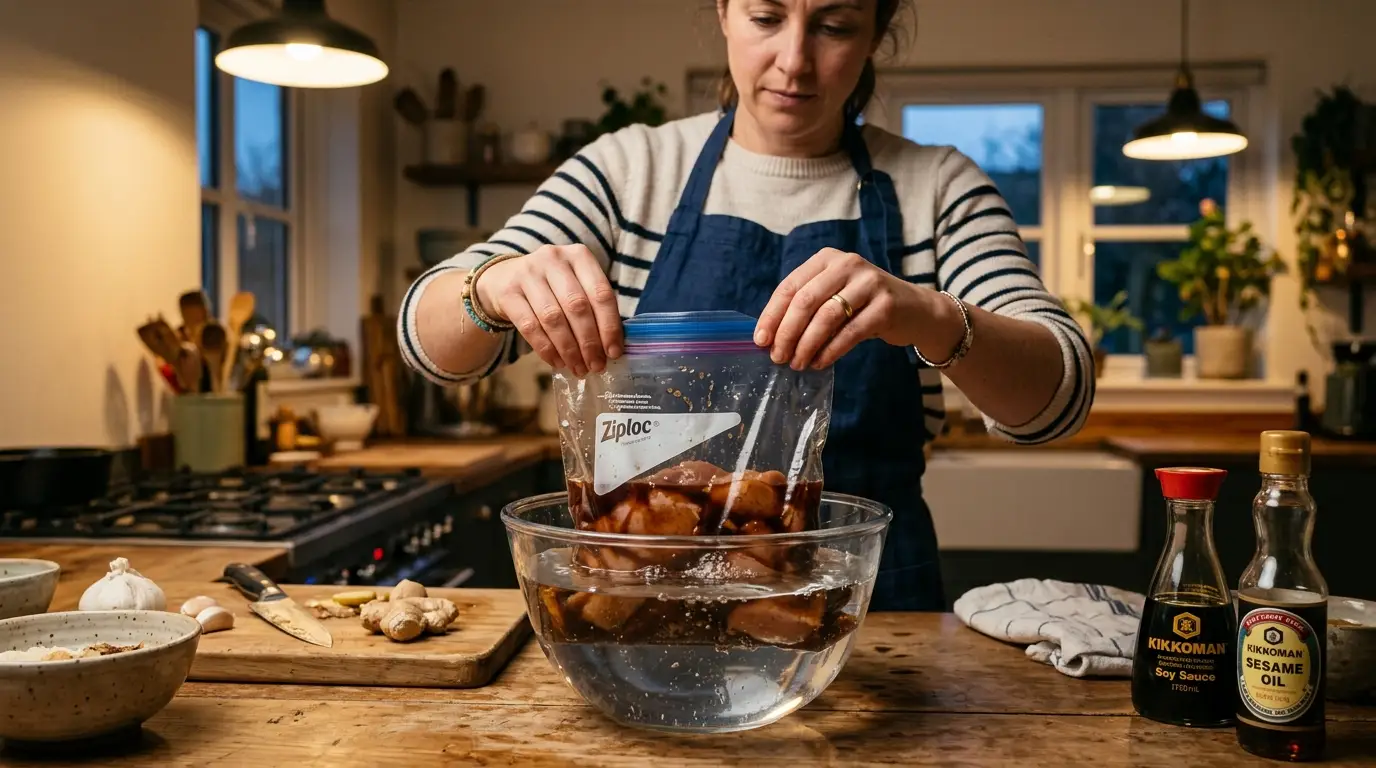
Here is the ultimate paradox of sous vide prep: The cheap, $0.15 Ziploc bag actually handles wet foods significantly better out of the box than a standard, $150 external vacuum sealer.
If you try to vacuum seal a beautiful cut of steak sitting in half a cup of soy sauce using a standard FoodSaver, the machine’s powerful pump will aggressively suck the dark liquid straight up into the Teflon heating element. This creates steam, instantly ruins the hot polymer seal, and leaves you with a sticky mess on your counter. (You have to use highly specific kitchen tricks to prevent this, which we outline extensively in How to Vacuum Seal Liquids Without a Chamber Sealer: 3 Proven Hacks).
Gravity is Your Best Friend
With the water displacement method, gravity is entirely on your side. Because you are lowering the open bag vertically and slowly into the deep water, the heavy liquid marinade stays safely pooled at the absolute bottom of the bag, while the lighter air is gently pushed out the top opening. It is a highly effective, completely mess-free way to safely sous vide heavily wet ingredients without having to upgrade to a massive, expensive commercial chamber sealer.
Explore the Vacuum Sealing Hub
Don’t stop here! Dive deeper into the science of food preservation, explore head-to-head machine comparisons, and read our latest hardware reviews for 2026.
FAQ: Sous Vide Bag Methods
2026 Guide: Ziploc Safety, Air Bubbles, and Freezing
Sous Vide Tip: To prevent a Ziploc bag from floating, clip a stainless steel butter knife or a heavy spoon to the bottom of the bag before submerging it!

