
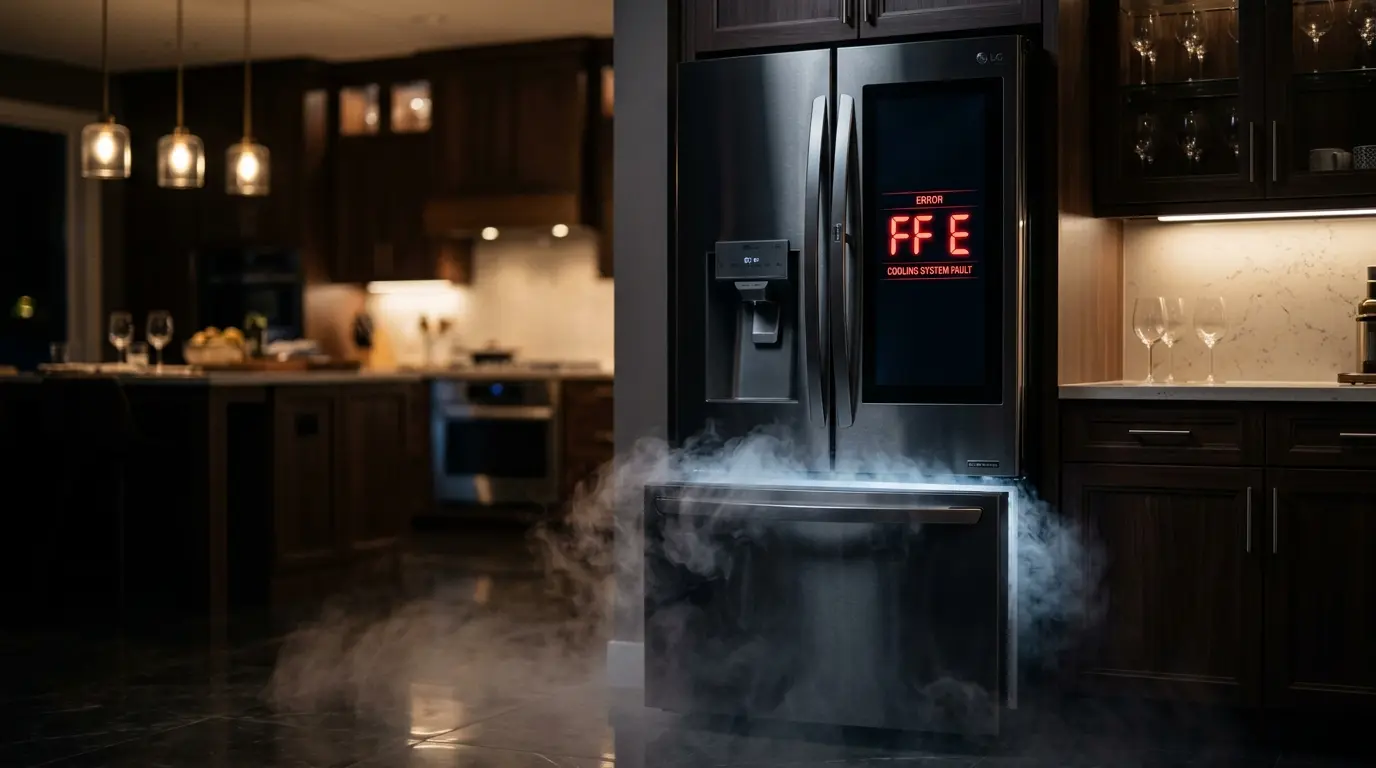
LG Fridge Error Code FF E Explained (And How to Fix It in 2026)
Modern smart refrigerators are brilliantly designed to take the stressful guesswork out of complex appliance maintenance. When something goes wrong deep inside the chassis, instead of silently failing and ruining hundreds of dollars worth of expensive groceries overnight, they proactively alert you with a highly specific diagnostic code.
If you have just walked into your kitchen to find your LG refrigerator beeping aggressively and flashing the FF E (or simply FF or rF) error code on the digital front display, you are likely panicking. You might also notice a very specific, alarming symptom: the fresh food refrigerator compartment feels unusually warm and humid, even though the bottom freezer is still rock solid and ice cold.
Before you spend $150 just to have an emergency appliance repair technician pull into your driveway, you need to understand exactly what this code means. In the vast majority of cases, the fix is completely free and requires absolutely zero mechanical experience. In this diagnostic guide, we break down the thermodynamics behind the LG Fridge Error Code FF E, the three main reasons it triggers, and exactly how to fix it yourself safely.
The Quick Answer
The FF E code on an LG refrigerator stands for Freezer Fan Error (or Evaporator Fan Error). It means the internal fan responsible for pushing cold air from the freezer up into the fresh food section is jammed or dead. In 80% of cases, the fan blades are simply frozen solid behind a wall of frost because the freezer door was left slightly open. To fix it for free, you must perform a manual 24-hour thaw by unplugging the fridge and leaving the doors wide open to melt the ice block entirely.
I. What Does Error Code FF E Actually Mean?
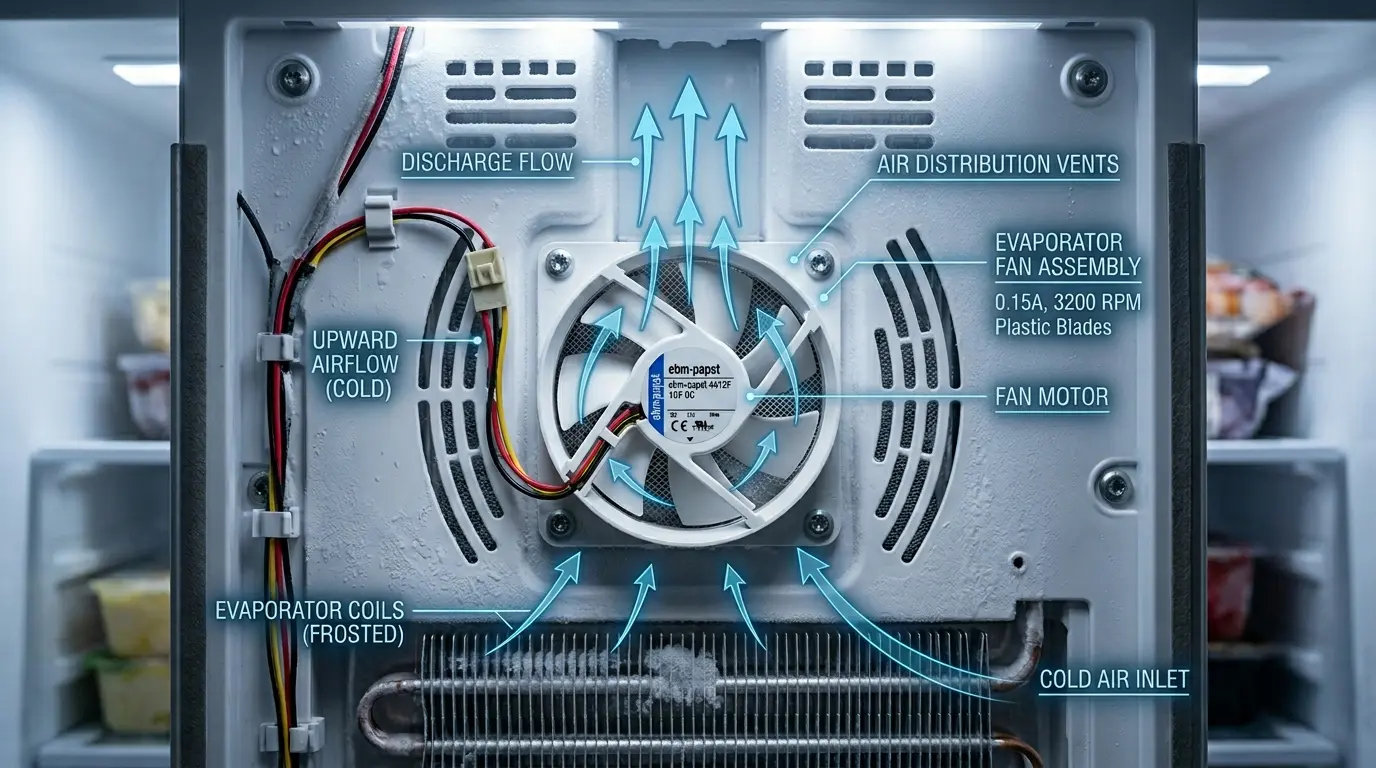
To truly understand this error, you have to understand the basic anatomy of a modern LG refrigerator. Most residential refrigerators only have one single primary compressor and one set of cooling coils (the evaporator) to create cold air for the entire massive appliance. This central cooling unit is usually located deep inside the freezer compartment.
So, how does the top section of your fridge—where you keep your milk, eggs, and delicate vegetables—actually get cold?
It relies entirely on a small, high-speed electric motor called the Evaporator Fan (or Freezer Fan). This fan sits directly above the freezing coils. Its sole job is to suck the sub-zero air off the coils and forcefully push it up through a series of hidden internal plastic vents (the air tower) into the fresh food section.
The Diagnostic Trigger
Modern LG control boards constantly monitor the electrical current and RPMs (Revolutions Per Minute) of this fan. When the main computer detects that the freezer fan is struggling to spin, spinning too slowly, or completely, physically stuck in place, it immediately triggers the FF E code to warn you that the life-saving air circulation has catastrophically failed. If this fan does not run, the freezer will stay frozen, but your fresh food section will rapidly warm up to room temperature and spoil within 12 hours.
II. The #1 Cause: Severe Ice Buildup (The 24-Hour Fix)
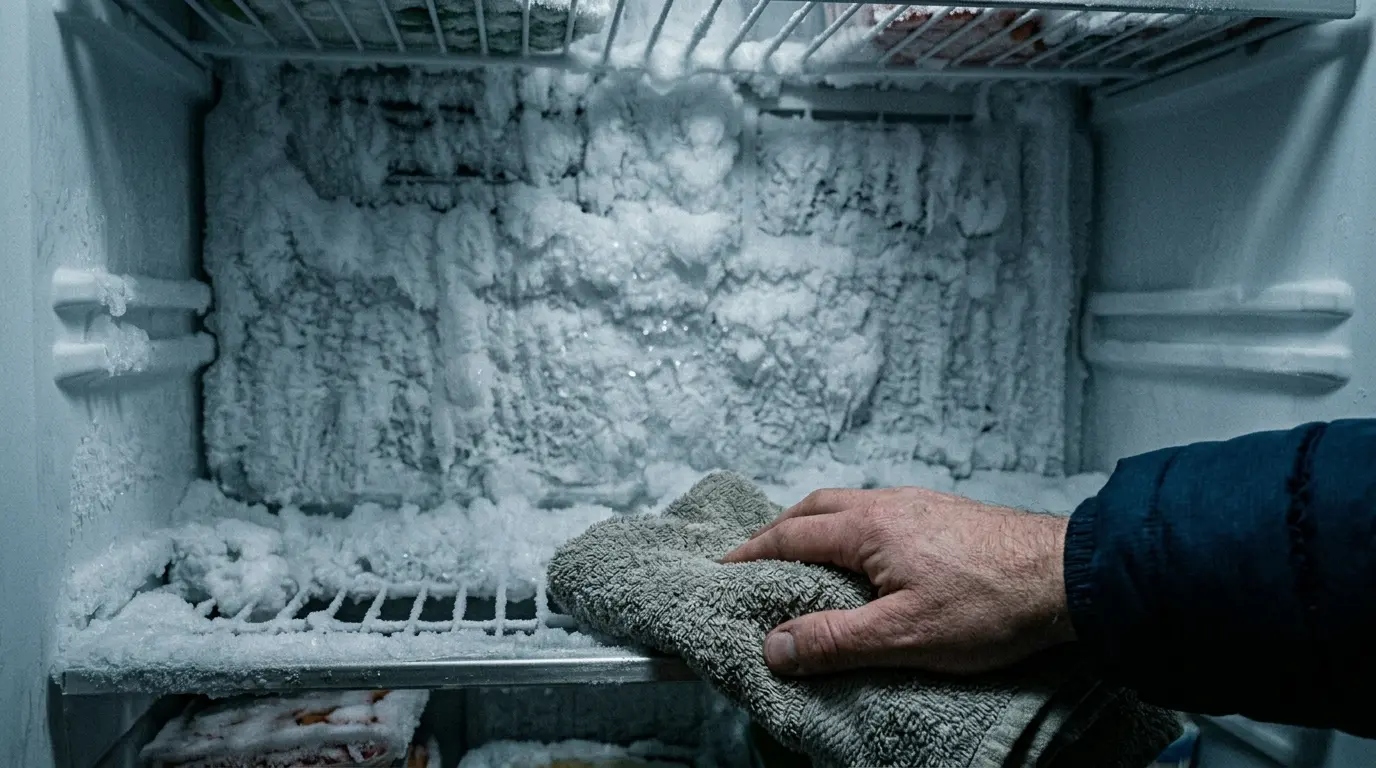
Here is the best news you will read all day: In roughly 80% of FF E cases, the physical fan motor itself is not actually broken. Instead, the delicate plastic fan blades are physically trapped and frozen solid behind a thick wall of ice.
Why Does the Fan Freeze?
Frost is created when warm, humid room air meets freezing surfaces. If someone in your household accidentally leaves the freezer door slightly ajar overnight, or if a piece of food prevents the drawer from closing 100%, massive amounts of humid air constantly rush into the sub-zero freezer.
This moisture instantly condenses and freezes into hard, white frost on the coldest surface available: the evaporator coils and the fan housing. Eventually, within just a few days, this frost builds up thick enough to completely encase the fan blades, locking them tightly in place and triggering the error code. Similar massive frost buildups are also the primary culprit behind broken ice makers, a topic we cover deeply in How to Fix a French Door Ice Maker That Keeps Freezing.
How to Fix It for Free: The Manual Thaw
To fix this, you must melt the ice block hidden behind the rear freezer wall. Pressing buttons on the display will not fix this.
- Empty the Appliance: You must remove all perishable food from both the fridge and the freezer. Store it in heavy-duty camping coolers packed with ice.
- The Hard Reset: Pull the refrigerator away from the wall and unplug the main power cord entirely.
- The 24-Hour Wait: Open all the appliance doors wide. You must let it sit completely unplugged for a full 24 to 48 hours. The ice block encasing the fan is deeply insulated and takes a staggering amount of time to melt at room temperature. Place thick towels at the base of the fridge and freezer to catch the melting water as it inevitably overflows the internal drain pan.
- The Test: After a full 24 hours, thoroughly dry the interior with a towel, close the doors, and plug the fridge back in. Wait 30 minutes. If the fan was just frozen, the ice is now gone, the fan will spin freely, and the FF E code will permanently disappear.
⚠️ Crucial Warning: Do Not Rush the Thaw
It is incredibly tempting to grab your wife’s hairdryer or a commercial heat gun to blast hot air into the freezer vents to speed up the melting process. Never do this. The interior walls of an LG refrigerator are made of thin, thermally sensitive ABS plastic. A hairdryer will instantly melt, warp, and deform the plastic lining, permanently destroying the structural integrity of your $2,000 appliance.
III. A Faulty Evaporator Fan Motor
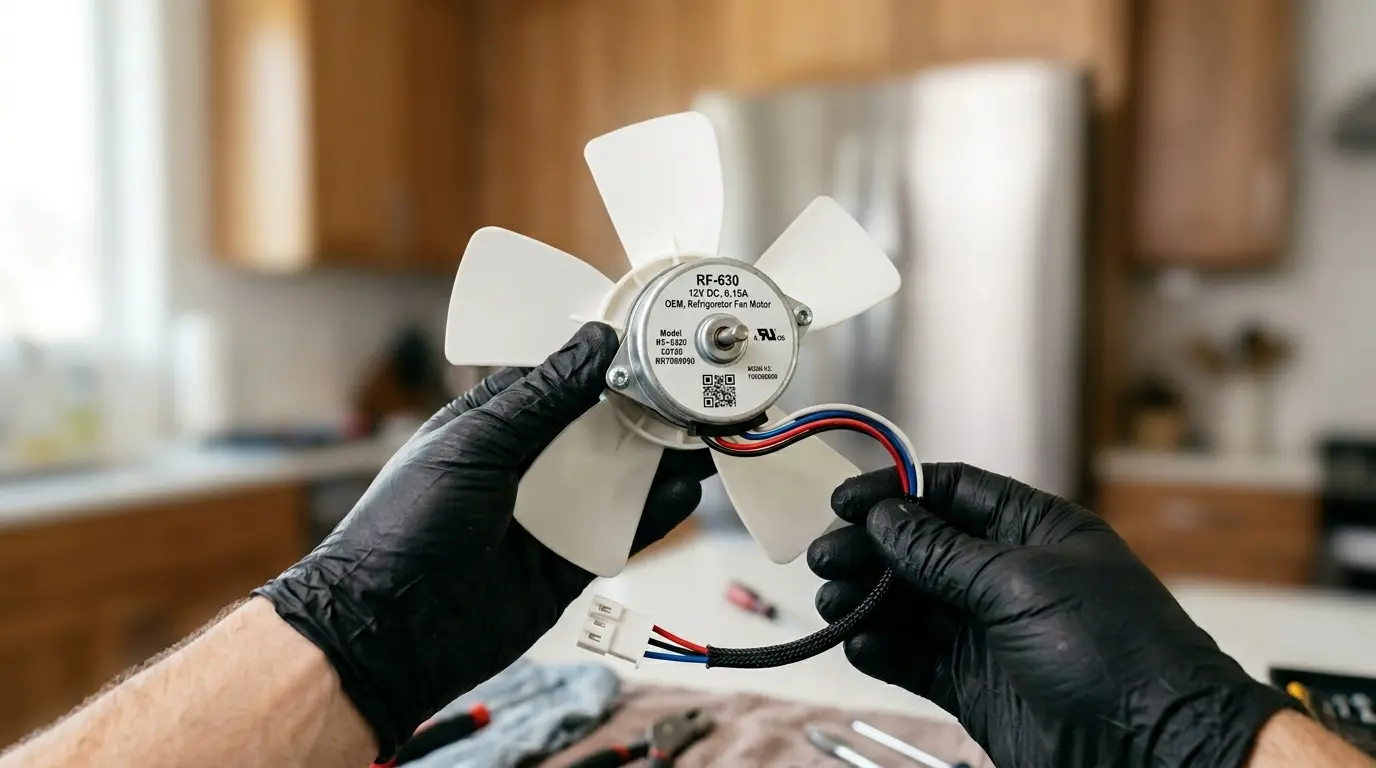
If you patiently perform the full 24-hour manual thaw, plug the refrigerator back into the wall, and the FF E code immediately returns within a few minutes, you have successfully ruled out ice buildup. The next logical, mechanical culprit is a genuinely dead fan motor.
Over years of continuous, 24/7 operation in a harsh, sub-zero environment, the mechanical bearings inside the small electric fan motor can simply dry out and seize, or the internal electrical copper windings can short-circuit. Modern LG fridges use sophisticated BLDC (Brushless DC) motors, meaning if the internal logic board on the motor itself fails, the fan is permanently dead.
The Solution: Motor Replacement
The fan motor cannot be repaired; it must be completely replaced. Fortunately, this is a highly accessible part located directly behind the back interior plastic panel of the freezer compartment.
An OEM (Original Equipment Manufacturer) LG fan motor is relatively inexpensive (usually between $40 and $80). Replacing it usually requires nothing more than removing a few Philips-head screws to pull the back panel off, unplugging the plastic wire harness, and swapping the new fan into the housing. It is a highly approachable DIY project.
IV. Defrost System Failure (The Recurring Nightmare)
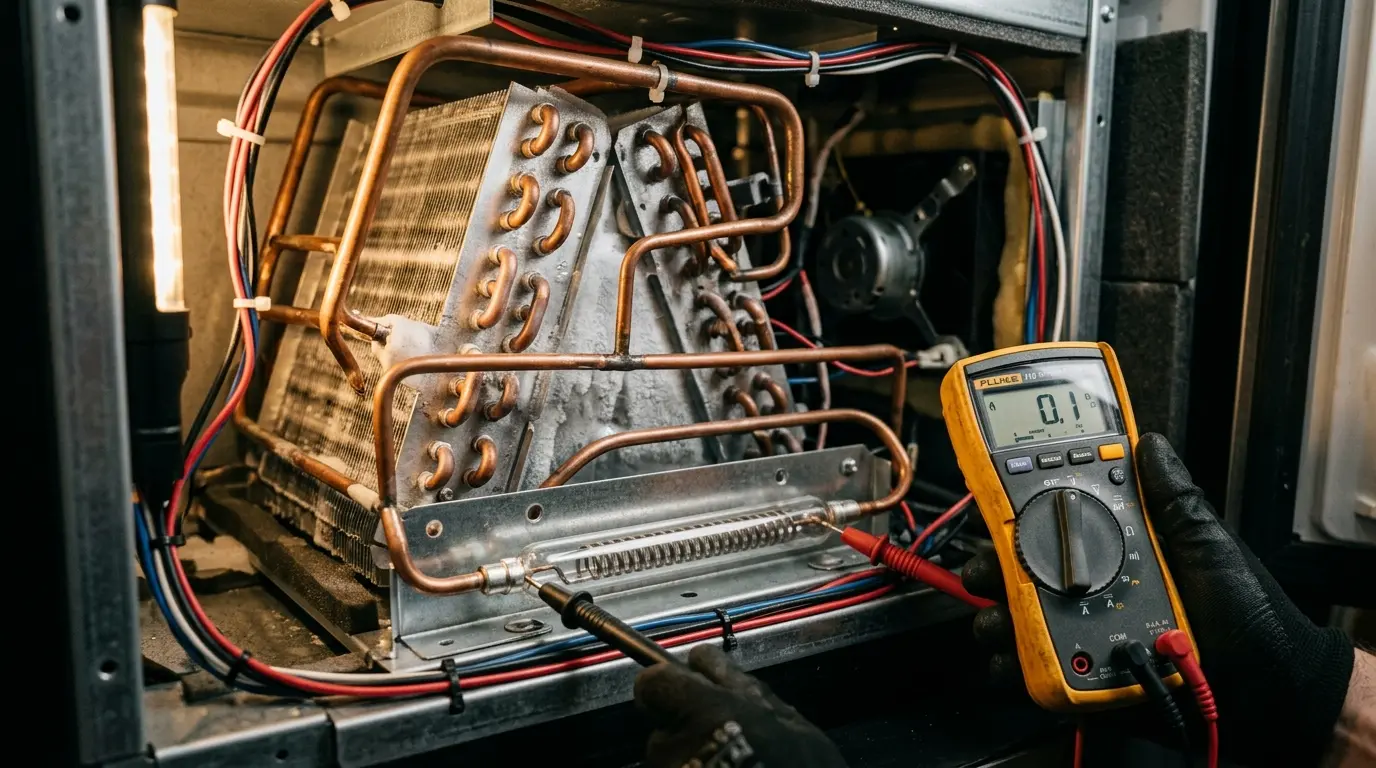
Here is the most frustrating scenario: You perform the 24-hour manual thaw. The fridge works perfectly, the code vanishes, and your food gets cold. But exactly one or two weeks later, the exact same FF E code returns.
This indicates a much more complex, underlying issue: your refrigerator’s Automatic Defrost System is catastrophically broken.
How the Defrost Cycle Works
Even with the doors closed, a tiny amount of frost naturally builds up on the freezing coils every single day. To combat this, modern refrigerators run a brief automatic heating cycle every 8 to 10 hours. The main computer turns off the compressor and turns on a scorching hot glass Defrost Heater wrapped around the coils to melt away the minor frost before it becomes a solid block of ice.
Once the ice melts, the water drips down a tube into a pan under the fridge. (If this tube gets clogged with debris, the water backs up and freezes the floor of your fridge—a separate issue we solve in How to Fix a Refrigerator That Is Leaking Water Inside).
The Mechanical Failure
If the defrost heater element burns out, or if the bimetal defrost sensor (thermistor) fails and fails to tell the computer to turn the heater on, the frost will continuously build up unchecked, day after day, until it physically encases the fan blades again.
The Solution: This requires using a digital multimeter to test the electrical continuity (Ohms) of both the defrost heater element and the defrost thermistor to pinpoint exactly which specific part has failed. If the heater reads “OL” (Open Loop) on your multimeter, the filament is snapped, and you must replace the heater entirely.
V. How to Prevent the FF E Error from Returning

Once you have successfully resolved the issue, you must practice proper, routine appliance maintenance to ensure the fan never has the opportunity to freeze over again.
Wipe down the rubber magnetic seals around your freezer door with warm, soapy water every single month. Sticky syrup or juice spills can pull the gasket slightly out of alignment when you open the door, allowing massive amounts of humid room air to constantly leak inside the freezing cavity.
Use a carpenter’s level to ensure your refrigerator is tilted very slightly backward (about a quarter inch higher in the front). This subtle gravity tilt allows the heavy, loaded doors to naturally swing shut and seal completely on their own, preventing accidental ajar doors overnight.
Never pack your freezer so tightly that large frozen pizza boxes or bags of ice are shoved directly against the back interior plastic wall. This physically blocks the crucial airflow vents, forcing the fan to work twice as hard to push air around the blockage and promoting rapid internal frost buildup.
Explore More Diagnostic Guides
Don’t pay for an expensive technician if you don’t have to. Visit our complete hub for more expert DIY repair tips, electrical testing guides, and replacement part manuals.
FAQ: LG Refrigerator Error Codes
2026 Guide: Troubleshooting the FF E Fan Error
Prevention Tip: Ensure the freezer door seal is clean and sealing tightly. A tiny gap letting in humid room air is the #1 cause of frost locking up the fan motor!

