
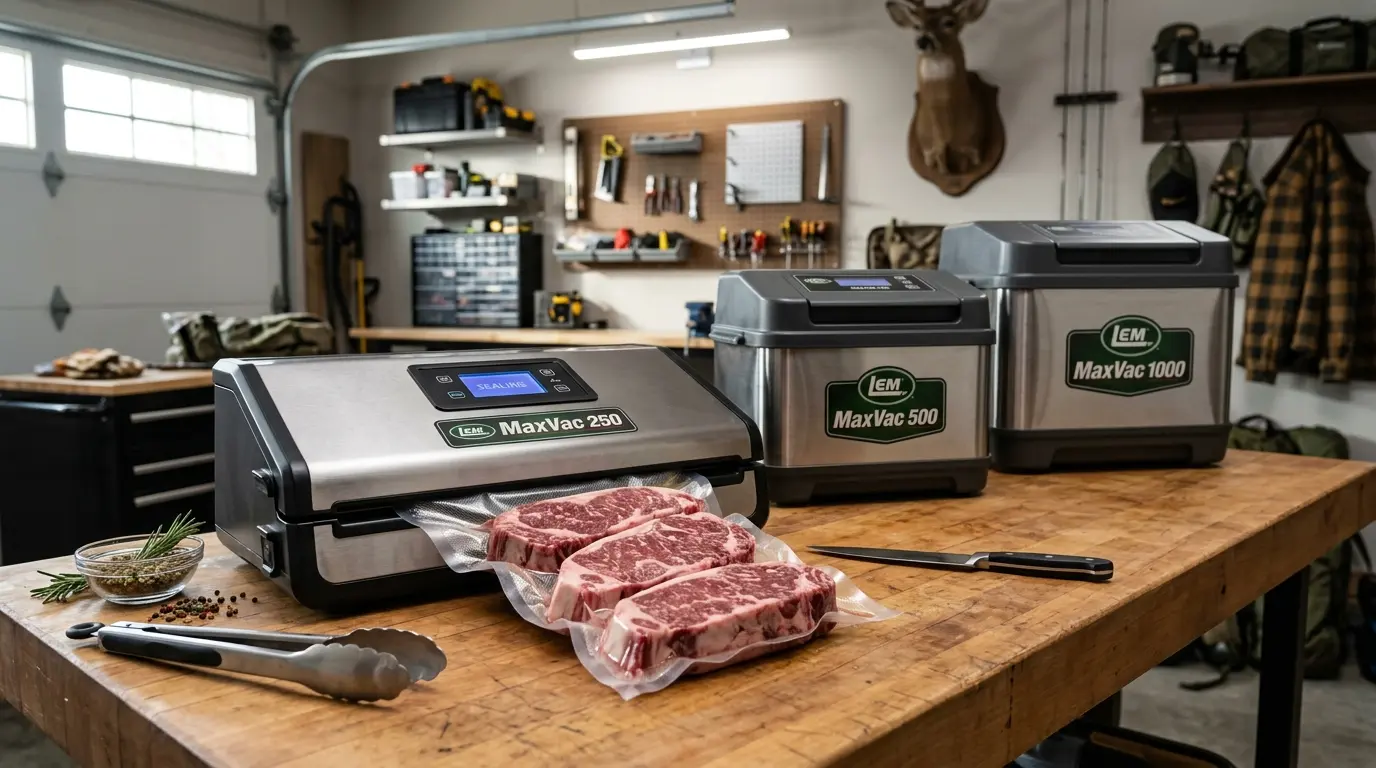
LEM MaxVac Series Review: Which Vacuum Sealer is Best for You? (100 vs 250 vs 500)
You know that exact moment of intense frustration: you have just returned from a highly successful hunting trip or a massive bulk run at the local wholesale butcher. You have a massive pile of fresh meat on your kitchen counter. You get into a great rhythm, making excellent time packing it all up, but by the 15th bag, your cheap plastic vacuum sealer suddenly stops working. The thermal overload switch has tripped. Now, you are forced to stand idly in your kitchen for 30 agonizing minutes, waiting for the tiny motor to cool down while your expensive, highly perishable meat sits oxidizing in the open air. Yeah. Overheating is the absolute worst part of bulk food preservation.
Honestly, most standard, consumer-grade vacuum sealers you find at big-box stores are explicitly designed to seal a couple of chicken breasts for a Tuesday night dinner. They are absolutely not built for high volume. If you want to process serious volume without stepping all the way up to a massive, thousand-dollar commercial chamber machine, you urgently need a heavy-duty external suction sealer with an internal cooling system. This is exactly where the legendary LEM MaxVac Series dominates the market. Let’s completely break down the MaxVac 100, 250, and 500 to see which machine fits your specific meal prep, homesteading, and bulk processing needs in 2026.
📊 Quick Comparison: The LEM MaxVac Lineup
The core difference between these incredible machines comes down to build material and exactly how many consecutive bags they can seal before the motor requires a mandatory cool-down period.
| Feature | LEM MaxVac 100 | LEM MaxVac 250 | LEM MaxVac 500 |
|---|---|---|---|
| Max Consecutive Seals | 100 Seals | 250 Seals (~2.5 hours) | 500 Seals (~5 hours) |
| Cooling System | Passive Heat Dissipation | Active Internal Cooling Fan | Active Internal Cooling Fan |
| Build Material | Durable ABS Plastic | High-Grade Stainless Steel | Heavy-Duty Aluminum |
| Seal Bar Length | 11.75 inches | Standard (approx 12″) | 14 inches (Extra Wide) |
| Best For | Daily Meal Prep & Small Bulk | Serious Preppers & Farmers | Hunters & Home Butchers |
I. The Physics of Thermal Overload: Why Cheap Sealers Fail
Before deciding which MaxVac model you need, you have to understand exactly what causes standard kitchen sealers to fail so spectacularly during bulk processing. It comes down to two components: the vacuum pump motor and the Teflon heat bar.
The Duty Cycle Limit
Every vacuum sealer has a “duty cycle”—the ratio of time a machine can actively run versus the time it must rest to dissipate heat. A standard $80 plastic sealer typically has a terrible duty cycle; the internal heat bar wire gets so aggressively hot that if you seal 15 bags in a row, the protective Teflon tape will literally melt, and the plastic casing will warp. To prevent a fire, a thermal sensor forces the machine to shut down completely for 30 minutes.
The LEM Engineering Solution
The LEM MaxVac series solves this issue by severely upgrading the internal thermodynamics. Starting with the 250 model, they introduce an active internal cooling fan that physically exhausts the hot air away from the motor and the sealing bar. This is what allows you to achieve commercial-level bagging speeds without the dreaded 30-minute timeouts.

1. LEM MaxVac 100: The Compact Powerhouse
Do not let the “entry-level” status of this machine fool you. While it is technically the smallest and most affordable in the heavy-duty LEM lineup, the MaxVac 100 still drastically and confidently outperforms standard grocery-store brands.
Why it stands out:
- The 100-Seal Rating: Most standard vacuum sealers need a mandatory 20-second break between every single bag and will still overheat after 15 bags. The MaxVac 100 is engineered with heavy-duty heat sinks to handle up to 100 consecutive seals. For the average family buying bulk meat from Costco or Sam’s Club, this is more than enough thermal power.
- Space-Saving Footprint: Made from highly durable ABS plastic, it is incredibly lightweight and compact enough to actually fit inside a standard kitchen drawer, keeping your countertops completely clear when not in use.
- Pulse Function: This is a highly crucial feature for culinary enthusiasts. If you are sealing highly delicate foods (like fresh raspberries, artisanal bread, or soft meal-prep ingredients), the pulse button allows you to manually control the exact amount of suction. You pulse it until the air is gone, stopping right before the pressure aggressively crushes your soft food.
Curious about how long your new bulk purchases will actually last once sealed? Check out our definitive timeline guide: How Long Does Vacuum Sealed Meat Last in the Freezer?
👉 The Verdict: The absolute best choice for standard households, batch meal preppers, and casual weekend bulk buyers who want commercial reliability without a massive, heavy machine.
 Check Price on the LEM MaxVac 100

2. LEM MaxVac 250: The “Sweet Spot” Prosumer Choice
This is precisely where we cross the line from standard consumer kitchen gadgets into heavy-duty processing equipment. The MaxVac 250 introduces active internal cooling technology, making it a serious, reliable workhorse for massive preservation projects.
Why it stands out:
- Active Internal Cooling Fan: This changes absolutely everything about the workflow. The built-in heavy-duty fan actively keeps the powerful 21Hg vacuum pump and the Teflon sealing bar cool. This allows you to process up to an incredible 250 seals back-to-back. That equates to roughly 2.5 hours of non-stop, uninterrupted operation.
- Stainless Steel Build: Moving entirely away from ABS plastic, the 250 model features a rugged, commercial-style stainless steel housing. It is incredibly easy to wipe down and chemically sanitize after processing raw, bloody meats, and it looks highly professional sitting permanently on a garage prep table.
- One-Handed Locking: Instead of having to forcefully press down on both corners of the lid to physically lock it (a highly common, frustrating annoyance with cheaper sealers), the 250 features a simple, highly ergonomic one-handed locking lid. This speeds up your workflow significantly when your other hand is covered in meat juice and holding a heavy bag.
👉 The Verdict: The perfect middle-ground. Buy this if you are a serious homesteader, a gardener processing a massive end-of-season harvest, or someone who processes a few deer a season and hates waiting.

3. LEM MaxVac 500: The Heavy-Duty Beast
If you process your own livestock, hunt big game frequently, or run a small commercial jerky operation, the MaxVac 500 is the industrial-grade machine you have been desperately looking for. It is completely unyielding.
Why it stands out:
- 500 Consecutive Seals: The aggressively upgraded cooling fan system allows this machine to run for up to 5 hours completely continuously. You can literally process an entire quartered elk or hundreds of pounds of wholesale beef without ever waiting for the machine to cool down once.
- Heavy-Duty Aluminum Body: It is built like a military tank. The heavy aluminum construction ensures it can take a serious beating in a freezing garage, a dirty hunting cabin, or a fast-paced commercial workshop without denting.
- 14-Inch Seal Bar: This is a massive, highly sought-after upgrade. A standard 11-inch bar severely limits the size of the cuts you can seal. The 14-inch bar on the 500 allows you to use extra-wide commercial bags to seal massive, whole packer briskets, full racks of ribs, and large Alaskan salmon fillets with absolute ease.
Bone-In Safety Tip: If you are using this 14-inch bar to seal massive, sharp racks of ribs or T-bone steaks, you absolutely must protect the plastic from piercing. Read our highly rated guide: Stop Puncturing Bags: How to Vacuum Seal Bone-In Meat Perfectly before you ruin a bag.
👉 The Verdict: This is a strictly high-volume machine. If time is money and you simply cannot afford to wait for a machine to cool down, the 500 is your ultimate solution.
⚠️ Important Note: The Liquid Limitation
While the LEM MaxVac series is incredibly powerful, you must understand the physics of External Suction sealers.
Because all three of these models physically suck the air directly out of the neck of the bag, they will inherently struggle with sealing pure liquids. If you attempt to seal hot soups, heavy wet marinades, or massive amounts of blood, the liquid will be violently sucked up into the pump, destroying the heat seal and potentially flooding the motor.
If your workflow involves sealing heavy marinades or liquids daily, you should bypass external suction entirely. You must step up to a commercial chamber machine. We highly recommend reading our deep-dive review of the flagship LEM MaxVac Pro Chamber Sealer or understanding the technological differences in Chamber Vacuum Sealer vs. External Suction: Is the Upgrade Worth It?
The 3-Minute Buying Guide: Making the Final Choice
Still unsure which specific LEM model to grab? Strip away the marketing terms and ask yourself these two highly practical questions:
1. What is your longest continuous sealing session?
If you rarely spend more than 20 to 30 minutes sealing food after a grocery run, save your money and get the MaxVac 100. If you routinely spend several hours processing a multi-deer hunt in the garage with a team of people, the cooling fan in the MaxVac 500 is an absolute mandatory upgrade to keep the line moving.
2. What size bags do you actually need?
All three models feature an incredibly convenient built-in roll holder and a sliding bag cutter, which saves you a ton of money by letting you cut custom lengths. However, if you regularly need to seal items wider than 11 inches (like giant briskets, massive ribs, or large game quarters), you must upgrade to the MaxVac 500 specifically to utilize its massive 14-inch seal bar.
Frequently Asked Questions
Can I use generic or cheap bags in the LEM MaxVac series?
Yes, but there is a major caveat. Because these are external suction machines, you must use embossed (textured) bags. The textured channels allow the air to escape. If you buy completely smooth, flat commercial chamber pouches to save money, these machines will instantly clamp them shut, trap the air inside, and fail to vacuum. You can use any brand, but they must be textured rolls or bags.
Why does the thermal seal sometimes fail in the freezer?
If your bag loses its vacuum after a few weeks in the freezer, it is rarely the machine’s fault. It usually means a microscopic droplet of moisture, fat, or blood was sitting directly across the heating wire when it clamped down, preventing the two layers of plastic from physically melting together. Always fold the top two inches of the bag outward (like a cuff) while loading raw meat to keep the sealing rim bone dry.

