
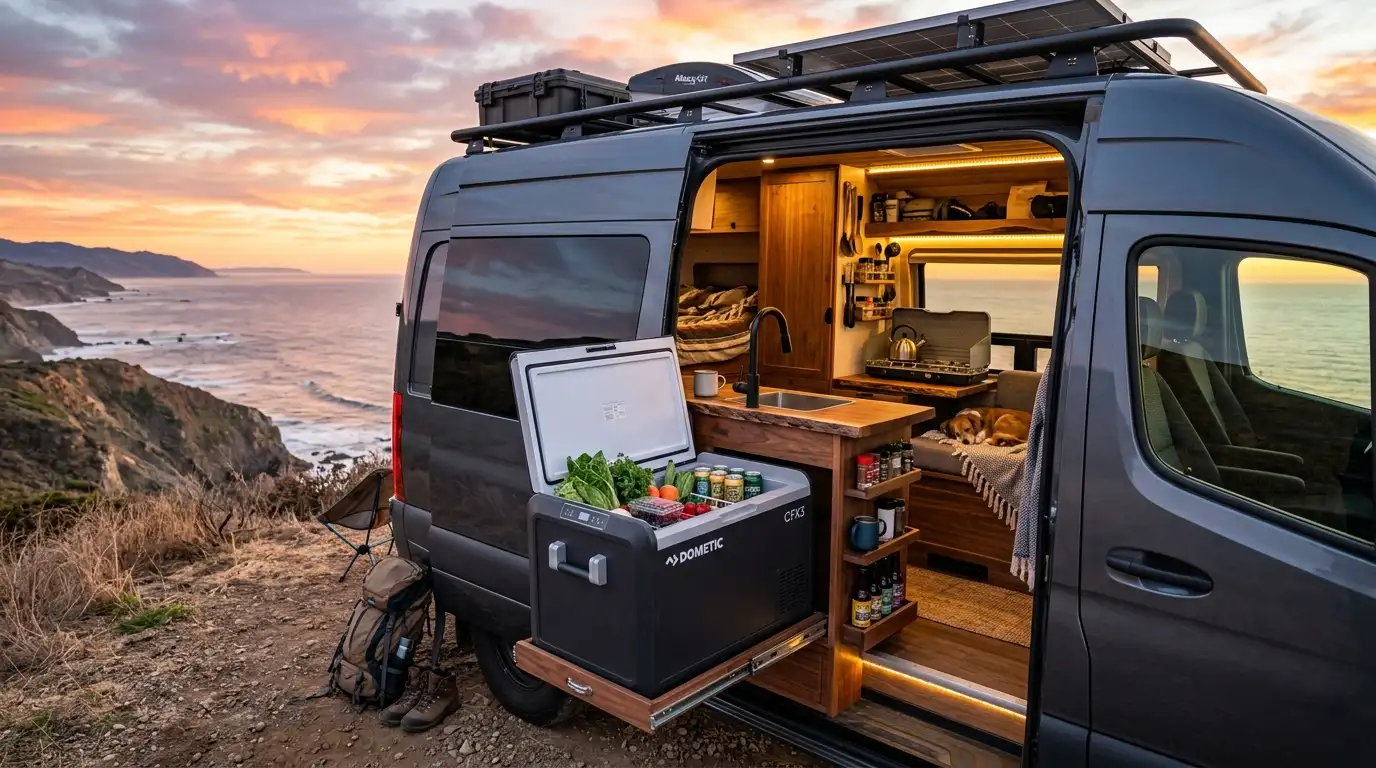
Best 12V Compressor Fridge for Vanlife: Top Picks for 2026
You know that exact moment of dread: you’re three days into a remote, washboard mountain trail, the midday sun is beating down on the roof of your van, and you excitedly open your cooler to grab a cold drink. Instead, you find a tragic pool of lukewarm, cloudy water and a soggy, ruined package of expensive steaks. The ice has completely melted, your “weekend getaway” food is now a severe biological safety hazard, and you are officially miles away from the nearest grocery store. Yeah. It’s incredibly frustrating.
Honestly, finding the best 12V compressor fridge for vanlife is the single most important lifestyle upgrade for any off-grid vehicle build. Unlike old-school 3-way propane fridges that require perfectly level ground, or basic rotomolded coolers that drain your wallet with daily ice purchases, modern 12V compressor models are essentially miniature, highly-fortified versions of your home kitchen refrigerator. They pull incredibly little power, handle extreme vehicle vibrations, and maintain a rock-solid internal temperature even when the interior of your parked van hits a sweltering 100°F. If you’ve been struggling with soggy sandwiches or lying awake worrying about your battery bank dying overnight, let’s fix your mobile kitchen.
📊 Quick Comparison: Best 12V Vanlife Fridges
Choosing the right fridge depends entirely on your available floor space and how long you plan to stay completely off-grid. Here is how the top premium and budget contenders stack up for 2026.
| Feature | Dometic CFX5 35 ORE | BougeRV E40 (42 Qt) | ICECO VL60D Dual Zone |
|---|---|---|---|
| Best For | Extreme efficiency & rugged durability | Budget-conscious weekend builds | Long trips requiring both Fridge & Freezer |
| Compressor Type | Dometic VMSO3 High-Performance | Inverter Technology (Fast Cooling) | SECOP (Danfoss) Legendary |
| Capacity | 35 Liters | 40 Liters (42 Quarts) | 60 Liters (63 Quarts) |
| Special Tech | Vacuum Insulated Panels (VIP) | Eco Mode / Fast Cooling Switch | Dual-Zone Independence |
| Warranty | 2-Year Limited | 2-Year Limited | 5-Year Compressor |
I. The Thermodynamics: Why 12V Compressors are the Gold Standard
In real-world use, a 12V compressor fridge is structurally and scientifically far superior to any other mobile cooling method. For decades, RV owners relied on “3-Way” absorption fridges running on propane. While silent, propane fridges have a fatal flaw for true off-roading: they must be parked perfectly level to work, and they require massive holes cut into the side of your van for ventilation.
The Tilt Advantage
Modern 12V compressors (especially those manufactured by SECOP) are designed to operate flawlessly at extreme angles—up to 30 or 40 degrees. This makes them absolutely perfect for overlanding and parking on uneven, rugged campsites without the cooling system shutting down.
The Solar Synergy
Buying a high-quality 12V unit is an investment in true electrical independence. Because they use variable-speed compressors, they sip tiny amounts of electricity. You can often run them indefinitely with just a modest 200W solar panel setup and a single 100Ah Lithium LiFePO4 battery. For a broader look at how different power sources compare for remote cabins and vans, read our deep dive on 12V DC Compressor Fridge vs Propane Fridge for Off-Grid Living.

1. Dometic CFX5 35 ORE (The Efficiency King)
If you are a solo traveler, a minimalist couple, or someone absolutely obsessed with building the most efficient electrical system possible, the Dometic CFX5 35 is the undisputed “gold standard” of the vanlife community. It is built like an indestructible tank and engineered to aggressively sip power.
Why it’s a top pick:
- Maximum Thermal Efficiency: The magic of Dometic is in the walls. It uses advanced dense Polyurethane insulation combined with Vacuum Insulated Panels (VIPs). This means the box physically stays colder for drastically longer even when the compressor turns off, significantly reducing your nightly battery drain.
- Rugged ExoFrame Build: The hard-shell design, complete with reinforced corners and aluminum alloy handles, is built for incredibly harsh environments. It’s shockingly quiet, heavily vibration-resistant, and handles brutal off-road washboard trails without skipping a cooling cycle.
- Smart App Monitoring: Includes a high-gloss TFT LCD interface and a powerful Bluetooth/WiFi app. This allows you to monitor your internal temperatures and adjust battery protection settings directly from your phone while you’re driving in the front seat.
Real-world users constantly highlight how quiet this unit is compared to cheaper competitors. It can easily store enough food and drinks for two people for a full, uninterrupted week. While it is a premium financial investment, its ability to run efficiently on small portable power stations (like a Jackery or EcoFlow) makes it a massive favorite for those with limited roof space for solar panels.
👉 Best for: Solo travelers, minimalist couples, and high-end off-grid sprinter builds where electrical efficiency is the top priority.
 Check Price & Availability on Amazon

2. BougeRV E40 42 Quart
You absolutely don’t have to spend over $1,000 to get highly reliable, freezing-cold off-grid cooling. The BougeRV E40 offers a slightly larger capacity and incredibly stable performance for a fraction of the price of the premium legacy brands.
Why it’s a top pick:
- Fast Cooling Inverter Tech: Uses a specialized compressor with inverter technology to drop temperatures rapidly from 77°F to 32°F in under 20 minutes, ensuring your delicate groceries stay safe the moment you plug it in.
- Low Energy Draw: In “Eco Mode,” it consumes less than 1 Ah per hour once the target temperature is reached, making it extremely friendly for budget DIY solar setups that lack massive battery banks.
- 4-Year Proven Reliability: While BougeRV started as a budget brand, long-term vanlifers have consistently reported these units running flawlessly for years, even in raw 12V lithium systems, with virtually zero maintenance.
This is the exact model to choose if you need more physical space for a long two-week road trip but want to keep your overall van build costs down. It features a rugged, scuff-resistant matte finish and a surprisingly quiet operation that won’t keep you awake if your bed is directly above it.
👉 Best for: Weekend warriors, budget DIY builds, and family road trips.

3. ICECO VL60D Dual Zone (63 Quarts)
If you are living in your van full-time or taking major off-grid expeditions longer than a week, a single cooling zone simply limits your diet too much. You need the ability to have both a fresh fridge and a deep freezer simultaneously. The ICECO VL60D is the heavy-duty, overlanding solution for serious travelers.
Why it’s a top pick:
- SECOP (Danfoss) Compressor: This is the holy grail of 12V cooling. It uses the legendary German-engineered SECOP compressor, known worldwide for its unkillable reliability and backed by an unheard-of 5-year warranty. This is the beating heart of a fridge that can easily last a decade on the road.
- Independent Dual Zones: You can set the left side to 38°F for milk and produce, and the right side to 0°F to freeze raw meat and ice cream. No more choosing between cold drinks or frozen treats.
- Indestructible Metal Build: Unlike the plastic bodies of cheaper models, it features a highly durable, dent-resistant metal shell and heavy magnetic lids that stay firmly sealed even on the bumpiest gravel roads.
Users who have taken this specific unit on grueling transcontinental road trips praise its deep organization and capacity. Even though dividing a fridge means the freezer section is slightly smaller, having two separate lids is a massive thermodynamic advantage; it completely prevents all your precious freezing cold air from escaping the side you aren’t currently reaching into.
👉 Best for: Full-time vanlifers, large families, and long-distance overlanders crossing deserts.
The 3-Minute Vanlife Electrical Buying Guide
Installing a 12V fridge requires a basic understanding of your van’s electrical grid. When narrowing down your choice, do not just look at the price tag. Look closely at these four critical engineering factors:
1. Amp-Hour (Ah) Consumption
This is the only number that matters when designing your solar system. A high-quality 12V fridge should average a draw between 0.5 and 1.5 Ah per hour once cooled (roughly 20 to 40 Ah per day). Always utilize the “Eco Mode” settings to maximize your lithium battery life overnight when the sun goes down.
2. The Compressor Brand
If you see the name SECOP (formerly Danfoss) or LG listed in the specs, you are looking at a highly reliable unit. These premium compressors are designed internally with spring mounts to handle the extreme tilt, shocks, and continuous vibration of a moving vehicle.
3. Lid Orientation (Chest vs Upright)
In a tight van layout, you must choose between a “chest-style” (opens up) or an “upright” (opens out like a home fridge). Chest-style fridges like these top picks are massively more energy-efficient because cold air naturally sinks. When you open a chest lid, the cold air stays trapped at the bottom; when you open an upright door, all your expensive cold air instantly spills out onto the floor.
4. Battery Protection Systems
Ensure your fridge has a built-in “3-stage battery protection” system (High, Med, Low). If you ever plug the fridge directly into your van’s 12V cigarette lighter, this crucial software prevents the fridge from draining your engine’s starter battery so low that your van won’t start the next morning.
Frequently Asked Questions
Can I run a 12V fridge off a regular car battery?
Only safely while the engine’s alternator is running and actively charging it. If the engine is off, a standard lead-acid starter battery is not designed for deep, slow discharging and will be completely drained and permanently damaged in just a few hours. For vanlife, you absolutely need a dedicated “deep cycle” house battery (preferably Lithium LiFePO4) to run the fridge safely overnight.
Should I use AC or DC power in my van?
Always use the native 12V DC power cord plugged directly into your fuse block if possible. Converting your 12V battery power to 110V AC (using your large power inverter) and then having the fridge’s power brick convert it back to DC is wildly inefficient and will waste about 15% to 20% of your precious battery capacity entirely to heat loss.
⚠️ How do I prevent condensation pooling inside the fridge?
In humid, rainy environments (like the Pacific Northwest), water vapor from the air will condense into actual puddles at the bottom of the fridge whenever you open the lid. This is normal physics. Wipe it down once a week with a towel and ensure the lid gasket seal is perfectly clean. For deep-dive maintenance and moisture control tips, see our technical guide on How to Stop Condensation in a Mini Fridge—the thermodynamics are exactly the same!

