
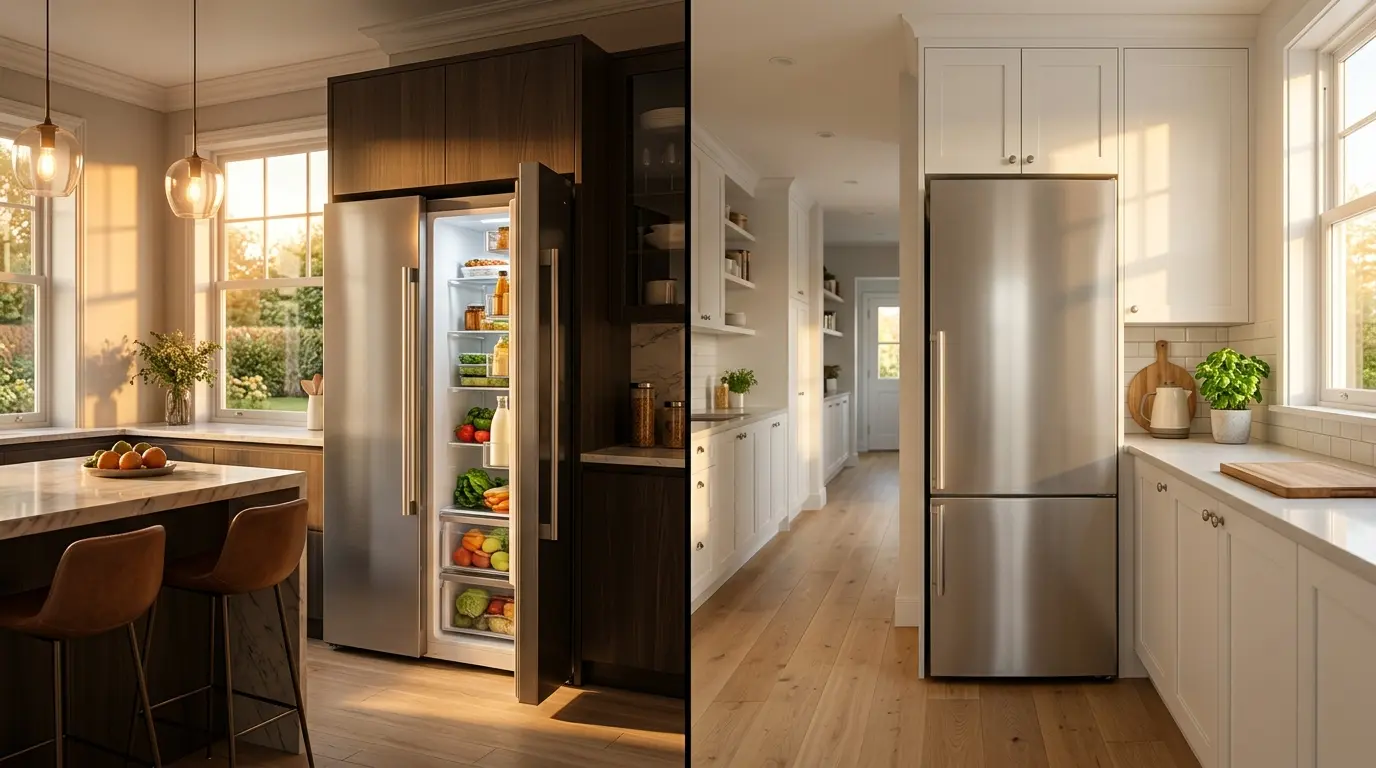
French Door vs Bottom Freezer Refrigerator: Which is Better? (2026 Guide)
When planning a comprehensive kitchen remodel or desperately trying to replace a dying appliance, the very first architectural decision you have to make is the layout of your refrigerator. While the traditional top-freezer model (where you bend down to reach your vegetables) was the undisputed standard for decades, modern luxury and daily practicality have shifted the market entirely toward bottom-mount freezers.
By putting the heavy, frozen items on the bottom, the fresh food section—the area you actively access 90% of the time—is elevated to perfect eye level. It saves your lower back from constant bending and makes organizing fresh produce significantly easier.
However, once you decide you want the freezer on the bottom, you are immediately faced with the ultimate kitchen design debate: French Door vs Bottom Freezer Refrigerator. While they share the exact same basic cooling geometry, the way their upper doors open drastically changes how your kitchen flows, how much money you spend upfront, and how mechanically reliable the appliance will be in the long run. In this guide, we break down the pros, cons, and hidden long-term costs of both styles to help you make the perfect choice for your home.
The Quick Answer
The French Door Refrigerator is the modern luxury standard, offering narrow door swings that are perfect for tight kitchen islands and wide-open shelving for massive platters, but they are highly prone to expensive ice maker failures. The standard Bottom Freezer Refrigerator features a single, full-width top door. It requires more clearance to swing open, but it offers unparalleled mechanical reliability, zero ice-maker freeze-ups, and incredible budget value, making it the smartest choice for practical, long-term durability.
1. The French Door Refrigerator: The Modern Standard
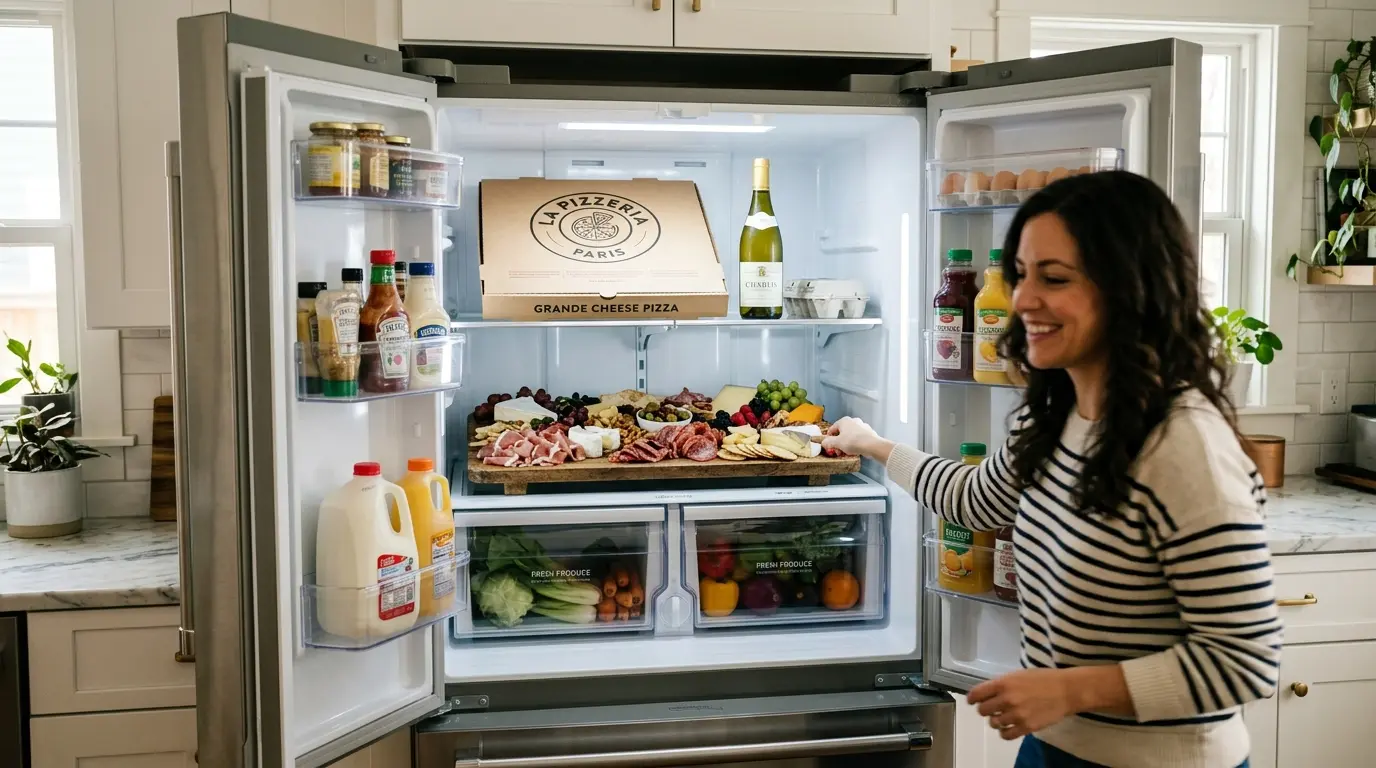
The French door refrigerator features two narrow half-doors that open outward from the center to reveal a single, massive fresh food compartment, accompanied by a heavy pull-out freezer drawer below. Over the last ten years, it has become the undisputed, most popular appliance design in premium American kitchens, heavily pushed by major brands like LG, Samsung, and GE.
The Pros: Wide Spaces and Workflow
- The Wide-Shelf Advantage: Because there is no solid center partition bisecting the fridge (unlike older side-by-side models), you can store incredibly wide items. Oversized commercial pizza boxes, massive Thanksgiving deli platters, and full-sized metal baking sheets fit with absolute ease.
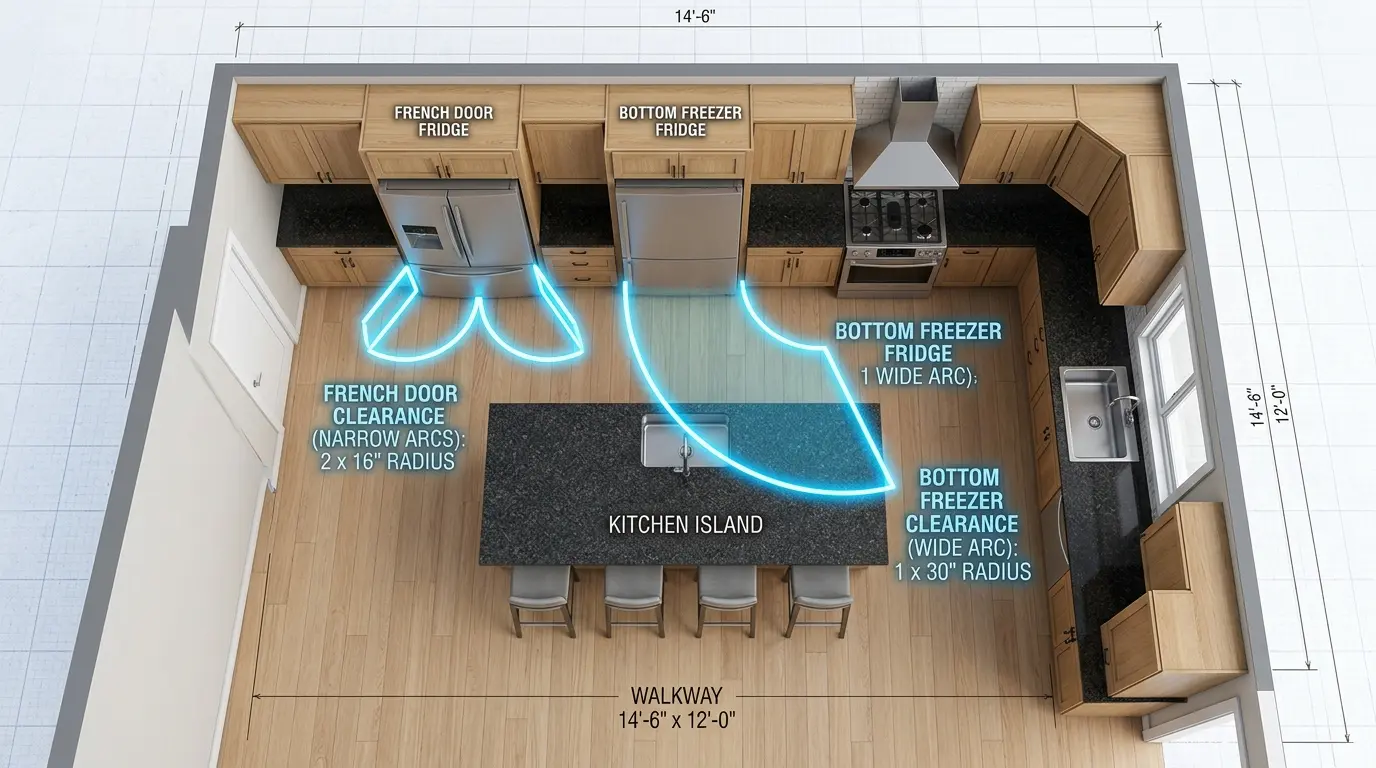
- Narrow Door Swing (The Island Saver): This is the primary functional reason French doors are beloved by interior designers and architects. Because the top doors are split exactly in half, they require very little physical clearance to swing open (usually only 15 to 18 inches). If you have a narrow galley kitchen or a massive center kitchen island placed close to the fridge, you can open the doors to grab ingredients without completely blocking the walking aisle.
- Premium Smart Features: Manufacturers actively put their absolute best technology and R&D budgets into their French door lines first. This is where you will find advanced dual-evaporator cooling systems, bespoke interchangeable glass panels, internal Wi-Fi cameras, and customizable middle “flex” drawers that can switch from fridge to freezer temperatures at the push of a button.
The Cons: Ice Makers and Premium Price
Ice Maker Vulnerability (The Thermodynamic Flaw)
If you buy a French door fridge with an ice and water dispenser built directly into the exterior door, you are buying the most highly repaired, universally flawed appliance component in the world.
To make ice in the door, the fridge has to route sub-zero air from the freezer up into a tiny, poorly insulated “ice room” located inside the 38°F fresh-food section. Pushing freezing air through a warmer, humid environment inevitably leads to massive condensation and severe freeze-up issues—a widespread mechanical nightmare we covered extensively in our step-by-step diagnostic guide on How to Fix a French Door Ice Maker That Keeps Freezing Up.
- High Upfront Cost: Because they require complex door seals (the articulating center flapper mullion), multiple hinges, and advanced cooling routing, French door models are significantly more expensive to manufacture and purchase than standard bottom freezers.
2. The Bottom Freezer Refrigerator: The Practical Classic
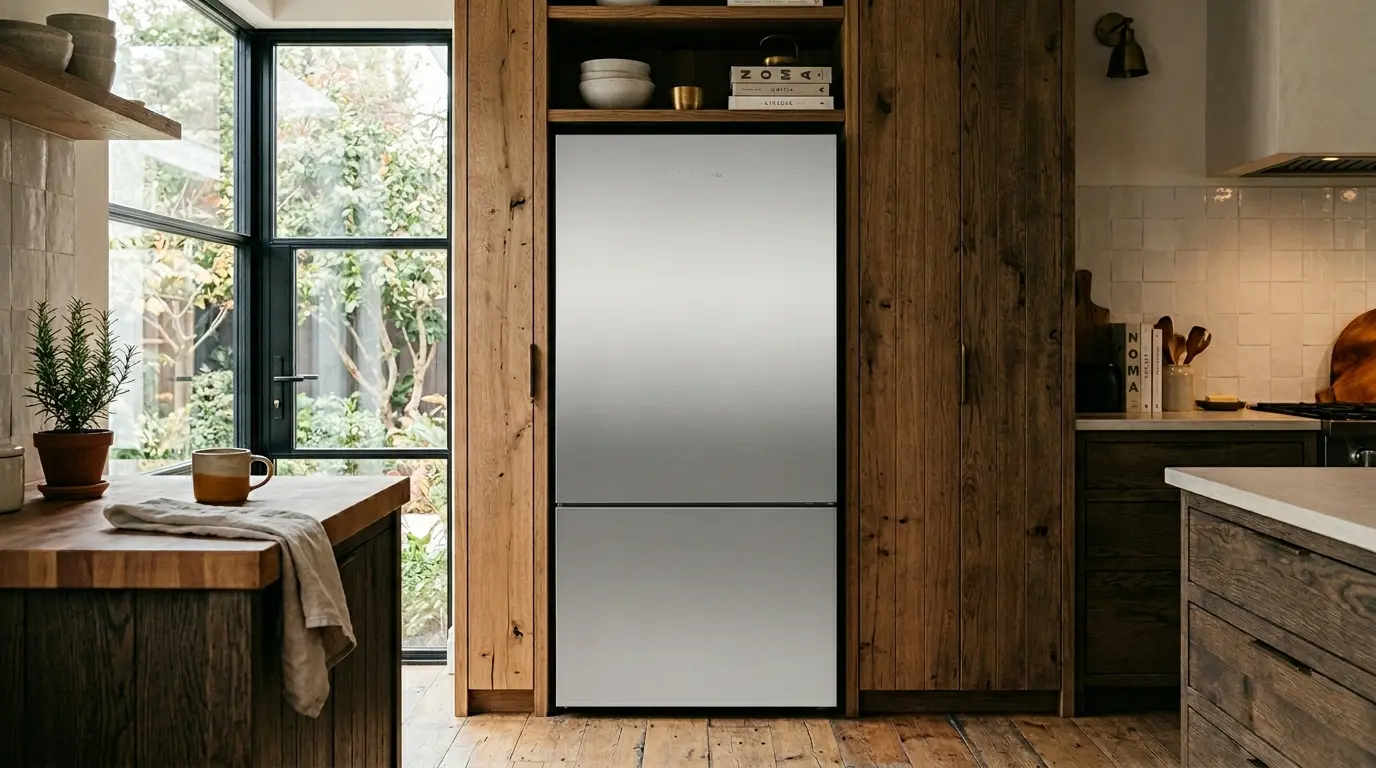
A standard bottom freezer refrigerator (also widely known in the industry as a single-door bottom-mount) features a single, full-width swinging door on top for the fresh food section, and either a swing door or a heavy pull-out drawer for the freezer compartment below.
The Pros: Unbeatable Budget and Reliability
- Incredible Value: You can often purchase a high-end, premium-finish bottom freezer with a massive cubic capacity for hundreds (or even thousands) of dollars less than a comparable, tech-heavy French door model. You are paying for pure cooling power, not flashy touchscreens.
- Unmatched Mechanical Reliability: Bottom freezers are the ultimate mechanical workhorses. They rarely feature complex through-the-door ice makers. Because the ice maker is kept safely inside the sub-zero bottom freezer drawer—exactly where ice actually belongs—these units experience far fewer catastrophic mechanical failures. For those prioritizing absolute longevity, these models heavily dominate our Most Reliable Refrigerator Without Ice Maker rankings.
- Great for Tight Cutouts (Older Homes): If your kitchen cabinetry was built in the 1980s or 1990s, the physical fridge cutout is likely very narrow (typically around 30 to 33 inches wide). It is vastly easier to find high-capacity bottom freezers that fit these vintage spaces than it is to find narrow French door models, saving you from expensive carpentry modifications. See our top solutions in the Best Narrow Depth Bottom Freezer Refrigerator guide.
The Cons: The Massive Door Swing
- Severe Clearance Issues: A single, massive 30-inch or 36-inch wide upper door requires a massive amount of physical clearance to open fully. If you have a tight kitchen island or a narrow galley layout, pulling a bottom freezer door open 90 degrees might force you to physically step backward or bump into your counters.
- Heavier Operation: The door bins on a refrigerator are designed to hold heavy items like gallons of milk, juice, and condiments. Opening one giant, fully-loaded door requires noticeably more physical pulling effort than opening a lightweight, half-width French door, which can be an annoyance for children or the elderly.
- Vacuum Seal Strength: Because a single door has one massive, continuous magnetic gasket, the vacuum seal created by the cold air can be incredibly strong, sometimes making the door difficult to yank open quickly after it has just been closed.
3. The Energy Efficiency Debate: Cold Air Loss
When discussing French door vs bottom freezer efficiency, there is a common myth that French doors are vastly superior because “you only open half the fridge at a time.”
In theory, yes, opening just one French door lets less cold, dense air spill out onto your kitchen floor compared to swinging open a massive single door. However, the reality of daily use paints a different picture.
The Flapper Mullion Leak
To seal the gap between the two French doors, manufacturers use an articulating vertical flap (a mullion) that snaps into place when the doors close. This mechanism has multiple points of failure and requires small anti-sweat heaters to prevent condensation. If the mullion spring wears out or the doors become slightly misaligned, cold air constantly leaks out 24 hours a day. A standard bottom freezer has one single, uninterrupted magnetic gasket, which provides a significantly more reliable, energy-efficient thermal seal over a 15-year lifespan.
4. Direct Comparison: Which is Right for You?

| Feature | French Door Refrigerator | Bottom Freezer Refrigerator |
|---|---|---|
| Door Swing Clearance | Minimal (Perfect for kitchen islands) | Massive (Requires wide open space) |
| Initial Purchase Cost | High ($1,500 – $4,000+) | Low to Moderate ($800 – $1,800) |
| Wide Platter Storage | Excellent | Excellent |
| Ice Maker Reliability | Poor (Prone to severe freeze-ups in door) | Excellent (Kept safely in bottom freezer) |
| Aesthetic / Design Feel | Highly modern, luxury standard | Traditional, clean, minimalist |
Explore the Refrigerator Hub
Don’t stop here! Dive deeper into appliance mechanics and discover the best setups tailored specifically for custom kitchen upgrades and long-term reliability.
FAQ: Refrigerator Layouts
2026 Guide: French Door vs. Bottom Freezer Comparison
Selection Tip: Choose French door for wide platters and tight clearances, or Bottom Freezer for simple reliability and better budget value.

