
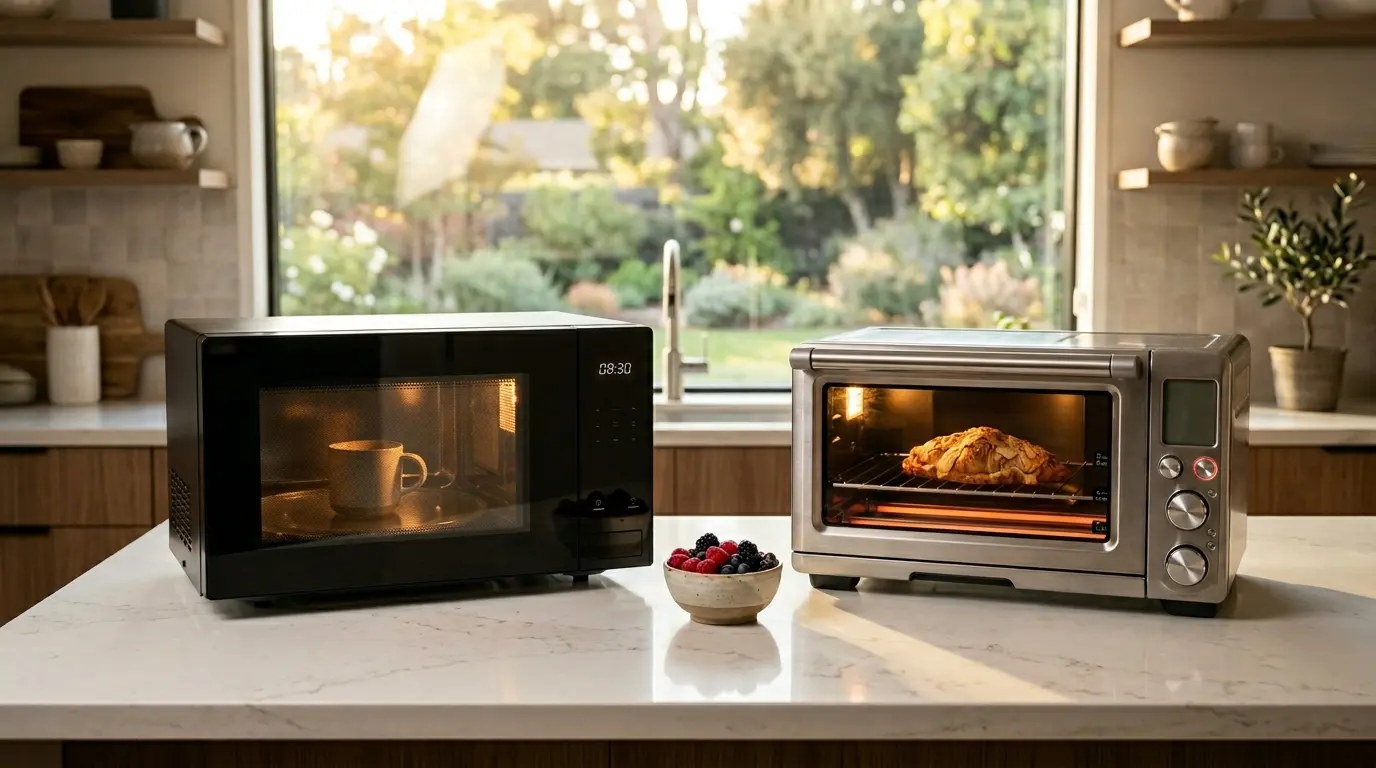
Microwave vs Toaster Oven: Which Appliance Do You Really Need? (2026 Guide)
Counter space is the most valuable real estate in any kitchen. When outfitting a new home, a dorm room, or a custom camper van, you are often forced to make a difficult choice between two staple appliances: the microwave and the toaster oven.
Both appliances promise convenience, speed, and the ability to heat up your meals without turning on a massive conventional oven that heats up the entire house. However, the fundamental way they cook food—and the final culinary results they produce—could not be more different.
If you are debating which appliance deserves a permanent spot on your countertop, this comprehensive microwave vs toaster oven breakdown will help you decide based on your cooking habits, energy constraints, and food preferences.
The Quick Answer
The debate boils down to Speed vs. Texture. The Microwave is the undisputed champion of speed and efficiency, perfect for boiling water, reheating soups, and safely defrosting meat in minutes. However, it leaves food soggy. The Toaster Oven acts like a miniature traditional oven. It takes much longer to cook and uses more continuous electricity, but it delivers superior culinary results by browning, baking, and restoring the crispy texture to pizza, fries, and roasted vegetables.
1. The Microwave Oven: Speed and Convenience
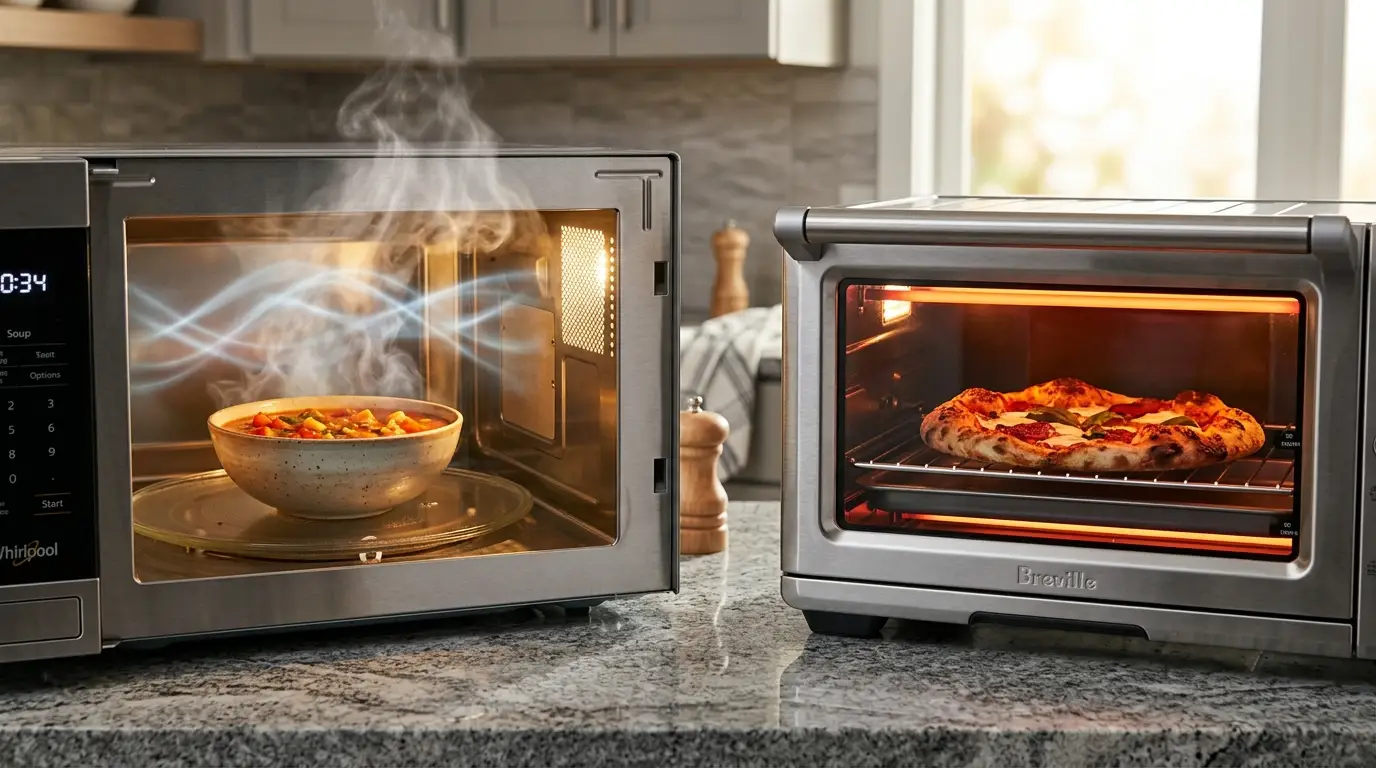
To understand why a microwave excels at certain tasks and fails at others, you must understand the science behind it. Microwaves use electromagnetic radiation (generated by a magnetron) to agitate water molecules inside your food. This violent molecular movement creates internal friction that generates heat from the inside out. This specific technology, known as dielectric heating, revolutionized the modern kitchen by drastically reducing cooking times.
The Pros of a Microwave:
- Unmatched Speed: Nothing beats a microwave when it comes to time. It can boil a mug of water in two minutes, pop a bag of popcorn in three, and thoroughly reheat a dense plate of leftovers in 60 seconds.
- Energy Efficiency: Because the cooking times are so incredibly short, microwaves use very little overall electricity (measured in Watt-hours). Even though they pull a high surge of power momentarily, they are far more efficient than waiting 15 minutes for an oven to preheat. If you are living off-grid, reading our guide on the Best Microwave for Solar Power Systems will show you just how efficient these units can be for alternative energy setups.
- Unbeatable Safety: The exterior chassis of a microwave stays completely cool to the touch. Furthermore, there are no exposed red-hot heating elements inside the cavity, making it a drastically safer option for households with young children or for cramped, mobile spaces like motorhomes. See our Best Microwave for RV and Van Life picks for safe, low-clearance models.
The Cons of a Microwave:
- The “Soggy” Factor: Because microwaves heat the water inside the food, that moisture is driven to the surface and trapped there. Microwaves cannot trigger the Maillard reaction (the chemical process that browns food). Therefore, reheating pizza, french fries, or pastries in a microwave usually results in a soft, limp, rubbery mess.
- Uneven Heating: If your food is particularly dense, microwaves can struggle to penetrate all the way through, leaving frustrating cold spots in the center while simultaneously overcooking and drying out the edges.
2. The Toaster Oven: Quality and Versatility
A toaster oven is essentially a miniature version of your standard kitchen wall oven. Instead of radiation, it uses exposed metal resistance heating elements (usually quartz or calrod tubes) located at the top and bottom of the interior cavity. It cooks food from the outside in using ambient, radiant heat. Many modern models also include a convection fan to rapidly circulate that hot air.
The Pros of a Toaster Oven:
- Crispy Results: If you love crispy chicken nuggets, perfectly toasted artisan bagels, or restoring the crunchy crust to leftover pizza, a toaster oven is vastly superior. The dry, ambient heat browns and caramelizes the exterior of the food perfectly.
- Baking Capabilities: A toaster oven isn’t just for reheating. You can actually bake small batches of cookies, roast root vegetables, or even broil a small steak. For individuals living in studio apartments without a stove, a premium toaster oven is a true replacement for a full-sized oven.
- Even Cooking: Especially if you buy a convection model, toaster ovens provide consistent, even, surrounding heat without the rubbery, chewy textures so heavily associated with microwaves.
The Cons of a Toaster Oven:
- Slower Cooking: You cannot cheat thermal physics. The metal elements must heat up, which heats the air, which eventually heats the food. Preheating and baking take significantly longer. A frozen meal that takes 4 minutes in a microwave might take 25 to 30 minutes in a toaster oven.
- High Power Draw: Toaster ovens use electrical resistance heating elements that draw massive amounts of continuous power (often 1500W to 1800W) for long periods of time. This makes them significantly less energy-efficient per meal than a microwave.
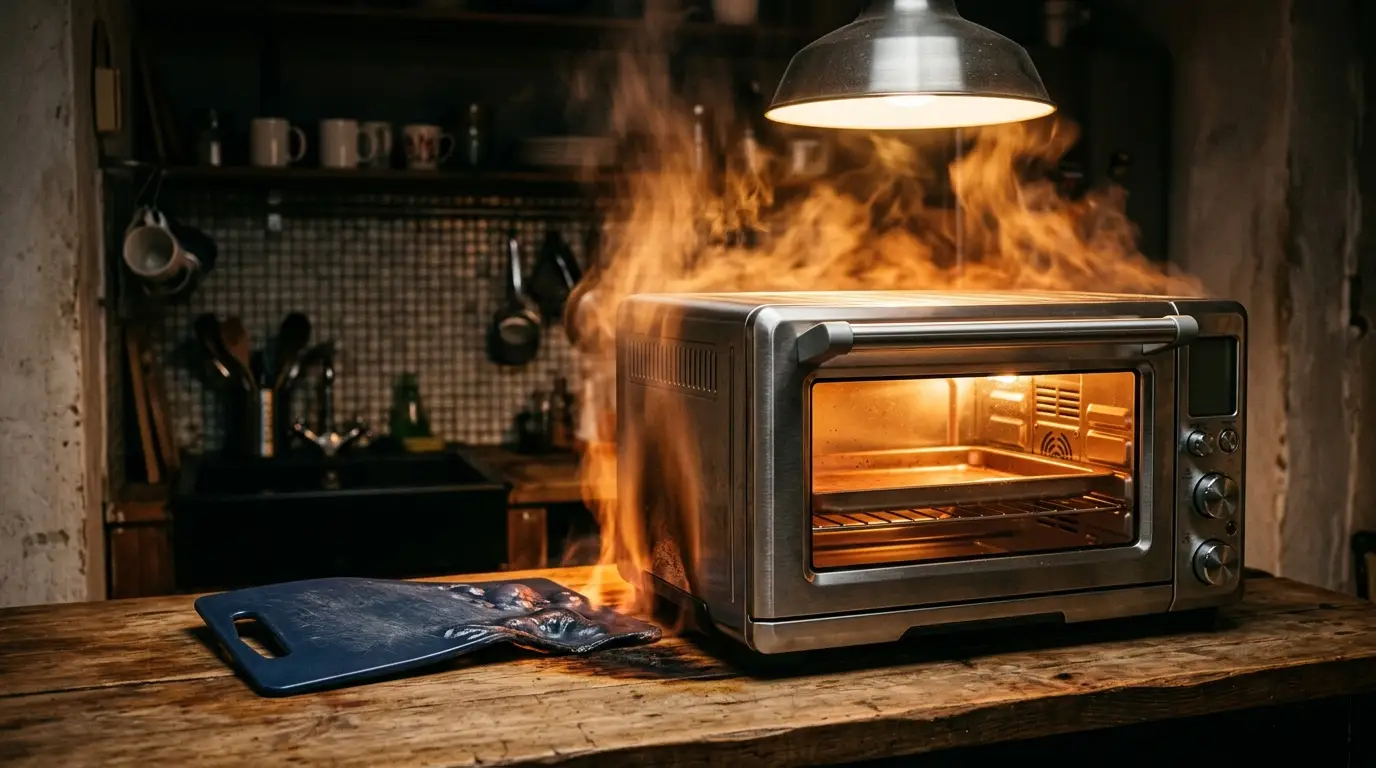
- Exterior Heat and Safety Hazards: The metal casing of a toaster oven gets extremely hot to the touch. They require significant clearance space above and behind the unit to safely vent the heat and avoid melting nearby plastics, damaging under-cabinet lighting, or causing a kitchen fire.
3. Head-to-Head Comparison
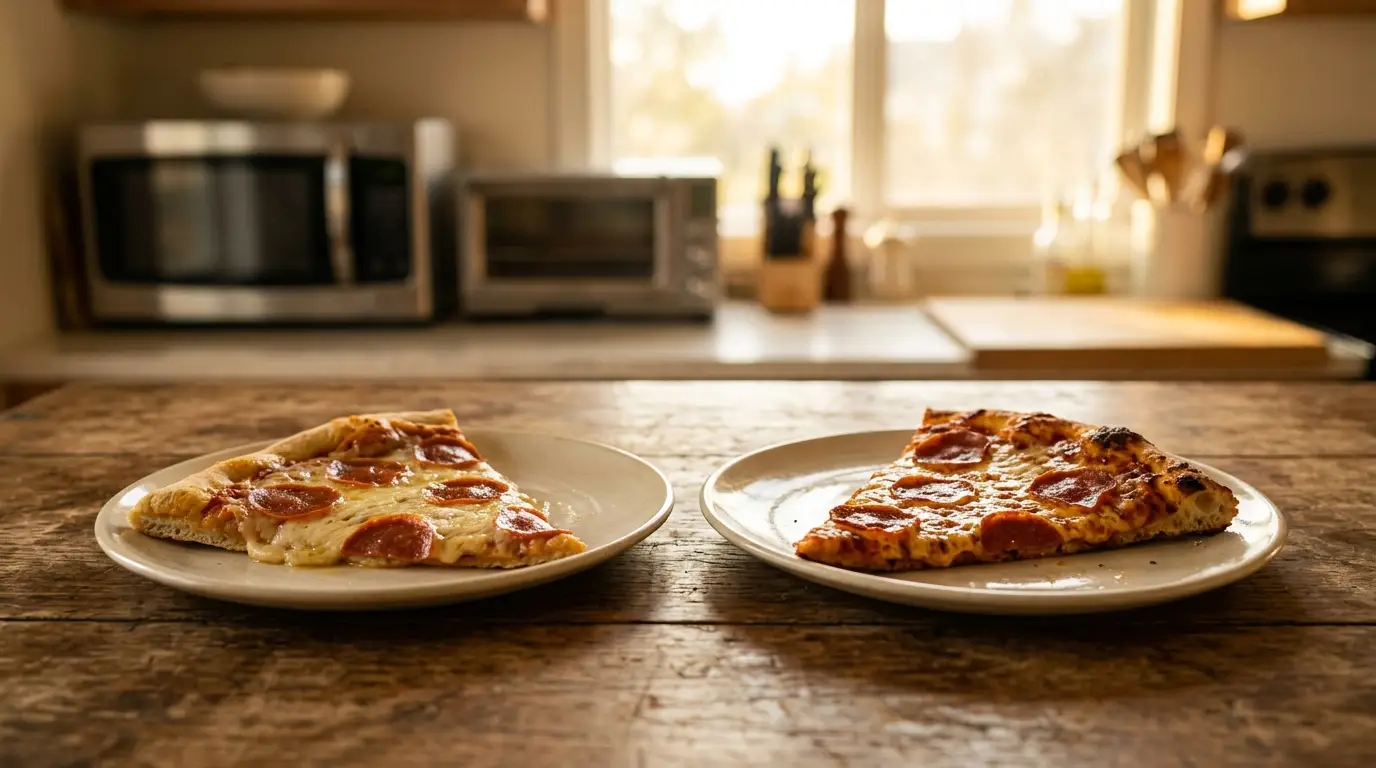
To make the best choice, consider what you actually do in the kitchen on a daily basis. Let’s look at five specific, everyday scenarios.
For Reheating Liquids & Soups
Winner: Microwave. You cannot easily or safely heat a tall mug of coffee or a deep bowl of soup in a toaster oven. The ambient heat struggles to penetrate the liquid deeply, and placing tall containers near the exposed top heating elements risks shattering the ceramic or causing dangerous spills.
For Reheating Pizza & Fried Foods
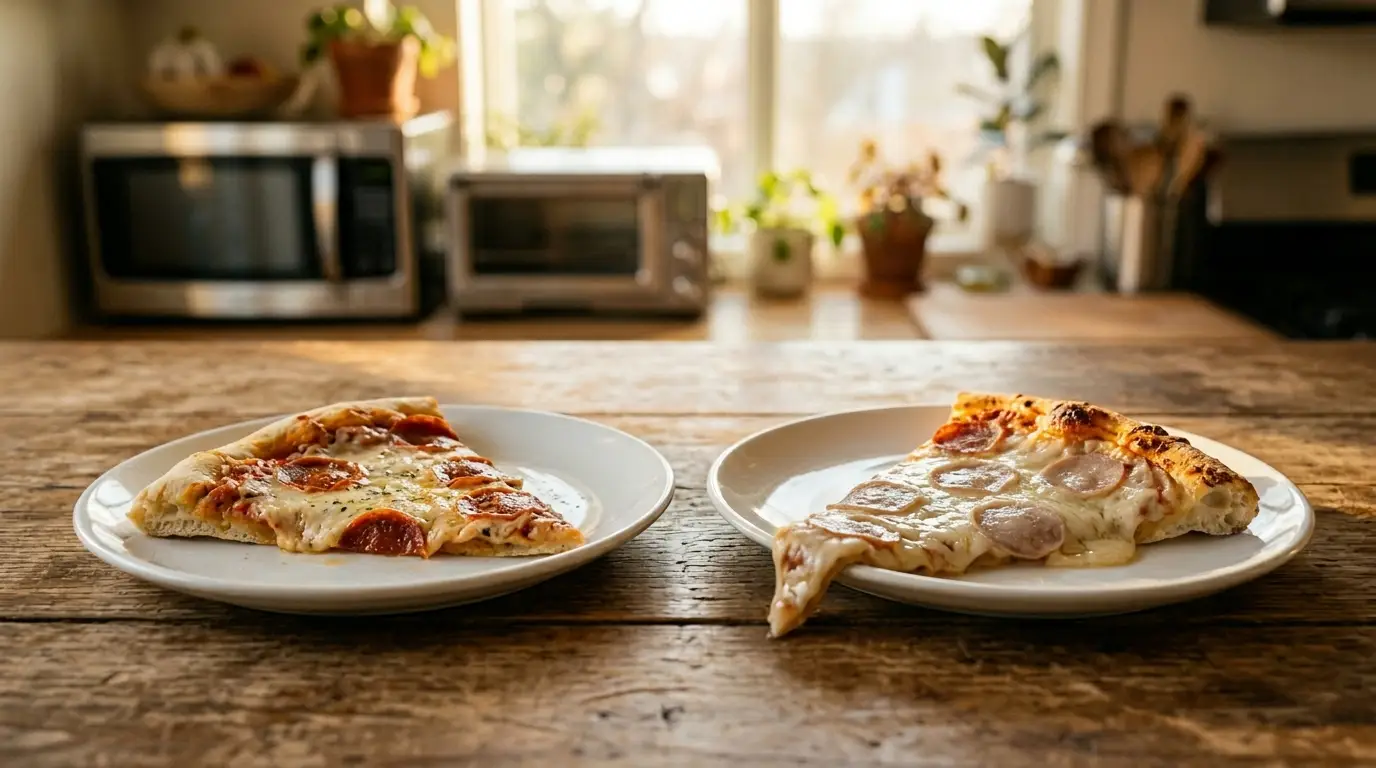
Winner: Toaster Oven. The dry, intense radiant heat will evaporate the surface moisture and restore the satisfying crunch to your meal, whereas a microwave will steam the bread, ruining the texture entirely.
For Defrosting Meat
Winner: Microwave. Modern microwaves (especially those with Inverter technology) have specialized defrost algorithms that pulse low levels of radiation to safely thaw thick cuts of meat from the inside out in just minutes. If you try to defrost a frozen steak in a toaster oven, the intense external heat will completely cook and dry out the outside of the meat while the center remains a block of solid ice.
For Smart Home Integration
Winner: Microwave. If you want advanced features like voice control via Alexa, mobile app notifications, or barcode scanning that automatically sets the cooking time for a specific frozen dinner, the technology industry is currently leaning heavily toward microwaves. Learn more in our guide to the Best Smart Microwave Ovens.
For Maintenance & Safety
Winner: Microwave. Toaster ovens catch grease, cheese drips, and bread crumbs on their hot lower heating elements, which can smoke terribly and pose a fire hazard. They require constant, tedious cleaning of the crumb tray. Microwaves simply require a quick wipe-down of the glass interior with a damp cloth.
(Though, if your microwave is ever flashing or smoking, immediately unplug it and read our Microwave Sparking Inside: Causes and Fix guide to check the waveguide cover).
4. The Ultimate Solution: Why Not Both?
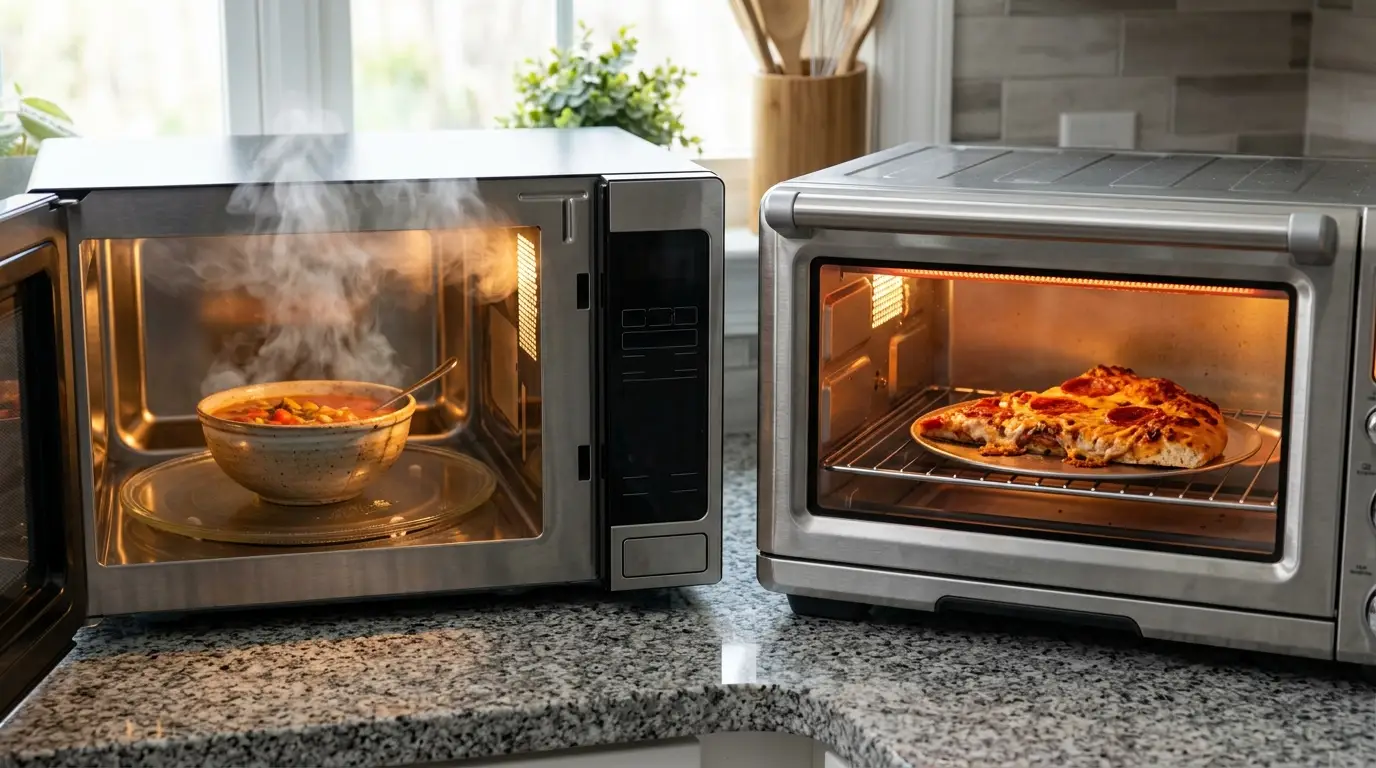
If you absolutely refuse to compromise on speed but still desperately want the ability to bake, roast, and crisp your food, you do not necessarily have to sacrifice your counter space to buy two separate appliances.
The appliance industry has largely solved the “microwave vs toaster oven” debate by seamlessly combining them into one unit. By investing in a high-quality Convection Microwave or an Air Fryer Combo unit, you get the unparalleled speed of internal microwave radiation paired seamlessly with the crisping power of a built-in convection heating element.
The Best of Both Worlds
If this sounds like the perfect middle ground for your kitchen layout, check out our comprehensive reviews to find a single appliance that truly does it all.
Read: Best Microwave Air Fryer Combos of 2026FAQ: Microwave vs. Toaster Oven
2026 Guide: Speed, Crispiness, and Energy Efficiency
The Bottom Line: Choose a microwave for speed and liquid reheating; choose a toaster oven for browning and crisping.
Editorial Note & Recommended Citations
This article was developed using AI, drawing on a comprehensive knowledge base of appliance mechanics, thermodynamics, and SEO best practices tailored specifically for The Bridge Finds. While no live web scraping was necessary, all technical information is rooted in established appliance science.
To maximize your SEO and build reader trust, we highly recommend linking out to high-authority domains. Here are a few authoritative sources you can naturally weave into the article to support its claims:
-
Energy Efficiency:
ENERGY STAR (U.S. Environmental Protection Agency)
Suggested context: Mention that microwaves use significantly less energy than conventional ovens and are generally more efficient than toaster ovens for short reheating tasks by targeting water molecules directly. -
Cooking Mechanisms (Radiation vs. Convection):
USDA Food Safety and Inspection Service (FSIS)
Suggested context: Cite how microwave energy causes water molecules to vibrate and create friction, contrasting it with the external heating elements of toaster ovens. -
Appliance Safety & Maintenance:
National Fire Protection Association (NFPA)
Suggested context: Use this to back up safety guidelines regarding proper clearance space for high-heat toaster ovens and the importance of cleaning grease from heating elements.

