
Can You Vacuum Seal Cheese? Storage Times Explained (2026 Guide)
Artisan cheese is an expensive culinary luxury. Whether you just brought home an imported, perfectly aged wheel of Parmigiano-Reggiano from a specialty Italian deli, or you bought a massive, 2-pound block of sharp cheddar from a warehouse club to meal prep for the month, the stressful race against mold begins the exact moment you open the plastic packaging.
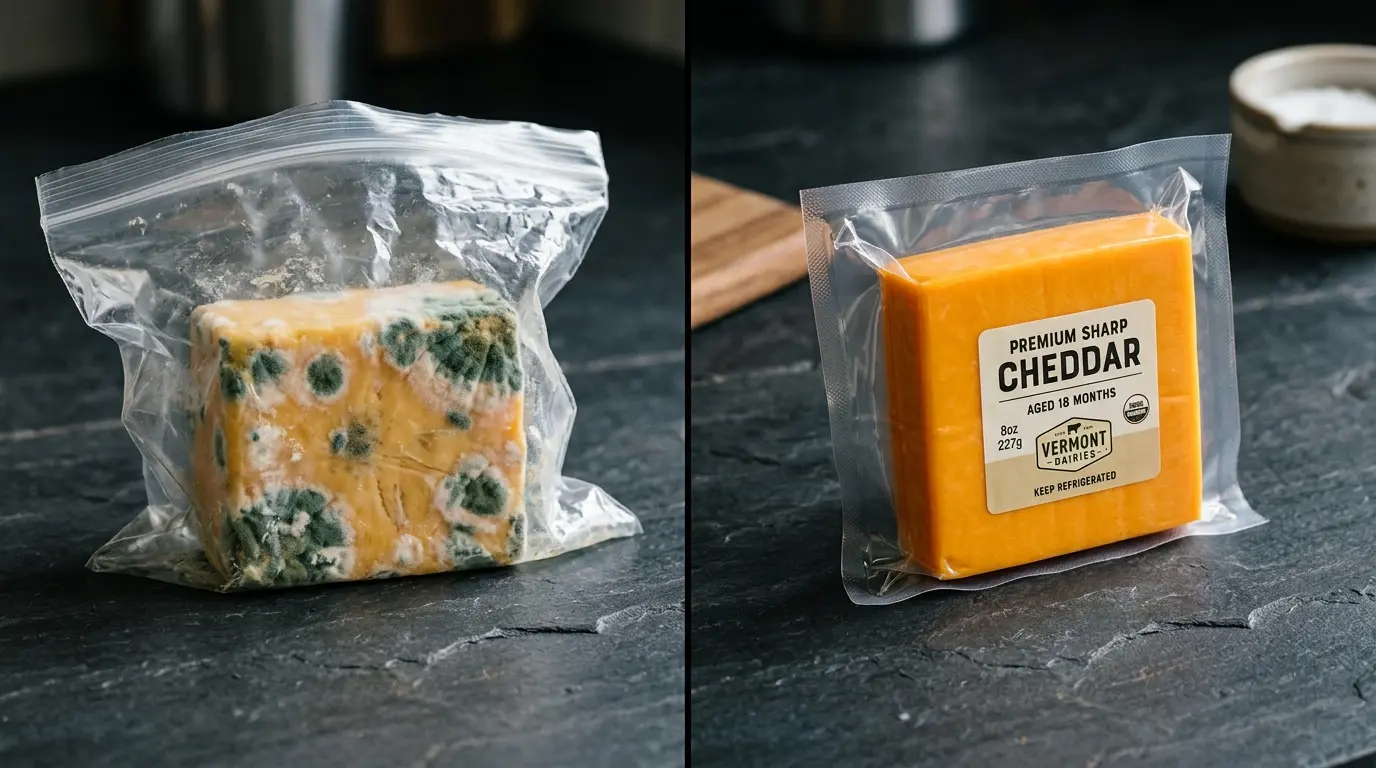
In a standard plastic zipper bag or loosely wrapped in cling film, a block of cheddar might last two to three weeks in the high-humidity crisper drawer before white, green, and fuzzy blue spots inevitably start to appear. This frustrating food waste leads many home chefs to ask the ultimate preservation question: Can you vacuum seal cheese to definitively stop the mold?
The short answer is yes, but with incredibly strict biological exceptions. Vacuum sealing removes the ambient oxygen that mold requires to grow, drastically extending the shelf life of your dairy. However, applying this aggressive preservation method to the wrong type of cheese will not only ruin its flavor profile but can actively turn it into a dangerous breeding ground for harmful, toxic bacteria. In this guide, we break down exactly how to vacuum seal cheese safely. For more comprehensive food preservation rules, explore our master directory: Vacuum Sealing Excellence: The Definitive Guide for 2026.
The Quick Answer
Yes, you can flawlessly vacuum seal hard and semi-hard cheeses (like Cheddar, Parmesan, Gouda, and Swiss), extending their refrigerator shelf life from a few weeks to 4 to 8 months by completely depriving mold of the oxygen it needs to grow. However, you must never vacuum seal soft, unpasteurized, or blue-veined cheeses (like Brie, Camembert, or Gorgonzola). These cheeses require oxygen to breathe; sealing them encourages the rapid growth of deadly anaerobic bacteria like Listeria or Botulism.
I. Hard Cheeses (The Perfect Match)
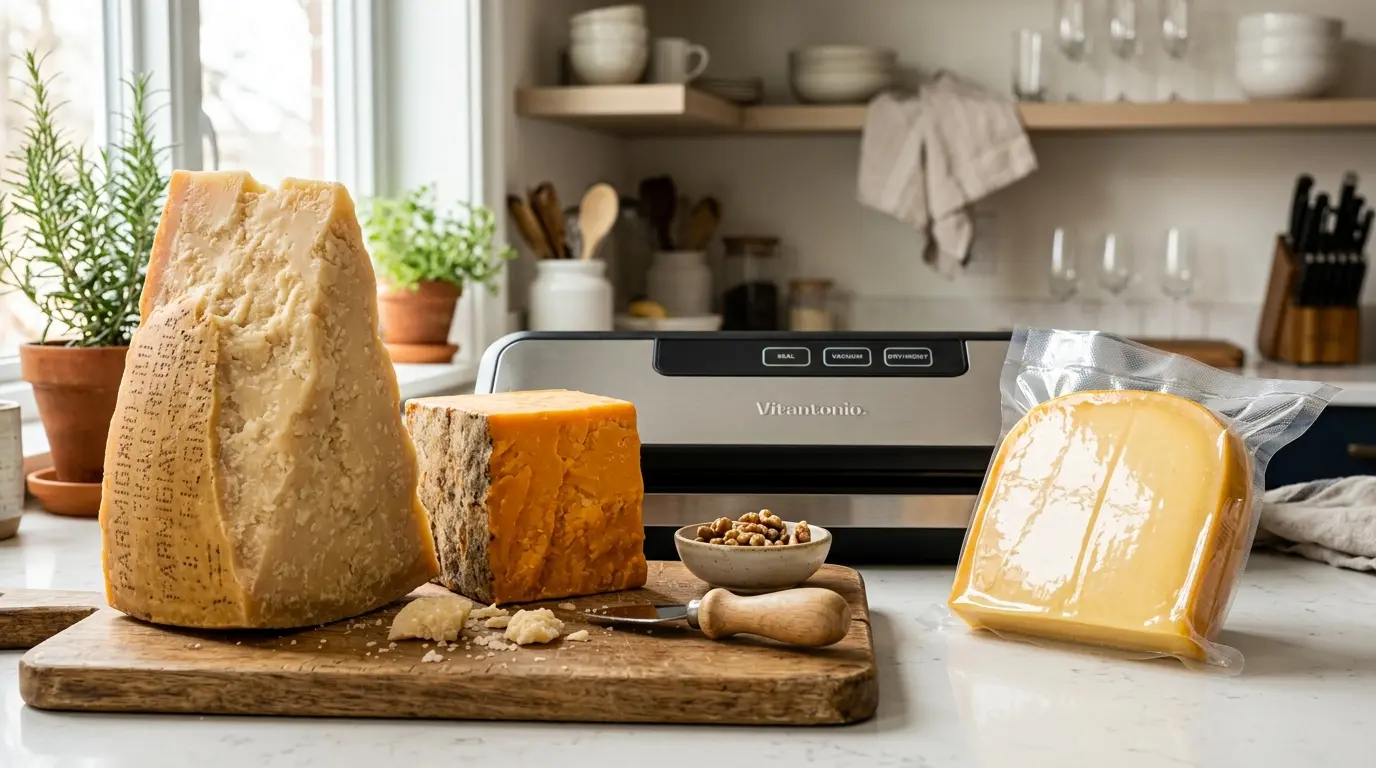
Hard and semi-hard cheeses are the undisputed champions of vacuum sealing. Because they have undergone an extensive aging process, they have a naturally low moisture content. This makes them highly stable and structurally robust when aggressively deprived of oxygen.
Sharp Cheddar, Parmesan, Pecorino Romano, Asiago, Gouda, Swiss, Gruyère, Provolone, and rigid blocks of Monterey Jack.
Common food mold is an aerobic organism, meaning it absolutely requires ambient oxygen to survive and multiply. By using a high-quality machine to pull a tight vacuum, you completely eliminate the air supply, starving the mold and stopping its growth dead in its tracks.
Crucial Preparation: Hand Hygiene
Before you ever touch the block of cheese, you must wash your hands thoroughly with antibacterial soap or wear food-safe nitrile gloves.
Why? The natural oils, salts, and microscopic bacteria living on your fingertips will immediately transfer to the surface of the cheese. Once those foreign bacteria are sealed tightly against the cheese in a high-pressure plastic bag, they can fester and cause the cheese to spoil prematurely from the outside in. (If you are looking for the best hardware to seal your dairy, read our FoodSaver vs Vacuum Chamber Sealer guide to find the right machine for your kitchen).
II. Soft Cheeses (The Biological Danger Zone)
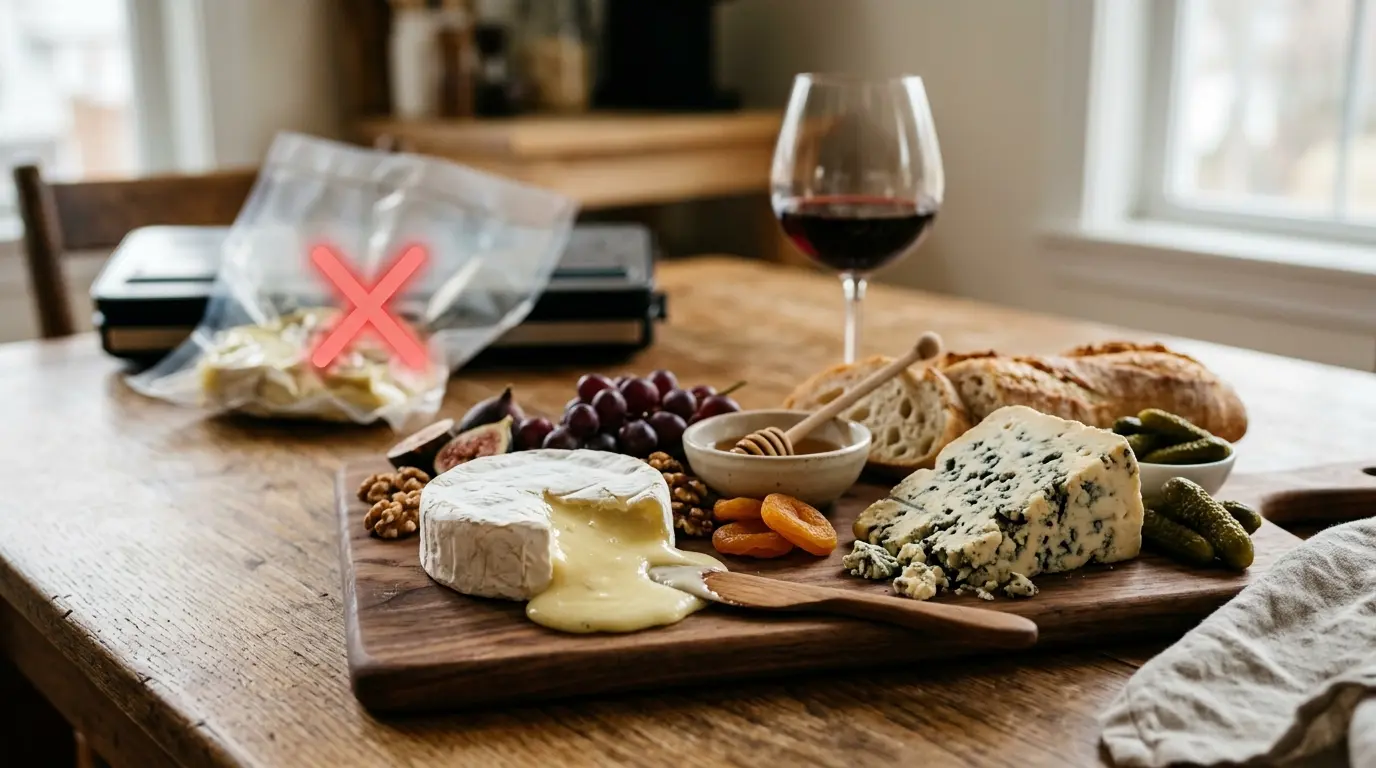
While vacuum sealing is an absolute miracle for cheddar, it is a literal death sentence for a wheel of Brie. You should never vacuum seal soft, highly moist, unpasteurized, or blue-veined artisan cheeses.
The Culprits to Avoid
Brie, Camembert, Blue Cheese, Gorgonzola, Roquefort, fresh Ricotta, Cottage Cheese, Feta in brine, and unpasteurized soft goat cheeses (Chèvre).
The Danger: Anaerobic Bacteria
Soft cheeses have a very high internal moisture content and rely on specific, healthy molds (like the delicate white Penicillium camemberti rind on Brie or the blue veins of Penicillium roqueforti in Gorgonzola) to physically breathe and maintain their complex flavor.
Vacuum sealing suffocates these beneficial, oxygen-dependent molds. Worse, the combination of high moisture and a zero-oxygen environment creates a perfect incubator for anaerobic bacteria.
Without oxygen, deadly pathogens such as Listeria or the spores that cause botulism can rapidly multiply inside the bag. We cover this exact, terrifying biological hazard extensively in our overarching safety guide: Foods You Should Never Vacuum Seal.
The Exception: Processed Blocks
Commercially produced, highly pasteurized cream cheese blocks or firm, low-moisture mozzarella blocks can be safely vacuum sealed because the pasteurization process has killed the dangerous bacteria. However, you must use a gentle “Pulse” setting, as these soft cheeses will easily crush and deform under the intense pressure of a standard suction machine.
III. Storage Times: A Quick Reference Guide
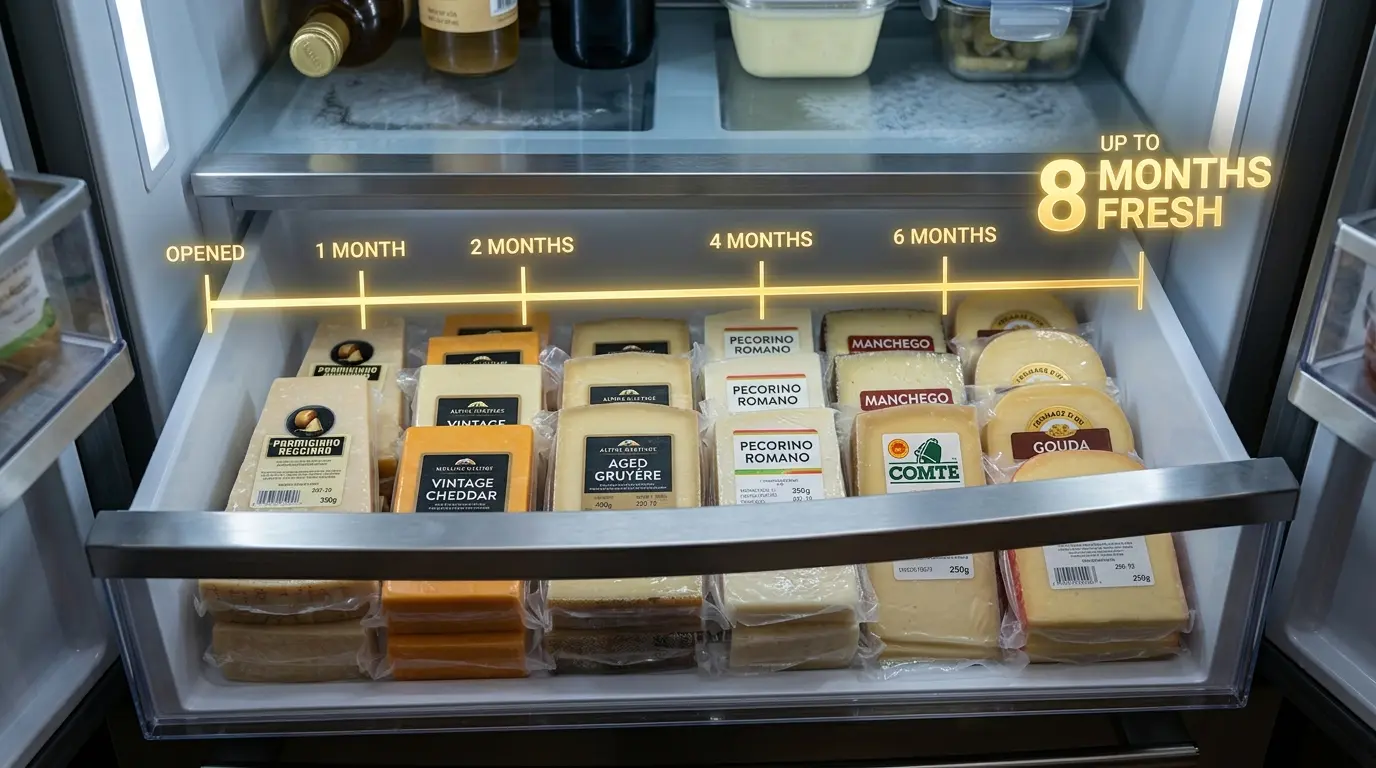
By upgrading your packaging from a loose plastic bag to a heavy-duty polymer, you are fundamentally changing the lifespan of your dairy. As we established in our deep dive on Vacuum Sealer Bags vs Freezer Bags, removing the air via a nylon-barrier bag is the only way to achieve these extended timelines.
| Cheese Type / Storage Location | Standard Ziploc / Cling Wrap | Vacuum Sealed |
|---|---|---|
| Hard Cheese (Refrigerator) | 2 to 3 Weeks | 4 to 8 Months |
| Hard Cheese (Deep Freezer) | 6 Months (Prone to freezer burn) | 2 to 3 Years |
| Soft / Blue Cheese (Refrigerator) | 1 to 2 Weeks (Wrapped in parchment) | DO NOT SEAL |
IV. Pro Tips for Vacuum Sealing Cheese
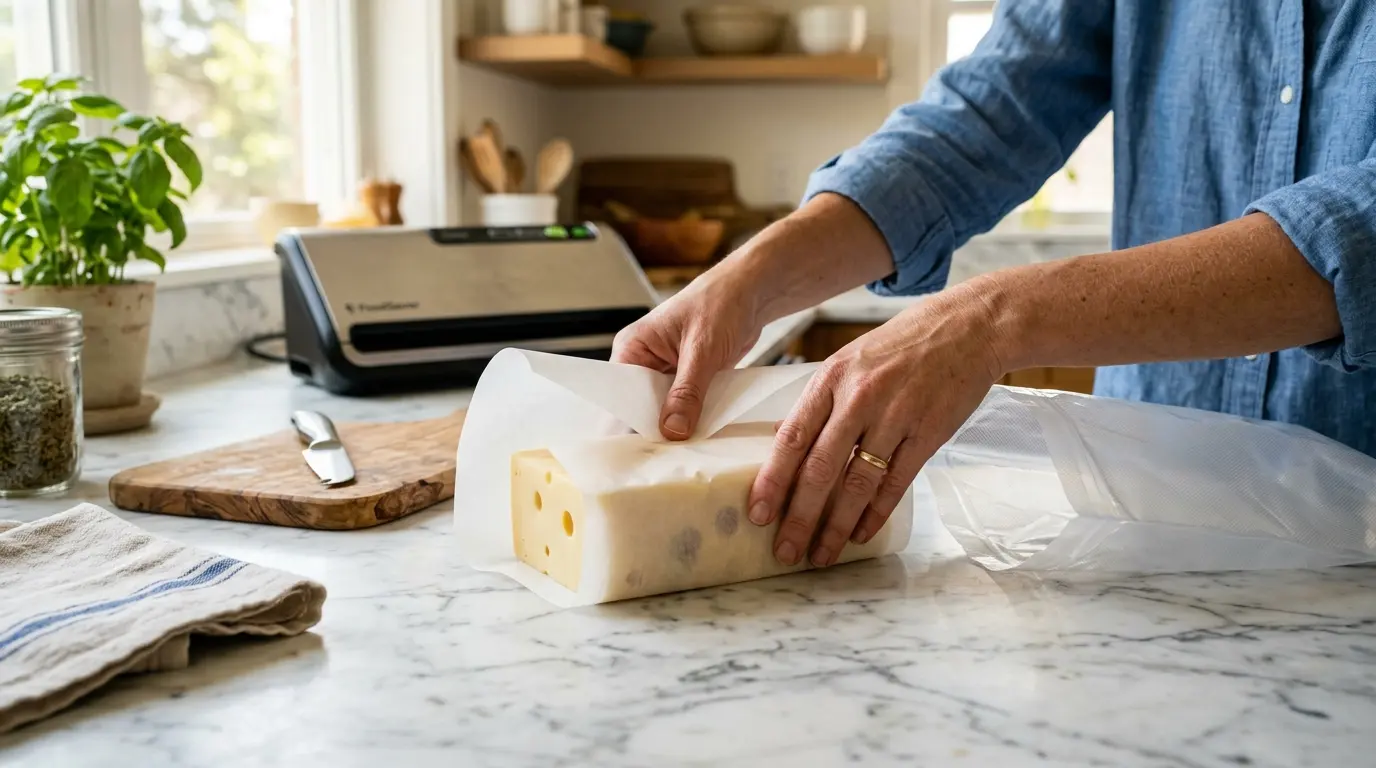
To get the absolute best results, preserve the texture of the cheese, and avoid wasting expensive plastic vacuum bags every time you want a snack, follow these expert butcher techniques:
1. The Oversized Bag Hack
Cutting a new bag every time you want a slice of cheddar is incredibly expensive. Instead, cut your initial vacuum sealer bag from the roll about 3 to 4 inches longer than you actually need to fit the cheese block.
Every time you want a slice of cheese, simply use scissors to cut the bag open right below the hot seal line. Take your slice, wipe the inside of the bag opening dry with a paper towel, and vacuum seal the exact same bag again. You can re-use one long bag dozens of times as it slowly gets shorter!
2. The Parchment Wrap (Stop the Sweat)
Hard cheese contains high amounts of natural butterfat oils. Under the intense, crushing pressure of a vacuum seal, some of these oils can be physically squeezed out of the dairy, causing the cheese to “sweat” against the plastic. When you open it, the cheese feels slimy and unappetizing.
The Fix: Wrap the block of cheese in a single layer of unbleached parchment paper or wax paper before placing it into the vacuum bag. The parchment wicks away the expelled oils, keeping the surface of the cheese perfectly dry and pristine.
3. Check the Seal Monthly
Even hard cheeses emit microscopic amounts of natural gases over time as they age. Check your stored bags every month. If the bag starts to loosen, lose its tight grip, or inflate slightly like a balloon, the seal has failed. Simply cut it open, wipe the cheese dry, and reseal it in a fresh bag to reset the clock.
V. What Happens if You Freeze Vacuum Sealed Cheese?
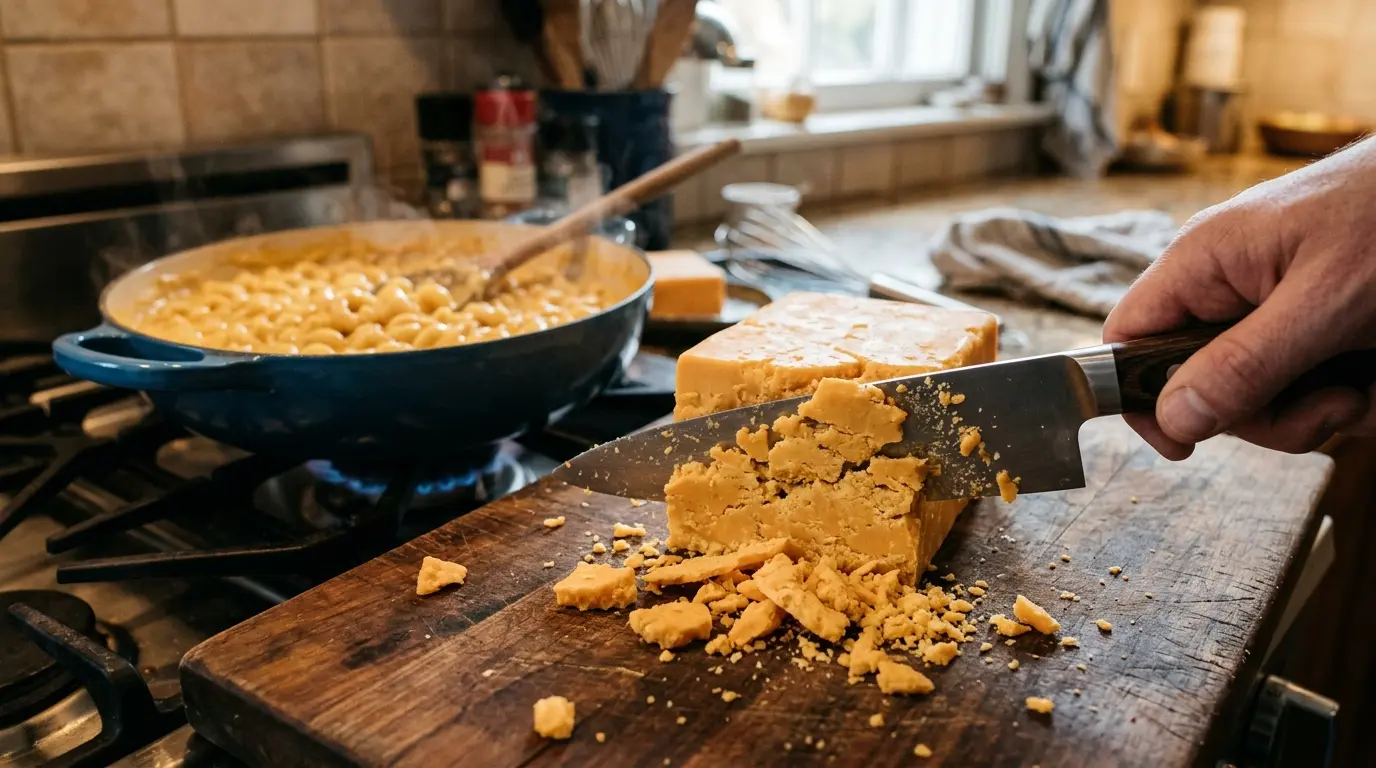
You can absolutely freeze vacuum-sealed hard cheeses to extend their life for multiple years, but you must do so with a very clear, predetermined culinary plan.
Freezing fundamentally alters the chemical structure of dairy. The residual moisture inside the cheese turns into physical ice crystals. These expanding ice crystals shatter the delicate casein protein matrix holding the cheese together. When the cheese thaws and those crystals melt back into liquid, they leave microscopic, empty pockets behind. This permanently causes the cheese to become extremely crumbly, mealy, and dry.
When to Freeze:
If you are planning to melt the cheese later for baked macaroni and cheese, casseroles, broccoli cheddar soup, or a fondue pot, freezing is perfectly fine. The intense heat of cooking will melt the fats and restore the smooth, liquid texture, making the crumbling completely irrelevant.
When NOT to Freeze:
If you are planning to slice the cheese raw for a luxury charcuterie board, a fine wine pairing, or a deli sandwich, you must keep it in the refrigerator. The brittle, crumbly texture of a thawed block will completely ruin the presentation and the mouthfeel. (If you want to know more about freezing delicate proteins, see our guide on How Long Does Vacuum Sealed Meat Last in the Freezer?).
Explore the Vacuum Sealing Hub
Don’t stop here! Dive deeper into the science of preservation, explore machine comparisons, and read our latest commercial hardware reviews for 2026.
FAQ: Vacuum Sealing Master Guide
2026 Edition: Dairy, Liquids, Safety & Culinary Science
Pro Tip: Use the ‘Freeze-then-Seal’ method for soft cheeses you plan to cook with—it preserves the shape perfectly!
Vacuum Sealing Excellence: The Definitive Guide (2026)
