
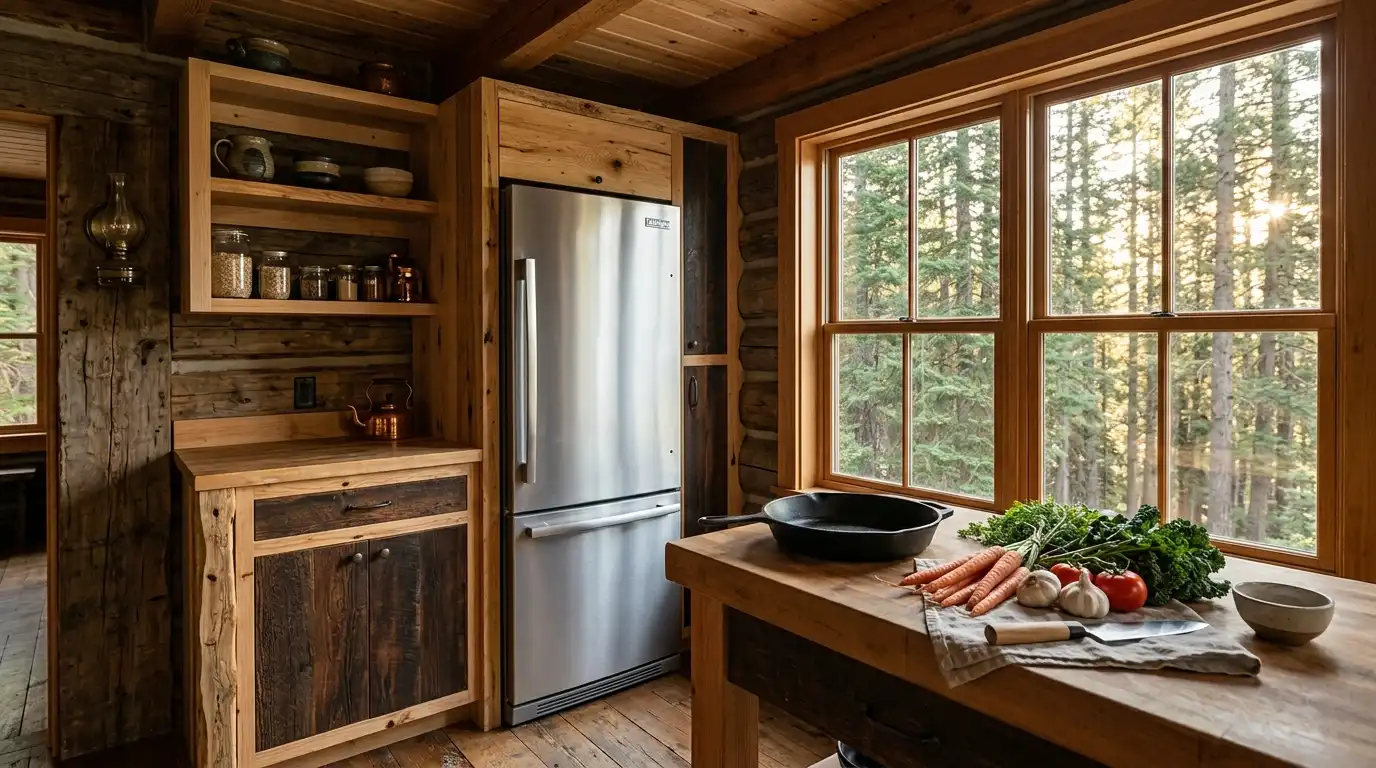
The Ultimate Guide to the Best Propane Fridge for Off-Grid Cabins (2026)
You know that exact moment: you’ve finally escaped the city and driven up to your beautiful, quiet off-grid cabin for the weekend, only to be constantly annoyed by the loud, droning hum of a gas generator or a cheap electrical compressor fridge violently kicking on every 20 minutes. Or worse, you are relying entirely on coolers, dealing with soggy food, floating deli meats, and constantly driving back into town to buy expensive bags of ice. It completely ruins the peace, quiet, and independence you went out there to find.
Honestly, finding the best propane fridge for off-grid cabins is the ultimate game-changer for remote living in 2026. What most people don’t realize is that these specialized refrigerators use “absorption cooling” technology. Because they do not have a traditional mechanical compressor or any moving parts, they operate in absolute, 100% dead silence while running highly efficiently on standard LPG propane. If you’ve been living out of a cooler or draining your expensive solar batteries dry just to keep your milk cold, we need to fix your kitchen immediately. Let’s find the perfect silent, gas-powered cooler for your remote sanctuary.
📊 Quick Comparison: Best Off-Grid Propane Fridges
Choosing the right fridge is entirely about measuring your cabin space and understanding your food volume needs. Here is a quick breakdown to help you find the exact size you need for your off-grid setup.
| Feature | SMETA 13.4 cu.ft (Full Size) | Smad 6.1 cu.ft (Mid-Size) | SMETA 3.5 cu.ft (Compact) |
|---|---|---|---|
| Best For | Full-time cabin living, large families, hunters | Weekend cabins, couples, hunting blinds | Tiny homes, camper vans, tight off-grid spaces |
| Power Sources | 2-Way (LPG Gas / 110V AC) | 2-Way (LPG Gas / 110V AC) | 3-Way (LPG / 110V AC / 12V DC) |
| Cooling Tech | Absorption (100% Silent) | Absorption (100% Silent) | Absorption (100% Silent) |
| Freezer Setup | Top Mount (3.3 cu.ft) | Top Mount (1.5 cu.ft) | Internal Compartment (0.5 cu.ft) |
| Dimensions | 30.6″D x 27.1″W x 69.3″H | 23.6″D x 26.0″W x 57.5″H | 24.0″D x 21.0″W x 33.0″H |
I. The Surge: Why Standard Electric Fridges Fail Off-Grid
In real-world use, buying a standard residential electric fridge from a big-box store and putting it in an off-grid cabin is a massive drain on resources. To understand why propane is superior for remote living, you have to understand electrical math.
The Compressor Surge
Standard electrical fridges use a mechanical compressor. When that motor kicks on, it requires a massive “starting surge” of power—often spiking to 1,500 or 2,000 watts for a split second. To support this, you must buy a massive, expensive pure sine wave solar inverter and a huge lithium battery bank. If you don’t, the fridge will trip your inverter and shut down your entire cabin’s electrical grid.
The Propane Solution
Buying a propane fridge completely eliminates this electrical burden. By using heat (from a tiny, highly efficient pilot flame) to drive a chemical cooling process, you bypass electricity entirely. You save your precious, limited solar power for lights, charging laptops, and running water pumps. If you are still debating whether to build a massive solar setup or stick to gas, read our in-depth thermodynamic breakdown: 12V DC Compressor Fridge vs Propane Fridge for Off-Grid Living.

1. SMETA Propane Refrigerator with Freezer (13.4 cu.ft)
If you live in your cabin full-time, frequently host large families, or need to store hunted game, you simply cannot compromise on food storage volume. The SMETA 13.4 cu.ft model is the undisputed heavyweight champion, giving you the exact feel of a traditional, modern home kitchen without the crippling electrical draw.
Why it’s a top pick:
- Massive Capacity: With 10.1 cu.ft of fresh food space and a massive 3.3 cu.ft separate top freezer, you can safely store weeks’ worth of groceries, cutting down on two-hour drives to the nearest town.
- True Dual-Power (2-Way): It operates seamlessly on standard 110V AC (if you have the generator running during the day) and effortlessly switches to LPG propane at night, consuming a highly efficient 1.6 lbs of gas per day.
- Completely Silent Architecture: It uses ammonia-based R-717 refrigerant in a fan-less, compressor-less absorption system. There are no moving parts. You will literally hear nothing while it runs.
This is the one I’d personally choose for a permanent, four-season off-grid homestead. It features 5 adjustable shelves, a reliable piezoelectric ignition, and a reversible door to fit any awkward cabin kitchen layout. The only downside is the sheer physical weight (230 lbs), so you will definitely need a heavy-duty dolly and help getting it onto your cabin porch.
👉 Best for: Large families, hunters storing meat, and full-time off-grid homesteaders.
 Check Price & Availability on Amazon

2. Smad 6.1 Cu.Ft Off Grid Propane Refrigerator
You don’t have to buy a giant, expensive appliance if you only visit your cabin or hunting blind on weekends. The Smad 6.1 is the ultimate “Goldilocks” fridge—not too big, not too small. It perfectly balances the luxury of a separate freezer door with a compact, space-saving footprint.
Why it’s a top pick:
- Perfect Mid-Size Footprint: At exactly 57.5 inches tall and 23.6 inches deep, it easily fits under low, sloping A-frame cabin ceilings or into tighter galley kitchens without visually dominating the entire room.
- Advanced Safety Mechanics: Features a windproof ignition and a highly advanced, leak-tested thermocouple system. If the propane flame ever blows out, the gas shuts off instantly, ensuring your absolute peace of mind while sleeping nearby.
- Double Door Efficiency: Unlike tiny single-door dorm units, having a completely separate 1.5 cu.ft freezer door means your frozen goods and ice packs won’t partially thaw every single time you open the main compartment to grab a cold drink.
While many 12V solar fridges of this exact size cost an absolute fortune in required battery upgrades, this 2-way (110V/LPG) fridge runs efficiently and silently on gas you likely already have on-site. This is the one I’d personally choose for a weekend hunting cabin, a cozy couple’s retreat, or a remote lake house.
👉 Best for: Couples, weekend getaways, hunting cabins, and medium-sized off-grid setups.

3. SMETA 3.5 Cu.Ft 3-Way Compact Propane Refrigerator
If you are dealing with a truly tiny space—like a 10×10 micro-cabin, an off-grid shed conversion, a vintage Airstream, or even a commercial semi-truck—this 3-Way SMETA model is an absolute masterclass in extreme versatility.
Why it’s a top pick:
- 3-Way Power Functionality: The ultimate flexibility. You can run it on 110V AC at home to pre-cool it, plug it into your vehicle’s 12V DC cigarette lighter to maintain temps while driving, and immediately switch to LPG gas the moment you park off-grid.
- Anti-Shake Design: The internal absorption tubes are heavily reinforced and engineered to withstand aggressive bumps, potholes, and vibrations, making it incredibly durable for harsh mobile environments.
- Compact Integration: At exactly 33 inches high, it fits perfectly under standard kitchen countertops without requiring custom carpentry cutouts.
If I had to choose a fridge for a Tiny Home on wheels or a heavy overlanding rig, this is the one. The only downside is that the freezer is a tiny, internal 0.5 cu.ft uninsulated compartment. It is meant for a couple of ice trays or frozen TV meals, not for long-term raw meat storage.
💡 Related Vanlife Reading: If you are building out a camper van with a massive lithium battery bank and strictly want to use your solar panels instead of running gas lines inside the vehicle, read our alternative guide on the Best 12V Compressor Fridge for Vanlife to explore high-efficiency electric options. Or, compare layout styles in our Chest Fridge vs Upright Fridge for Vanlife breakdown.
👉 Best for: Tiny homes, RVs, camper vans, semi-trucks, and extreme space-saving needs.
The 3-Minute Technical Buying Guide
Installing a propane fridge is not like plugging in a standard appliance. The physics are entirely different. When narrowing down your choice for a propane fridge, you must understand these three critical thermodynamic factors:
1. Understand Absorption Tech
Propane fridges rely on the Einstein-Szilard cycle. Heat boils an ammonia-water solution, which rises, cools, and extracts heat from the interior. Because there is no high-speed pump, this process takes much longer to reach the target cold temperature than electric compressor fridges. Rule of thumb: Always turn the fridge on (or light the pilot) 12 to 24 hours before putting warm groceries inside to allow the chemical cycle to establish.
2. Ventilation is Mandatory
Because these units literally burn liquid propane to create the heat for the cooling process, they produce exhaust gases. They require proper, unobstructed airflow. You must follow the manufacturer’s clearance guidelines for the back and top of the fridge (often requiring an exterior wall vent). Furthermore, you must ensure your cabin has proper, battery-operated Carbon Monoxide (CO) detectors installed.
3. Leveling is Crucial
This is the #1 reason off-grid fridges fail. Absorption fridges rely entirely on gravity for the ammonia/water mixture to flow smoothly through the complex rear cooling tubes. If the fridge is not perfectly level, the fluids will pool, crystallize, and the fridge will stop cooling completely, causing permanent damage. Always keep a high-quality bubble level handy during installation!
Frequently Asked Questions
Are propane refrigerators safe to use indoors?
Yes, modern 2026 propane refrigerators are highly regulated and exceptionally safe for indoor use. Models like the Smad and SMETA feature advanced safety shut-off valves (thermocouples) that instantly stop the gas flow if the flame ever blows out. However, proper rear ventilation and a functioning carbon monoxide detector in the same room are always required by building codes.
How much propane does a fridge actually use?
It varies slightly by the size of the unit and the ambient temperature of your cabin, but generally, they are extremely efficient. A full-size 13.4 cu.ft fridge usually consumes about 1.5 to 1.8 lbs of propane per day. This means a standard 20 lb BBQ propane tank can run a large fridge for nearly two weeks, and a mid-size fridge for almost a full month on a single fill.
⚠️ Why is my propane fridge not getting cold enough?
The two most common reasons are entirely installation-based. First, the fridge is not perfectly level, preventing the internal ammonia fluids from flowing down the pipes. Second, the ambient temperature in the cabin is too hot and the fridge lacks proper rear ventilation to expel the heat it generates. Pull it two inches away from the wall and check it with a level.

