
Mason Jars vs Reusable Silicone Bags for Vacuum Sealing (2026 Guide)
As global grocery prices continue to climb and environmental awareness reaches an absolute peak in 2026, the modern home kitchen is undergoing a massive, fundamental shift. Home chefs are actively moving away from the “throwaway culture” of single-use plastics, seeking sustainable, zero-waste preservation methods that don’t compromise on food quality.
Vacuum sealing remains the undisputed gold standard for extending the shelf life of groceries by up to 500%, but relying on continuously buying and throwing away disposable plastic rolls feels deeply counterintuitive to a sustainable lifestyle. This friction has sparked a fierce, ongoing debate in the zero-waste community regarding the absolute best reusable vessels for oxygen-free storage: Glass Mason Jars vs. Reusable Silicone Bags.
Both options allow you to pull a tight, reliable vacuum and reuse the container hundreds of times, completely eliminating the need for throwaway plastic. However, they represent two fundamentally different mechanical approaches to food storage—rigid versus flexible. In this comprehensive breakdown, we aggressively compare the hygiene, space efficiency, and thermal limits of both materials to help you build the ultimate eco-friendly kitchen.
The Quick Answer
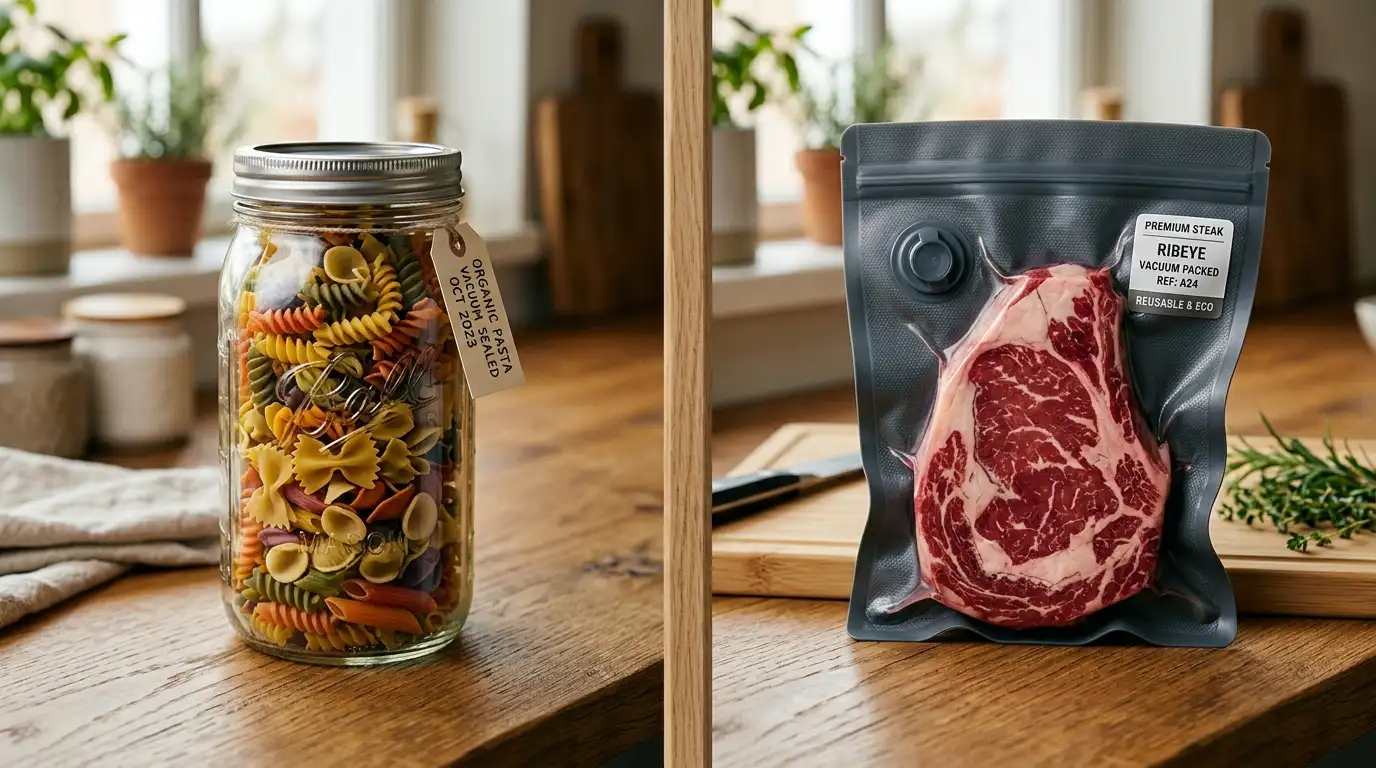
Mason Jars are the ultimate choice for dry pantry goods, highly odorous foods, and delicate produce; they are 100% impermeable to oxygen, cannot be stained, and are incredibly easy to sterilize, but they are heavy and bulky. Reusable Silicone Bags are the champions of the freezer and sous vide baths; their flexible nature conforms tightly around meats to prevent freezer burn and save massive amounts of space, but they are notoriously difficult to clean properly after storing raw proteins.
For a complete look at all our sustainable storage guides, visit The Ultimate Vacuum Sealing Hub: Food Storage, Sous Vide, Mason Jars & Buying Guides (2026).
I. The Case for Mason Jars (The Indestructible Archive)
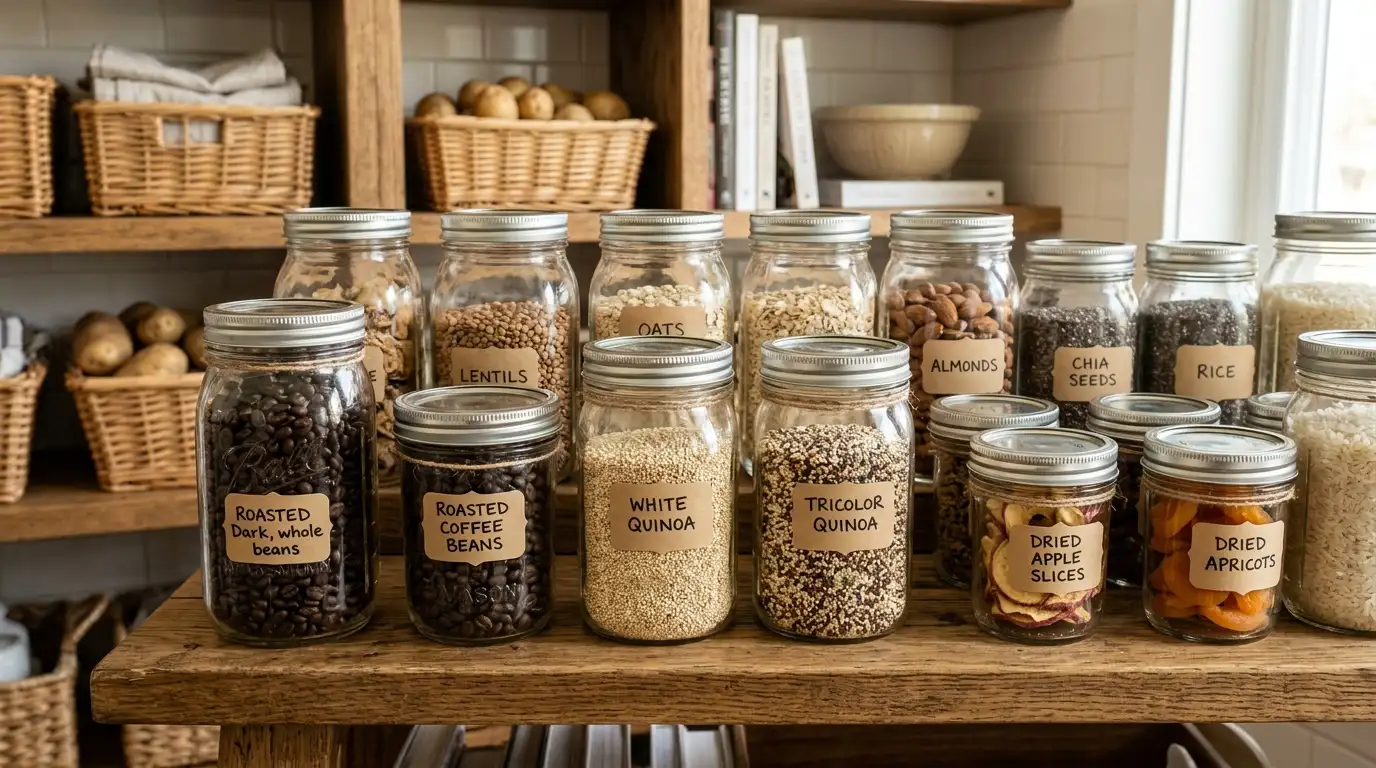
Glass has been the absolute cornerstone of long-term human food preservation for over a century, and for excellent scientific reason. Whether made from standard soda-lime or high-end borosilicate, glass is an incredibly stable, inert material.
The Pros of Glass
- Absolute Impermeability: Unlike plastics or even thick silicone, glass is 100% impermeable to oxygen at a molecular level. Once you pull a vacuum on a glass jar, absolutely zero new oxygen will ever bleed through the walls.
- Chemical Inertness: Glass will never absorb pungent odors (like garlic or curry), it will never hold onto greasy stains from tomato sauce, and it will never leach endocrine-disrupting chemicals into your food.
- Crush-Proof Protection: Because the jar is completely rigid, you can pull an incredibly powerful, high-pressure vacuum without crushing delicate, fragile foods like fresh berries, pastries, or potato chips. (We cover this specific technique in our guide on How to Vacuum Seal Delicate Fruits for Smoothies Without Crushing).
- Cost-Effective: Standard Mason jars are dirt cheap, infinitely reusable, and easily replaced at any local grocery store if dropped.
The Cons of Glass
Glass is heavy, highly breakable if dropped on a tile floor, and most importantly, it lacks spatial efficiency. A 32oz Mason jar takes up the exact same fixed amount of physical volume in your pantry or fridge, regardless of whether it is holding a full pound of coffee beans or just three leftover strawberries.
How to Seal Them Effortlessly
You no longer need to drag a massive, loud, 10-pound external suction machine out of your cabinets to seal a jar. Read our comprehensive hardware guide on the 7 Best Electric Mason Jar Vacuum Sealers in 2026: Tested & Reviewed to see how tiny, cordless, USB-rechargeable pucks have completely revolutionized daily jar sealing.
II. The Case for Reusable Silicone Bags (Flexible Efficiency)
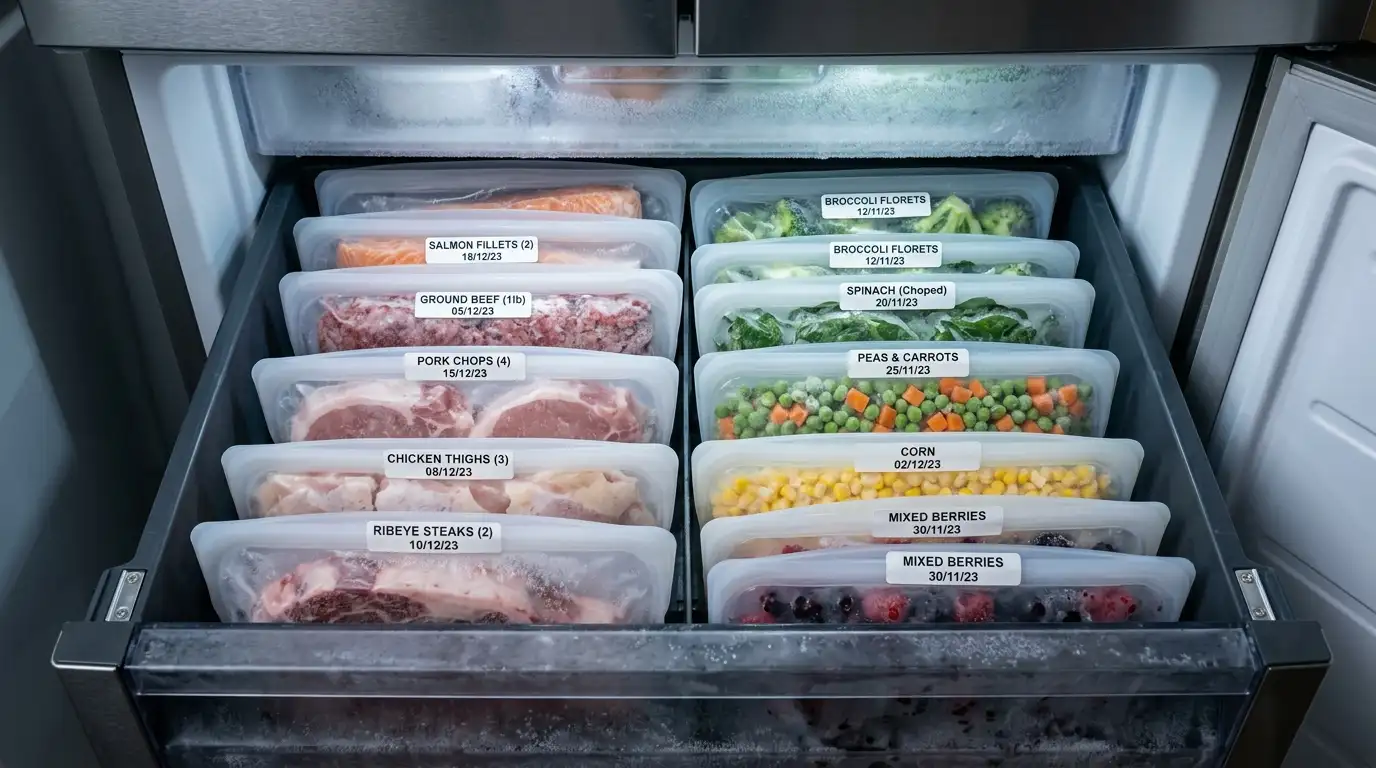
Platinum-cured, food-grade silicone bags (which often utilize proprietary handheld vacuum pumps or specialized wand systems) offer the incredible physical flexibility of traditional disposable plastic bags without the heavy environmental guilt.
The Pros of Silicone
- Ultimate Space Efficiency: This is their absolute greatest asset. As the pump pulls the vacuum, the flexible silicone physically collapses and shrinks tightly around the exact shape of the food inside. It pushes out all the “dead air” space, taking up the absolute minimal physical volume in your crowded freezer drawer.
- Unbreakable: They are lightweight, completely drop-proof, and can easily be tossed into a backpack or cooler without fear of shattering.
- Superior Marinating: The flexible nature of the bag physically forces wet liquids and marinades directly into the cellular structure of the protein under vacuum pressure, massively accelerating the flavor infusion process.
The Cons of Silicone
High-quality, thick silicone vacuum bags featuring integrated one-way air valves and heavy-duty zipper closures are highly expensive upfront, often costing $15 to $30 for a single bag. Furthermore, you are usually locked into buying that specific brand’s proprietary handheld pump to extract the air.
If you are deciding which proprietary ecosystem to invest in, we aggressively test the leading wand systems in our head-to-head hardware review: ZWILLING Fresh & Save vs Anova Precision Port: Handheld Showdown.
III. The Hygiene Debate: The Reality of Raw Meat
When comparing these two materials, the most critical, divisive line is not spatial efficiency; it is biological hygiene.
If you are vacuum sealing clean, dry pantry goods (like bulk rice, dried beans, or roasted coffee) or prepping crisp, fresh vegetables for the workweek (like the complex salads detailed in our Vacuum Sealing Salad in a Mason Jar: Shelf Life and Crispness Guide), both glass jars and silicone bags are perfectly hygienic and incredibly easy to wipe clean.
The Biofilm Problem in Silicone
However, if you are vacuum sealing raw chicken breasts, bloody steaks, or greasy, marinated pork chops for the freezer, glass wins definitively.
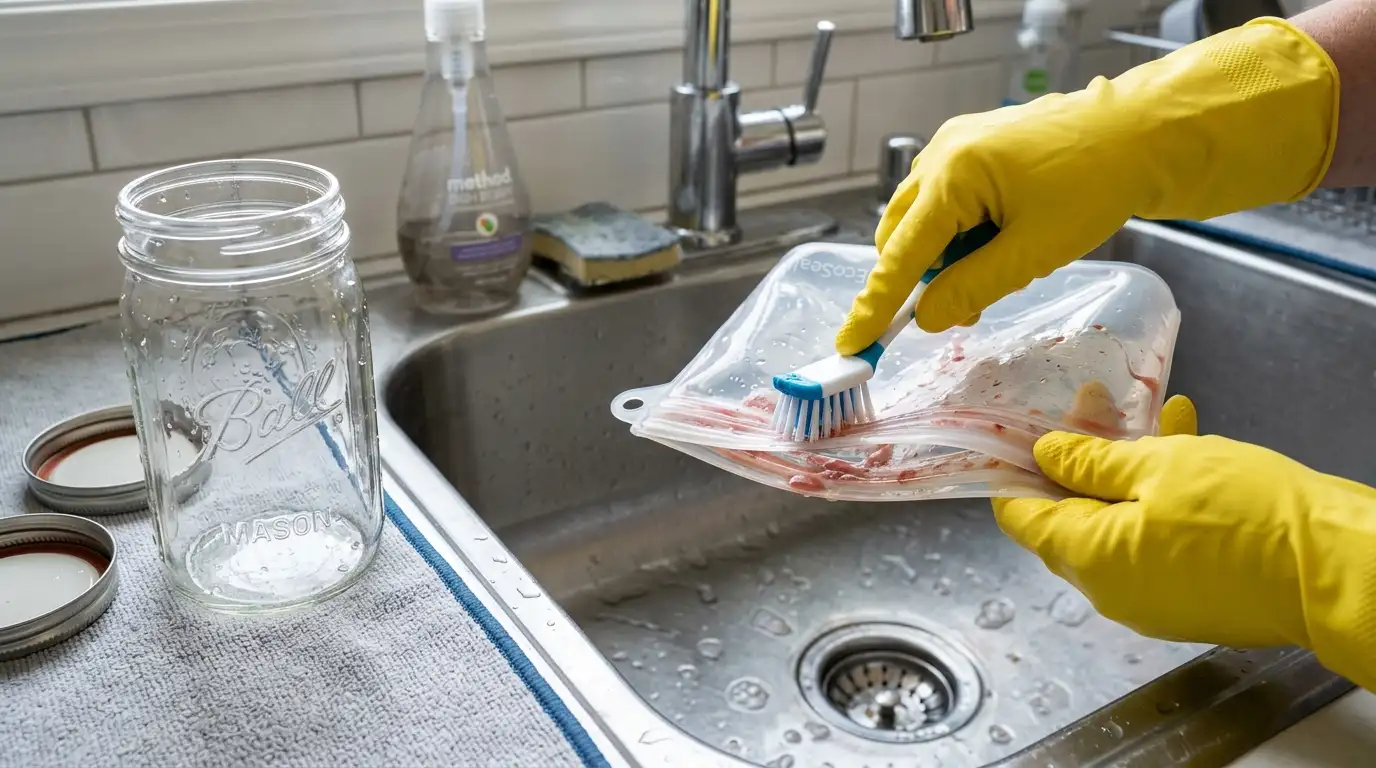
When you pull a tight vacuum on a flexible silicone bag, raw meat juices, blood, and liquid animal fats get forcefully pushed deep into the microscopic crevices of the plastic zipper tracks and sometimes directly underneath the delicate silicone one-way air valve.
Washing these heavy, sticky animal oils out completely by hand is notoriously difficult. If you fail to remove 100% of the organic matter, the bag inevitably becomes a breeding ground for toxic bacterial biofilms (like Salmonella or E. coli), which will cross-contaminate the next meal you put inside the bag. A glass Mason jar, on the other hand, can simply be thrown into the bottom rack of a dishwasher or actively boiled in water to achieve absolute, hospital-grade sterilization.
IV. Thermal Limits: Sous Vide and Deep Freezing
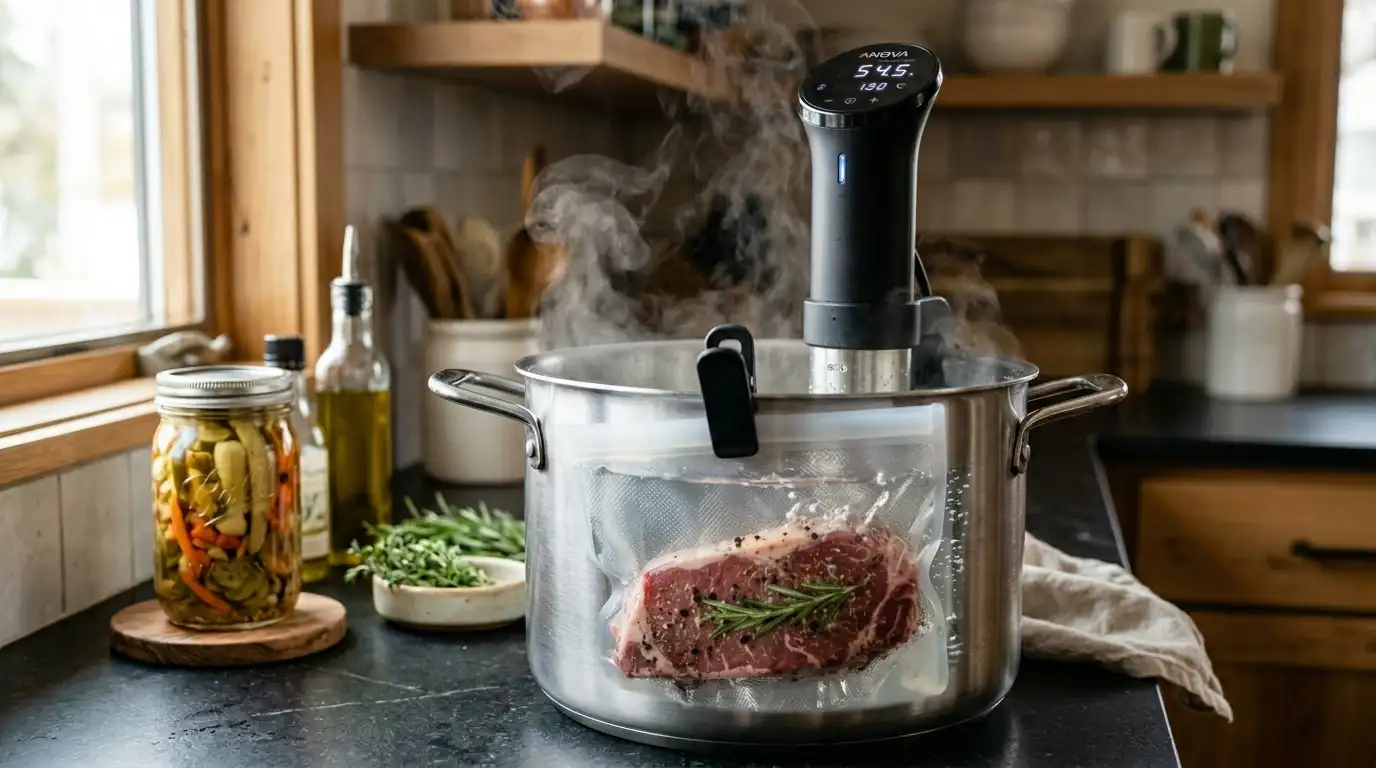
How do these two highly durable materials handle the extreme physical stresses of extreme heat and extreme cold in a high-end kitchen?
1. Sous Vide Cooking (The Water Bath)
Winner: Silicone Bags. Silicone is the undisputed, heavyweight champion here. High-grade, platinum-cured silicone can withstand sustained boiling temperatures (up to 400°F) effortlessly without leaching chemicals or melting. More importantly, because the flexible bag is vacuumed tight against the meat, there is zero air left inside. This completely eliminates buoyancy, ensuring your steak stays perfectly, safely submerged under the water for even cooking.
While Mason jars are incredibly popular for specific sous vide applications (like cooking delicate egg bites, infused oils, or crème brûlée), they are terrible for large cuts of meat, and they carry a massive risk of shattering violently from thermal shock if a cold jar is submerged into boiling water too quickly.
2. Deep Freezing
Winner: Tie (With Caveats). Both materials perform exceptionally well in a sub-zero deep freezer, effectively preventing dreaded freezer burn by blocking out the arid, circulating air.
However, you must respect the physics of water expansion. If you are freezing anything with high moisture content (like chicken stock, chili, or wet marinades) inside a rigid glass Mason jar, you must leave at least 2 inches of empty “headspace” at the top of the jar. As the liquid freezes, it will physically expand upward; if there is no room, the expanding ice will shatter the thick glass instantly. A silicone bag avoids this danger entirely, as it will simply stretch and bulge to accommodate the expanding ice block.
Explore the Vacuum Sealing Hub
Don’t stop here! Dive deeper into the science of preservation, explore head-to-head machine comparisons, and read our latest hardware reviews for 2026.
FAQ: Zero-Waste Vacuum Sealing
2026 Guide: Reusable Bags, Compostables, and Odor Removal
Sustainability Tip: When disposing of plant-based PLA bags, check with your local municipality. Many require industrial composting facilities rather than backyard compost bins to break down effectively.

