
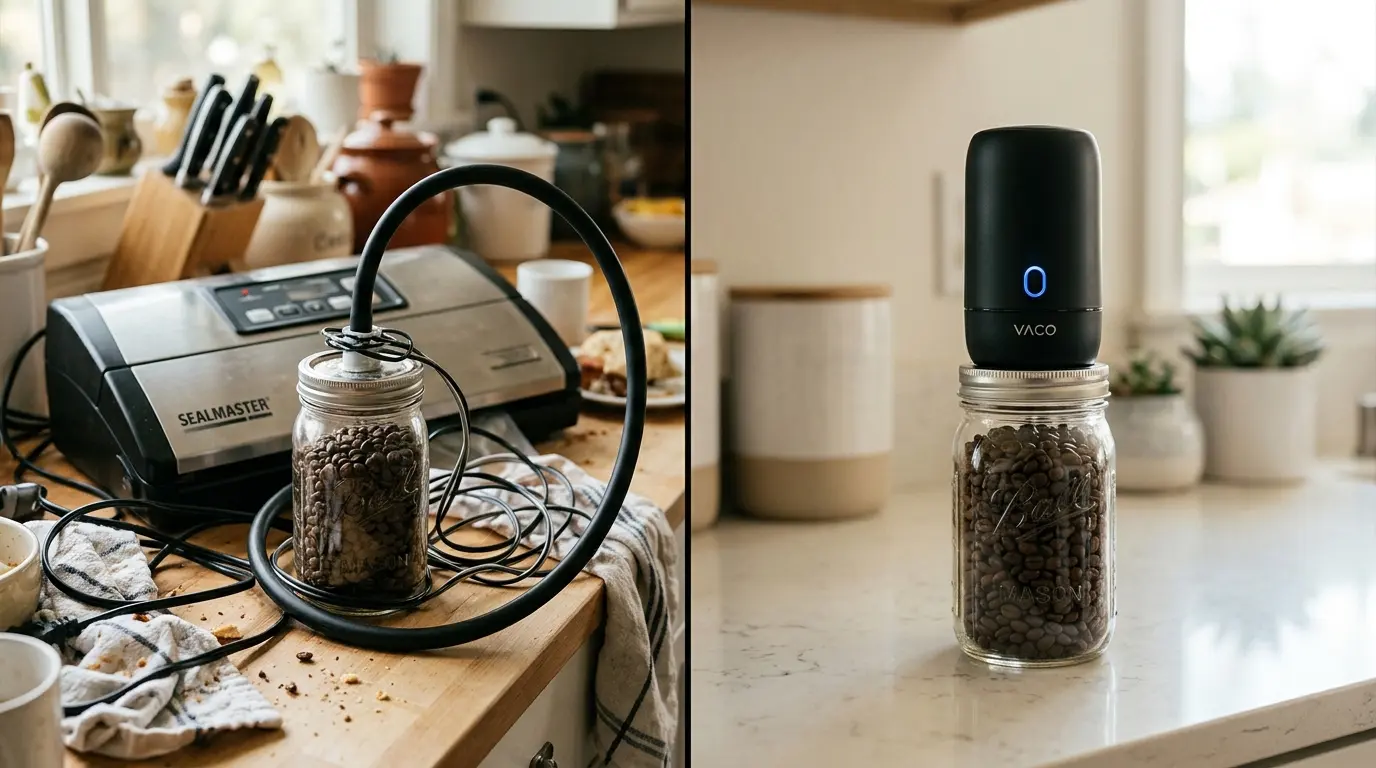
How to Vacuum Seal Mason Jars Without a Bulky FoodSaver Machine (2026 Guide)
In the modern 2026 kitchen, the heavy glass Mason jar is the undisputed king of sustainable, zero-waste food storage. Whether you are rigorously preserving a massive autumn harvest of homegrown dehydrated herbs, keeping highly expensive, single-origin coffee beans perfectly fresh, or meal-prepping crisp, vibrant salads for the workweek, a glass jar offers a completely impenetrable, chemical-free barrier to ambient odors and stains.
But to truly unlock a Mason jar’s ultimate preservation power and halt the chemical process of oxidation, a tight metal lid is not enough. You absolutely must remove the oxygen.
Historically, this required dragging a heavy, 10-pound external suction machine (like a traditional FoodSaver) out of your cramped pantry, plugging it into the wall, blindly hunting through drawers to find the specific plastic accessory hood, connecting a flimsy, fragile rubber hose, and running a loud, vibrating motor. For a massive, once-a-year tomato harvest, that exhausting workflow is acceptable. But if you simply want to reseal your jar of coffee beans every single morning before work, it is a complete, undeniable nuisance.
Fortunately, the home preservation industry has evolved dramatically. Today, you can achieve a flawless, airtight, long-lasting seal using highly engineered tools small enough to fit directly in your utensil drawer. In this guide, we break down exactly how to vacuum seal Mason jars without a bulky FoodSaver machine.
The Quick Answer
You no longer need a massive countertop appliance to seal glass jars. You can use a Cordless Electric Jar Sealer (a small, USB-rechargeable puck that seals automatically in 30 seconds), a Manual Hand Pump (a rugged, off-grid mechanical piston pump that requires physical effort but lasts forever), or a Handheld Wand Sealer paired with a standard accessory hood. These compact tools deliver the exact same vacuum pressure as a $150 FoodSaver without occupying precious kitchen real estate.
For a complete overview of all our preservation techniques and tool reviews, make sure to visit: The Ultimate Vacuum Sealing Hub: Food Storage, Sous Vide, Mason Jars & Buying Guides (2026).
I. Why Vacuum Seal Glass Instead of Plastic Bags?
Before exploring the hardware, it is critical to understand why so many professional meal preppers and homesteaders are abandoning high-tech vacuum sealer bags in favor of 100-year-old glass jar technology.
As we covered extensively in our bag comparison guides, cheap plastic is microscopically porous. Over a period of months, oxygen slowly bleeds right through the plastic walls. Heavy borosilicate or soda-lime glass is 100% impermeable. Once the oxygen is removed from a jar, it is impossible for new oxygen to enter.
Standard plastic vacuum bags must be cut open and thrown into a landfill. A Mason jar and its flat metal lid can be vacuum sealed, popped open, washed, and resealed literally thousands of times without degrading, offering massive long-term financial savings.
If you try to vacuum seal fragile, dehydrated berries or delicate lettuce in a plastic bag, the immense atmospheric pressure will violently crush the food into a sad paste. Because the glass walls of a jar do not collapse under a vacuum, the food inside remains physically untouched and pristine.
II. Cordless Electric Jar Sealers (The Modern Marvel)
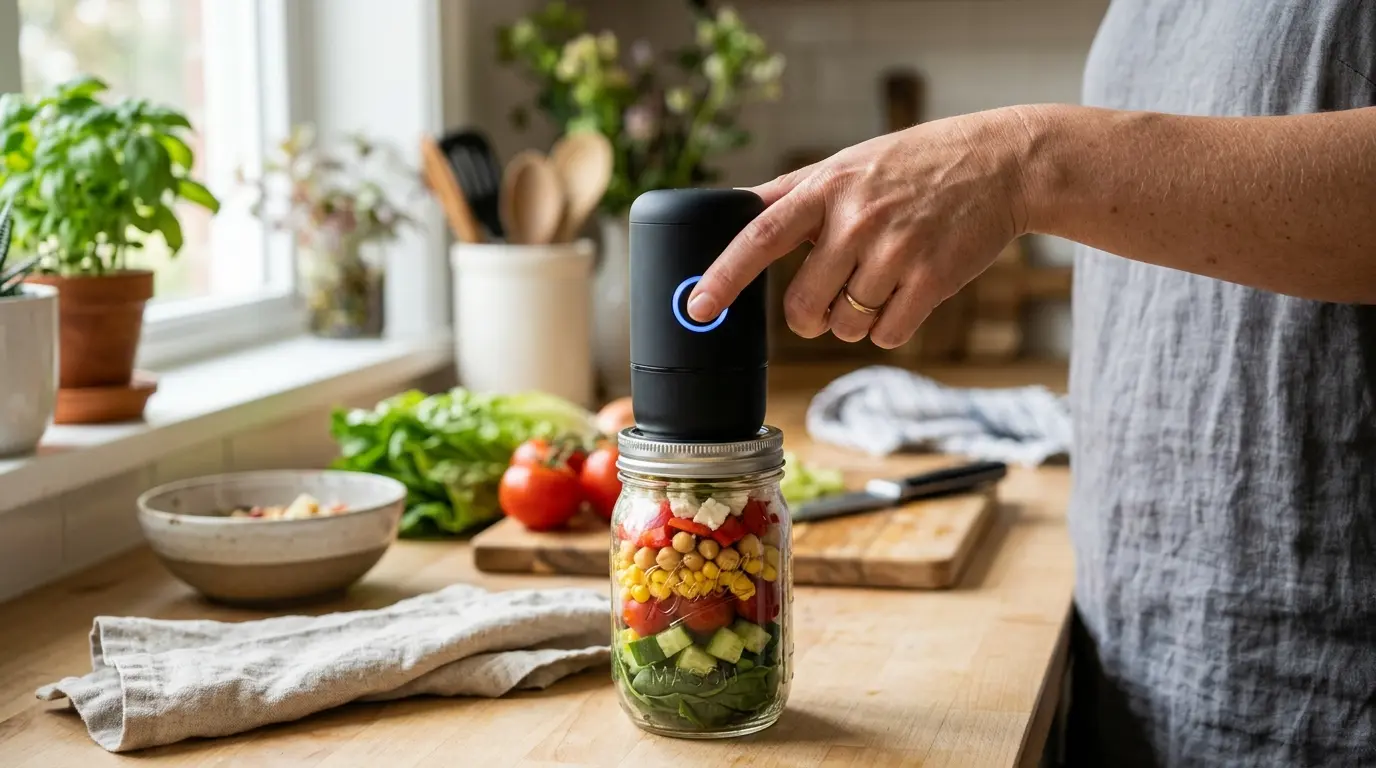
If you value rapid, push-button convenience and minimalist, aesthetic kitchen design, the standalone electric jar sealer is arguably the greatest food preservation invention of the decade.
How it Works: The Micro-Pump
These devices look like a small, sleek plastic puck or a miniature coffee thermos. They contain a highly miniaturized, high-torque diaphragm vacuum pump and a lithium-ion battery built directly into the housing.
You simply place a standard, flat metal Mason jar lid directly on the rim of your glass jar (do not screw the metal band on yet). You press the electric sealer firmly down over the top so its internal silicone gasket grips the glass, and hit the power button. In roughly 30 seconds, it sucks all the air out of the jar and stops automatically. The atmospheric pressure of the room physically crushes the metal lid down, compressing the lid’s “Plastisol” rubber ring against the glass to form a permanent, airtight seal.
The Benefit: Total Freedom
No hoses, no tangled electrical cords, and absolutely zero counter space required. You can keep it right next to your coffee maker for daily use or toss it in your pantry drawer. It completely removes the “friction” of vacuum sealing.
The market is currently flooded with incredibly cheap, generic white-label brands featuring weak motors that burn out after a month. To ensure you buy a premium unit with a heavy-duty battery that will actually last, read our comprehensive, lab-tested hardware guide: 7 Best Electric Mason Jar Vacuum Sealers in 2026: Tested & Reviewed.
III. The Manual Hand Pump (Off-Grid Power)
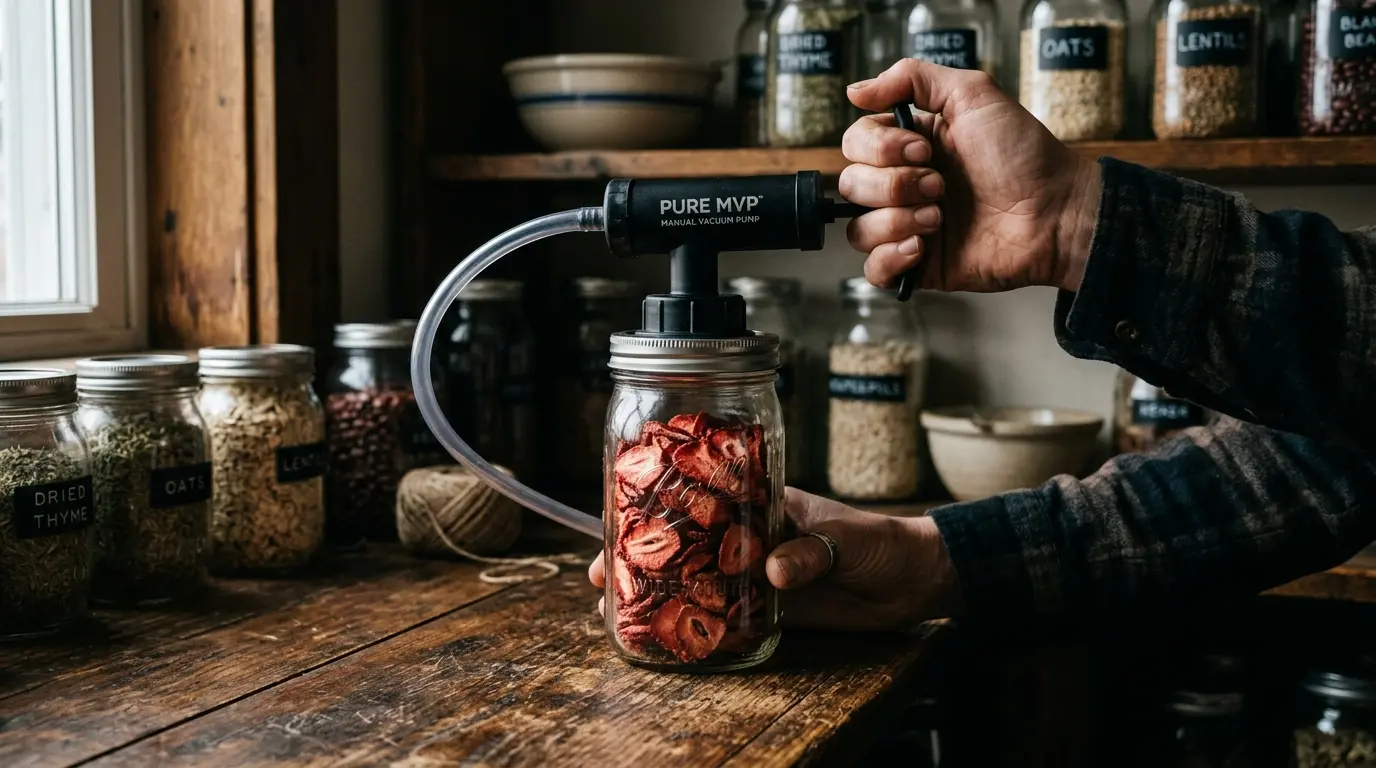
If you are a dedicated homesteader, an emergency prepper, or simply someone who hates dealing with degrading lithium-ion batteries, planned obsolescence, and proprietary charging cables, manual hand pumps offer indestructible, buy-it-for-life reliability.
How it Works: Mechanical Pistons
Tools like the incredibly popular Pure MVP look and operate exactly like high-end, aluminum bicycle tire pumps—just working in reverse.
You place a specialized plastic accessory hood completely over your jar lid, attach the nozzle of the pump, and manually pump the T-handle up and down. Usually, within 10 to 15 aggressive pumps, you pull a flawless vacuum. You know exactly when the jar is perfectly sealed because you will feel significant, undeniable physical resistance in the handle as the pressure drops.
The Benefit: Unstoppable Utility
It works flawlessly during a massive power outage, at a remote hunting cabin, or deep in the woods at a campsite. Because the internal mechanisms are strictly physical gaskets and aluminum pistons, there are zero motherboards to fry and no fragile digital sensors to glitch.
We test the ergonomics, user fatigue, and actual verifiable suction power (inHg) of the leading manual pump in our Pure MVP Hand Pump for Mason Jars Review: Does it Really Work?.
To see exactly how raw human mechanical power compares directly to the speed of a battery-powered motor, check out our highly requested head-to-head showdown: Pure MVP Vacuum Pump vs. Electric Jar Sealers: Which is Better?.
IV. Handheld Wand Sealers (The Hybrid Approach)
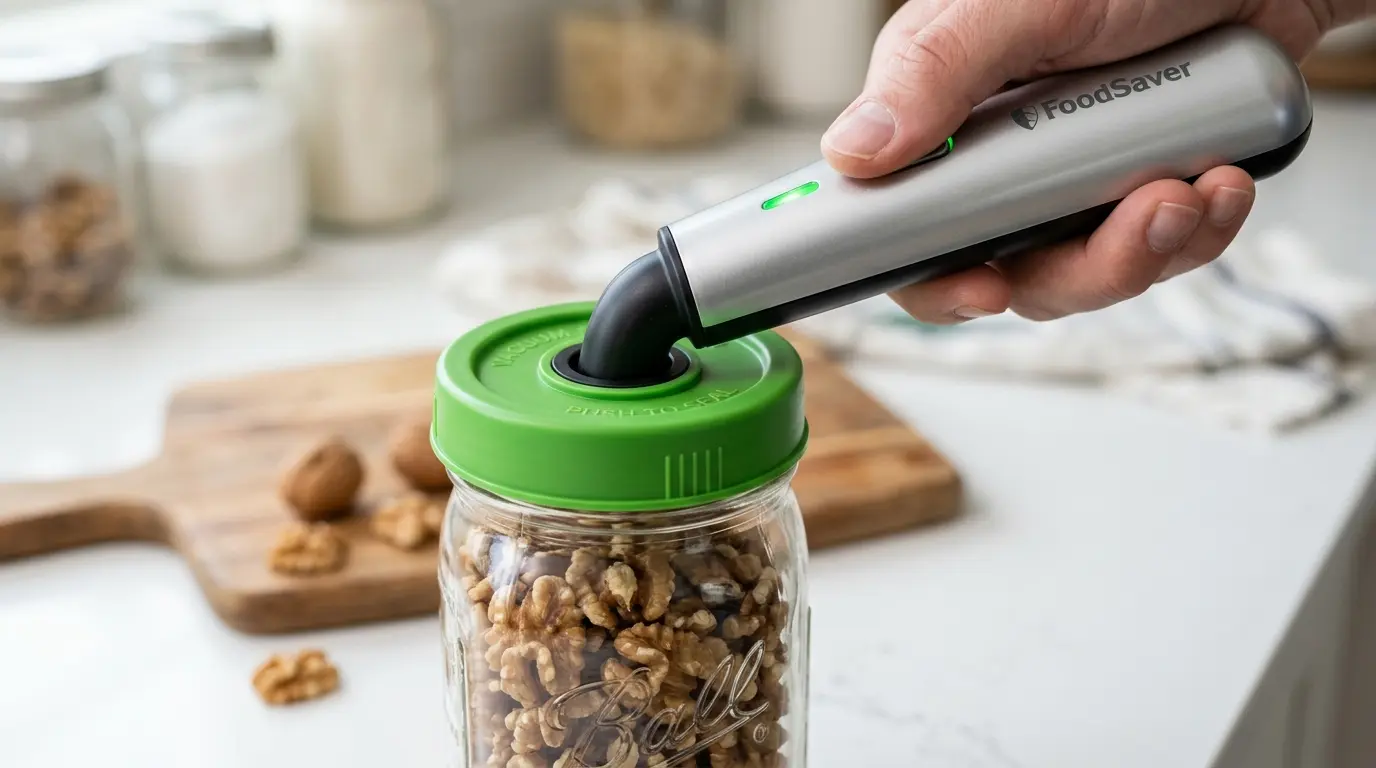
If you want a highly versatile hybrid approach that can handle both glass jars and flexible plastic, handheld “wand” sealers offer an incredible middle ground between massive, full-sized machines and hyper-specific dedicated jar sealers.
How it Works: The Universal Nozzle
Major appliance brands like FoodSaver, ZWILLING, and Anova offer incredibly slim, stick-like, cordless vacuum pumps. While they are primarily marketed and designed to be used with their own proprietary reusable zipper bags or brand-specific glass containers (which have specialized one-way valves built into the lids), they are easily adaptable.
You can simply take the standard green-and-white FoodSaver Mason Jar Accessory Hood (which you can buy separately for about $15), place it over your jar, and press the nozzle of your handheld wand directly against the tiny hole on top of the hood. The wand will effortlessly pull a vacuum through the hood and seal the jar perfectly.
The Benefit: Total Versatility
It is highly versatile. A single wand can seal your children’s plastic sandwich bags for school lunches, and then immediately transition to sealing your heavy glass pantry jars, all without taking up more space in your drawer than an immersion blender.
We heavily compare the leading wand systems, analyzing their battery life and accessory compatibility, in our ZWILLING Fresh & Save vs Anova Precision Port: Handheld Showdown.
V. The Daily Workflow (Salads & Specialty Coffee)
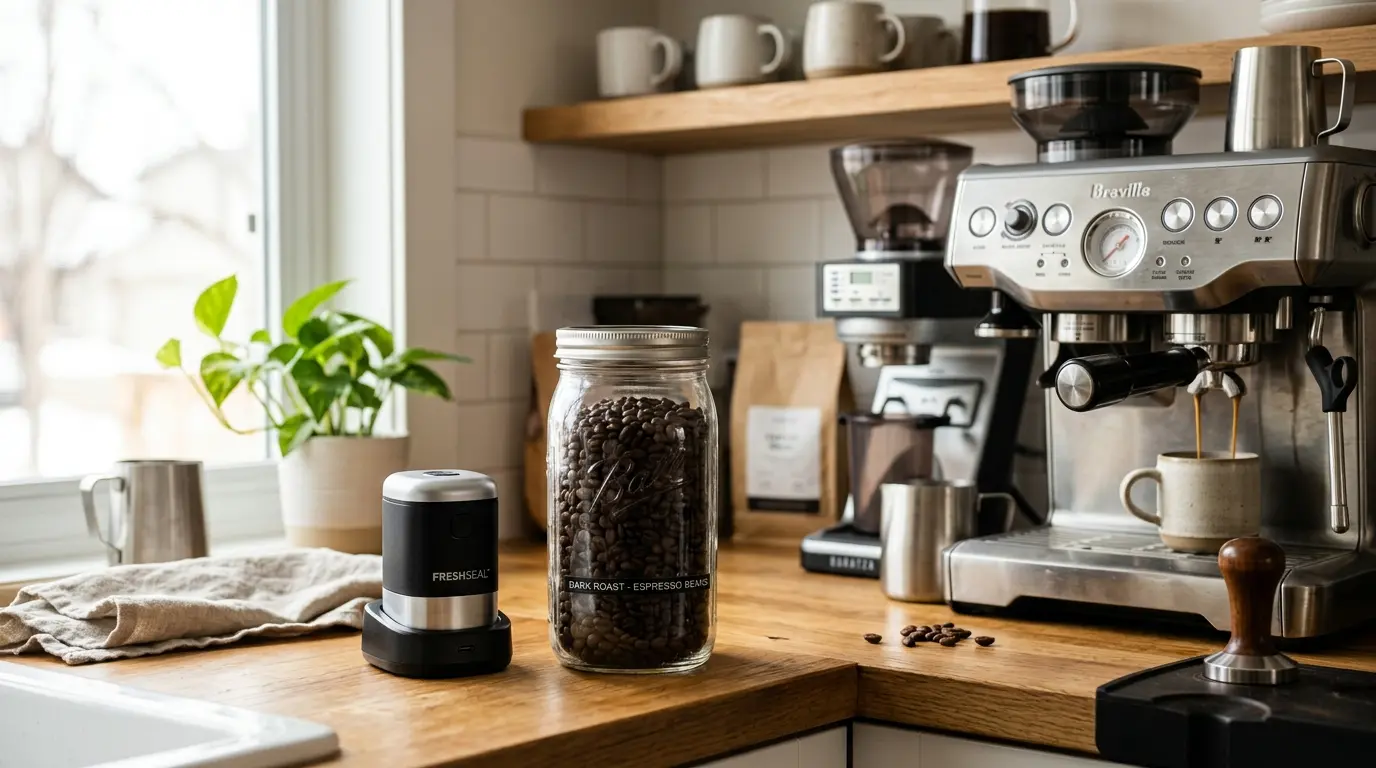
Why go through the massive effort and expense of ditching the bulky external machine you already own? Because owning compact, hyper-accessible tools fundamentally changes how you interact with your expensive food on a daily basis.
When the act of vacuum sealing takes exactly five seconds and requires zero stressful setup, you actually start doing it for everyday, mundane items rather than saving it strictly for big-game hunting yields.
The Crisp Salad Hack
Chopping fresh lettuce, bell peppers, and cucumbers every single morning before work is exhausting. With a cordless sealer, you can chop a massive week’s worth of highly perishable greens on Sunday, carefully divide them into five separate 32oz glass jars, vacuum seal them all in minutes, and have perfectly crisp, bright, un-oxidized greens sitting in your fridge on Friday afternoon.
Pro Tip: If you want to master this specific, highly efficient meal-prep workflow, read our dedicated structural breakdown: Vacuum Sealing Salad in a Mason Jar: Shelf Life and Crispness Guide.
Preserving Artisan Coffee
Coffee beans are highly volatile. The moment they are exposed to oxygen, their delicate aromatic oils begin to degrade, turning a $25 bag of single-origin beans flat and stale in days. By keeping your beans in a dark amber Mason jar and utilizing a push-button electric sealer every morning after you scoop out your daily dose, you essentially pause the aging process, ensuring every cup of espresso tastes like it was roasted yesterday.
VI. A Critical Warning About Liquids in Jars
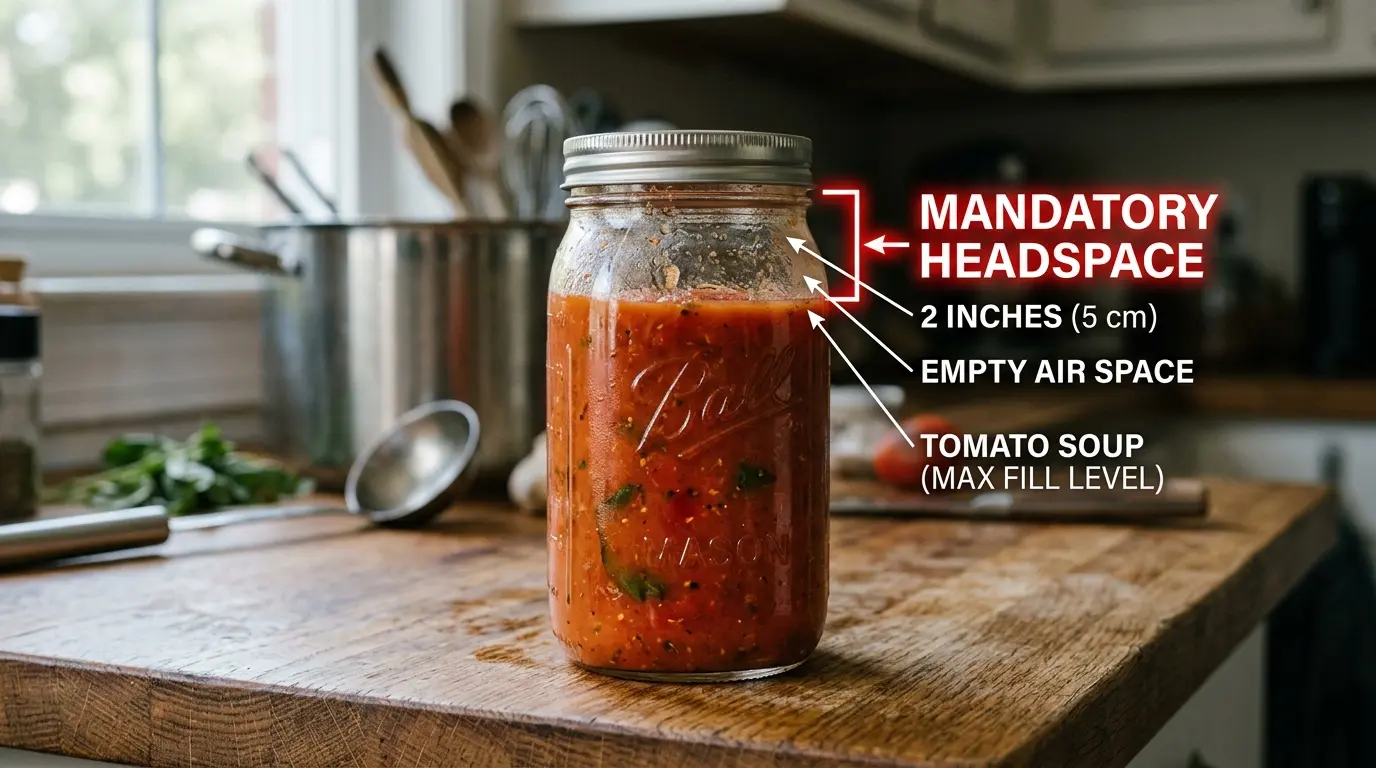
While these compact handheld tools are undeniably incredible, they share the exact same fatal weakness as the bulky countertop machines they replace: they absolutely hate moisture.
If you attempt to aggressively vacuum seal a Mason jar filled completely to the brim with homemade tomato soup, wet salsa, or a heavy meat marinade, the intense physical suction generated by the pump (whether electric or manual) will violently suck the heavy liquid right up through the tiny hole in the metal lid and directly into the internal motor.
This single mistake will instantly, permanently short-circuit and ruin an electric sealer, and it will create a highly toxic, impossible-to-clean mold hazard deep inside the piston chamber of a manual hand pump.
The Golden Rule (Headspace):
To completely prevent catastrophic hardware failure, you must always leave at least 1.5 to 2 inches of empty “headspace” at the very top of the glass jar when sealing wet or liquid items. This air gap gives the liquid room to bubble, expand, and boil under the intense vacuum pressure without reaching the roof of the lid.
For a complete masterclass on more advanced culinary hacks regarding wet foods, read our highly technical guide: How to Vacuum Seal Liquids Without a Chamber Sealer: 3 Proven Hacks.
Explore the Vacuum Sealing Hub
Don’t stop here! Dive deeper into the science of preservation, explore head-to-head machine comparisons, and read our latest hardware reviews for 2026.
FAQ: Nesco VS-12 & Mason Jars
2026 Guide: Bags, Maintenance, Mylar & Mason Jar Sealing
User Tip: Always store the Nesco VS-12 in the “unlocked” position to keep the foam gaskets fluffy and perfectly airtight!

