
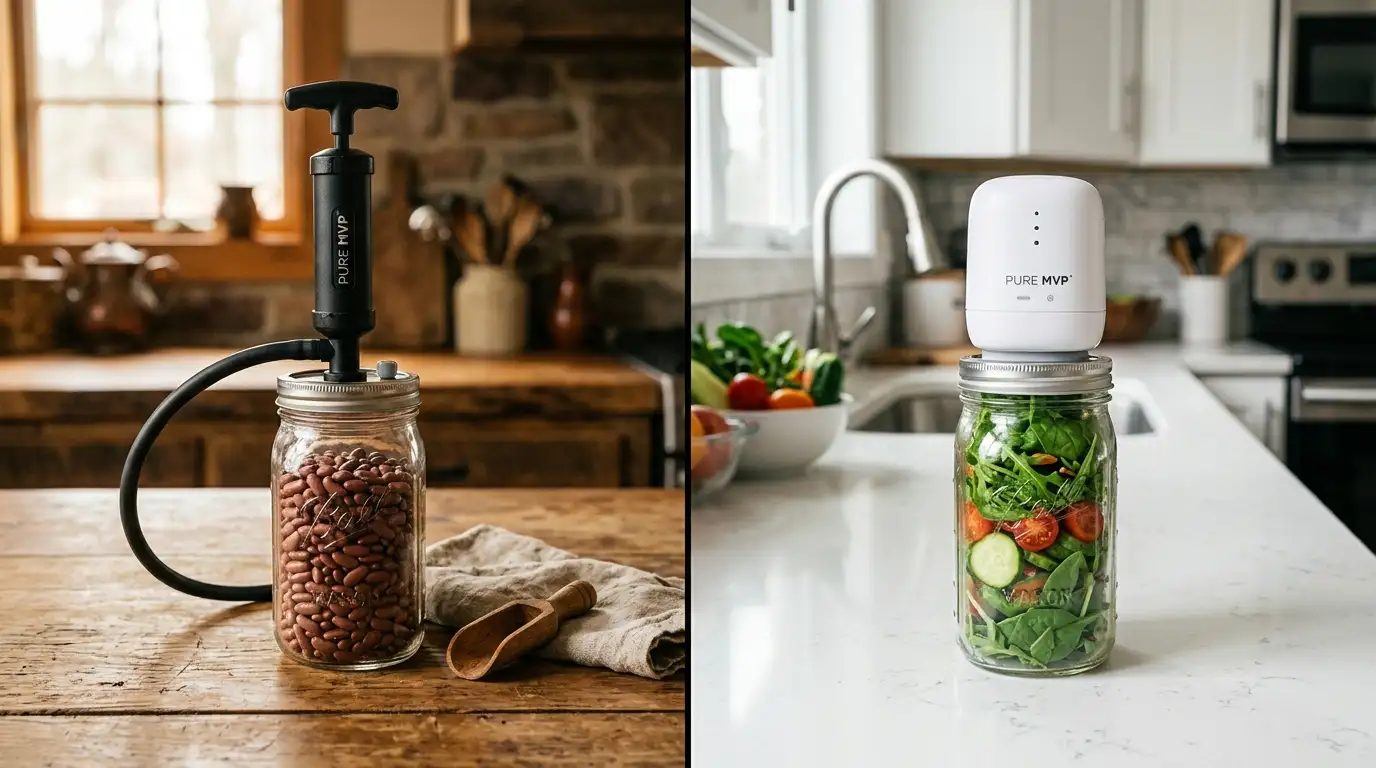
Pure MVP Vacuum Pump vs. Electric Jar Sealers: Which is Better? (2026 Guide)
The classic glass Mason jar has made a massive, undeniable comeback in modern kitchens. Driven by valid health concerns over microplastics and chemical leaching, home chefs are rapidly ditching single-use plastics. From storing dehydrated pantry goods for years to meal-prepping crisp weekly salads for the office, heavy-duty glass is the ultimate storage vessel.
But to truly unlock the preservation power of a Mason jar, a tight lid isn’t enough. You must extract the ambient oxygen. For years, the only way to do this was by dragging a bulky appliance out of your cabinet and hooking up a highly frustrating, awkward accessory hose. Today, the market has been completely revolutionized by compact, handheld devices designed specifically for sealing glass jars.
The two dominant forces in this space represent two entirely different engineering philosophies: the rugged, human-powered Pure MVP Vacuum Pump, and the sleek, battery-powered Electric Jar Sealer. If you are trying to decide between off-grid reliability and push-button convenience, you are in the right place. In this head-to-head showdown, we compare seal strength, mechanical longevity, and daily workflow to crown the ultimate pantry tool.
The Quick Answer
An Electric Jar Sealer is the undisputed champion of daily convenience. It uses a rechargeable battery to seal jars automatically in 30 seconds with zero physical effort, making it perfect for daily meal prep and coffee beans. The Pure MVP Hand Pump is a rugged, off-grid powerhouse. It requires manual pumping, but because it has no batteries or motors to burn out, it is a “buy-it-for-life” tool. It is the ultimate choice for serious homesteaders, preppers, and long-term deep pantry archiving.
Explore all our preservation guides in our master directory: The Ultimate Vacuum Sealing Hub.
I. The Pure MVP Hand Pump (Off-Grid Reliability)
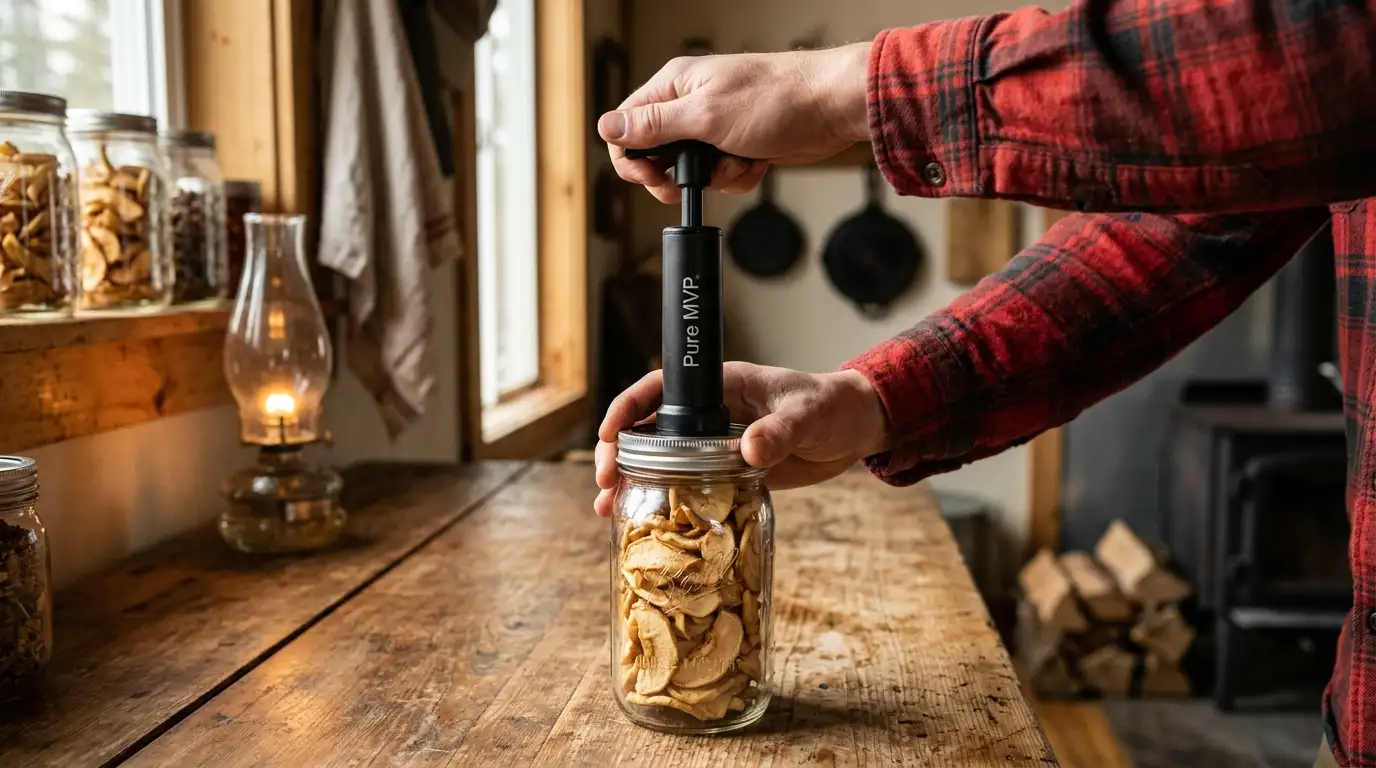
The Pure MVP is essentially a high-end, heavily engineered bicycle pump designed specifically for food preservation. It requires absolutely zero electricity, no lithium-ion batteries, and no fragile charging cables. You place it over the custom jar lid and use your own arm strength to pull the oxygen out of the glass cavity.
The Pros: Indestructible Utility
Because the Pure MVP is entirely mechanical—often constructed from CNC-machined aluminum and heavy-duty silicone valves—it is virtually indestructible. There are no circuit boards to fry and no digital sensors to glitch.
If the power grid goes down, or if you are stockpiling food at a remote, off-grid hunting cabin, the Pure MVP will continue to work flawlessly. It is the ultimate tool for dedicated survivalists, which is exactly why it features so prominently in our Prepper’s Guide: The Best Vacuum Sealers for Tactical Gear.
The Cons: Physical Exhaustion
It requires deliberate, physical effort. To achieve a true, long-lasting vacuum inside a large 32oz Mason jar, you must pump the handle vigorously 10 to 20 times against increasing pressure.
If you are processing a massive autumn harvest and trying to seal 15 jars of dehydrated apples in one afternoon, your arm and shoulder will get a serious, burning workout. We test the ergonomics and physical fatigue of this device deeply in our Pure MVP Hand Pump Review.
II. Electric Jar Sealers (Modern Convenience)
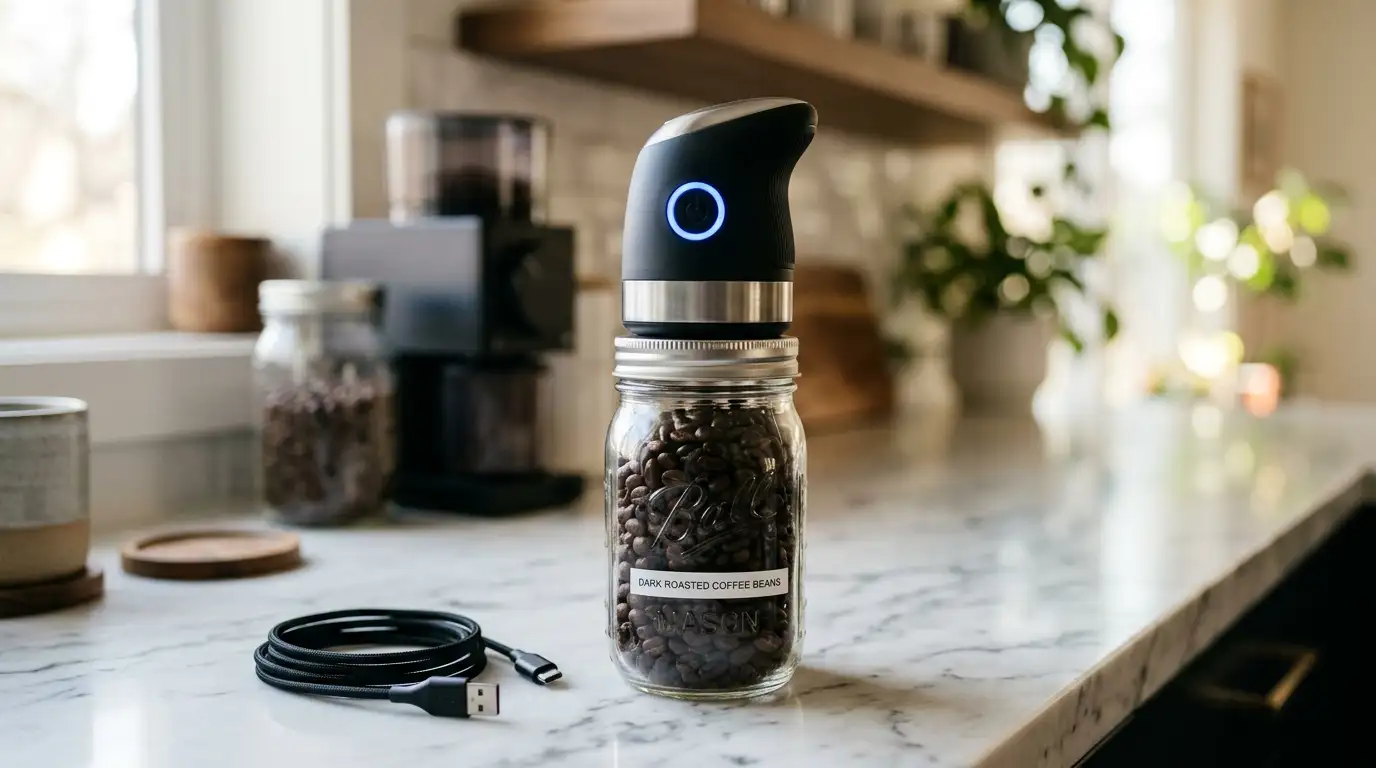
Walk into any modern, aesthetic kitchen in 2026, and you will almost certainly find a cordless, USB-C rechargeable electric jar sealer sitting beautifully on the counter. These devices look like small, sleek coffee thermoses but house a miniaturized, high-speed diaphragm vacuum pump.
The Pros: Push-Button Perfection
This is culinary convenience at its absolute finest. You simply place the silicone-ringed device over the standard Mason jar lid, press the single LED button on top, and walk away to dry your hands.
The internal motor sucks the air out in about 30 seconds and stops automatically when it senses a perfect vacuum. It requires zero physical exertion, making it ideal for high-frequency daily use—like opening and securely resealing a jar of premium coffee beans every single morning without a second thought.
The Cons: Planned Obsolescence
It completely relies on an internal lithium-ion battery. Exactly like a smartphone or a laptop, this battery will inevitably degrade after a few years of constant charging and discharging. Once the battery dies, the entire device goes into a landfill.
Furthermore, if you forget to charge it before a massive meal prep session, you cannot seal your food. To see which specific models feature the longest-lasting motors and biggest batteries, explore our guide on the 7 Best Electric Mason Jar Vacuum Sealers in 2026.
III. The Seal Strength Showdown: Human vs. Machine
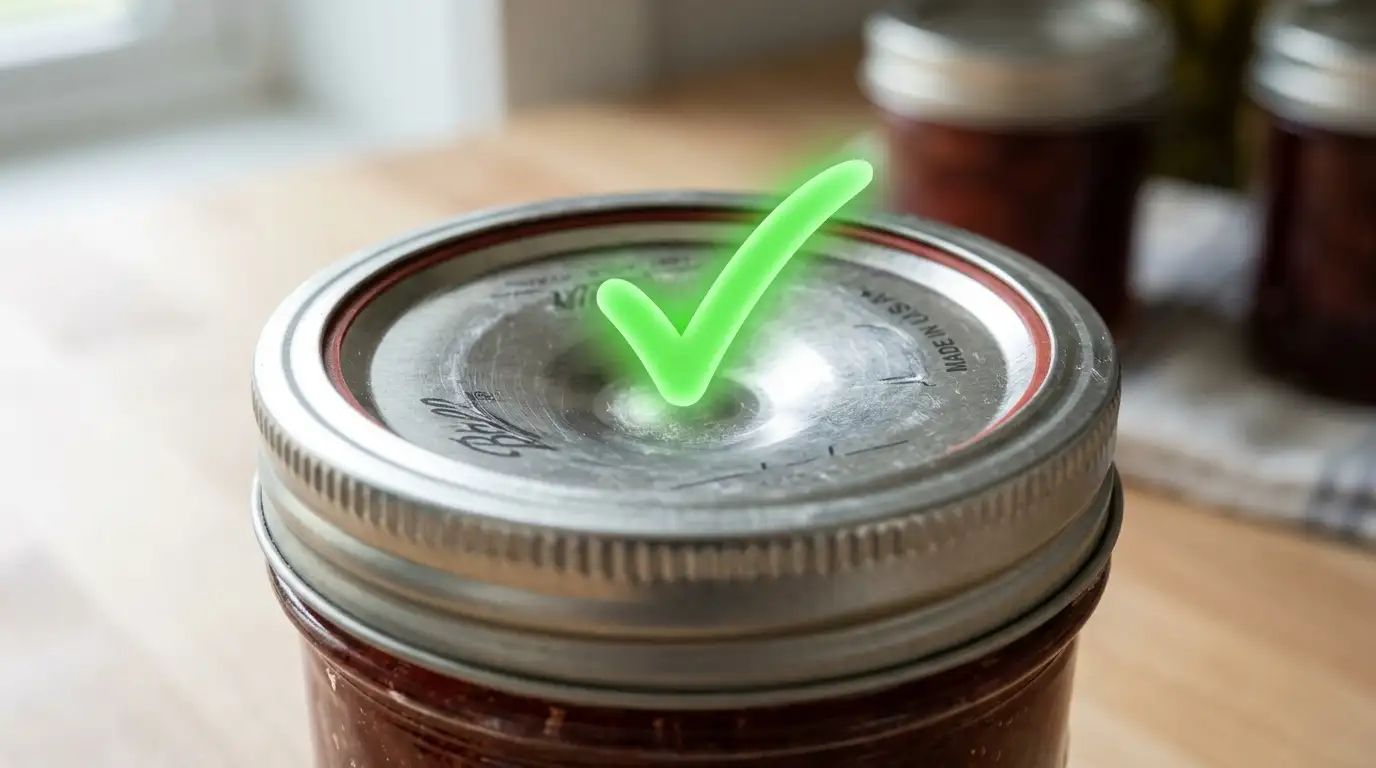
A vacuum sealer is completely useless if it leaves residual air behind to oxidize your food. So, when dealing with a rigid glass container, who actually pulls a tighter, lower-pressure vacuum: the human or the machine?
The Physics of the Plastisol Seal
A Mason jar lid relies on a thin ring of “Plastisol” (a rubbery gasket material) to seal against the glass rim. To pull a vacuum, the pressure inside the jar must drop low enough that the higher atmospheric pressure of the room physically crushes the metal lid down, compressing the Plastisol against the glass permanently.
The Manual Advantage:
Surprisingly, the Pure MVP hand pump can often achieve a slightly tighter, deeper vacuum than budget electric sealers—if you have the physical strength to push the pump handle to its absolute limit. Because the system is manual, you can physically feel the mechanical resistance building in the handle. You know exactly when the jar is empty because the handle becomes nearly impossible to pull.
The Electric Advantage:
However, high-end electric sealers pull a perfectly consistent, mathematically precise vacuum every single time. They never get tired after sealing ten jars in a row, and they completely remove lazy human error from the equation. If you are curious about the physics of sealing jars using standard household appliances, check out our tutorial on How to Vacuum Seal Mason Jars Without a Bulky FoodSaver.
IV. Daily Workflow vs. Long-Term Storage
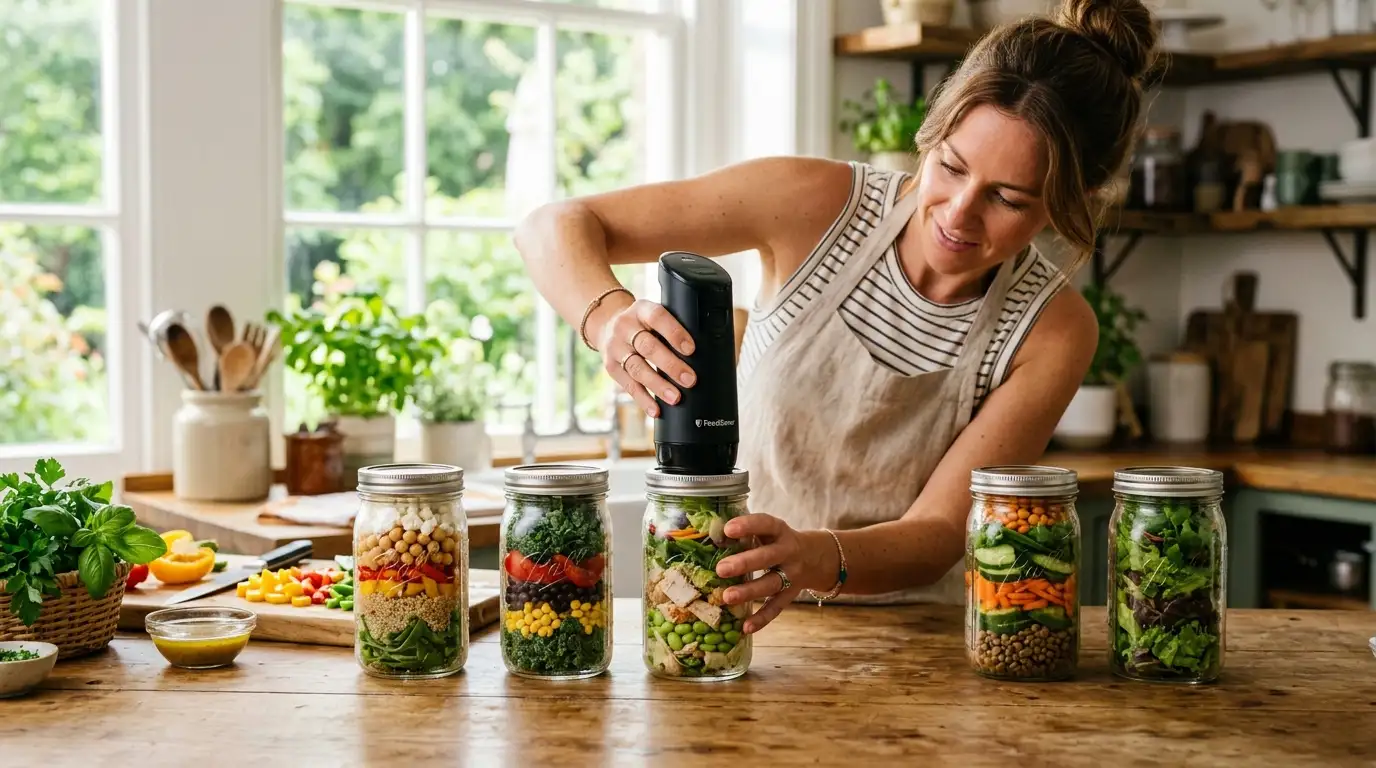
The true winner of this showdown doesn’t depend on the spec sheet; it depends entirely on how you actually intend to use your Mason jars in your daily life.
For Daily Meal Prep
If you are packing lunches for the workweek, the electric sealer wins in a landslide. When we wrote the comprehensive guide on Vacuum Sealing Salad in a Mason Jar, the ability to rapidly layer ingredients and seamlessly seal five jars in exactly two minutes with an electric device was an absolute game-changer. It turns a tedious Sunday chore into a completely frictionless habit.
For Long-Term “Deep Pantry” Archives
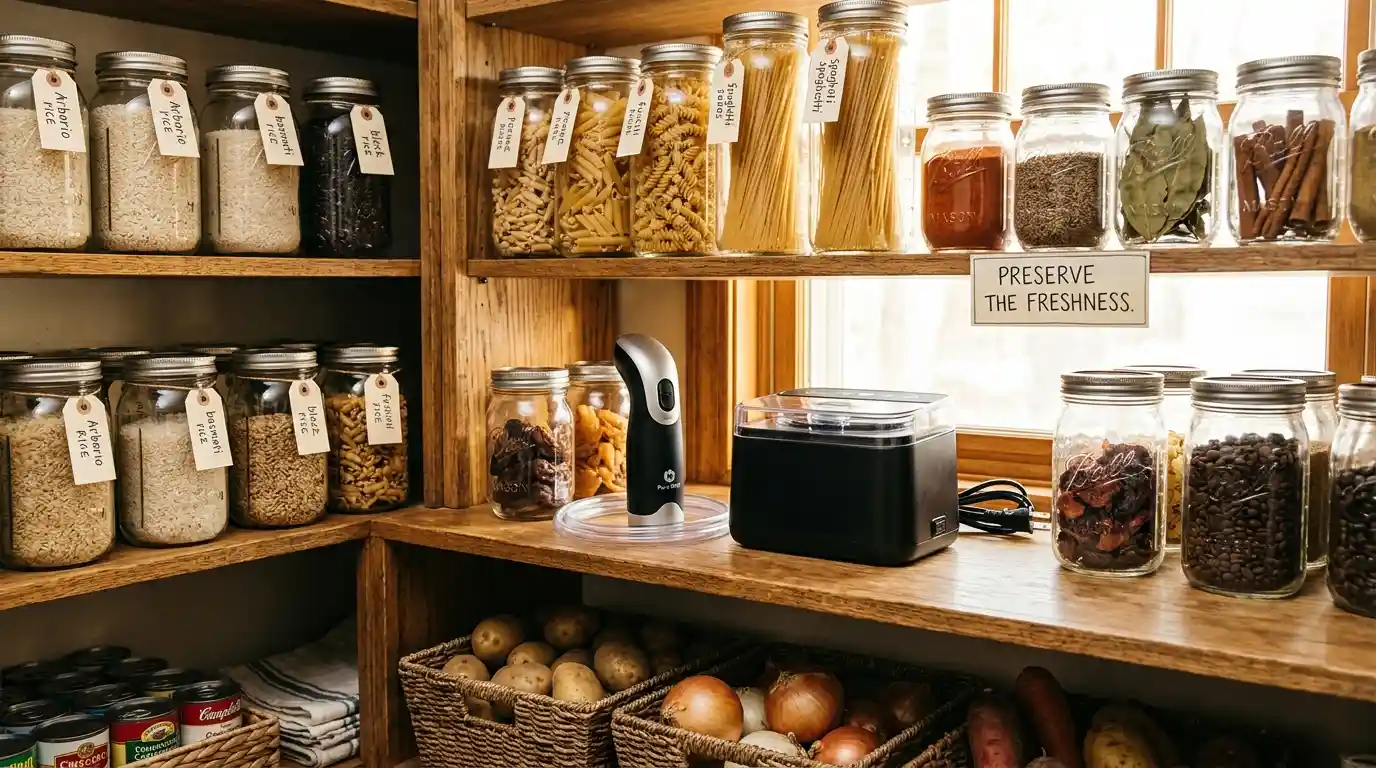
If you are sealing dry black beans, bulk white rice, pasta, or expensive heirloom seeds that you plan to put on a dark basement shelf and leave completely untouched for five years, the Pure MVP is the undisputed champion. You pump it once, achieve an aggressively tight seal, and trust the mechanical reliability. You don’t care if it takes 30 seconds of physical labor because you are only sealing the jar once for the next half-decade.
V. Quick Comparison Chart
| Feature | Pure MVP Hand Pump | Electric Jar Sealer |
|---|---|---|
| Power Source | Human (100% Off-Grid) | Lithium-Ion Battery (USB-C) |
| Physical Effort Required | High (10-20 pumps) | Zero (Push button) |
| Maximum Seal Strength | Very High (If pumped fully) | Consistently High |
| Expected Lifespan | Decades (Buy-it-for-life) | 3-5 Years (Battery degradation) |
| Ideal Use Case | Long-term archiving, Survivalism | Daily meal prep, Coffee beans |
Explore the Vacuum Sealing Hub
Don’t stop here! Dive deeper into the science of glass preservation, explore machine comparisons, and read our latest hardware reviews for 2026.
FAQ: Nesco VS-12 & Mason Jars
2026 Guide: Bags, Maintenance, Mylar & Mason Jar Sealing
User Tip: Always store the Nesco VS-12 in the “unlocked” position to keep the foam gaskets fluffy and perfectly airtight!

