
FoodSaver vs Vacuum Chamber Sealer: Which is Best for You? (2026 Guide)
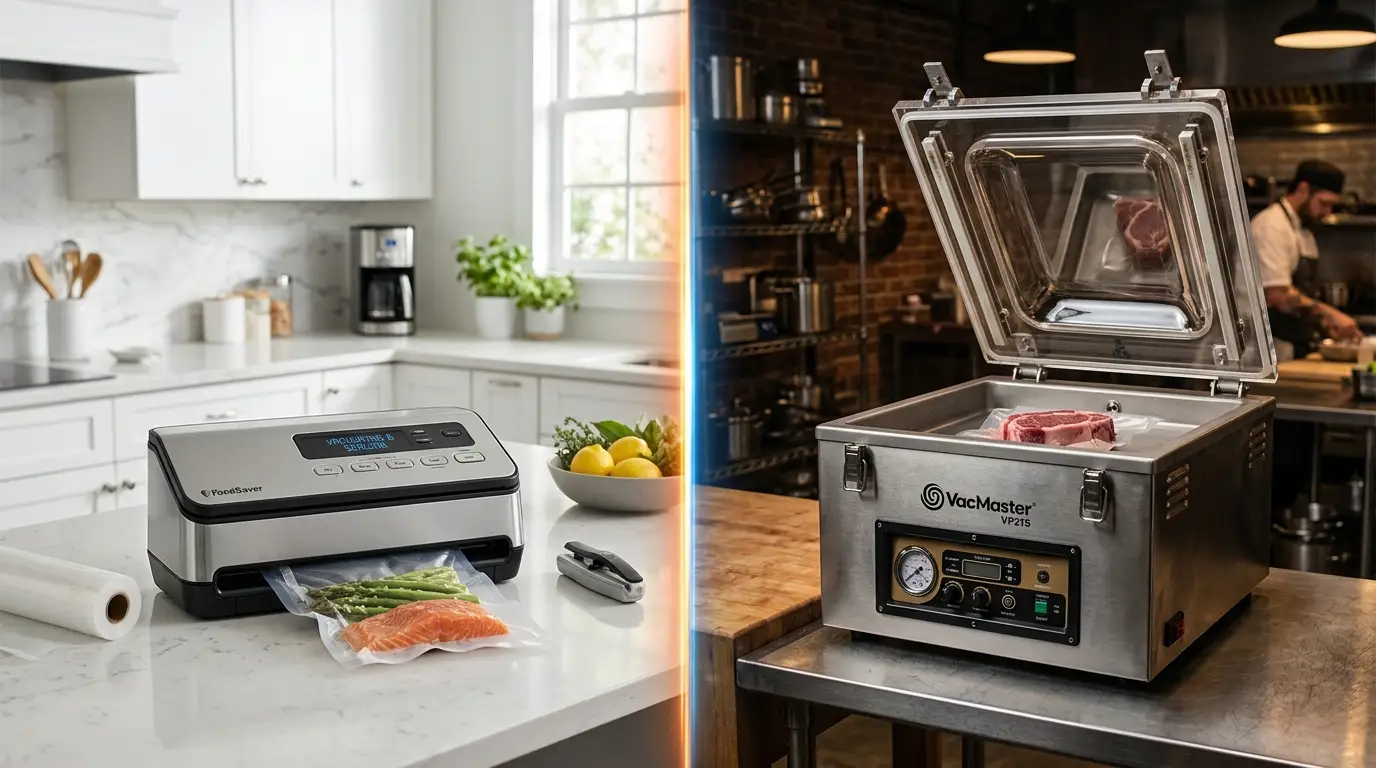
When it comes to home food preservation, the brand name “FoodSaver” has become entirely synonymous with the act of vacuum sealing itself—much like Kleenex is to tissues or Xerox is to paper copies. For decades, it has been the undisputed, lightweight king of the consumer kitchen counter, saving middle-class families thousands of dollars a year in otherwise freezer-burned meat and spoiled produce.
However, as home chefs have aggressively embraced advanced culinary techniques like precision immersion sous vide, and hunters have started processing massive, 200-pound game yields in their own garages, the harsh mechanical limitations of standard external suction machines have become glaringly obvious. Enter the Vacuum Chamber Sealer: the heavy, stainless steel, commercial-grade beasts that were once strictly reserved for professional restaurant kitchens and butcher shops, but are now rapidly making their way into prosumer home kitchens in 2026.
If you are currently trying to decide whether to buy a reliable household name or drop $500+ on an industrial machine, you need to understand the fundamental physics dividing them. In this definitive FoodSaver vs Vacuum Chamber Sealer showdown, we break down the liquid handling capabilities, the hidden recurring bag costs, and the true physical footprint of both machines. To explore our complete library of machine reviews and preservation hacks, visit the Vacuum Sealing Hub.
The Quick Answer
A FoodSaver is an external suction machine; it is cheap to buy, lightweight, and perfect for dry goods or casual meal prep, but it struggles massively with liquids and requires expensive textured bags. A Chamber Vacuum Sealer is an expensive, heavy, commercial appliance that equalizes atmospheric pressure to flawlessly seal pure liquids (like soups and marinades). If you process high volumes of food, the massive ongoing savings of using cheap, smooth chamber bags will completely pay for the expensive chamber machine in 1 to 2 years.
I. The Mechanics: Suction vs. Equalized Pressure
To truly understand the massive price gap and performance differences between these two appliances, you have to look at how they interact with atmospheric air pressure. They do not operate on the same scientific principles.
The FoodSaver (External Suction)
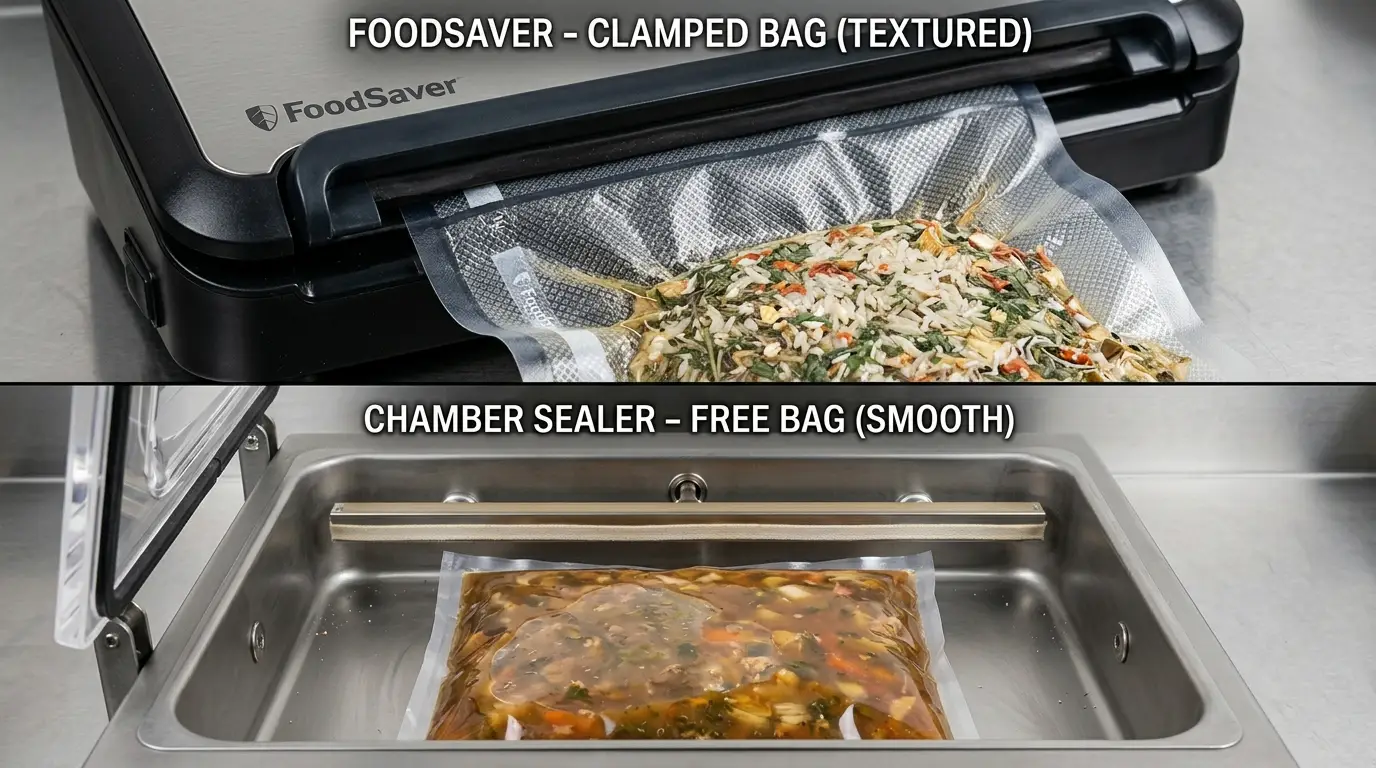
A FoodSaver is an “edge sealer.” You place the food in a bag, leave the open edge sticking out across a Teflon heating bar, close the lid, and the machine acts exactly like a household vacuum cleaner. It physically sucks the air out from the inside of the bag.
This creates a massive pressure differential: low pressure inside the bag, and high normal atmospheric pressure outside. The outside atmosphere aggressively crushes the bag flat, which is why delicate foods (like bread or berries) are instantly pulverized into a paste.
The Chamber Sealer (Space Vacuum)
A chamber sealer requires you to place the entire bag (food and all) flat inside a heavy-duty, sealed acrylic or glass box. Instead of sucking air out of the bag opening, the machine’s heavy pump evacuates the air from the entire chamber simultaneously.
Once the chamber is a zero-atmosphere vacuum, the heating bar seals the bag shut. Only then is the air let back into the box, instantly shrink-wrapping the plastic around the food. Because pressure is equalized throughout the process, food is never crushed. For a deeper dive into the physics of this process, read our comprehensive guide: Chamber Vacuum Sealer vs. External Suction.
II. The Liquid Battle (Marinades and Soups)
This is the exact point where the consumer-grade FoodSaver meets its match, and the commercial Chamber Sealer unequivocally proves its professional worth.
The FoodSaver Flaw
Because a FoodSaver physically pulls air out of the bag, it indiscriminately pulls liquids out, too. If you try to seal a juicy steak, a wet marinade, or a batch of leftover soup, the machine will violently suck those liquids right up the bag and directly into the heating element.
When liquid hits the red-hot Teflon bar, it turns to steam, cooling the element and ruining the plastic weld. This creates a massive, sticky mess on your counter and can eventually corrode and destroy the machine’s internal motor. (If you are currently struggling with this exact frustrating scenario, read our diagnostic fix: Vacuum Sealer Not Sealing Wet Foods? Here’s the Fix).
The Chamber Sealer Solution
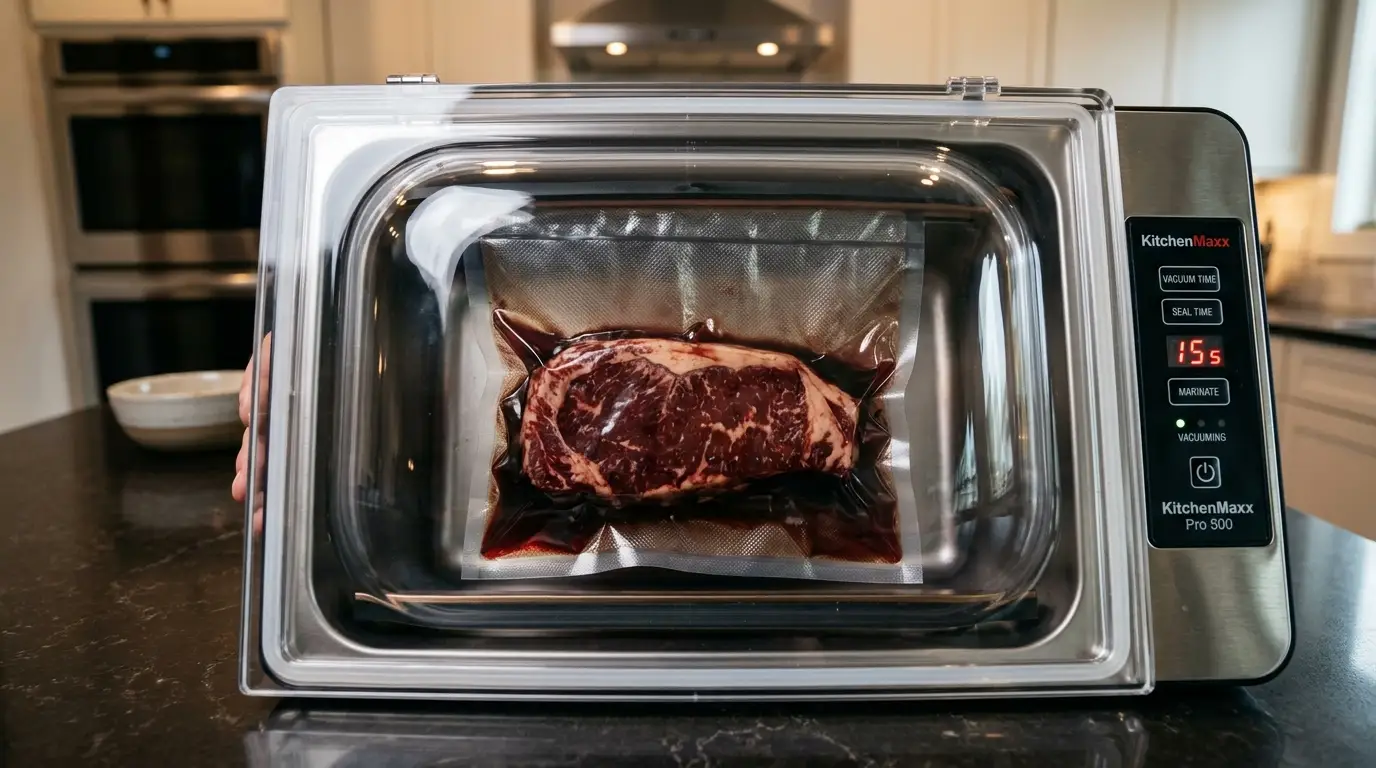
A Chamber Sealer, however, relies entirely on equalized pressure. Because the atmospheric pressure inside the bag and outside the bag is exactly the same while the air is being evacuated, liquids are not forced to move. They do not try to escape the bag.
You can seamlessly seal a bag of pure, unadulterated water, a rich batch of chili, or a heavily marinated pork shoulder without a single drop spilling. This makes the chamber sealer the only way to achieve a truly professional result for Sous Vide Cooking, where wet marinades and compound butters are absolutely essential to the flavor profile.
III. The Hidden Cost of Bags (The “Bag Math”)
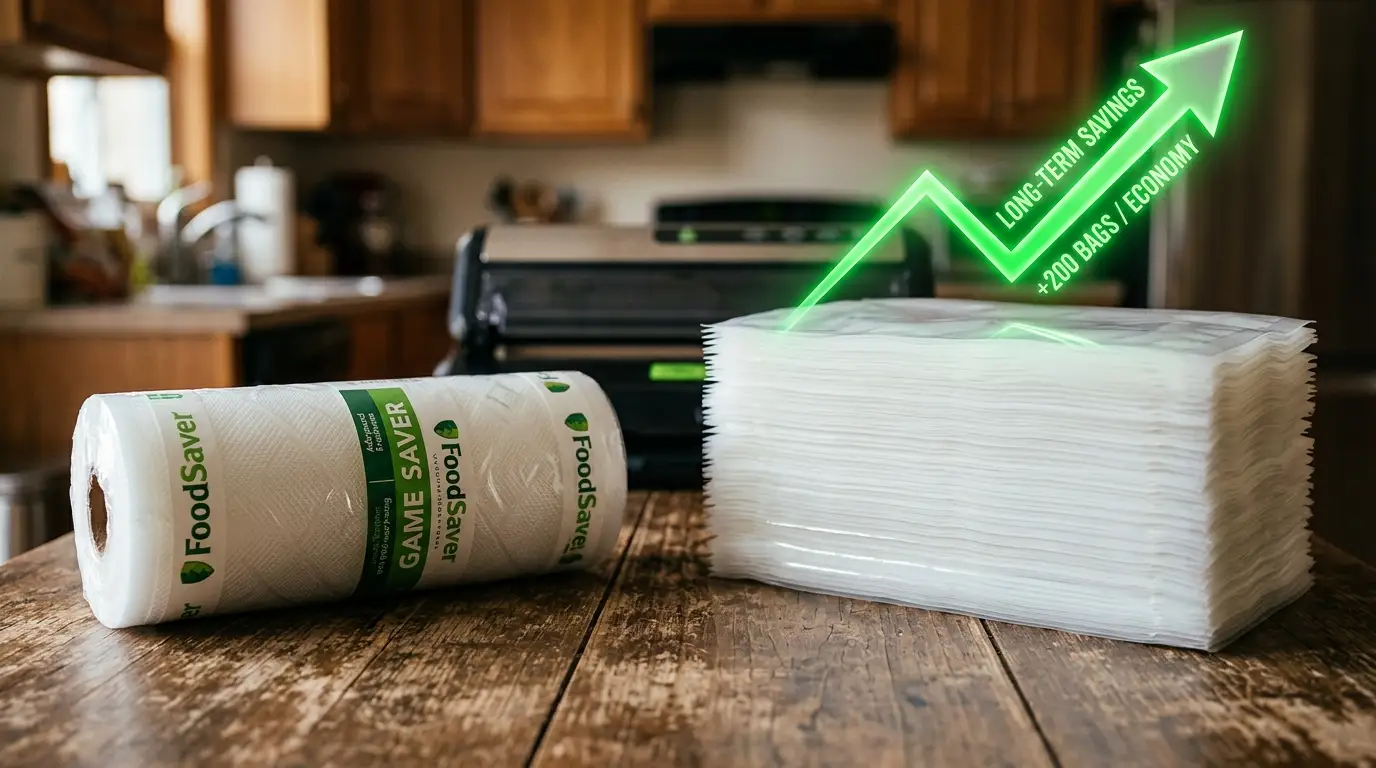
If you are debating the high upfront cost of a chamber machine, you must look at the long-term economics of the plastic bags. This is the industry’s biggest open secret: While a FoodSaver is cheap to buy, it is highly expensive to operate. While a Chamber Sealer is incredibly expensive to buy, it is dirt-cheap to operate.
-
FoodSaver Bags (Textured/Embossed):
External suction machines require specialized, highly proprietary bags with embossed micro-channels (a textured diamond pattern on one side). If the bag were perfectly smooth, the FoodSaver’s clamping jaws would squeeze the plastic completely shut, trapping the air at the bottom. The textured channels act as microscopic tunnels allowing the air to escape. Because they require complex manufacturing, these premium bags often cost $0.30 to $0.50 per bag. -
Chamber Bags (Smooth):
Because the whole bag sits completely inside the equalized vacuum chamber, it does not need textured air channels to function. Chamber sealers use industrial “smooth” bags. These are the exact same mass-produced bags used in commercial butcher shops, which typically cost just $0.05 to $0.10 per bag when bought in bulk.
The ROI Calculation
If you only seal leftovers twice a month, bag costs don’t matter. But if you process a 200-pound deer every hunting season, or buy your family’s meat in massive bulk warehouse runs, the math flips. Saving $0.35 per bag on 1,000 bags saves you $350. That massive savings on bags will literally pay for the entire Chamber Sealer appliance within two years. We break this math down even further in our Vacuum Sealer Bags vs Freezer Bags financial analysis.
IV. Footprint, Maintenance, and Price
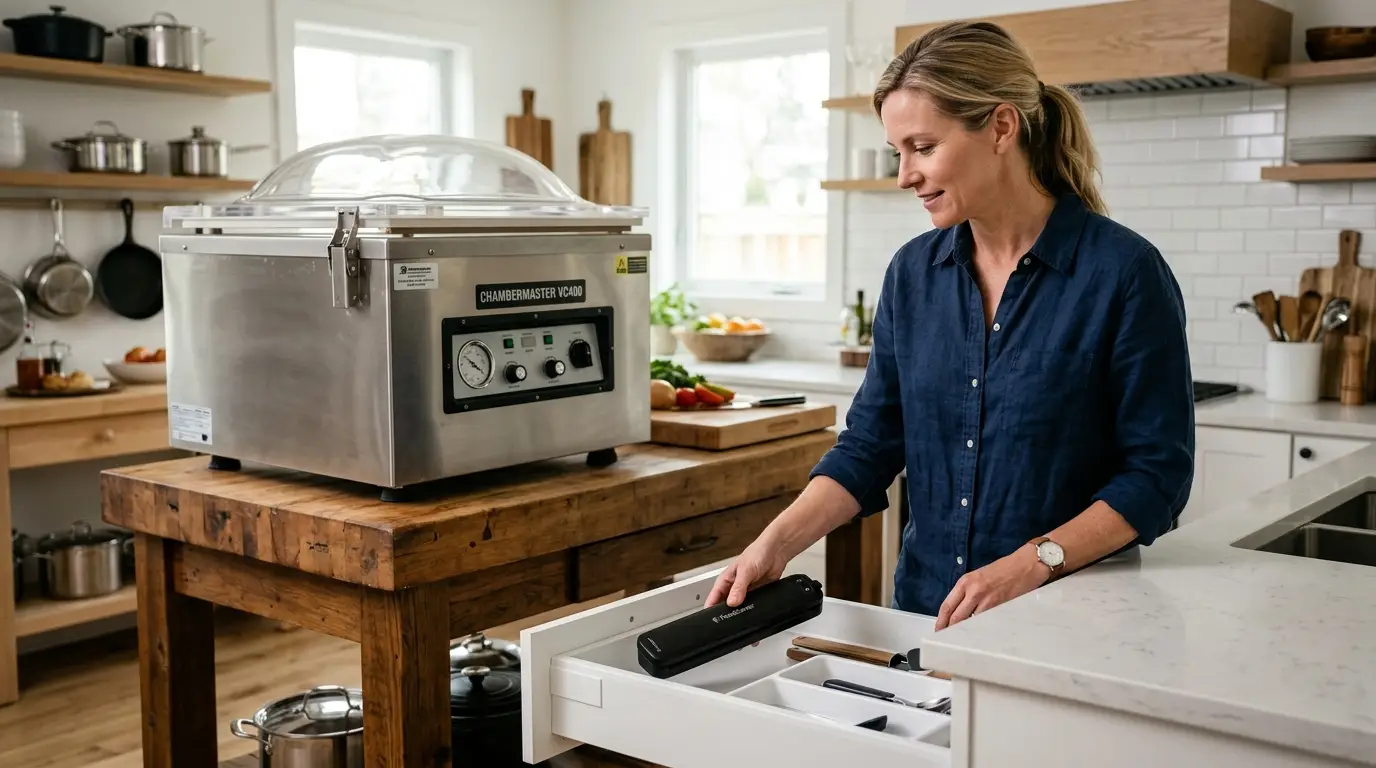
Before you excitedly click “Buy” on a massive commercial chamber sealer, you absolutely must respect the physical reality of what you are bringing into your kitchen.
The FoodSaver Reality
A high-end FoodSaver, like the premium model we detail in our FoodSaver V4840 2-in-1 Review, is incredibly user-friendly. It weighs about 6 to 8 pounds, meaning you can effortlessly lift it with one hand and tuck it away into a lower kitchen cabinet or a pantry drawer when you are done using it.
It requires absolutely zero mechanical maintenance other than occasionally wiping down the removable plastic drip tray in the sink and ensuring you don’t compress the foam gaskets during storage.
The Chamber Sealer Reality
An entry-level prosumer Chamber Sealer is a massive appliance. Because it requires a thick steel or reinforced acrylic box to safely hold a deep vacuum without imploding, these machines weigh between 40 and 80 pounds.
This is not an appliance you move around on a whim. It requires a dedicated, permanent footprint on your kitchen counter or a heavy-duty rolling utility cart in your garage.
Furthermore, many high-end commercial chamber sealers use oil-cooled rotary vane pumps. These engines are whisper-quiet and can run all day without overheating, but you must physically check the sight glass and perform regular oil changes to maintain their incredible suction power. To see which engine type (dry pump vs oiled pump) actually fits your lifestyle, read our technical breakdown: Oiled vs. Oil-Less Chamber Vacuum Pumps.
Explore the Vacuum Sealing Hub
Don’t stop here! Dive deeper into the science of preservation, explore head-to-head machine comparisons, and read our latest commercial hardware reviews for 2026.
FAQ: Vacuum Sealing Liquids & Machine Comparison
2026 Guide: Wet Foods, Chamber Sealers, and Pro Hacks
Pro Tip: If using an external sealer for liquids, pre-freeze the soup in a container for 2 hours until it is a “slush” before sealing!
Vacuum Sealing Excellence: The Definitive Guide (2026)
