
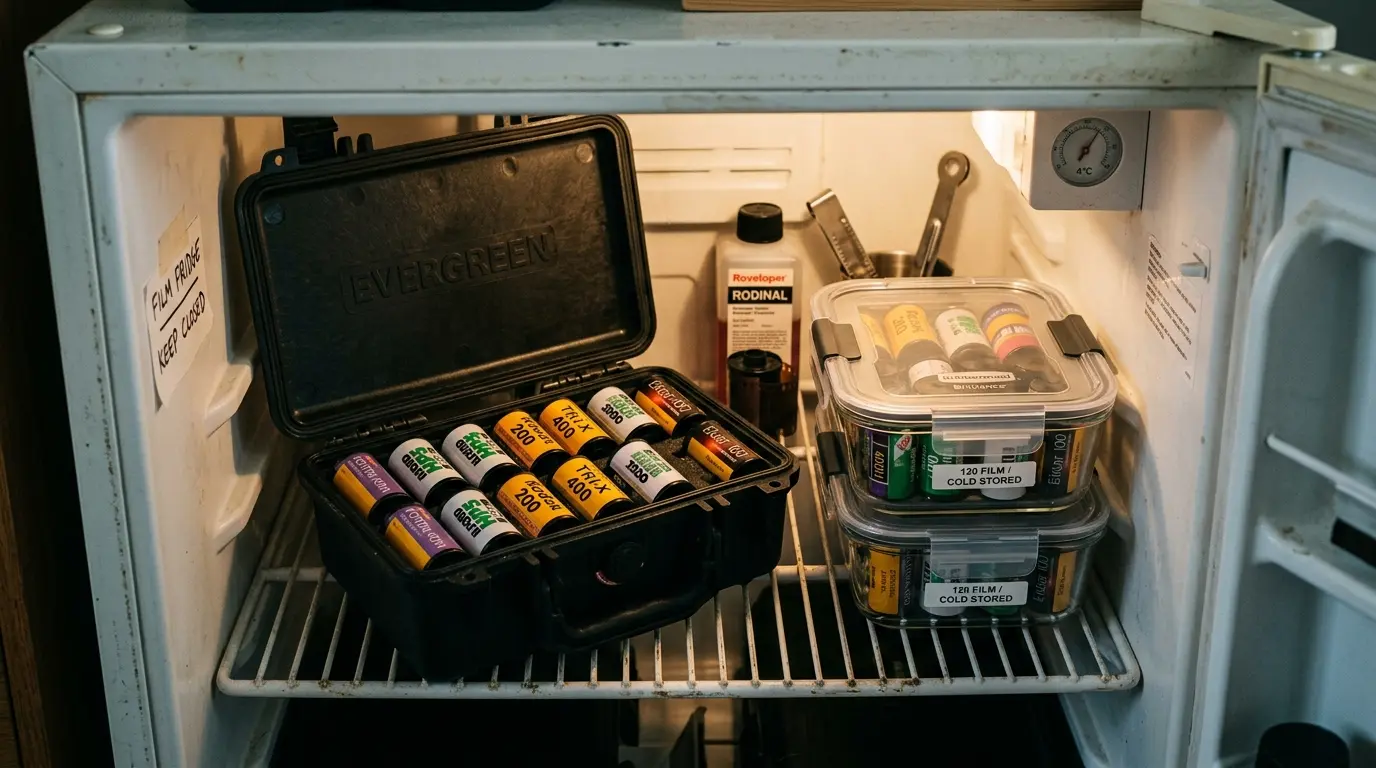
Best Airtight Film Storage Boxes for Refrigerators (2026)
You know that exact moment of dread: you pull your expensive, expired rolls of Portra 400 out of the fridge, set them on the kitchen counter, and immediately watch them sweat. Heavy condensation forms on the plastic canisters, microscopic water droplets seep into the 120 backing paper, and you suddenly realize your supposedly “safe” cold storage setup might have just permanently ruined your emulsion. Yeah. It’s an analog photographer’s worst nightmare.
Honestly, finding the best airtight film storage boxes is the single most important step for preserving your analog investment in 2026. What most people simply don’t realize is that refrigerators are inherently dynamic, highly humid environments. If you just carelessly toss your cardboard film boxes directly onto the wire shelf of a mini-fridge, the cold air isn’t protecting them; the fluctuating moisture is actively degrading the gelatin emulsion and causing base fog. If you want to deep-freeze your film to shoot years down the line, or just keep your current rotation fresh for a weekend shoot, we need to fix your storage methodology immediately. Let’s find the perfect airtight, moisture-proof containers that will keep your negatives perfectly dry.
📊 Quick Comparison: Best Airtight Film Storage
Whether you are storing 5 casual rolls of consumer stock or 50 rolls of discontinued professional film, here is how the top airtight containers stack up for rigorous refrigerator and freezer use.
| Product | Best For | Seal Type | Capacity / Size |
|---|---|---|---|
| Evergreen 35mm Case | Dedicated Pro Film Storage | IP67 Waterproof Rubber O-Ring | Holds 18 Rolls (35mm) |
| Rubbermaid Brilliance (Glass) | Bulk Storage & Visibility | Thick Silicone Latched Seal | Assorted (up to 8-cup volume) |
| Pelican 1120 Vault Case | Extreme Sub-Zero Protection | Polymer O-Ring & Press Valve | Customizable Pick N’Pluck Foam |
| Kodak 400 + Tiger Case Bundle | Beginners & Starter Kits | Snap-Tight Plastic Latch | Holds 6 Rolls (35mm) |
I. The Science: Why Cold Storage Fails Without an Airtight Seal
In real-world use, putting unprotected film directly in a fridge causes a massive, destructive issue known as thermal shock. Photographic film emulsion is essentially composed of silver halide crystals suspended in organic gelatin. Because it is an organic material, it acts like a highly sensitive sponge for ambient moisture.
The Condensation Trap
Every time you open the fridge door to grab a drink, a wave of warm, humid room air rushes in and collides with your freezing cold film canisters. This temperature differential instantly creates condensation. If the film is not sealed, that moisture binds directly to the gelatin emulsion, causing the layers to stick together, destroying the chemical sensitizers, and creating base fog (a murky, grainy look to your final scans). If you are currently struggling with a constantly wet fridge interior, you absolutely must read our maintenance guide on How to Prevent Condensation in a Film Storage Fridge.
The Micro-Climate Solution
Buying an airtight container creates a safe “micro-climate.” The heavy rubber or silicone seal literally locks out the fridge’s aggressive humidity cycles. When you take the box out to use the film, the airtight seal ensures that the damaging condensation forms harmlessly on the outside of the plastic box, while the environment inside remains perfectly, desert-dry.
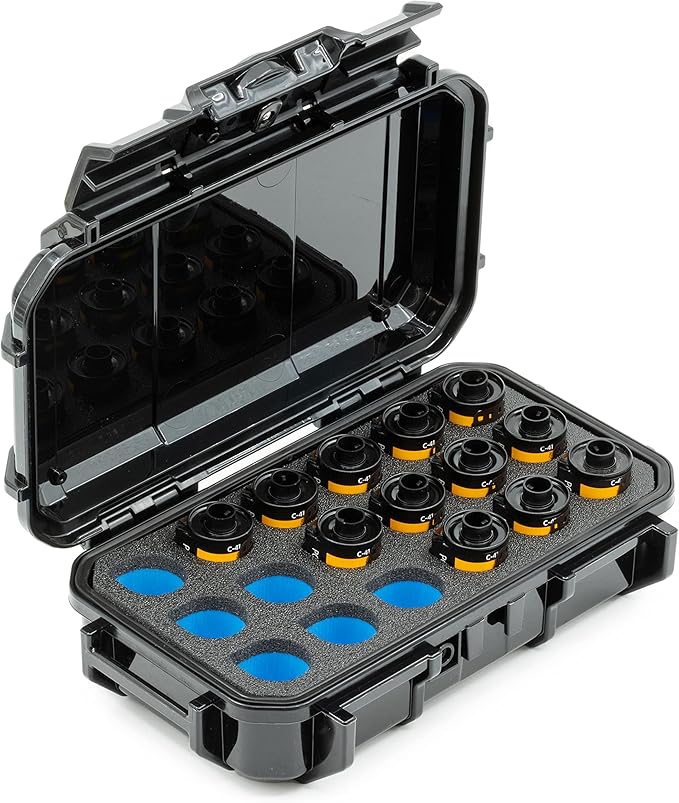
1. Evergreen 35mm Film Storage Case
If you shoot primarily 35mm and want a dedicated, rugged solution that looks as incredibly good as it performs, the Evergreen Case is the undisputed champion. It is purposely built from the ground up specifically for the meticulous analog photographer.
Why it’s a top pick:
- Freezer-Safe & IP67 Waterproof: It is heavily designed to strict military-grade specifications. The continuous rubber O-ring completely locks out all external moisture, making it perfectly safe to bury in the icy back corner of your deep freezer for decade-long emulsion preservation.
- Holds 18 Rolls Securely: The custom-molded internal inserts keep your 35mm canisters perfectly organized and separated, ensuring they don’t rattle around and pop their caps off during transit.
- 100% Light-Sealed: Because it has an opaque black outer shell, it actively protects your film from damaging UV light exposure every single time you open the brightly lit fridge door.
This is the exact case I’d personally choose for a dedicated analog setup. It features premium twist-lock latches that ingeniously double as a pressure equalization system. This means the lid won’t get violently vacuum-sealed shut when the cold air inside compresses and shrinks.
👉 Best for: Professional photographers, massive 35mm hoarders, and long-term sub-zero freezer storage.
 Check Price & Availability on Amazon

2. Rubbermaid Brilliance Glass Containers
You do not absolutely have to buy a tactical, heavy military case to keep your film dry. Analog photographers have been cleverly using high-end kitchen storage for decades. The Rubbermaid Brilliance Glass set is the ultimate, highly visible “hack” for storing bulk 120 medium format or loose 35mm film.
Why it’s a top pick:
- Unbeatable Silicone Seal: The snap-down latches firmly compress a thick silicone gasket that is 100% leak-proof and heavily airtight, totally neutralizing fridge humidity and preventing the transfer of food odors to your film base.
- Glass Thermal Mass: This is a major thermodynamic advantage. Unlike thin plastic, thick glass holds its temperature incredibly well. When you open your fridge door, the heavy glass prevents the internal temperature surrounding the film from fluctuating rapidly.
- Crystal Clear Visibility: Because it is transparent, you can easily see exactly how many rolls of Ilford HP5 or Kodak Gold you have left without breaking the airtight seal to check your inventory.
While many people buy small, dedicated, aesthetically pleasing coolers (like the ones featured in our Best Retro Mini Fridge for Small Spaces guide), utilizing these heavy glass containers allows you to stack your film neatly, safely, and beautifully on the shelves without wasting vertical space.
👉 Best for: Medium format (120) shooters, loose bulk film storage, and highly organized fridge setups.

3. Pelican 1120 Case With Foam
If you are traveling through intensely humid climates (like Southeast Asia or Florida) or storing thousands of dollars worth of incredibly rare, discontinued film (like Fuji Pro 400H, Kodak Aerochrome, or old Polaroid packs), you simply do not take chances. You buy a Pelican.
Why it’s a top pick:
- Polymer O-Ring: Pelican is the absolute global standard for watertight, airtight, military-grade seals. Absolutely zero moisture from your deep-freezer or fridge will ever penetrate the walls of this box.
- Pick N’Pluck Foam: The interior isn’t just hollow; it comes with scored foam that you can precisely customize to perfectly hug your delicate 120 pro-packs, 35mm canisters, or bulky instant film packs, completely preventing transit damage.
- Pressure Equalization Valve: An advanced feature that automatically releases built-up air pressure while simultaneously using a Gore-Tex membrane to keep water molecules out.
This is the ultimate analog vault. It is undeniably heavier and bulkier than the other options on this list, but it offers absolute, uncompromising peace of mind for the serious collector. (Pro tip: If you are upgrading your entire archival storage system and need a dedicated appliance, check out our Ultimate Guide to Refrigerators to find the most stable cooling unit).
👉 Best for: Rare, expired film storage, extremely humid climates, and harsh overland travel.

4. Kodak Ultramax 400 + Tiger Case Bundle
If you are just getting into film photography and need to stock up on both film and a protective storage solution simultaneously, this Kodak & Tiger Case bundle is an incredibly fantastic entry point into the hobby.
Why it’s a top pick:
- Instant Arsenal: You get 6 fresh rolls (144 exposures) of highly versatile Kodak Ultramax 400, which is currently one of the absolute best everyday color negative films available for a variety of lighting conditions.
- Tiger Film Case: The included slim case holds exactly 6 rolls securely. It is incredibly sturdy and perfect for safely throwing into your camera bag without crushing the canisters.
- Perfect for Mini Fridges: Its slim, low-profile design fits perfectly into the notoriously tight door shelves of standard mini fridges. (Many photographers ingeniously repurpose cosmetic fridges for this—read our guide on the Best Mini Fridge for Skincare to see which silent units work best for maintaining film temps).
A crucial note on thermodynamics: While the Tiger case is highly protective and physically sturdy against drops, it does not feature a heavy rubber O-ring like the Evergreen or Pelican cases. It uses a snap-tight plastic latch. It is fantastic for short-term fridge storage (1-3 months) where you are cycling through film quickly, but for extreme, long-term deep freezing (1+ years), we highly recommend upgrading to the Evergreen.
👉 Best for: Beginners, weekend shooters, and those needing a slim, immediate travel case.
The 3-Minute Buying Guide for Film Storage
When narrowing down your choice for fridge storage, don’t just buy a standard Tupperware bin. To protect the delicate chemistry of your film, look closely at these three critical engineering factors:
1. O-Rings are Mandatory
For deep-freezing or long-term fridge storage, the box must have a continuous rubber or silicone gasket (an O-ring). Standard, cheap snap-on plastic lids will physically warp and shrink in the intense cold over time, breaking the seal and letting fridge humidity slowly seep into the box, destroying the emulsion.
2. Size the “Dead Air” Correctly
Do not buy a massive, suitcase-sized Pelican case to store 5 rolls of 35mm film. Too much empty “dead air” inside the sealed box traps a large volume of ambient room humidity when you close the lid. When that large volume of trapped air cools down in the fridge, the moisture falls out of the air and condenses on your film. Buy a case that closely hugs the exact amount of film you own.
3. The Golden “Thawing Rule”
Warning: Never open an airtight box immediately after taking it out of the cold fridge! Let the fully sealed box sit on your counter at room temperature for at least 2 to 3 hours (longer if from the freezer). The condensation will form entirely on the outside plastic of the box, keeping the internal environment and your film perfectly dry. Only open the latches when the outside of the box feels completely room-temperature.
Frequently Asked Questions
Should I store film in the fridge or the freezer?
It depends on your timeline. If you plan to shoot the film within the next 6 months, the standard refrigerator (around 40°F) is perfectly fine and requires less thawing time. If you are hoarding discontinued stocks or don’t plan to shoot the film for a year or longer, you should deep-freeze it (around 0°F) in a high-quality, O-ring sealed case like the Evergreen or Pelican to essentially halt the chemical degradation entirely.
Can I store film in ziplock bags?
While better than nothing, standard consumer ziplock bags are actually slightly permeable to moisture over long periods, and the zipper seals often fail in sub-zero freezer conditions. If you must use bags for extreme budget reasons, double-bag the film and throw a few silica gel desiccant packets inside to aggressively absorb any trapped moisture.

