
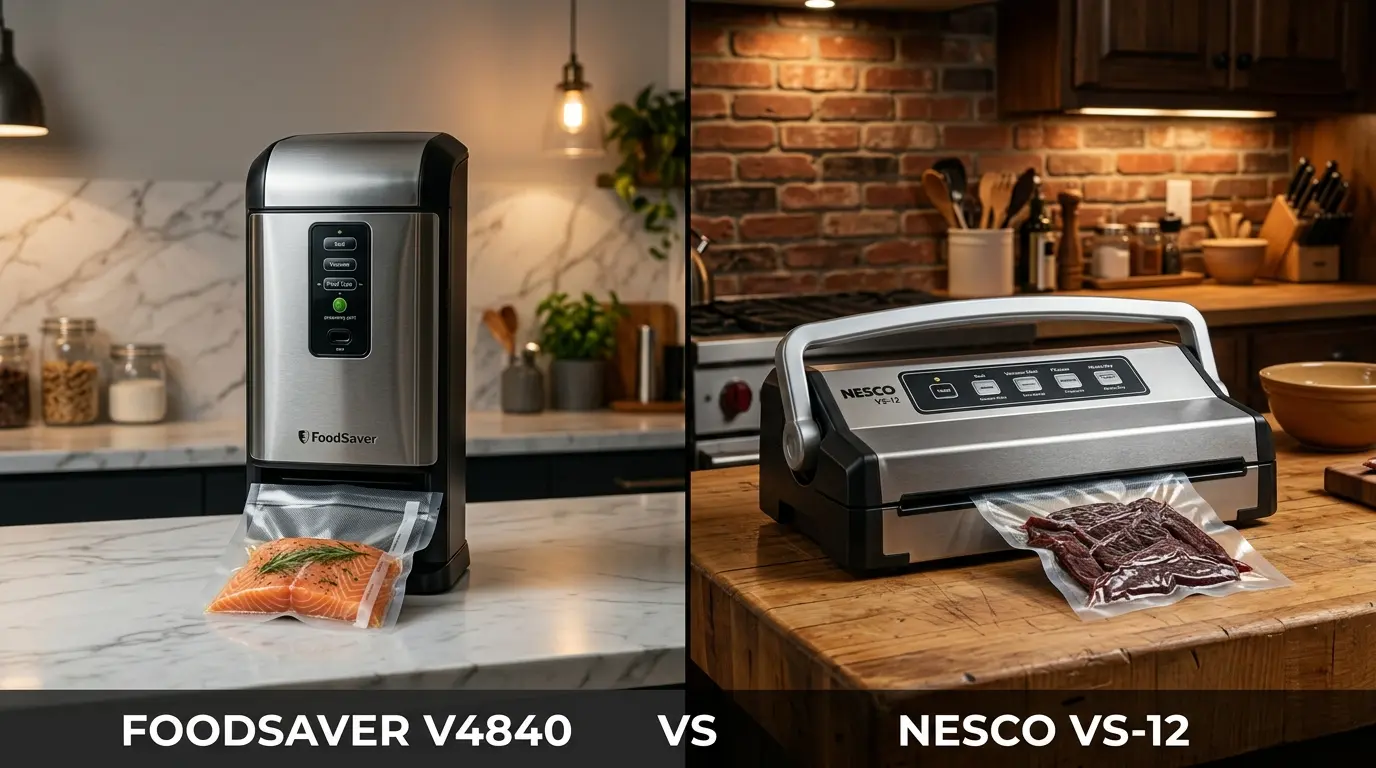
FoodSaver V4840 vs. Nesco VS-12: Best Vacuum Sealer for the Money (2026)
If you are truly serious about protecting your expensive cuts of meat from devastating freezer burn, extending the shelf life of your dry pantry goods, or prepping perfectly sealed steaks for a precision sous vide water bath, you absolutely need a reliable vacuum sealer.
In the highly competitive world of consumer-grade external suction machines, two specific models have heavily dominated the market conversation for the last several years: the incredibly famous FoodSaver V4840 2-in-1 and the fiercely loved, cult-classic Nesco VS-12 Deluxe.
On the surface, both of these premium machines achieve the exact same mechanical goal—they forcefully suck ambient air out of a textured plastic bag and melt the edge shut with a Teflon heating bar. But under the hood, they represent two completely, fundamentally different engineering design philosophies. In this comprehensive head-to-head showdown, we strip away the marketing jargon to compare raw pump strength, liquid handling capabilities, and the hidden reality of bag waste.
The Quick Answer
The FoodSaver V4840 is the ultimate appliance for hands-free automation. It detects the bag automatically and seals it without you ever pressing a button, making it the luxury choice for casual, convenient meal prep. The Nesco VS-12 requires manual locking, but it is the undisputed champion of value and performance. It features a vastly superior dual-vacuum pump, a double-wire heating element for fail-proof seals, and its manual design prevents the expensive plastic bag waste associated with FoodSaver’s automated sensors.
For a broader look at our testing protocols across all brands, visit our master directory: The Ultimate Vacuum Sealing Hub (2026).
I. Design & Automation (The FoodSaver Advantage)
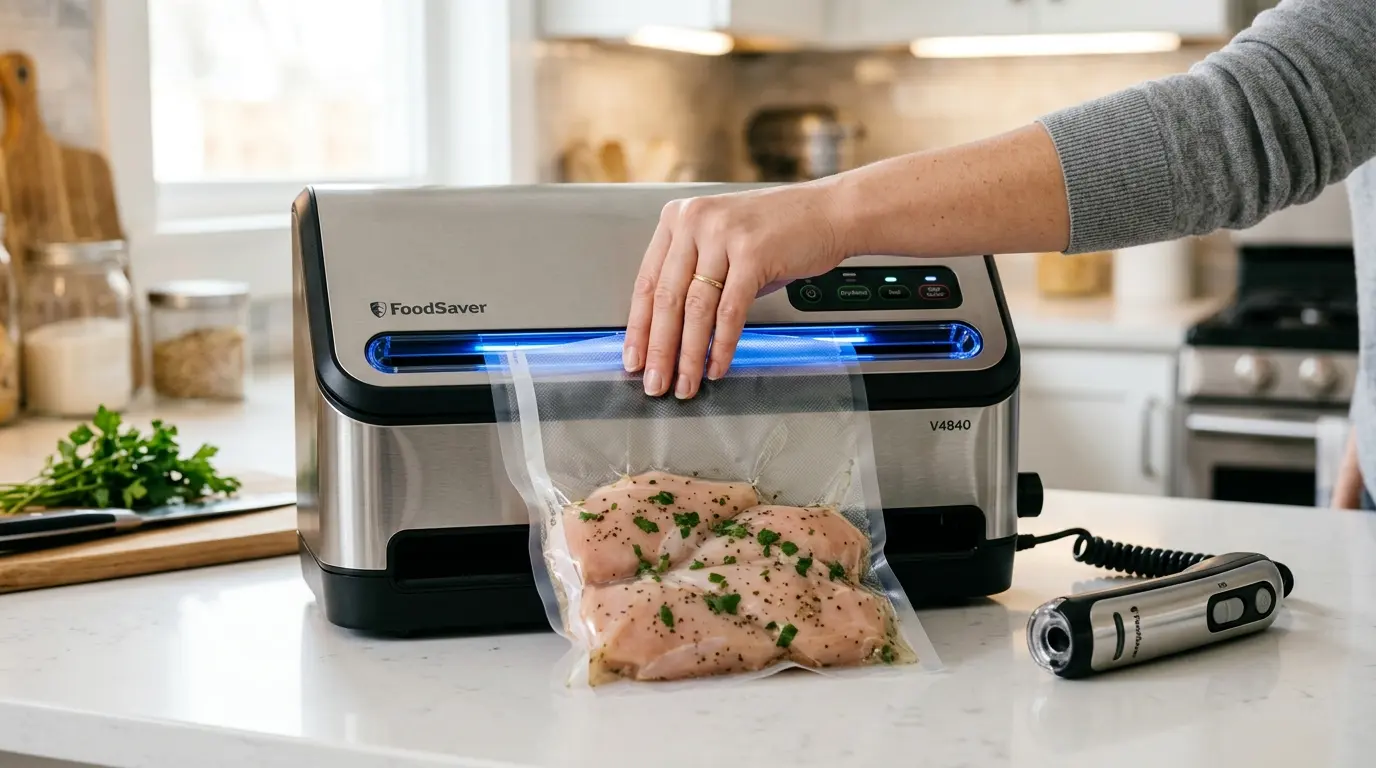
The FoodSaver V4840 is meticulously designed for the modern home cook who wants premium, hands-free convenience with absolutely zero learning curve. It is a large, sleek, vertically oriented machine that sits proudly on the counter, heavily emphasizing a luxurious visual aesthetic.
1. Auto-Bag Detection Sensors
This is the V4840’s hallmark, flagship feature. There are no heavy handles to crank down and no clips to lock in place. You simply insert the open end of a textured bag directly into the illuminated slot. The machine’s internal infrared sensors automatically detect the plastic, mechanically clamp down on the bag, engage the vacuum pump, and melt the seal without you ever having to push a single physical button.
2. The Built-In Retractable Hose
The “2-in-1” moniker refers to a brilliant, built-in retractable handheld sealer pulling straight out from the top of the unit. This accessory is used for sealing specialized zipper bags, marinating containers, and glass Mason jar accessories.
Because it is physically wired into the machine on a retractable spool, you never have to blindly hunt through your messy “junk drawer” trying to find a lost, loose hose attachment. We cover the full, incredible capabilities of this specific feature in our dedicated FoodSaver V4840 2-in-1 Review.
The Downside: The “Bag Tax”
Automation always comes with a hidden cost. The internal optical sensors require a significant physical amount of plastic to be inserted into the machine before they register and trigger the clamping mechanism. This inherently results in about 1.5 to 2 inches of completely wasted, empty bag material on every single seal you perform. As we will calculate later, this artificial waste adds up to a massive financial loss over time.
II. Vacuum Power & Control (The Nesco Advantage)
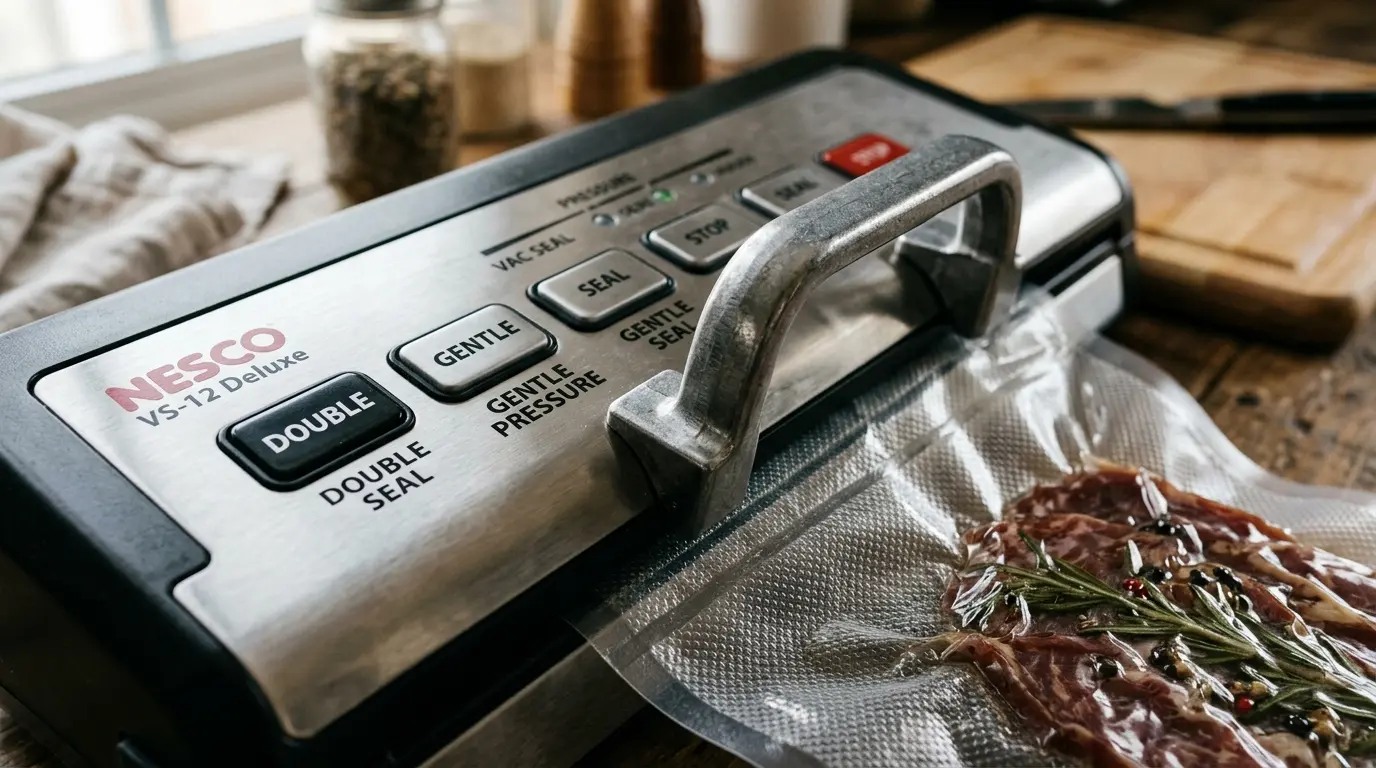
The Nesco VS-12 Deluxe takes a completely, fundamentally different architectural approach. It is a traditional horizontal, locking-handle machine. It fiercely favors raw mechanical power, durable components, and absolute user control over flashy, motorized automation.
1. The 130-Watt Dual Vacuum Pump
While most machines in this price bracket (including the FoodSaver) use a single-piston motor, the Nesco VS-12 features a heavy-duty, 130-watt double vacuum pump. Because two pistons are moving air simultaneously, it pulls an incredibly tight, blisteringly fast vacuum (reaching up to 25.5 inHg of pressure).
This immense power effortlessly rivals commercial machines that cost three times as much, securely wrapping the plastic into every tiny crevice of the meat. This specific engineering is exactly why it consistently ranks so highly in our dedicated Nesco VS-12 Deluxe Review.
2. Variable Settings & The Double Seal
The Nesco gives the chef total command. It allows you to manually choose between “Normal” and “Gentle” suction pressure (which is absolutely crucial to prevent crushing soft foods, as noted in our How to Vacuum Seal Delicate Fruits tutorial).
More importantly, it offers an exclusive “Double” seal setting. The machine is physically equipped with two parallel heating wires instead of one. When activated, it creates two thick, independent thermal welds across the top of the bag. If one seal is compromised by a stray drop of oil, the second seal acts as a fail-safe, providing truly bulletproof security for long-term deep freezing.
The Downside: Manual Muscle Required
It requires physical, manual operation. You must carefully align the bag inside the vacuum channel, and then physically push the heavy-duty handle down with significant force to lock the massive latches into place before you can press the vacuum button. It takes slightly more physical effort and technique than simply sliding a bag into the automated FoodSaver slot.
III. Handling Wet Foods & Marinades
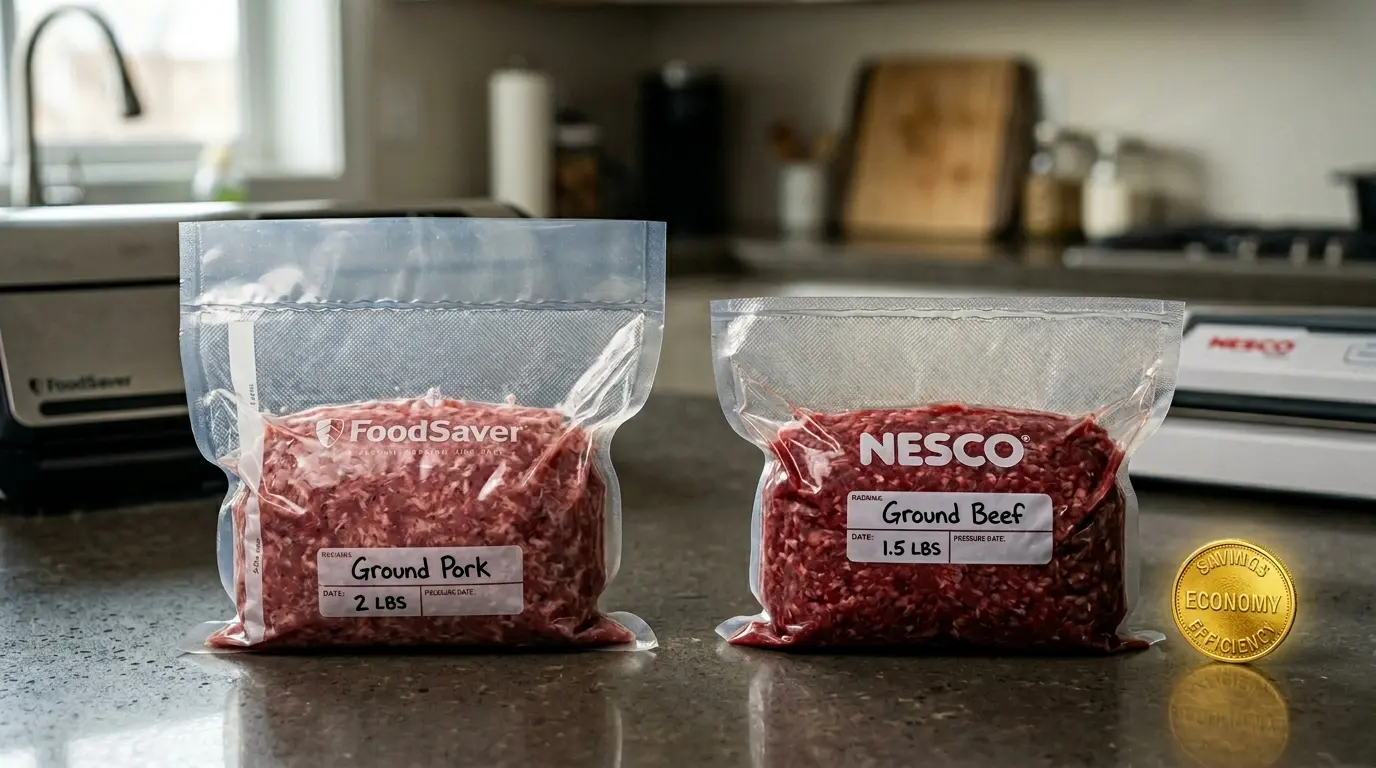
Sealing wet foods—like steaks submerged in teriyaki sauce or freshly washed chicken breasts—is the ultimate Achilles heel of all external suction machines. Because both the FoodSaver and the Nesco aggressively suck air out of the open bag, they will inevitably pull that liquid straight up toward the searing hot heating element if you aren’t perfectly careful.
The FoodSaver Method
The V4840 features a highly convenient, removable, dishwasher-safe plastic drip tray located right beneath the sealing bar. If you accidentally suck up raw steak juice, the tray safely catches it, preventing the sticky liquid from dripping down and ruining the internal motor. However, if that liquid physically touches the plastic where the seal is being made, the automated cycle will still fail to fuse the plastic, leaving an air leak.
The Nesco Method
While the VS-12 lacks a completely removable drip tray (meaning you have to wipe the channel out with a sponge manually), its “Moist” and “Double” seal settings give it a massive mechanical edge. The dual heating wires ensure that even if a small, rogue amount of liquid reaches the top rim, at least one of the two intense thermal welds will successfully burn through the moisture and fuse.
Pro Tip: Stop the Mess Entirely
If you frequently seal liquid marinades or heavy stews, neither of these external suction machines is truly perfect. To prevent failed seals, you must use the physical paper towel hacks outlined in our Vacuum Sealer Not Sealing Wet Foods Guide, or consider upgrading your entire kitchen setup by reading our comprehensive Chamber Sealer vs External Sealer showdown.
IV. Price and Long-Term Value (The “Bag Math”)
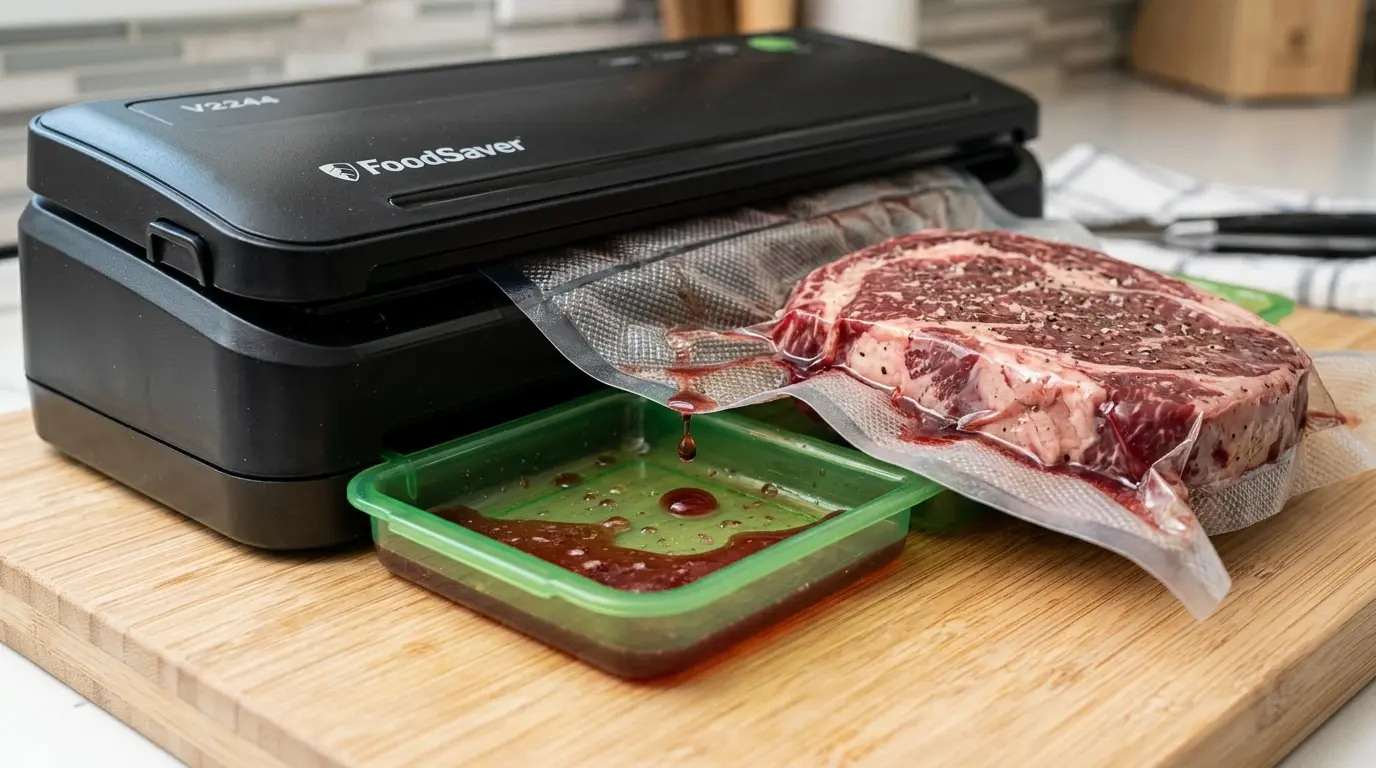
When it comes to officially crowning a winner for the “Best for the Money” title, we have to look past the initial retail price and calculate the brutal, long-term operational costs of the plastic bags themselves.
1. The Retail Gap
The FoodSaver V4840 typically retails between $150 and $200, depending on heavy holiday sales and bundle deals. The Nesco VS-12 usually sits very comfortably around the $130 mark, making it significantly cheaper upfront to acquire.
2. The Bag Waste Savings (The Hidden ROI)
Because the Nesco utilizes a manual locking lid, you are in total visual control. You can place the extreme, absolute edge of the plastic bag directly over the heating wire, resulting in almost zero wasted plastic per seal.
As previously mentioned, the FoodSaver’s deep optical auto-sensors force the machine to pull the bag deep into the chassis before clamping down, wasting roughly 2 inches of expensive textured plastic per bag.
Let’s Do The Math:
- If you seal 500 bags of meat over a hunting season or a year of heavy meal prep.
- Wasting 2 inches per bag equals 1,000 inches (over 83 feet) of totally wasted plastic roll.
- Considering premium textured rolls are expensive, the Nesco will easily save you $30 to $50 in wasted plastic in just its first year of heavy use. Over a three-year lifespan, the Nesco pays for itself entirely in bag savings alone.
Explore the Vacuum Sealing Hub
Don’t stop here! Dive deeper into the science of preservation, explore head-to-head machine comparisons, and read our latest commercial hardware reviews for 2026.
FAQ: Vacuum Sealing Master Guide
2026 Edition: Brands, Dairy, Safety & Culinary Science
Pro Tip: To seal moist foods, place a folded paper towel inside the bag near the seal line to catch juices before they reach the machine!
Vacuum Sealing Excellence: The Definitive Guide (2026)
